Executive Overview
The intersection of artificial intelligence and the music industry has officially moved from a theoretical debate among technologists to the front lines of mainstream commercial adoption. As generative audio tools grow increasingly sophisticated, the music community finds itself sharply divided over the ethics, authenticity, and future of AI-assisted creation.
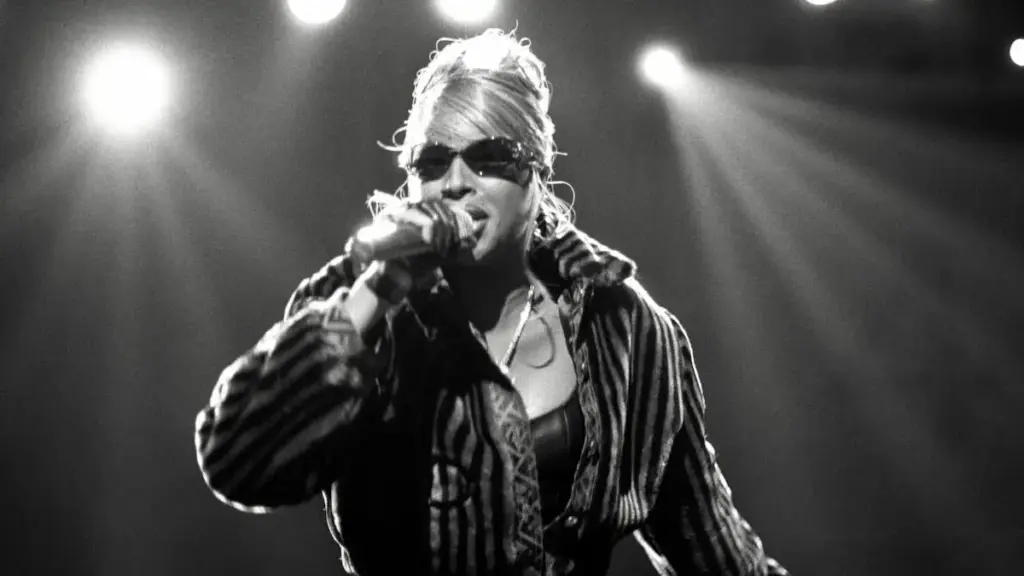
At the center of the latest cultural flashpoint is nine-time Grammy-winning R&B legend Mary J. Blige. Recently, Blige appeared in a promotional advertisement for Suno, a prominent and widely utilized AI music generation company. In the clip, producers present the iconic singer with tracks that are either fully generated or heavily assisted by machine learning models. Her reaction—noting that while she does not fully understand the mechanics of generative AI, she finds the output "dope" and expresses a willingness to "learn" more—has ignited intense debate across social media platforms and music industry circles alike.
Simultaneously, unverified rumors began circulating across platforms like X (formerly Twitter) alleging that Blige had inked a multi-million-dollar endorsement deal with Suno to champion AI music. An investigative review of these claims reveals a stark lack of corroboration: no reputable music or financial journalism outlets have reported the arrangement, and Suno itself has remained silent regarding any financial partnership with the artist.
Despite the unconfirmed nature of the multimillion-dollar rumor, Blige’s visual association with Suno underscores a broader, undeniable trend. Legendary artists and elite hip-hop producers from previous decades—including industry titans Dr. Dre, Jimmy Iovine, and Timbaland—are actively embracing AI tools, viewing them not as an existential threat to human creativity, but as the logical evolution of studio technology, akin to the introduction of the drum machine or the synthesizer.
This article provides an in-depth exploration of the emerging relationship between legacy artists and generative AI, examines the specifics of the Suno advertisement featuring Mary J. Blige, dissects the unverified financial rumors, and contextualizes this shift within the broader debate over the future of human musicianship.
Detailed Chronology: The Ad, the Reaction, and the Rumor Mill
To understand how a single promotional clip escalated into a viral industry controversy, it is necessary to trace the chronology of events as they unfolded across digital platforms.
The Suno Advertisement Debut
In late August 2026, generative music platform Suno rolled out a new marketing campaign designed to bridge the gap between traditional music icons and cutting-edge technology. The centerpiece of this campaign was a short-form video clip featuring Mary J. Blige. In the footage, contemporary music producers play a track for the R&B icon. The audio, explicitly framed as a product of AI generation or assistance, prompts a visibly intrigued reaction from the singer.
Rather than dismissing the technology outright—a stance common among contemporary musicians fearful of copyright infringement and displacement—Blige offers a measured, open-minded response. She admits to the camera that she does not entirely grasp the technical mechanisms behind how AI produces harmonic structures and vocal timbres, yet candidly remarks that the sound is "dope." Furthermore, she signals a willingness to engage with the technology, stating that she is open to learning more about its applications in the studio space.
The Virality and the Backlash
Within hours of the advertisement’s release, clips were cross-posted to various social media ecosystems, most notably by aggregator accounts on X such as @TheePopCore. The internet’s reaction was immediate and polarized.
For purists and copyright advocates, Blige’s apparent curiosity was viewed as a betrayal of traditional artistry. Critics argued that even casual endorsement from a luminary of Blige’s stature legitimizes platforms like Suno, which face ongoing legal scrutiny and deep-seated distrust from independent artists, songwriters, and union representatives. Conversely, tech enthusiasts and progressive producers praised her willingness to adapt, framing her open-mindedness as the hallmark of a true innovator who has continuously reinvented her sound over a decades-long career.
The Genesis of the "Multimillion-Dollar" Rumor
As the video continued to accumulate millions of impressions, the discourse shifted from artistic philosophy to financial speculation. On August 24, 2026, a single post on X (originating from an account focused on media and executive news) asserted that Mary J. Blige had secured a "multimillion-dollar deal with Suno to promote using AI in music."
An exhaustive investigative check of media databases, entertainment trades (such as Variety, Billboard, and The Hollywood Reporter), and official corporate press releases reveals that this singular post served as the sole source of the claim. Neither Suno nor Blige’s official representatives have confirmed the existence of any paid endorsement contract, let alone one valued in the millions of dollars. Consequently, standard journalistic practices dictate that the financial figures associated with her appearance must be classified strictly as an unverified rumor. Nevertheless, the speed with which the rumor spread highlights the volatility of public perception surrounding AI monetization in the arts.
Supporting Context & Metrics: The Generative Audio Landscape
The controversy surrounding Mary J. Blige does not exist in a vacuum; it is part of a massive, rapidly accelerating shift in how commercial audio is conceived, produced, and consumed.
The Rise of Platforms Like Suno
Suno, alongside competitor Udio, has emerged as a dominant force in the generative AI space. By leveraging deep learning architectures trained on vast corpuses of audio data, these platforms allow users to generate full-length songs—complete with instrumentation, rhythm, and synthesized vocals—via simple text prompts. While the technology has democratized music creation for hobbyists, it has simultaneously triggered profound legal and ethical alarms.
Major record labels, including Universal Music Group, Sony Music Entertainment, and Warner Music Group, have filed high-profile lawsuits against generative AI companies, accusing them of widespread copyright infringement by allegedly training their models on copyrighted master recordings without authorization or compensation.
The Changing Guard: Hip-Hop Royalty Weighs In
While many independent artists and trade organizations view generative AI as an existential threat, a distinct faction of veteran hip-hop producers and industry architects are publicly welcoming the technology. This creates a fascinating generational and ideological divide within the music community.
Most notably, Dr. Dre and Jimmy Iovine addressed the topic during an extensive joint interview with The New York Times in August 2026. Dr. Dre, a foundational figure in West Coast hip-hop and co-founder of Beats Electronics, pushed back sharply against the fear surrounding AI music tools. According to Dre, apprehension toward generative audio stems primarily from creators "who have trouble creating."
Drawing parallels to historical technological shifts in the music industry, Dre argued that critics of AI are making the same logical missteps as those who opposed electronic innovations decades ago:
"I had a discussion with a few people a few days ago. They were against AI, and I’m like, ‘OK, you sound like the person that would have been against the drum machine when it came out.’ Or synthesizers, right? It’s a new tool for creativity. Some people are afraid of learning new things."
Dre further revealed that he has actively experimented with generative systems, utilizing AI "as a tool to see what it would do with what I just did," treating it as a digital collaborator rather than a replacement for human soul.
His long-time business partner and industry visionary, Jimmy Iovine, reinforced this perspective, noting that Dre is not alone among elite producers incorporating these technologies into their workflows. "So is Timbaland," Iovine remarked, referencing the iconic Grammy-winning producer who has similarly championed AI-driven vocal synthesis and production tools through ventures like his platform, Sunhouse, and his work with AI-generated virtual artists. Iovine added a telling observation regarding the current cultural climate: "By the way, there’s a lot of closet AI producers out there."
Industry Metrics and Adoption Rates
| Metric / Indicator | Status in 2026 | Industry Trend |
|---|---|---|
| Major Label Litigation | Active federal lawsuits filed by Urum/Sony/Warner against AI audio firms. | Aggressive legal pushback on training data copyrights. |
| Producer Adoption | Growing subset of veteran producers (Dre, Timbaland) experimenting openly. | Normalization among legacy creators. |
| Independent Artist Sentiment | Overwhelmingly skeptical; high concern over unlicensed data scraping. | Active resistance and calls for strict regulatory frameworks. |
| Corporate Venture Capital | Hundreds of millions injected into generative audio platforms (Suno, Udio). | High financial backing despite legal ambiguity. |
Official Statements and Industry Perspectives
The chasm between how legacy icons view AI and how working songwriters and performers perceive it is defined by a distinct clash of philosophies regarding what constitutes artistic value.
The Producer Perspective: AI as an Instrument
For producers like Dr. Dre and Timbaland, the music studio has always been a laboratory of technological evolution. The transition from physical instrumentation to sampling, MIDI sequencing, digital audio workstations (DAWs), and now generative machine learning is viewed as a continuum. In their view, AI does not write the song; rather, it provides accelerated iterations, textural variations, and sonic palettes that the human producer can curate, manipulate, and finalize.
Proponents argue that refusing to engage with generative tools is professionally shortsighted—akin to a painter refusing to use synthetic pigments or a photographer rejecting digital sensors in favor of film stock.
The Artist and Songwriter Perspective: The Threat of Devaluation
Conversely, organizations representing working session musicians, background vocalists, and songwriters argue that comparing AI to a drum machine or synthesizer is a false equivalence. A drum machine is an instrument requiring a human operator to program rhythms and beats; an AI model, by contrast, synthesizes outputs based on statistical probabilities derived from the past works of human creators.
The primary concerns voiced across the artistic community include:
- Economic Displacement: The potential for studios, advertisers, and media companies to bypass human session musicians, beatmakers, and vocalists in favor of instantaneous, zero-cost AI generation.
- Consent and Likeness: The unauthorized replication of vocal timbres and stylistic signatures without financial compensation or moral rights protection.
- Erosion of Authenticity: The fear that audiences will become desensitized to manufactured emotional resonance, stripping music of its core purpose as a vehicle for genuine human lived experience.
While Mary J. Blige has not issued a formal manifesto detailing her long-term stance on these complex issues, her willingness to engage with Suno places her precariously at the intersection of these two warring philosophies.
Future Outlook: Where Goes Mary J., Where Goes the Industry?
As the dust settles on the initial wave of reaction to the Suno advertisement, the broader implications for the music industry remain profound and unresolved.
The Legal Battlegrounds
Over the next several years, the legality of generative AI in music will be heavily shaped by ongoing courtroom battles. If federal courts rule that training AI models on copyrighted sound recordings constitutes fair use, platforms like Suno will likely experience an explosive surge in corporate partnerships, potentially validating the unverified rumors surrounding multimillion-dollar artist deals. Conversely, if courts rule in favor of the major labels, generative audio platforms will be forced to completely restructure their training models around licensed, fully consented datasets, radically altering their business models.
The Evolution of Artist Branding
For icons like Mary J. Blige, navigating the era of generative AI requires walking a delicate tightrope. Artists must balance their cultural credibility—often rooted in raw, deeply personal vulnerability and pain—with the commercial realities of a tech-driven marketplace. Even if the reported multimillion-dollar payout from Suno remains an unverified internet rumor, the publicity generated by the campaign demonstrates that AI companies are desperately seeking the cultural validation that only legacy superstars can provide.
Conclusion
Mary J. Blige’s encounter with Suno serves as a microcosm of the music industry’s current identity crisis. It exposes the tension between veteran innovators who view AI as the next frontier of creative exploration and an anxious artistic community fighting to preserve the sanctity of human expression. Whether AI tools ultimately become standard studio equipment like the synthesizer or agents of cultural homogenization will depend not on promotional advertisements, but on the legal precedents, ethical boundaries, and consumer choices that define the remainder of the decade.