Executive Overview
The global music landscape has undergone a seismic shift over the past decade, moving away from localized Western market dominance toward a truly internationalized ecosystem. At the center of this paradigm shift is the meteoric rise of K-pop, a cultural and economic juggernaut that has steadily conquered the most fiercely contested metrics in the music industry.
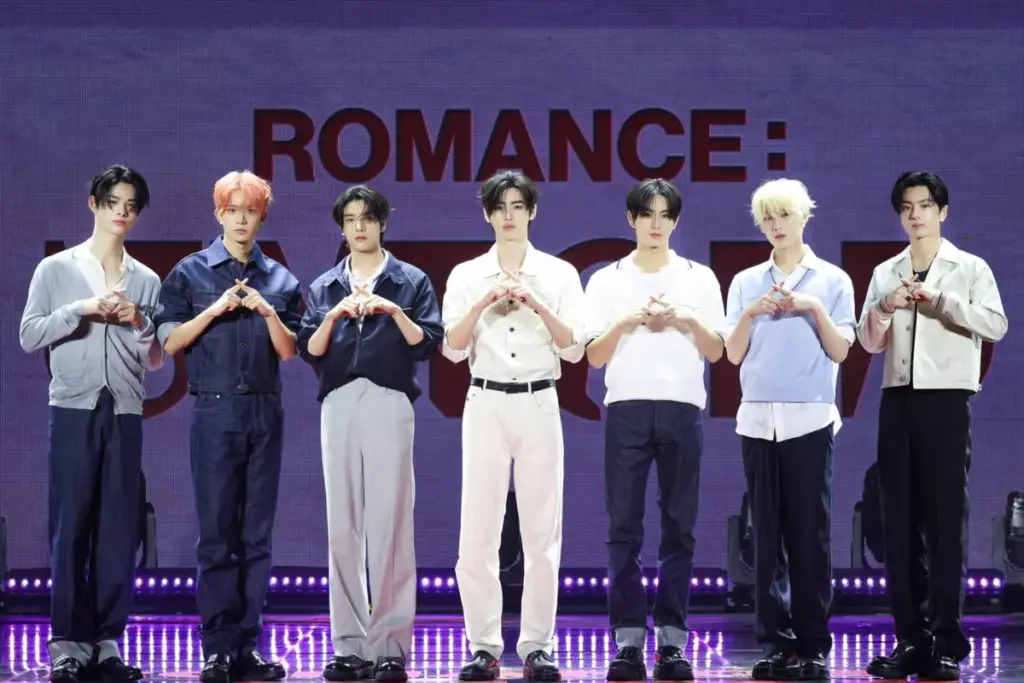
The latest milestone in this unprecedented wave arrives courtesy of ENHYPHEN, whose latest extended play, THE SIN: BLISS, has officially debuted at No. 1 on the all-genre Billboard 200 chart. This monumental achievement marks the 26th time a Korean pop act has claimed the pinnacle of Billboard’s flagship album ranking in just over eight years.
What began as a localized phenomenon championed by fervent digital fandoms has evolved into an institutional powerhouse. From BTS breaking the glass ceiling in June 2018 with Love Yourself: Tear, to BLACKPINK shattering historical gender barriers as the first female K-pop act to lead the chart with Born Pink in 2022, the trajectory of K-pop in the United States has been nothing short of historic.
This deep-dive analysis explores the historical trajectory of K-pop’s dominance on the Billboard 200, examines the statistical landscape of group sizes, charts the milestones of individual acts—from Stray Kids to ATEEZ—and projects the future outlook of Korean music in the global marketplace.

Detailed Chronology: From BTS to ENHYPHEN
To understand the magnitude of ENHYPHEN’s achievement, one must trace the chronological milestones that paved the way. The infiltration of the Billboard 200 by K-pop acts is a study in compounding momentum.
The Dawn of a New Era (2018)
Before June 2018, Korean-language albums and K-pop releases frequently found themselves relegated to specialized world music charts or niche digital sub-rankings. That changed irrevocably when BTS unleashed Love Yourself: Tear. By capturing the No. 1 spot on the all-genre Billboard 200, the septet proved that linguistic barriers were entirely porous in the face of compelling artistry, intricate conceptual storytelling, and deeply devoted global fandoms (ARMY).
Expanding the Horizon (2019–2021)
Following BTS’s historic breakthrough, the floodgates opened. Acts such as SuperM entered the fray, demonstrating that multi-label and super-group concepts could resonate instantly with American consumers. Although 2021 experienced a temporary cooling period—marking the only calendar year since 2018 without a K-pop No. 1 album due to shifting release schedules and pandemic-related disruptions—it proved to be merely the calm before a torrential surge.
The Peak Years and Female Empowerment (2022–2023)
The year 2022 marked a vital diversification of the K-pop landscape. While boy bands had historically driven the initial charge to the top, BLACKPINK shattered historical glass ceilings in September 2022 when Born Pink debuted at No. 1. This marked the first time a female K-pop act claimed the apex of the Billboard 200, opening the door for subsequent groundbreaking girl groups like NewJeans and TWICE.

By 2023, the movement reached its zenith. That calendar year stands as the peak period for K-pop dominance on the chart to date, yielding an astounding five separate No. 1 albums.
The Modern Era and ENHYPHEN’s Triumph (2026)
As the industry progresses through 2026, momentum shows no signs of slowing down. With THE SIN: BLISS, ENHYPHEN secures their first career No. 1 on the Billboard 200, pushing the current year’s tally of K-pop chart-toppers to four. This victory signifies that the phenomenon is no longer sustained by just two or three legacy acts; rather, a deep bench of globally competitive groups is continuously rotating at the top of the American music industry.
Supporting Context & Metrics: The Numbers Behind the Charts
A quantitative analysis of K-pop’s chart dominance reveals fascinating trends regarding group configurations, label strategies, and output frequency.
The Billboard 200 Leaderboard: Who Leads the Pack?
- Stray Kids: Leads all K-pop acts with an astonishing nine No. 1 titles on the Billboard 200, proving their unmatched consistency and streaming power in Western markets.
- BTS: Sits firmly in second place with seven No. 1 titles, representing the foundational pillar of the modern K-pop boom.
- ATEEZ: Continues their fierce ascent, securing the third-highest position with three No. 1s.
- Single-Title Achievers: A robust tier of talent has notched one No. 1 album to date, including SuperM, BLACKPINK, TOMORROW X TOGETHER (TXT), NewJeans, TWICE, and newly inducted ENHYPHEN. Additionally, the multi-artist soundtrack KPop Demon Hunters reached the summit, highlighting the genre’s footprint across cinematic and television mediums.
The Gender and Ensemble Dynamics
An intriguing statistical anomaly of K-pop’s success on the Billboard 200 is the complete absence of solo artists, duos, or trios at the top. Every single one of the 26 No. 1 achievements has been accomplished by large-scale ensembles or collaborative projects.

- TWICE: Leads the structural size metric among the listed chart-toppers with nine members.
- Stray Kids & ATEEZ: Operate with eight members.
- BTS & SuperM: Built their success on seven-member lineups (noting SuperM’s hiatus in mid-2021).
- ENHYPHEN: Anchored by a cohesive six-member synergy.
- TOMORROW X TOGETHER & NewJeans: Streamline their creative output with five members.
- BLACKPINK: Demonstrates that a tight-knit four-member ensemble can achieve global market supremacy.
This structural data suggests that the diverse vocal tones, striking visual choreography, and multi-faceted branding enabled by larger ensembles play a critical role in captivating international consumer bases.
Official Industry Perspectives and Expert Analysis
Music industry analysts and cultural economists have continuously attempted to decode the formula behind K-pop’s sustained dominance. Unlike traditional Western album rollouts, which often rely heavily on radio airplay and spontaneous playlisting, the K-pop machine relies on hyper-engaged fan mobilization, physical-digital hybrid purchasing models, and intricate, interconnected cinematic universes (lore).
Industry insiders note that ENHYPHEN’s success with THE SIN: BLISS is a masterclass in artistic maturation. By blending dark, sophisticated sonic textures with high-concept visual storytelling, the group successfully bridged the gap between loyal core supporters and casual American music listeners.
Furthermore, structural support from major US distribution partners—such as Republic Records, Geffen, and Columbia—has transformed how K-pop physical variants, collectible photo cards, and limited-edition vinyl pressings are distributed across North American retail outlets. This symbiotic relationship between Korean entertainment agencies (such as HYBE, JYP Entertainment, SM Entertainment, and YG Entertainment) and American major labels has standardized international music distribution.

Future Outlook: What’s Next for K-Pop on the Global Stage?
As we look beyond 2026, the question is no longer whether K-pop can conquer Western charts, but rather how sustainable and diversified this dominance will become.
1. Broadening Beyond the Core Fandoms
While early chart-toppers relied almost exclusively on direct-to-consumer digital sales and dedicated fandom pre-orders, recent trends indicate a gradual integration into mainstream Western radio and playlist culture. Future success will likely depend on crossover collaborations with Western producers and artists, as well as increased sync placements in film, television, and gaming.
2. The Rise of New Generations
With legacy acts balancing mandatory military service (in the case of male groups) and solo endeavours, newer ensembles like ENHYPHEN, NewJeans, and Stray Kids are proving that the industry’s pipeline of talent is virtually inexhaustible. The ability of multiple generations of artists to simultaneously command top-tier chart positions ensures structural stability for the genre.
3. Expansion Into Untapped Formats
As demonstrated by charting soundtracks like KPop Demon Hunters, the intersection of K-pop with digital media, virtual reality concerts, and immersive gaming experiences will likely yield new pathways to the Billboard summit.

Ultimately, ENHYPHEN securing the 26th K-pop No. 1 album with THE SIN: BLISS is not an isolated cultural moment—it is a testament to an industrialized, highly disciplined, and globally resonant musical movement that has permanently altered the fabric of the global pop charts.