Executive Overview
In the modern landscape of physical health, few complaints are as ubiquitous—or as chronically mismanaged—as tightness in the anterior hip. Whether manifesting as a dull ache after an eight-hour shift at an office desk or a sharp pinch following a weekend of high-mileage walking and active parenting, tight hip flexors have become a hallmark of contemporary living. For millions, step counts fluctuate wildly between sedentary workweeks and hyper-active weekends, creating a physiological paradox: our bodies are simultaneously weakened by prolonged sitting and abruptly overloaded by weekend warrior bursts of activity.
Enter the physical therapy community’s best-kept secret for deep tissue release: the couch stretch. Recommended widely by movement specialists, including prominent physical therapist Dr. Andy Fata-Chan, this movement offers a powerful solution for an area of the body that resists conventional stretching.
This comprehensive report explores the mechanical root causes of tight hip flexors, examining how prolonged chair-bound postures interact with repetitive impact sports and daily ambulatory stress. We will investigate the biomechanical anatomy of the hip complex, evaluate the precise execution of the couch stretch, analyze the broader implications for mobility and gait, and provide safe, physio-approved alternatives for individuals managing joint sensitivities. By adopting a proactive, preventative approach to hip health, individuals can reclaim their range of motion, enhance athletic performance, and protect their joints from long-term wear and tear.
Detailed Chronology: The Anatomy of Modern Hip Degradation
To understand why the hips lock up, we must examine the intersection of modern lifestyle habits and human evolutionary design. The human body is engineered for dynamic movement—squatting, lunging, walking, and running across varied terrain. However, the architecture of the 21st-century workplace forces the musculoskeletal system into a prolonged static posture that directly opposes this design.
The Sedentary Trap: Monday Through Friday
During a typical workday, an individual may sit continuously for four to six hours at a time. In this seated position, the primary hip flexor muscle group—most notably the iliopsoas (comprising the psoas major and the iliacus) and the rectus femoris (one of the quadriceps muscles that crosses both the hip and the knee joint)—is held in a persistently shortened state.
When a muscle remains shortened for extended periods, the central nervous system adapts. The muscle fibers undergo adaptive shortening, and the surrounding fascial connective tissue begins to remodel itself to accommodate this restricted range of motion. Over weeks, months, and years, the resting length of the hip flexors decreases. Consequently, when the individual stands up, the tight muscles pull anteriorly on the pelvis, contributing to an anterior pelvic tilt. This postural deviation places undue stress on the lumbar spine, inhibits the gluteal muscles (gluteus maximus), and sets the stage for compensation injuries further up and down the kinetic chain.
The Weekend Surge: Saturday and Sunday
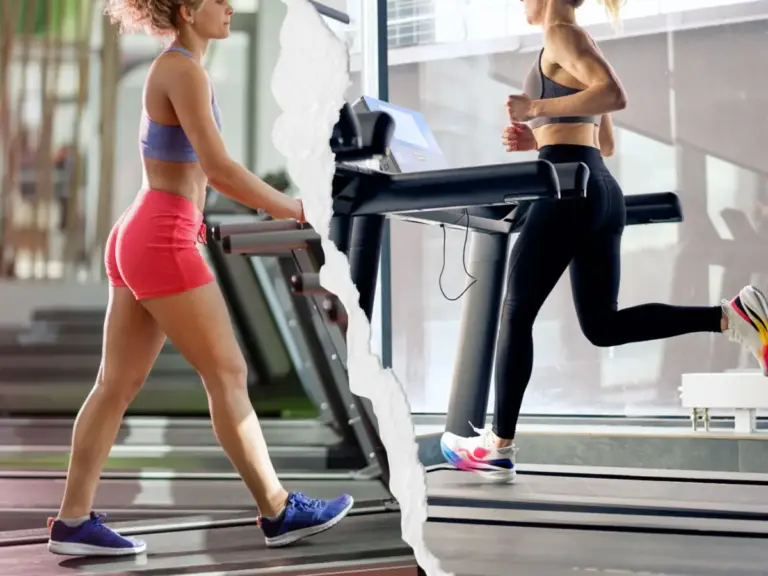
The physiological challenge compounds dramatically when a sedentary individual experiences a sudden spike in physical activity. Consider the common weekend scenario: transitioning from 6,000 daily steps during the workweek to 14,000 steps over the weekend while chasing a toddler, hiking, or tackling home improvement projects.
This sudden uptick in volume introduces a high-frequency contraction cycle to muscles that have grown stiff and unyielding. Every step requires the hip flexors to actively lift the femur against gravity. When performed thousands of times in a single day by a chronically tight muscle group, this repetitive concentric and eccentric loading creates micro-trauma, localized inflammation, and severe post-activity stiffness across the front of the hips. The body is caught in a punishing cycle: weakened and shortened by stillness, then overstressed and strained by sudden exertion.
Supporting Context & Metrics: The Biomechanics of the Couch Stretch
Traditional static stretches—such as a standard half-kneeling hip flexor stretch—often fail to provide deep enough relief for individuals with severe restrictions. This is because standard stretches frequently miss the rectus femoris, which attaches below the knee. Because the knee is bent at a 90-degree angle during standard movements, the rectus femoris remains slack unless the lower leg is elevated and manipulated in a specific alignment.
The couch stretch solves this structural limitation by placing the back leg into extreme knee flexion while simultaneously extending the hip. This dual-action stretch targets both the deep psoas and the multi-articular rectus femoris in a single, highly efficient movement.
Step-by-Step Execution: How to Perform the Couch Stretch
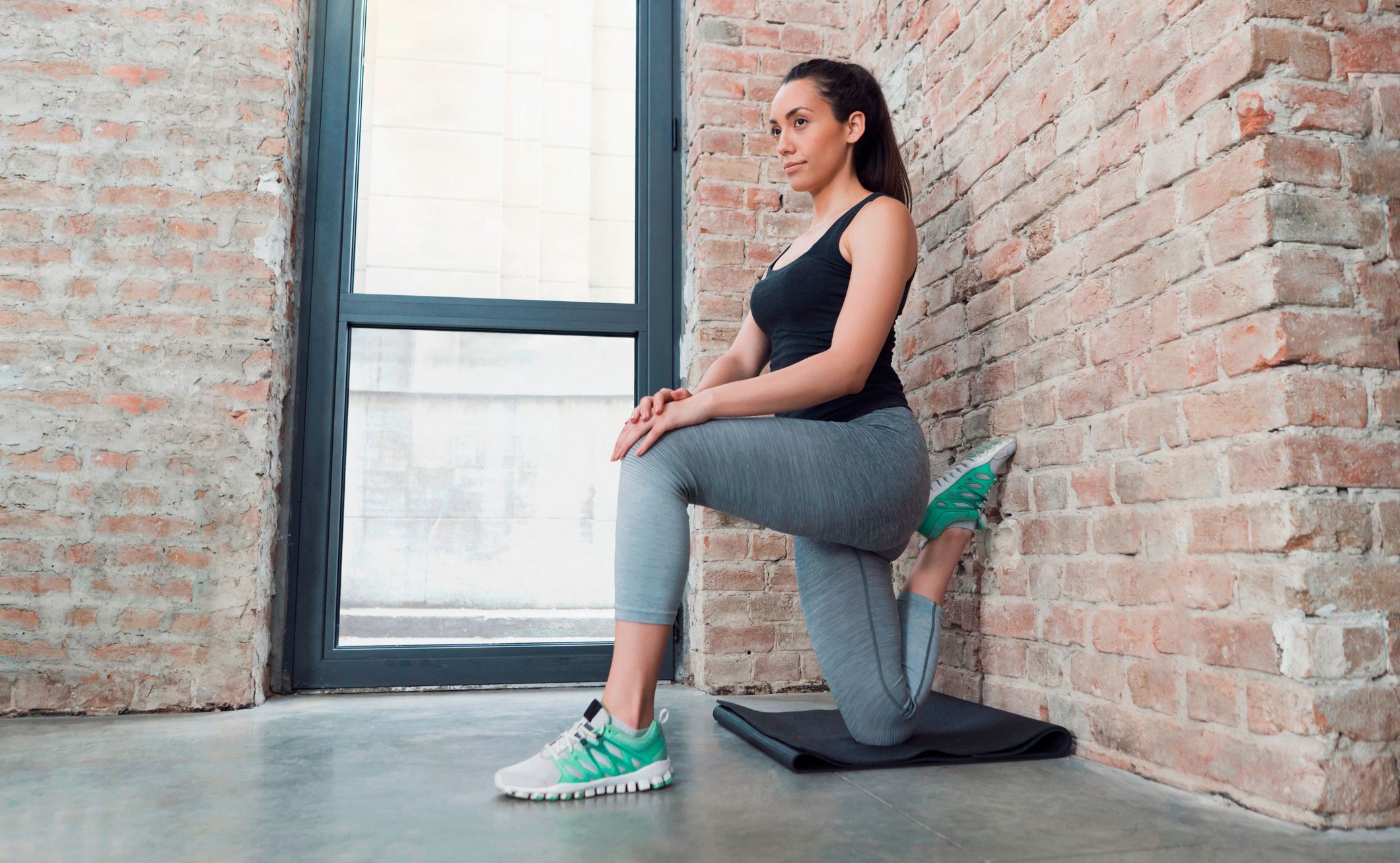
Executing the couch stretch requires careful attention to form to maximize efficacy and protect vulnerable joints.
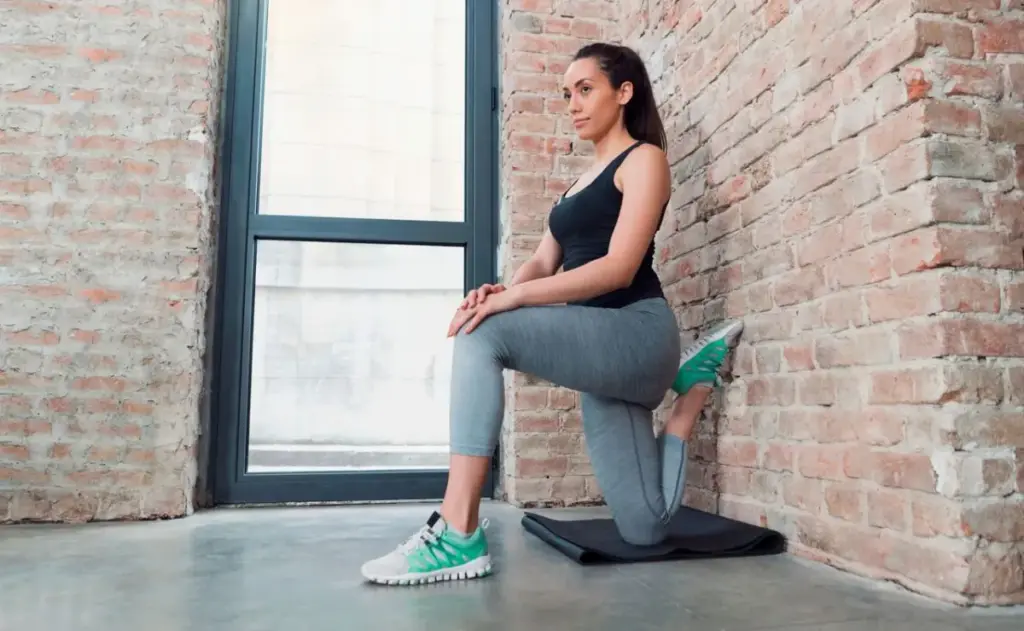
- Setup: Find a sturdy surface, such as a couch, a cushioned bench, or a wall with a yoga mat placed underneath. Position yourself facing away from the furniture or wall in a half-kneeling position.
- Knee Placement: Place your back knee as close to the crease between the seat and the backrest (or right up against the base of the wall) as your flexibility allows. The shin of your back leg should run vertically up the back of the couch or wall, with the top of your foot pointed or resting flat.
- Front Leg Positioning: Step your opposite foot forward so that your front knee is bent at a 90-degree angle, with your ankle directly beneath your knee.
- Pelvic Posterior Tilt: This is the most crucial step. Engage your core and gently tuck your tailbone under (performing a posterior pelvic tilt). You should immediately feel a deep, intense stretch running down the front of the thigh and hip of the back leg. Avoid arching your lower back; keeping the spine neutral ensures the stretch isolates the hip flexors rather than compressing the lumbar vertebrae.
- Duration and Frequency: Hold the position for 30 to 45 seconds per side, completing 1 set per session, though the movement can be repeated multiple times throughout the day.
[Couch/Wall]
    |---> Shin vertical against surface
    |---> Back knee on padded floor

[Torso & Pelvis]
    |---> Upright posture
    |---> Posterior pelvic tilt (tailbone tucked)
    |---> Core engaged (zero lumbar arching)

[Front Leg]
    |---> Foot planted firmly
    |---> Knee at 90-degree angle
Strategic Timing for Maximum Benefit
While many individuals treat mobility work as an afterthought—tacking it on only when pain or stiffness becomes unbearable—physical therapists advocate for proactive integration.
- Pre-Activity Priming: Performing the couch stretch before a long day of walking or running opens up the anterior hip capsule, allowing the femur to extend fully during the terminal stance phase of the gait cycle.
- Post-Activity Recovery: Performing the stretch after high-volume activity helps flush metabolic byproducts, lengthens fibers contracted by repetitive stepping, and prevents the onset of delayed-onset muscle soreness (DOMS).
Expert Insights and Official Perspectives
Rehabilitative medicine increasingly emphasizes structural mobility as a foundational pillar of preventative healthcare. Dr. Andy Fata-Chan, a respected physical therapist specializing in movement mechanics, champions accessible interventions that counteract the sedentary damage inflicted by modern desk jobs.
According to clinical observations shared by physical therapy leaders, the failure to address hip mobility issues extends far beyond localized anterior hip discomfort. When the hip flexors are restricted:
- Gait Efficiency Drops: The natural backward swing of the leg (hip extension) is curtailed. To compensate, the body recruits the lower back and hamstrings, leading to compensatory fatigue and potential spinal pathology.
- Neuromuscular Inhibition Builds: Reciprocal inhibition dictates that when a muscle is tight or hypertonic (such as a chronically contracted hip flexor), the opposing muscle group (the gluteus maximus) experiences neural downregulation. In simple terms, tight hips turn off your glutes, leading to "dormant butt syndrome" and power loss in athletic and daily movements.
- Postural Cascades Occur: Forward-pulling hips disrupt the alignment of the entire kinetic chain, placing abnormal shear forces on the knees, lumbar spine, and even the thoracic region.
Clinical consensus dictates that mobilizing the hip complex should not be viewed as an optional luxury for elite athletes, but rather as basic hygienic maintenance for anyone who spends hours sitting or walking.
Future Outlook: Integrating Mobility into the Daily Routine
As public awareness of ergonomic health grows, the integration of targeted mobility work into daily routines is shifting from fringe fitness advice to mainstream preventative medicine. The future of health and wellness lies in micro-interventions—short, highly targeted movements performed consistently throughout the day rather than relying solely on sporadic, hour-long weekend workouts.
Overcoming Contraindications: Modifying for Knee Sensitivity
It is important to note that the couch stretch is an aggressive movement that places significant stress on the patellar tendon and knee joint structures. For individuals with pre-existing knee pain, patellofemoral tracking issues, or acute joint sensitivity, forcing the knee into extreme flexion against a couch or wall can be counterproductive or painful.
For these individuals, physical therapists recommend regressing to a static lunge stretch (often performed in a half-kneeling position with the back foot on the floor rather than elevated). This physio-approved alternative provides a comparable opening of the hip flexors and psoas without placing excessive shear stress on the knee joint.
Building a Sustainable Habit
To safeguard against the cumulative toll of sitting and walking, individuals are encouraged to adopt a sustainable hip-health framework:
- Audit Your Environment: Ensure workstation ergonomics encourage movement, and take regular micro-breaks to stand and walk every 45 to 60 minutes.
- Pre-Emative Stretching: Do not wait for pain to appear. Integrate a 30-to-45-second couch stretch (or static lunge variation) into days marked by heavy sitting or high step counts.
- Listen to Your Body: Distinguish between the productive, deep muscular tension of a good stretch and sharp joint pain. Modify movements immediately if discomfort arises in the knees or lower back.
By respecting the anatomical needs of the hip complex and utilizing evidence-based movements like the couch stretch, individuals can bridge the gap between sedentary desk work and active, high-volume lifestyles—ensuring fluid, pain-free movement for years to come.