EXECUTIVE OVERVIEW
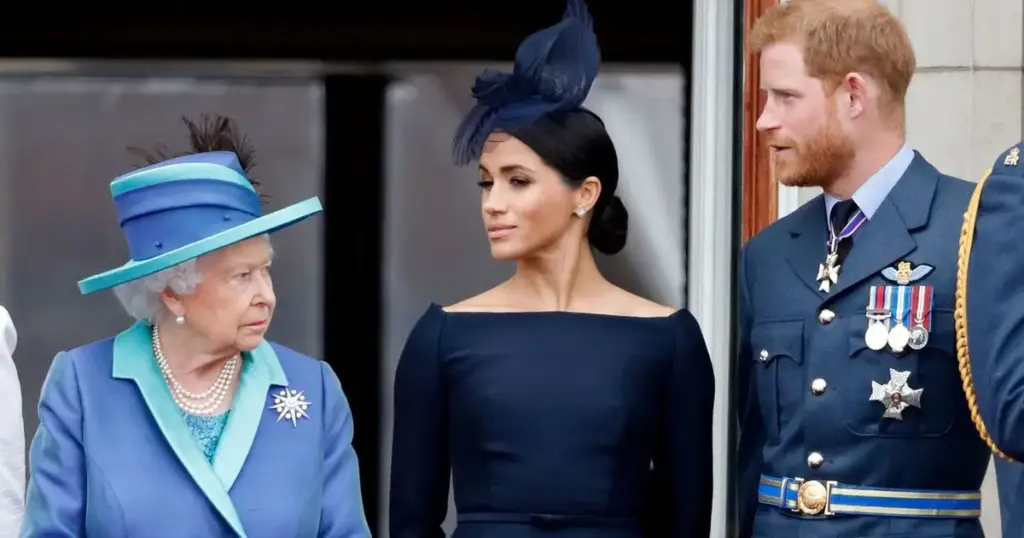
The reverberations of January 2020 continue to echo through the gilded corridors of Buckingham Palace and across the Atlantic in California. When Prince Harry and Meghan Markle, the Duke and Duchess of Sussex, announced their momentous decision to step down as senior working members of the British Royal Family, it sent shockwaves through the global media landscape. The public narrative immediately focused on institutional fracture, protocol breaches, and an unprecedented rupture within the House of Windsor.
However, royal biographers and seasoned historians suggest a more nuanced reality. According to prominent royal author Andrew Morton, the late Queen Elizabeth II—a monarch renowned for her stoicism, profound sense of duty, and deep familial pragmatism—would have ultimately understood, and perhaps even quietly supported, the Sussexes’ desire to forge an independent path.
This deep-dive analysis examines the anatomy of the 2020 royal exit, known colloquially as "Megxit," tracing it from the initial Instagram announcement to the historic Sandringham Summit. It explores historical precedents within the royal family—specifically Queen Elizabeth’s own formative years living abroad in Malta—to offer an authoritative reassessment of how the longest-reigning British monarch viewed the modernizing, albeit turbulent, evolution of her family.
1. The Anatomy of an Exit: Breaking Down the 2020 Announcement
On January 8, 2020, the status quo of the British monarchy shifted irrevocably. Without the customary prior consultation typical of major royal announcements, Prince Harry and Meghan Markle used their official Instagram account—@sussexroyal—to broadcast a seismic shift in their professional and personal lives.
The statement read, in part:
"After many months of reflection and internal discussions, we have chosen to make a transition this year in starting to carve out a progressive new role within this institution. We intend to step back as ‘senior’ members of the Royal Family and work to become financially independent, while continuing to fully support Her Majesty The Queen."
The shock was immediate. For an institution built upon centuries of unyielding tradition, rigid protocols, and centralized communication channels managed by palace press offices, a digital announcement bypassing traditional media gatekeepers was nothing short of revolutionary. The couple outlined an ambitious blueprint: splitting their time geographically between the United Kingdom and North America, carving out private financial independence through commercial ventures, and launching a new charitable entity, all while maintaining their patronage obligations to the Crown.
Public reaction was polarized. To ardent royal traditionalists, the move was viewed as a betrayal of duty—a prioritization of celebrity and personal comfort over lifelong service to the nation. To supporters, particularly younger demographics, it was seen as a courageous, modern attempt to escape an intrusive tabloid press and create a healthier environment for a young family. Behind closed doors, however, the reaction from senior royals was a mixture of deep personal hurt and institutional alarm.

2. Historical Precedent: The Queen’s Time in Malta and the Parallel of Private Life
Despite the initial friction, royal experts have drawn fascinating parallels between the Sussexes’ yearning for a private family existence and the early married life of Queen Elizabeth II herself.
Speaking on The Mirror’s podcast, Pod Save the King, royal author Andrew Morton argued that the late Queen possessed a personal perspective that would have fostered profound empathy for her grandson’s situation. Long before she ascended the throne in 1952, then-Princess Elizabeth experienced a rare, relatively unshielded taste of ordinary married life.
Between 1949 and 1951, while Prince Philip was stationed in Malta as a Royal Navy officer, Princess Elizabeth lived there for extended periods as a naval wife. Residing at Villa Guardamangia on the outskirts of Valletta, she enjoyed a degree of relative anonymity that was impossible within the fishbowl of British palace life. She shopped at local grocery stores, drove small cars, attended parties at the naval base, and lived without the suffocating weight of twenty-four-hour public scrutiny.
Morton noted that Elizabeth II cherished those years as some of the happiest and most formative of her life. Consequently, her lived experience gave her an innate understanding of why a young royal couple might crave the freedom to raise their children away from the relentless pressure cooker of the British press corps. While the institutional mechanism of the monarchy demanded unbroken public presence, the grandmother behind the crown reportedly held a deeper, more empathetic capacity for the human desire for space and autonomy.
3. The Institutional Crisis: The Road to the Sandringham Summit
The unfiltered nature of the Sussexes’ announcement triggered an emergency crisis management protocol within the royal household. The strategy meetings that followed were swift, intense, and deeply personal.
Within days of the Instagram post, Queen Elizabeth II took decisive control of the situation. She summoned an urgent summit at her private Norfolk estate, Sandringham. The gathering—now historically immortalized as the Sandringham Summit—brought together the monarch, Prince Charles (now King Charles III), Prince William, and Prince Harry. Meghan Markle, who had returned to Canada, participated via telephone.
The summit was designed to negotiate the terms of what would become a complex, unprecedented transitional arrangement. The negotiations centered on critical operational questions:
- Financial Autonomy: How could the Duke and Duchess earn independent incomes without creating perceived conflicts of interest or commercializing the royal brand?
- Security and Funding: Who would pay for the family’s round-the-clock international security detail?
- Use of Titles: Could they retain their "Royal Highness" styles while operating outside official institutional duties?
The outcome of the summit was a formal, albeit brittle, compromise. In a statement issued on January 18, 2020, Buckingham Palace announced that the couple would no longer use their HRH styles, would cease receiving public funds for royal duties, and would repay the Sovereign Grant expenditures utilized for the renovation of their Windsor home, Frogmore Cottage.
4. Official Statements and Divergent Perspectives
The formal closure of the summit brought forth carefully crafted official statements designed to project unity while acknowledging the reality of the departure.

Queen Elizabeth II issued a personal and notably warm statement that sought to temper the public narrative of family warfare:
"Harry, Meghan and Archie will always be much-loved members of my family. I recognise the challenges they have experienced as a result of intense scrutiny over the last two years and support their wish for a more independent life."
This sentiment of personal affection stood in stark contrast to the rigid institutional boundaries set by the agreement. Yet, the emotional complexity of the period did not end with the Queen’s statement.
In subsequent years, deeper revelations regarding the inner workings of the summit emerged. Reports highlighted by outlets such as The Telegraph suggested that Prince Harry felt "blindsided" by certain aspects of the final institutional messaging—particularly the stripping of active military patronages and the public emphasis on their formal separation from the working firm. While the Queen’s public words were designed to soothe and protect her grandson, the bureaucratic apparatus of the palace operated with a strict, unyielding adherence to constitutional protocol: you cannot be half-in and half-out of the working monarchy.
5. Future Outlook: The Legacy of "Megxit" on the Modern Monarchy
Years removed from the dramatic events of 2020, the long-term ramifications of Prince Harry and Meghan Markle’s departure continue to reshape the British monarchy under the reign of King Charles III.
The exit catalyzed broader conversations about the modernization, scaling down, and future sustainability of the "slimmed-down monarchy." With fewer working royals available to shoulder the vast multitude of patronages, military associations, and international engagements, the remaining senior members—principally Prince William and Princess Catherine—face an increasingly demanding schedule.
Furthermore, the relationship between the Sussexes and the wider royal family remains complex and distant, defined by transatlantic separation, bestselling memoirs, and high-profile media interviews. Yet, Andrew Morton’s assessment serves as an important reminder of the human element behind the institution.
As the House of Windsor navigates an era of rapid social change, digital media saturation, and shifting public expectations, the fundamental tension between personal happiness and institutional duty remains as potent as ever. Queen Elizabeth II’s reported underlying empathy for her grandson’s plight underscores a timeless truth: even within the world’s most enduring and traditional institution, the desire for personal freedom and family sanctuary is a universal human constant.