Executive Overview
As adults cross the threshold into their thirties, a silent and often overlooked physiological shift begins to take place beneath the surface. Science tells us that individuals naturally lose between 3% and 8% of their muscle mass every single decade after the age of 30—a progressive condition known as sarcopenia. While this decline is a natural part of human aging, its consequences can be profound. Reduced muscle mass directly impacts basal metabolic rate, decreases overall functional mobility, and significantly elevates the risk of falls, bone fractures, and debilitating injuries later in life.
For decades, cultural narratives surrounding fitness have often steered aging adults—particularly midlife women—away from heavy resistance training and toward low-intensity steady-state cardio or avoiding exercise altogether out of fear of injury. However, a modern paradigm shift is redefining how we approach longevity. Lifting weights has emerged as arguably the single most effective intervention to future-proof the human body against the physical degradation of aging.
Enter visionaries like Holly Fivian, founder of Holsm, a specialized strength workout platform designed specifically for midlife women. Fivian and a growing community of physical therapists, kinesiologists, and personal trainers are championing strength training not merely as an aesthetic pursuit, but as a vital form of preventative healthcare. By introducing fundamental movement patterns paired with accessible equipment like dumbbells, beginners can dramatically reverse muscle loss, enhance bone density, and reclaim physical autonomy. This article provides an in-depth look at the science of muscle preservation, expert-backed methodologies for easing into resistance training, and a complete, step-by-step beginner dumbbell workout designed by Fivian to safely kickstart your fitness journey.
Detailed Chronology: The Evolution of Midlife Fitness and Resistance Training
To understand the current renaissance of strength training among older adults, one must examine how fitness culture has evolved over the past half-century.
The Era of Aerobics and Cardio Dominance (1980s–1990s)
For generations, the fitness industry overwhelmingly prioritized cardiovascular health. The 1980s and 1990s were dominated by high-impact aerobics, jogging, and low-calorie diets. While these modalities offered cardiovascular benefits, they largely ignored the skeletal-muscular system’s structural needs. Midlife individuals—women, in particular—were frequently advised to stick to light walking or bodyweight calisthenics, while heavy lifting was culturally stigmatized as something reserved for young male bodybuilders.
The Shift Toward Functional Longevity (2000s–2010s)
As sports science advanced, researchers began publishing longitudinal studies tracking metabolic health, bone mineral density, and sarcopenia. The medical community realized that chronic conditions such as osteoporosis, type 2 diabetes, and age-related frailty were intimately tied to declining muscle mass. The paradigm began to shift from "exercising to look good" to "exercising to function independently." Personal trainers began recognizing that older adults not only could lift weights safely, but needed to do so to maintain everyday capabilities like carrying groceries, climbing stairs, and rising from a chair.
The Digital Fitness and Niche Platform Boom (2020s–Present)
The post-pandemic digital fitness landscape revolutionized accessibility. Platforms like Holsm emerged to fill a glaring market gap: inclusive, science-backed strength programs tailored specifically to the physiological realities of midlife women experiencing perimenopause and menopause. No longer forced to navigate intimidating, male-dominated weight rooms, beginners now have access to targeted, expert-led instruction that demystifies barbell and dumbbell training, bringing professional coaching directly into living rooms around the world.
Supporting Context & Metrics: The Science of Sarcopenia and Muscle Preservation
The human body is an adaptive organism. Without adequate mechanical tension—the physical stress placed on muscles through resistance—it gradually dismantles unneeded tissue to conserve energy. This process accelerates rapidly if left unchecked.
The Numbers Behind Muscle Loss
- 3% to 8%: The average percentage of muscle mass lost per decade after turning 30.
- Accelerated Decline: After the age of 60, this rate of muscle degradation often accelerates significantly, leading to diminished balance, slower walking speeds, and a higher incidence of metabolic syndrome.
- Bone Mineral Density: Resistance training doesn’t just build muscle; it applies mechanical load to the skeleton, signaling osteoblasts (bone-forming cells) to lay down new bone matrix. This makes weightlifting one of the best defenses against osteopenia and osteoporosis.
From Bodyweight to External Resistance
For individuals who are completely new to physical conditioning, jumping straight into heavy barbells can be overwhelming and counterproductive. Holly Fivian emphasizes that beginners should always start by mastering foundational movement patterns using just their body weight.
"Once these movement patterns become habitual and you know what good form looks and feels like, you can start playing around with movement," Fivian explains. "You can add heavier weights, change your arm or hand position, try different squat, hinge, push, pull and lunge variations, or change your tempo or range of movement. This is where training becomes fun."
Transitioning from bodyweight movements (such as air squats and wall push-ups) to external resistance (such as dumbbells) represents the critical second phase of physical development. Dumbbells allow for unilateral training (working one side of the body independently), improve stabilizer muscle engagement, and offer incremental weight adjustments that suit any fitness level.
Official Trainer Insights & Methodology: Holly Fivian’s Beginner Dumbbell Workout
Designed specifically to bridge the gap between novice bodyweight exercises and comprehensive strength training, this routine focuses on the five fundamental human movement patterns: squatting, hinging, lunging, pushing, and pulling.
Before beginning, select a pair of manageable medium dumbbells. Each exercise in this circuit should be performed for 30 seconds, followed by 15 seconds of rest, repeated for a total of 3 sets.
1. Goblet Squat
- Sets: 3 | Work Time: 30 seconds | Rest: 15 seconds
- Primary Muscles Targeted: Quadriceps, glutes, core, upper back.
- Execution: Hold a single dumbbell vertically against your chest like a goblet, cupping the upper end with both hands. Stand with feet slightly wider than shoulder-width apart. Keeping your chest proud and core braced, push your hips back and bend your knees to lower your body into a deep squat. Push back up through your heels to return to the starting position.
- Trainer Tip: "Think: knees gently out, heels grounded, glutes on." Maintaining outward pressure on your knees prevents them from caving inward, protecting your joints and maximizing glute activation.
2. Romanian Deadlift (RDL)
- Sets: 3 | Work Time: 30 seconds | Rest: 15 seconds
- Primary Muscles Targeted: Hamstrings, glutes, erector spinae (lower back).
- Execution: Hold a dumbbell in each hand in front of your thighs with an overhand grip. Stand tall with a soft bend in your knees. Keeping your spine neutral and shoulders pulled back, hinge at your hips, sending your glutes backward toward the wall behind you. Lower the weights along the front of your legs until you feel a deep stretch in your hamstrings, then squeeze your glutes to drive your hips forward and return to standing.
- Trainer Tip: "This is a hinge rather than a squat. Think about sending the hips backwards." Distinguishing the hip hinge from a squat is crucial for protecting the lower back and properly loading the posterior chain.
3. Alternating Dumbbell Goblet Forward Lunge
- Sets: 3 | Work Time: 30 seconds | Rest: 15 seconds
- Primary Muscles Targeted: Quadriceps, glutes, calves, core stabilizers.
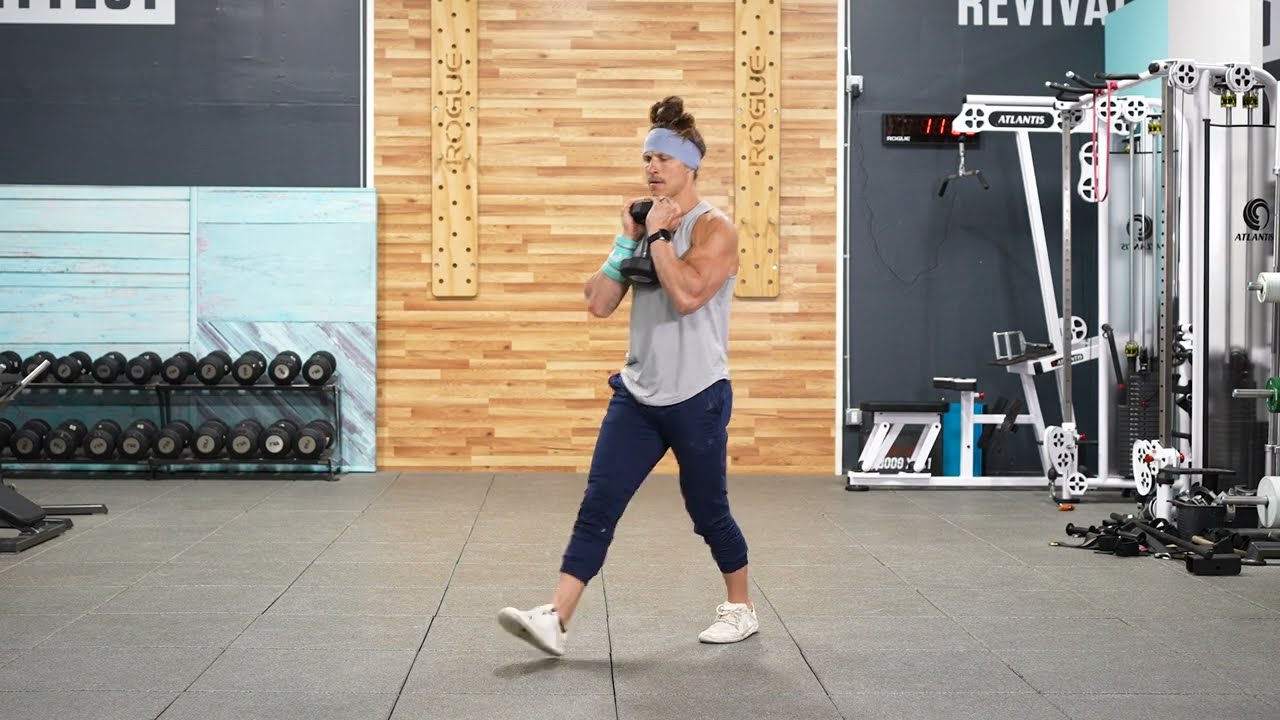
- Execution: Hold a single dumbbell vertically at your chest (goblet position). Step forward with your right foot and lower your hips until both knees are bent at approximately a 90-degree angle. Your back knee should hover just above the floor without resting on it. Push off your front foot to return to the starting position, then alternate to the left leg.
- Trainer Tip: "Use a wall or chair for additional stability if needed." Balance can be a hurdle for beginners; utilizing external support ensures safety and allows you to focus on muscle engagement rather than wobble control.
4. Dumbbell Floor Press (or Overhead Press)
- Sets: 3 | Work Time: 30 seconds | Rest: 15 seconds
- Primary Muscles Targeted: Pectorals (chest), anterior deltoids (shoulders), triceps.
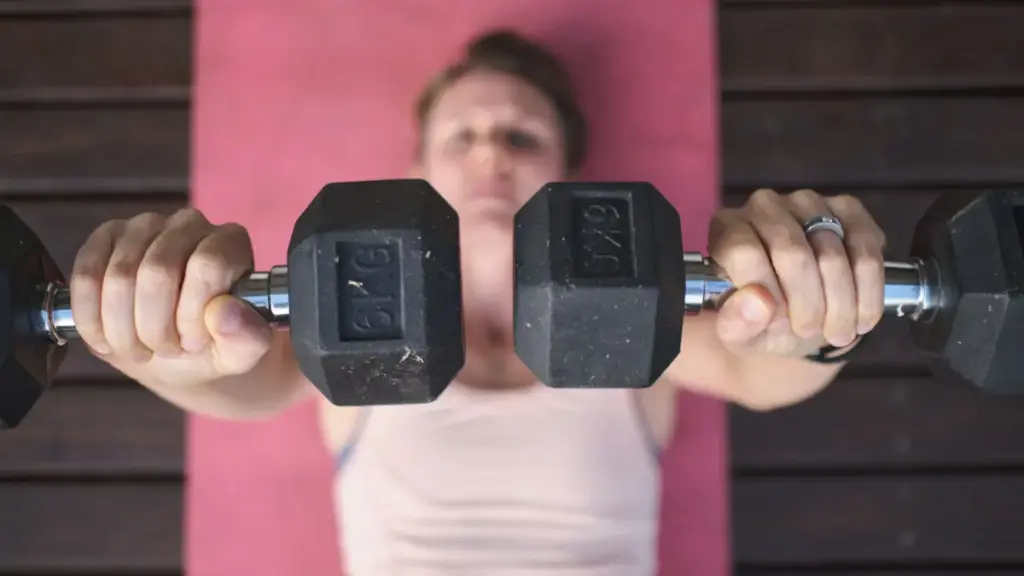
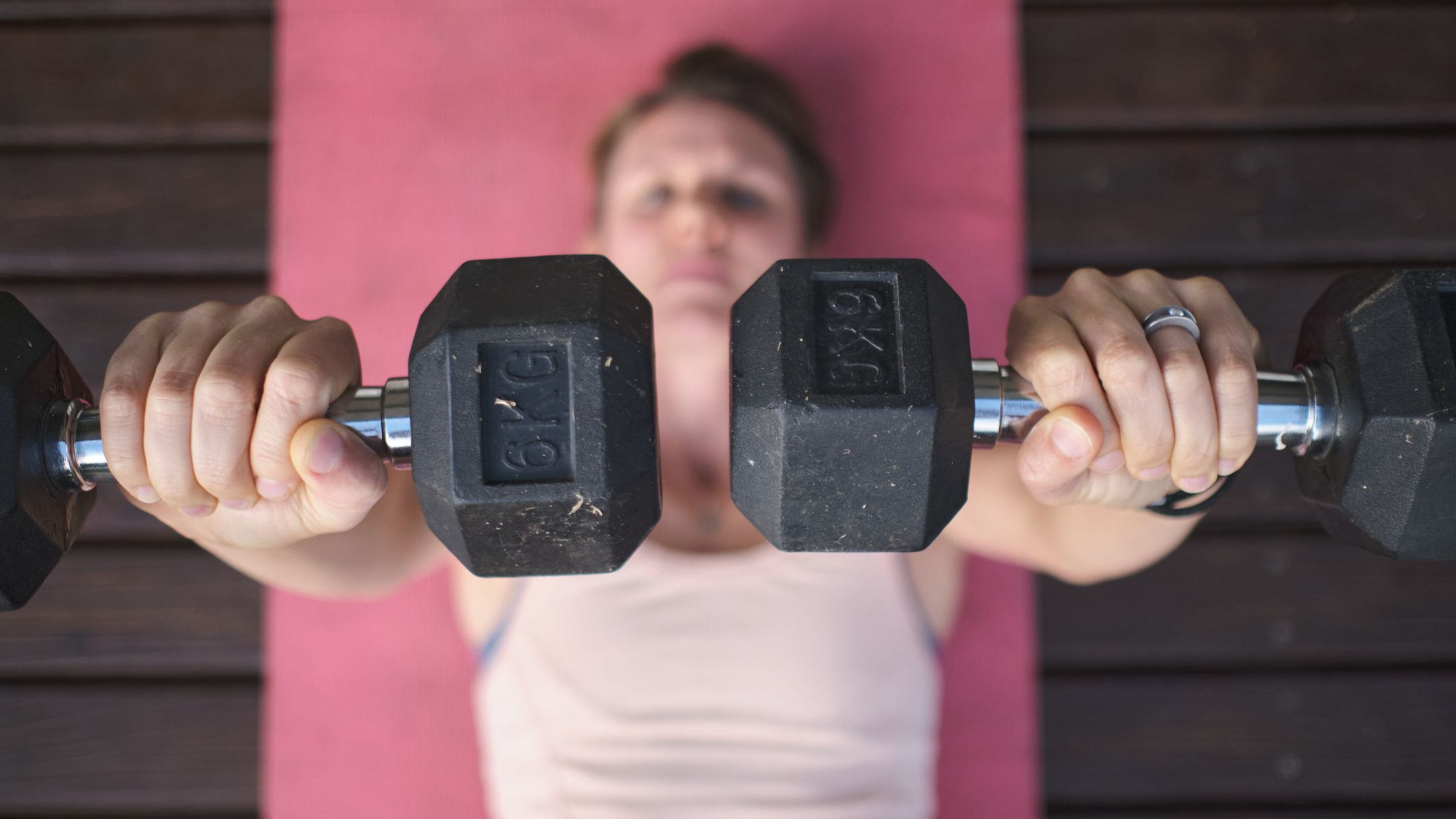
- Execution: Lie flat on your back on the floor with knees bent and feet flat, holding a dumbbell in each hand at chest level. Press the weights straight up toward the ceiling until your arms are fully extended, then slowly lower them back down with control until your upper arms touch the floor. (Alternatively, perform a standing overhead press).
- Trainer Tip: "Engage the core by tucking the ribs and the pelvis before pressing the dumbbells…" Keeping your core locked prevents lower back arching and ensures the force is generated cleanly through the upper body.
5. Bent-Over Dumbbell Row
- Sets: 3 | Work Time: 30 seconds | Rest: 15 seconds
- Primary Muscles Targeted: Latissimus dorsi (lats), rhomboids, rear deltoids, biceps.
- Execution: Hold a dumbbell in each hand. Hinge forward at the hips at roughly a 45-degree angle, keeping your back completely flat and core braced. Let your arms hang straight down. Pull the dumbbells up toward your hip creases, driving your elbows back and squeezing your shoulder blades together at the top of the movement. Lower the weights slowly.
- Trainer Tip: "Keep your head in line with your spine, shoulders away from your ears and torso strong and still. The movement comes from your arms and back, not from swinging your body to get the weights up." Strict form prevents momentum from doing the work, ensuring maximum muscular stimulation.
Future Outlook: The Next Generation of Longevity and Preventative Medicine
As healthcare costs rise and global populations age, the medical community is placing unprecedented emphasis on preventative lifestyle medicine. The old adage "use it or lose it" has never been more biologically accurate.
Looking forward, the integration of structured resistance training into standard healthcare recommendations for midlife adults is gaining significant momentum. Physicians are increasingly prescribing strength workouts alongside nutritional guidance to combat metabolic decline, improve mental health, and preserve cognitive function. Platforms like Holsm and expert trainers like Holly Fivian are spearheading a cultural shift that normalizes heavy lifting across all demographics.
Ultimately, lifting weights in midlife is not about chasing fleeting aesthetic ideals—it is an investment in personal freedom. By building a robust foundation of muscle, bone density, and functional strength today, individuals can safeguard their independence, ward off injury, and ensure that their later decades are characterized by vitality, strength, and resilience.