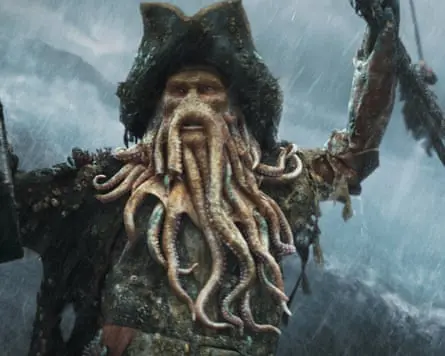
At the age of 76, Bill Nighy remains one of contemporary cinema’s most idiosyncratic and universally cherished figures. With a career spanning decades across theatre, television, and major motion pictures, the British actor has cultivated an unmistakable screen persona defined by an elegant blend of diffidence, razor-sharp comic timing, and profound emotional intelligence. Whether portraying a fading, self-deprecating rock star in Love Actually, a terminally ill, buttoned-up civil servant in Living—a performance that garnered him a historic Academy Award nomination—or hiding behind a digitally rendered veil of sea-monster tentacles in the Pirates of the Caribbean franchise, Nighy has consistently avoided the predictable traps of leading-man vanity.
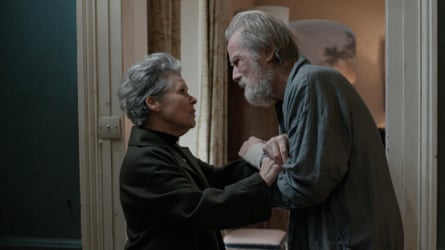
His latest cinematic venture, the genre-bending family drama & Sons, places him squarely in unfamiliar emotional territory. Playing AN Dyer—a reclusive, abrasive, and misanthropic literary patriarch whose sudden summons of his estranged family carries an unexpected science-fiction twist—Nighy tackles a character defined by cruelty and emotional absence. It is a striking departure from the endearing, sweet-natured figures audiences typically associate with him, yet it offers a masterclass in the kind of restrained, unflashy acting he has spent a lifetime refining.
Beyond the silver screen, Nighy’s cultural footprint continues to expand through unexpected avenues. His critically acclaimed, off-the-cuff podcast Ill-Advised—in which he serves as a meandering, droll agony uncle—has captured hundreds of thousands of listeners, earning him the prestigious Podcast of the Year accolade at the 2026 Broadcasting Press Guild Awards. In an exclusive reflection on his life, art, and enduring aversion to modern digital conveniences like Zoom and working lunches, Nighy proves that his off-screen persona is just as compelling, witty, and unapologetically singular as any character he has ever inhabited.
Detailed Chronology: From Caterham to the Silver Screen
The trajectory of William Francis Nighy is a winding narrative rooted in unassuming beginnings, accidental detours, and a lifelong fascination with the written word that predated his ambitions for the stage.
Early Years and Literary Aspirations
Born in Caterham, Surrey, a young Nighy was raised in a modest environment that fostered an early, intense romanticism for literature. Inspired by American literary giants such as Ernest Hemingway and F. Scott Fitzgerald, Nighy’s youthful worldview was upended at age 14 by an English teacher named Mr. Weir at his Catholic grammar school. Upon suggesting that the teenage Nighy try his hand at writing a novel, the instructor planted a seed that would alter the course of the boy’s imagination.
Before finding his footing in performance, Nighy sought employment in the literary ecosystem. At 15, he secured a position at the hunting and fishing magazine The Field. His duties were decidedly unglamorous: changing roller towels in the ladies’ typing pool. Rather than harboring early signs of executive ambition, Nighy frequently found himself the subject of amusement for the female typists, who delighted in testing the teenager’s legendary propensity for blushing by watching him struggle with the tricky mechanics of the washroom towels. His tenure at the magazine also provided an early lesson in corporate protocol; after being spotted by the CEO jumping up and down with excitement upon seeing a Rolls-Royce drive past on the street, Nighy was swiftly reprimanded for displaying unseemly enthusiasm.
The Parisian Interlude
Following the well-trodden path of countless aspiring artists before him, a young Nighy fled to Paris to fulfill his romanticized destiny as a writer. Settling near the iconic Left Bank bookstore Shakespeare and Company, he envisioned a lifestyle of churning out brilliant prose and finding effortless romance. Reality, however, intervened swiftly.
When the literary inspiration failed to materialize, Nighy found himself begging on the Trocadéro to make ends meet. It was only when an acquaintance casually suggested he try drama school that the trajectory of his life shifted. What began as a practical pivot toward acting gradually eclipsed his ambitions of penning the great European novel—though Nighy is quick to note that he has never officially abandoned the dream, attributing his lack of a published manuscript to a world-class talent for procrastination.
The Breakthrough and Television Infamy
Nighy’s transition into professional acting was marked by relentless stage work across regional British theatres before breaking into television and film. Throughout the 1980s and 1990s, he built a reputation as a versatile character actor of exceptional pedigree.
A major turning point arrived in 1991 with the provocative BBC drama series The Men’s Room. Nighy starred as a libidinous, fiercely charismatic academic whose explicit, unvarnished scenes sent shockwaves through British television. The performance was so charged that it drew formal censure from the Broadcasting Standards Council, cementing Nighy’s unexpected status as an unlikely sex symbol—a mantle later echoed by contemporaries like Cate Blanchett, who famously queried which thinking Western woman could resist his distinct charm.
Cinematic Maturity and Accolades
As his career progressed into the 2000s, Nighy achieved global recognition. Richard Curtis’s 2003 romantic comedy Love Actually introduced him to a mass audience as Billy Mack, an ageing, irreverent rock star who candidly describes his festive comeback single as a "festering turd." The role won him a BAFTA Award and forever embedded him in the British cinematic consciousness.
Blockbusters followed, including his unforgettable motion-capture performance as the tentacle-faced villain Davy Jones in the Pirates of the Caribbean franchise. Yet, it is his work in intimate, character-driven dramas that has defined his critical legacy. Whether playing a heartbroken husband in Lawless Heart, a lonely Scrabble enthusiast in Sometimes Always Never, or the deeply repressed, mortality-facing civil servant Mr. Williams in Oliver Hermanus’s Living (2022)—a role that secured his first Academy Award nomination—Nighy has consistently explored the quiet dignity of ordinary people facing extraordinary emotional landscapes.
Supporting Context & Metrics: The Mechanics of an Icon
To understand Nighy’s sustained relevance in an industry obsessed with youth and digital saturation, one must examine the specific metrics and philosophies that govern his professional and personal life.
Digital Abstinence and Analog Preferences
While modern actors are expected to maintain an active, highly curated digital footprint across social media platforms, Nighy has deliberately drawn a hard line against the encroachment of digital communication in his personal routine.
The Zoom Ban: Nighy has officially retired from video-conferencing platforms. Citing an escalating sense of malaise associated with virtual face-to-face interactions, he has drawn a firm boundary against Zoom calls, preferring traditional audio telephony or face-to-face encounters.
The Texting Paradox: Ironically, Nighy is a self-confessed enthusiast of text messaging, boasting of his early proficiency on classic Nokia handsets. However, his embrace of digital text is strictly moderated:
Emojis: Historically opposed on philosophical grounds, he permits a very specific, eccentric shortlist of exceptions. Approved emojis include the flamingo, the purple dahlia, the leaping shark (occasionally paired with a leaping dolphin), and the mid-swing golfer for celebratory messages. "Smileys" remain strictly forbidden.
The No-Work-Lunch Rule: At age 76, Nighy has streamlined his professional calendar by eliminating working lunches entirely, noting that combining food with contractual or creative discussions needlessly complicates the digestion of both.
Podcast Phenomenon: Ill-Advised
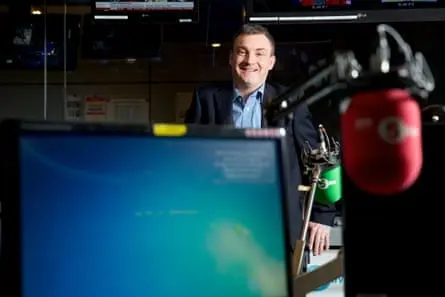
In October 2024, Nighy expanded into the audio landscape with his weekly podcast, Ill-Advised, which has rapidly become a cultural touchstone.
Audience Metrics: The podcast commands a robust monthly listening audience exceeding 300,000 subscribers.
Critical Acclaim: In early 2026, Ill-Advised was crowned Podcast of the Year by the Broadcasting Press Guild, an extraordinary achievement for a project its host insists he tried desperately not to make.
Format: Eschewing preparation or pre-screening, Nighy fields listener queries blind, offering meandering, droll advice on subjects ranging from wardrobe mechanics (such as lounge suit cuts and shirt collars) to avoiding social faux pas. The unscripted, rampling nature of the show captures his authentic conversational cadence, serving as a verbal memoir disguised as an agony-uncle broadcast.
Official Statements and Industry Insights
In conversation, Nighy exhibits a rare combination of self-deprecating wit and fierce intellectual clarity regarding the craft of acting. Discussing his role as the tyrannical novelist AN Dyer in & Sons—where he stars alongside Johnny Flynn, George MacKay, Noah Jupe, and Imelda Staunton—Nighy addressed the romanticized trope of the "tortured genius."
"It’s like when footballers behave badly on the pitch and people say, ‘Temperament is part of his genius.’ Give me a break. That’s anathema to me. I don’t believe it in the least."
Dyer’s character attempts to justify a lifetime of emotional absence and abrasive cruelty under the banner of literary output and the modest parenting goal to "do no harm." Reflecting on his own experience raising his daughter, actor-director Mary Nighy (with former partner Diana Quick), the actor acknowledges that parenting is an improvised art form:
"Blimey. It’s a long time ago. But no. Not really. You make it up as you go along. You make mistakes, then correct them, and hopefully you arrive at something that works. My parents were not oppressive or unkind, and I didn’t want to be either."
When considering his place within the cinematic pantheon, Nighy rejects the pressure to constantly reinvent himself through radical stylistic departures, choosing instead to admire the minimalist restraint of idols like Steve McQueen.
"That I’ll never be Steve McQueen. You need a lot of confidence to do what he did. No fireworks, no reaching for prizes. It’s a kind of reckless restraint."
It is a description that critics frequently apply to Nighy himself: an actor who achieves maximum emotional resonance not through histrionics or explosive vanity, but through a careful, understated mastery of craft. Furthermore, his professional boundaries are absolute when it comes to historical costume dramas: when asked what single factor guarantees he will turn down a script, his response is instantaneous and unequivocal: "Togas."
Future Outlook
As & Sons prepares for its theatrical rollout via Icon Film Distribution, Bill Nighy shows no signs of slowing down, even as he systematically curates out the aspects of modern celebrity culture that fail to interest him.
The immediate future holds the continued expansion of his award-winning podcast Ill-Advised, which recently launched its third successful series, proving that his distinctive voice—both literal and artistic—remains in high demand. On the cinematic front, his willingness to step into darker, more abrasive territory as AN Dyer signals a thrilling new chapter in his late-career output, proving that the man who once spent his youth begging on the Trocadéro is still capable of subverting expectations.
Whether he is debating the aesthetic merits of the purple dahlia emoji, musing on the proper geometry of a shirt collar, or delivering yet another masterclass in understated cinematic characterization, Bill Nighy continues to operate entirely on his own terms. Devoid of artifice and allergic to pretension, his enduring appeal rests on a simple, timeless truth: in an industry fueled by noise, his quiet, reckless restraint is a rare and irreplaceable work of art.