Executive Overview
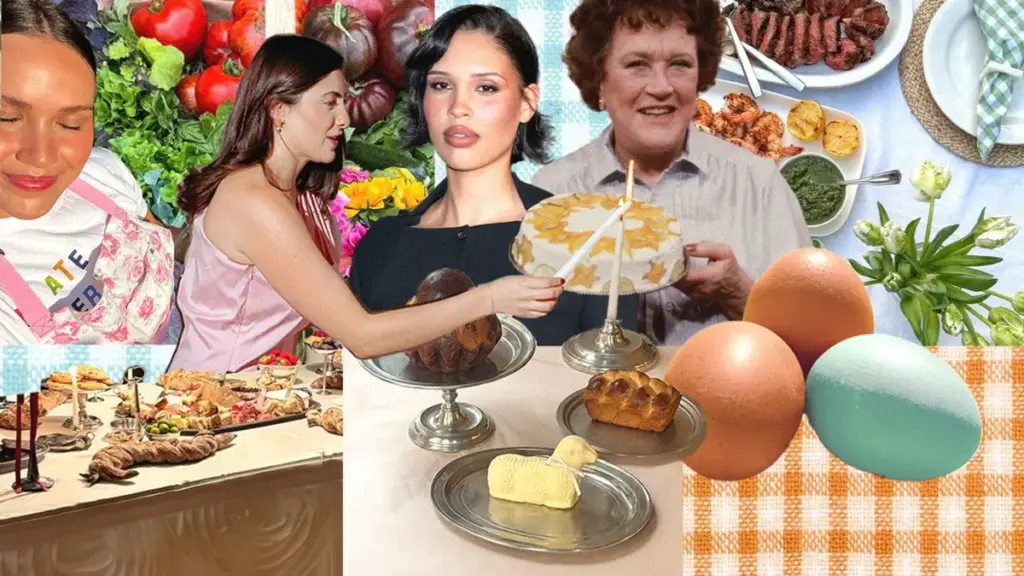
On a bright spring morning in the Hamptons, food media personality Meredith Hayden spends her morning selecting hydrangeas at a local garden center, planning her seasonal vegetable patch, testing recipes for dinner, and tending to her dog, Poppy. Scroll through the digital feeds of Hannah Neeleman—better known as the Juilliard-trained ballerina and multi-million-following creator behind Ballerina Farm—and one encounters a strikingly similar visual vocabulary: from-scratch panna cotta, fresh greenhouse flowers, hand-rolled pie crusts, and a life entirely anchored to the hearth.
To the casual observer scrolling through social media, distinguishing between these two creators can feel nearly impossible. Both women inhabit an idyllic visual ecosystem defined by artisanal foods, vintage linens, and a profound reverence for agricultural rhythms. Yet, beneath this shared surface lies a profound cultural tension. One woman represents the autonomous, self-made digital entrepreneur redefining food media; the other serves as the most visible global icon of the "tradwife" (traditional wife) movement, a phenomenon inextricably linked to theological gender roles and conservative domestic politics.
This article investigates the complex blurring lines between modern digital homemaking content, the hyper-feminine "cottagecore" aesthetic, and the sociopolitical implications of the tradwife movement. By examining the commercial strategies of breakout culinary figures, high-fashion runway interpretations, and the historical lineage of domesticity from Betty Friedan to Julia Child, we explore how traditional symbols of home economics have been decoupled from fixed political meanings—and why contemporary audiences struggle to define where personal agency ends and ideological performance begins.

Detailed Chronology: From Pandemic Escapism to the Tradwife Zeitgeist
To understand how high-fashion runways, progressive urban food media, and ultra-conservative homesteading came to share an identical visual language, one must trace the evolution of digital aesthetics over the past half-decade.
1. The Pandemic Catalyst and Cottagecore (2020–2021)
The convergence began in earnest during the global COVID-19 lockdowns. Confined to indoor spaces, a generation of digitally native consumers turned inward, romanticizing rural simplicity, scratch-baking, and indoor gardening. Coined "cottagecore," this movement provided psychological escapism. Concurrently, independent apparel labels specializing in smocked dresses, milkmaid silhouettes, and prairie aesthetics—such as Dôen, LoveShackFancy, and Hill House Home—built massive, devoted consumer bases. What began as a temporary coping mechanism for urban burnout slowly codified into permanent lifestyle preferences and sartorial choices.
2. The Rise of the Apolitical Culinary Creator (2021–2023)
As pandemic restrictions eased, creators like Meredith Hayden (Wishbone Kitchen) transitioned private-chef expertise into public-facing culinary media empires. Operating out of her Hamptons home, Hayden carved out a distinct space for young women seeking permission to prioritize domestic pleasures—cooking, gardening, and hosting—without carrying an embedded political or religious ideology. Her career trajectory intentionally mirrored historical icons like Julia Child, Martha Stewart, and Ina Garten, proving that domestic labor could be framed not as an oppressive obligation, but as an expression of personal agency and creative fulfillment.
.jpg)
3. The Mainstreaming of the Tradwife and Industrial Convergence (2023–2025)
By 2024, the aesthetic boundaries had officially collapsed. High-profile creators such as Nara Smith amassed tens of millions of followers across TikTok and Instagram by producing mesmerizing, hyper-stylized videos featuring extreme scratch-cooking—making everything from chewing gum to cereal from scratch—delivered with serene detachment.
The mainstreaming of this aesthetic reached a commercial tipping point when progressive, urban-leaning fashion retailer Reformation partnered with Nara Smith for a capsule collection. The collaboration sparked intense online debate across platforms like Reddit, serving as a symbolic acknowledgment that the once-separate worlds of progressive urban feminism and traditionalist homesteading had merged into a single, highly marketable aesthetic commodity.
Supporting Context & Metrics: The Paradox of Digital Domesticity
The modern digital economy thrives on the commodification of lifestyle fantasies. However, the economics of the "tradwife" and independent culinary creator models reveal deep structural paradoxes.
.jpg)
| Creator / Brand | Primary Platform | Approximate Reach | Core Commercial Model | Ideological Alignment |
|---|---|---|---|---|
| Meredith Hayden (Wishbone Kitchen) | Instagram / Netflix | Millions of engaged food-media fans | Content production, media partnerships, cookbook writing, upcoming Netflix video podcast | Apolitical, autonomous creative pursuit and professional food media |
| Hannah Neeleman (Ballerina Farm) | Instagram / TikTok | 10M+ followers | E-commerce (protein powder, bone broth, enamelware, beef), Amazon storefront | Traditional gender roles, theological family structure, rural homesteading |
| Nara Smith | TikTok / Instagram | 17M+ followers | High-fashion brand partnerships (Reformation), digital sponsorships | Hyper-stylized domestic performance art, stylistic ambiguity |
The Economic Paradox
The core paradox of the modern tradwife phenomenon lies in its economic foundation. While the ideological framework of traditionalism typically posits the husband as the sole breadwinner and head of household, the most prominent figures within the movement are runaway commercial successes who generate substantial multi-million-dollar enterprises. They monetize their domestic output through digital advertising, brand collaborations, and global e-commerce shipping operations. In many cases, these women function as the primary financial engine of their households, using modern digital tools to profit off a visual narrative of pre-modern, anti-modern simplicity.
Official Statements & Perspectives
Industry insiders, creators, and fashion icons have increasingly addressed the complexities of reclaiming domestic labor in contemporary media.
-
Meredith Hayden on Reframing Domestic Labor:
In an interview with Teen Vogue, Hayden emphasizes the importance of shifting cultural perceptions around home economics:"We need to reframe how we think of domestic labor… rather than something you have to do, [it’s] something you get to do."
Reflecting on her career inspiration, Hayden notes that her path was modeled directly after pioneering culinary moguls:
"If Martha Stewart started a catering company and then turned that into what she has now… then I could probably do something similar. It was literally that black and white." -
Ashley Coiffard on Creative Agency and Gathering:
Ashley Coiffard, co-founder of Brooklyn Heights staple L’Appartement 4F, views domestic hosting and table-dressing as an exercise in artistic freedom rather than adherence to gendered expectations:"When I’m hosting, I kind of let loose—things break and I somehow don’t care. The linens get stained, and for some reason when that’s happening I do not care… things become less precious."
Noting the division of labor in her own household—where her husband Gautier handles the baking—Coiffard jokes:
"I guess Gautier’s actually the tradwife.".jpg)
-
Miuccia Prada on the Symbolism of the Apron:
Following MiuMiu’s Spring 2026 Ready-to-Wear collection—which heavily recontextualized women’s workwear and the apron—designer Miuccia Prada explained the cultural resonance of domestic garments to reporters:"The apron fascinates me as an emblem. It symbolizes women, from factories through to serving to the home… It is about protection and care—for me, it is a symbol of the effort and hardship of women."
Prada’s designs explicitly rejected the notion that domestic symbols must carry a singular, fixed political meaning.

Future Outlook: Navigating Illegibility and Reclaiming Agency
As we look toward the future of digital media and fashion, the central challenge facing consumers and creators alike is the cultural cost of aesthetic "illegibility."
.jpg)
In contemporary online discourse, aesthetic choices are frequently weaponized as proxies for political alignment. When baking sourdough, wearing a Dôen dress, or tending to a garden automatically triggers ideological assumptions, individual agency is erased. Women who genuinely derive joy, artistic satisfaction, and professional fulfillment from domestic arts find themselves conscripted into political narratives they never endorsed.
The historical lineage charted from Betty Friedan’s critique of the "feminine mystique" to Julia Child’s unbridled enthusiasm for French culinary experimentation demonstrates that domesticity has never been inherently oppressive or liberating. The determining factor has never been the garment, the recipe, or the apron itself; rather, it is in whose life and autonomy those pursuits are placed in service of.
Ultimately, creators like Meredith Hayden and Ashley Coiffard offer a modern coda to second-wave feminism: rejecting patriarchal expectations attached to domesticity does not require women to abandon domestic practices altogether. As digital culture matures, the path forward relies on dismantling the knee-jerk impulse to code every loaf of bread or floral dress as a political statement—allowing women the full spectrum of human freedom to choose their crafts simply for the joy of creating them.