Executive Overview
In a landmark initiative poised to reshape international co-production landscapes, the South Asian Screen Office of Canada (SASO) and IFFSA Toronto, in strategic collaboration with Storiculture, have officially unveiled their inaugural slate of feature film projects. Selected for the very first industry market at the Toronto International Film Festival (TIFF), this curated group of eight projects forms the cornerstone of South Asian Screen Futures—a high-stakes accelerator designed to connect visionary storytellers directly with global financiers, sales agents, distributors, and strategic industry partners.
Rather than functioning as a traditional developmental lab or educational mentorship program, South Asian Screen Futures takes a decidedly pragmatic, project-first approach. Organizers have tailored individualized outreach campaigns for each selected title, focusing entirely on driving international financing, securing distribution, and forging co-production agreements.
This initiative is the vanguard of a broader institutional vision: the Canada–South Asia Screen Corridor. By intentionally dismantling traditional geographic and systemic barriers, this corridor aims to facilitate the seamless movement of talent, intellectual property, and capital between Canada, South Asia, and broader global entertainment markets. The selected slate features an impressive roster of established award-winners and rising international auteurs with deep ties to elite global platforms, including the Sundance Film Festival, the Cannes Film Festival, and TIFF itself. Among the attached luminaries are All We Imagine as Light director Payal Kapadia, Cactus Pears producer Neeraj Churi, and Second Chance writer-director Subhadra Mahajan.
Spanning single-country narratives rooted in Canada and India, alongside an ambitious tri-continental co-production spanning Saudi Arabia, the Netherlands, and Canada, the selected slate highlights a rich tapestry of marginalized perspectives, complex familial dynamics, and urgent socio-political narratives.
Detailed Chronology & Project Breakdown
The inaugural South Asian Screen Futures cohort showcases an astonishing breadth of cinematic form and thematic ambition. The eight selected feature film projects represent a diverse cross-section of contemporary diasporic and domestic storytelling:
1. A Varnam in Silence (Canada / India)
- Key Personnel: Written and directed by Kalainithan Kalaichelvan; produced by Shaista Roshan and Alison Almeida.
- The Narrative: The film centers on a woman who mysteriously loses her voice immediately following her mother’s funeral, colliding with her family’s superstitious and deeply held belief that her voice has been literally stolen.
- Track Record & Pedigree: Kalaichelvan’s acclaimed short film Karupy—which explores a Tamil matriarch who announces her plans to end her life at her own birthday party—premiered at TIFF and earned a Best Live Action Short Drama nomination at the 14th Canadian Screen Awards. Producer Shaista Roshan also shepherded Karupy (as well as the upcoming Unbraided), while co-producer Alison Almeida brings substantial heft, currently producing The Temple (directed by Calvin Thomas and Yonah Lewis) and having served as associate producer on Reza Dahya’s Boxcutter and Durga Chew-Bose’s Bonjour Tristesse.
2. Moh (India)
- Key Personnel: Written and directed by Subhadra Mahajan.
- The Narrative: Moh tracks an Indian widow and her late husband’s former lover as they embark on an unplanned shared journey that fundamentally reshapes their understanding of grief, love, and human connection.
- Track Record & Pedigree: Mahajan is widely recognized for her breakout feature debut, Second Chance, which premiered in competition at the Karlovy Vary Film Festival’s Proxima section before embarking on an extensive festival run encompassing Busan and AFI Fest, culminating in a 2025 theatrical release in India. Her formidable CV also includes co-writing Pan Nalin’s Angry Indian Goddesses (which bowed at TIFF) and serving as second unit director on Last Film Show, India’s official submission to the Academy Awards in 2023.
3. Pink City Skies (Canada)
- Key Personnel: Directed by Maya Bastian; produced by Leslie Hope and Tina Vacalopoulos for Parallila Pictures.
- The Narrative: This poignant drama follows a young teenager who is forced to flee his home after being discovered with his boyfriend, navigating urban displacement and queer survival.
- Track Record & Pedigree: Bastian’s short film Tigress—supported by the Netflix/CFC Calling Card Accelerator—enjoyed festival berths at Reel Asian and Reykjavik, earning a Canadian Cinema Editors award nomination. Producer Leslie Hope brings considerable mainstream visibility and institutional knowledge; the Nova Scotia-born actor, widely celebrated for her iconic portrayal of Teri Bauer on FOX’s 24, has transitioned into a prolific episodic television director with credits on Snowpiercer and Star Trek: Strange New Worlds, alongside producing the 2019 feature Lie Exposed.
4. A Suitable Wife for Her Husband (Canada)
- Key Personnel: Written and produced by Avi Grewal and Sunny Gill.
- The Narrative: A darkly comic yet sensitive exploration of contemporary immigrant life, the film follows an Afghan-Canadian salon owner who secretly goes to extraordinary lengths to find a second wife for her husband.
- Track Record & Pedigree: Grewal and Gill utilize sharp cultural observations to dissect patriarchal structures and shifting domestic dynamics within the Afghan-Canadian diaspora, positioning the project as a prime candidate for specialty arthouse distributors.
5. Soma Helang (India)
- Key Personnel: Co-written and co-directed by Shubham Negi and Sourav Yadav; produced by Neeraj Churi and Beesham A. Seecharan.
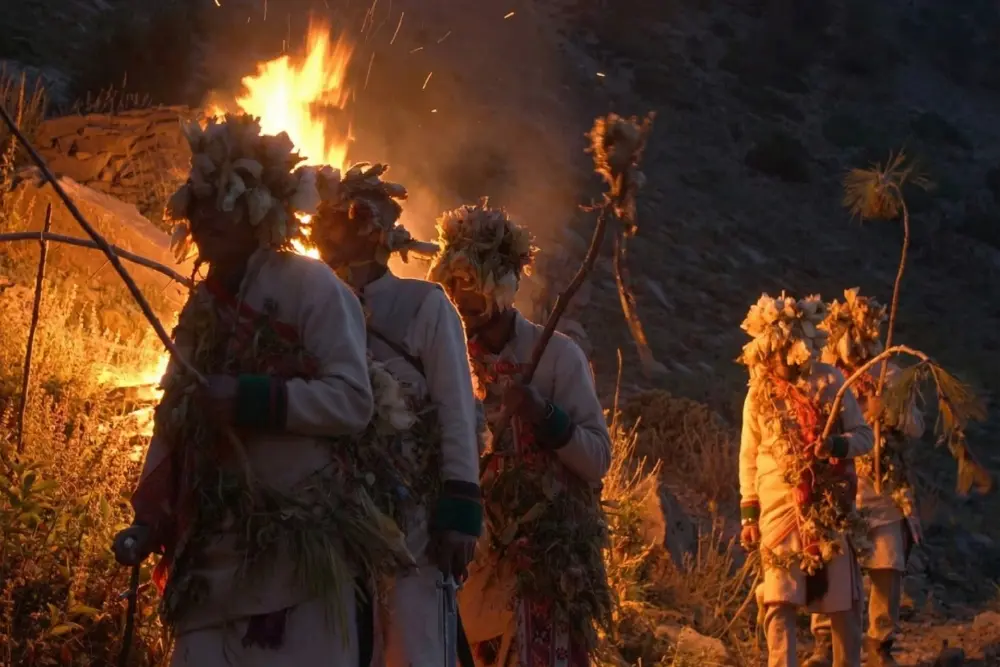
- The Narrative: Set against the unforgiving landscape of the Himalayas, the story follows a resilient woman fighting to hold her polyandrous family together after a catastrophic hailstorm completely destroys their agricultural harvest.
- Track Record & Pedigree: This project boasts an absolute powerhouse production pedigree. Co-writer/director Negi’s short Hills Don’t Dance Alone secured a prestigious Netflix TakeTen grant and bowed at BFI Flare, while Yadav’s Malwa Khushan won the Kashish QDrishti Grant and screened at the BAFTA-qualifying Iris Prize. Producer Neeraj Churi made global waves producing Cactus Pears (Sabar Bonda), which made history as the first Indian fiction feature to capture the World Cinema Grand Jury Prize: Dramatic at the Sundance Film Festival, subsequently securing theatrical distribution in the U.K. and Ireland. Co-producer Beesham A. Seecharan adds elite documentary and prestige television credentials, having co-executive produced the PGA-nominated Mediha and the BAFTA- and Emmy-nominated Beyond Utopia.
6. Lefty (Canada)
- Key Personnel: Written and produced by Seth Mohan; directed and produced by Esther Caszo.
- The Narrative: An inspiring athletic and psychological drama tracking a young man grappling with severe anxiety and substance addiction who finds a path toward rehabilitation and mental clarity through the sport of cricket.
- Track Record & Pedigree: Mohan and Caszo blend sports cinema tropes with mental health advocacy, offering a uniquely diasporic lens on addiction recovery within Canadian communities.
7. Unbraided (Saudi Arabia / Netherlands / Canada)
- Key Personnel: Written and directed by Razan Alsoghayer; produced by Shaista Roshan.
- The Narrative: A transnational coming-of-age story that tracks two lifelong childhood friends as they navigate the rapid socio-cultural transformations sweeping across a modernizing Saudi Arabia.
- Track Record & Pedigree: Alsoghayer trained at the prestigious La Fémis in Paris and the British Film Institute. Her short films have screened at the Red Sea International Film Festival, and her short A Breath earned a Best Student Film nomination at the Saudi Film Festival. Roshan rounds out the production team as a 2026 participant in the Red Sea Feature Films Program.
8. Swarnapuchhri (India)
- Key Personnel: Written and directed by Ritwik Goswami; produced by Nidhi Girish Salian; executive produced by Payal Kapadia.
- The Narrative: The film follows a mother’s harrowing search for answers and justice after her son mysteriously vanishes amidst violent, widespread protests against the construction of a controversial nuclear power plant.
- Track Record & Pedigree: Goswami’s screenplay won the West Meets East Screenplay Lab at the Dhaka International Film Festival. Producer Nidhi Girish Salian—a former corporate lawyer and founding team member of Vice India—oversaw Amazon Prime Video’s GLAAD-nominated docuseries Rainbow Rishta as creative director at VICE Studios Asia-Pacific. Most notably, the project features Cannes Grand Prix winner Payal Kapadia (All We Imagine as Light) as executive producer, lending immense artistic credibility to the production. Kapadia’s own directorial resume—including her 2024 Cannes sensation All We Imagine as Light, Golden Globe nominations for Best Director and Best Foreign Language Film, and her 2021 Cannes Golden Eye documentary win for A Night of Knowing Nothing—places Swarnapuchhri among the most anticipated development titles on the international circuit.
Supporting Context & Industry Metrics
The launch of South Asian Screen Futures arrives at a pivotal juncture in the evolution of global cinema. For decades, South Asian diasporic filmmakers operating in Western markets like Canada, alongside independent domestic filmmakers in India, have faced structural roadblocks in securing transatlantic financing. While global audiences have demonstrated an insatiable appetite for diverse, authentic storytelling, institutional risk aversion has frequently relegated South Asian content to niche festival runs rather than wide commercial distribution.
The establishment of the Canada–South Asia Screen Corridor directly addresses these systemic bottlenecks. By leveraging TIFF’s newly minted, high-profile industry market, SASO and IFFSA Toronto are bypassing traditional gatekeepers. Industry analysts note that matching projects like Soma Helang (backed by Sundance-winning pedigree) and Swarnapuchhri (backed by Cannes royalty like Payal Kapadia) with targeted sales agents and financiers dramatically shortens the developmental pipeline.
Furthermore, the inclusion of multi-jurisdictional co-productions—such as Unbraided linking Saudi Arabia, the Netherlands, and Canada—underscores a growing industry shift toward South-South and tri-continental alliances. These collaborative structures allow producers to pool soft funds, tap into regional tax credits, and satisfy disparate territorial distribution quotas, ultimately mitigating financial risk while maximizing global box office and streaming potential.
Official Statements & Institutional Vision
While specific individual statements from the founders were synthesized into the overarching framework of the initiative, the core philosophy articulated by the organizing bodies—the South Asian Screen Office of Canada, IFFSA Toronto, and Storiculture—emphasizes action over abstraction.
In outlining the parameters of South Asian Screen Futures, organizers explicitly rejected the traditional "lab model" in favor of an aggressively commercial posture. Rather than teaching filmmakers how to write or pitch, the initiative treats the selected eight projects as mature commercial assets ready for global deployment. Outreach is custom-built, ensuring that a political drama like Swarnapuchhri is placed in front of human-rights-focused distributors and international sales agents, while sports dramas like Lefty or genre-adjacent narratives find traction with mainstream commercial buyers.
By anchoring this initiative within the Toronto International Film Festival’s inaugural market, the organizers have positioned Canadian and South Asian talent at the literal center of the North American film business. This strategic placement ensures that regional stories with universal emotional cores are given the institutional backing required to compete on the world stage.
Future Outlook
The launch of the South Asian Screen Futures inaugural slate marks the beginning of what organizers intend to be a permanent, expanding infrastructure for international collaboration. As the Canada–South Asia Screen Corridor matures, industry stakeholders expect to see increased cross-border equity investments, official co-production treaty utilization, and a steady pipeline of festival-tier titles transitioning smoothly into multiplexes and global streaming libraries.
With projects helmed by visionary talents like Subhadra Mahajan, Kalainithan Kalaichelvan, and Ritwik Goswami—and bolstered by heavy-hitting producers who have conquered Sundance, Cannes, and the Canadian Screen Awards—the future of South Asian cinema on the global stage has never looked more assured. As these eight films take their first steps onto the TIFF market floor, they carry not only the ambitions of their respective creators, but the momentum of an entire transnational movement redefining what international cinema can achieve.