Executive Overview
More than two decades have passed since activist Tarana Burke laid the foundational stones of the “Me Too” movement, shifting global consciousness regarding the harrowing prevalence of sexual assault and harassment. In the years following its viral resurgence, public awareness has undeniably evolved. Modern lexicon now incorporates terms like "toxic masculinity," "gaslighting," and crucially, "consent." Yet, a profound paradox defines contemporary society: even as popular culture increasingly champions bodily autonomy, structural and educational institutions lag desperately behind.
According to data compiled by the Sexuality Information and Education Council of the United States (SEICUS), only 27 U.S. states mandate sex education in their public schools. More alarmingly, just 15 of those states require their curricula to include instruction on consent. This legislative vacuum leaves millions of young adults navigating the complex terrain of human intimacy without formal, standardized guidance.
Into this void steps a shifting cultural zeitgeist. Taglines such as “Consent is sexy” have flooded media campaigns, while online spaces, podcasts, and relationship columns encourage individuals—particularly women—to articulate their boundaries with unprecedented clarity. "We’re just becoming more vocal about making the choices that feel aligned for us," explains Natassia Miller, an AASECT-certified sexologist.
Yet, as cultural norms mature, our definitions must likewise evolve. For years, the gold standard of modern sexual ethics has been "enthusiastic consent"—the vibrant, unbridled green light that ensures both parties are actively and eagerly participating. But is enthusiastic consent the only valid framework for a positive, healthy sexual encounter? Or does real life—particularly within long-term, established partnerships—involve a more nuanced spectrum of desire?
By examining the paradigms of enthusiastic and willing consent, alongside the dangerous territories of unwilling and coerced consent, experts are redefining how we understand bodily autonomy, responsive desire, and communication in the bedroom.
Detailed Chronology: From Silence to the Modern Consent Framework
To fully understand where modern sexual ethics stand today, it is essential to trace how society arrived at our current terminology. The conversation surrounding consent did not happen overnight; it is the culmination of decades of legal battles, feminist activism, and psychological research.
- The Pre-1990s Silence: For generations, the legal and social definition of rape or sexual assault relied almost exclusively on the presence of physical force or overt threats of violence, coupled with a lack of physical resistance. The concept of verbal or non-verbal internal boundaries was largely ignored, and marital rape exemptions remained common across the globe.
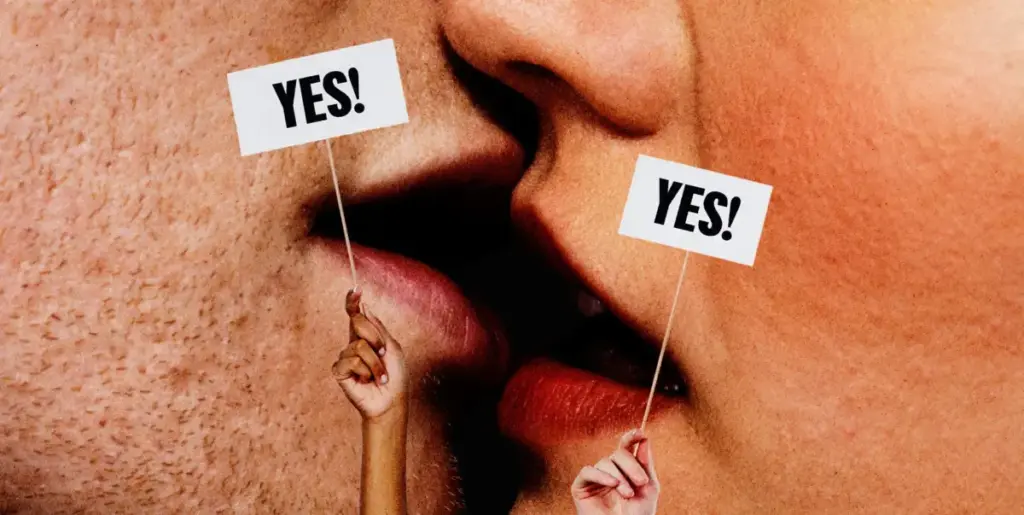
- The 1990s Campus Awakening: The modern push for proactive consent largely originated on American college campuses in the early 1990s. Institutions like Antioch College pioneered strict, affirmative consent policies, requiring students to obtain verbal permission for every single escalation of physical intimacy. At the time, these policies were heavily mocked by mainstream media as bureaucratic and "killjoys," but they planted the seeds for the "Yes Means Yes" legal frameworks that would follow decades later.
- The 2006 "Me Too" Genesis: Tarana Burke founded the "Me Too" movement in 2006 to support survivors of sexual violence, particularly young women of color. Operating long before the hashtag era, Burke’s work emphasized empathy, community healing, and exposing the systemic nature of abuse.
- The 2017 #MeToo Viral Explosion: When allegations against high-profile entertainment figures went viral in late 2017, the cultural floodgates opened. Conversations transformed from reactive legal discussions about assault to proactive cultural dialogues about workplace dynamics, dating etiquette, and the absolute necessity of mutual desire.
- The Post-2020 Nuance Era: As society absorbed the lessons of the #MeToo movement, sexologists, researchers, and relationship educators began pushing the conversation deeper. Recognizing that human desire is not always a linear, explosive spark, contemporary thinkers like Dr. Emily Nagoski and Dr. Rosemary Basson began popularizing frameworks that account for responsive desire, introducing the wider public to the concept of "willing consent."
Supporting Context & Metrics: The State of Education and Desire
The necessity for nuanced consent education becomes starkly apparent when examining the intersection of institutional policy, psychological research, and human behavior.
The Legislative Gap
The SEICUS state profiles reveal a patchwork of legislative neglect across the United States. While comprehensive sex education has been proven to delay sexual debut, reduce rates of sexually transmitted infections (STIs), and lower teen pregnancy rates, state legislatures remain politically fractured.
- 27 States: The total number of U.S. states that legally require any form of sex education in schools.
- 15 States: The subset of those states that mandate education specifically on the concept of consent.
- The Consequence: Millions of adolescents enter the dating pool relying on peer-to-peer myths, pornography, or trial and error to understand what constitutes a safe, legal, and mutually satisfying sexual encounter.
Deconstructing the Spectrum of Positive Consent
In the current era, phrases like "enthusiastic consent" have aimed to establish a high baseline for safe and pleasurable sex. However, sexologists argue that treating enthusiastic consent as the only valid form of positive consent can inadvertently pathologize normal human variations in desire.
- Enthusiastic Consent: This is not merely a polite nod or a quiet "sure." Natassia Miller defines it as: "When you really want your partner, when you don’t fear the consequences of saying ‘yes’ or saying ‘no,’ and when saying ‘no’ means that you’re missing out on something that you want." It is characterized by active, verbal, and non-verbal excitement—colloquially, being "revved up and ready to go."
- Willing Consent: Popularized by author and sex educator Dr. Emily Nagoski, willing consent occupies a different, highly valid space within long-term relationships and familiar dynamics. It occurs when an individual cares deeply about their partner, may not be experiencing spontaneous physical desire at that exact microsecond, but is open to the possibility of intimacy. As Miller notes, "You might express willing consent when you believe that your desire is going to show up after you say yes… It’s not like my body is having this huge ‘no’ that’s coming over it."
This distinction is heavily rooted in the psychological research of responsive desire, a term coined by sexologist Dr. Rosemary Basson. While "spontaneous desire" describes the sudden urge for sex that arrives out of nowhere, responsive desire means that an individual’s sexual desire is sparked in reaction to a stimulus (such as a loving touch, kissing, or emotional closeness) rather than preceding it. Assuming everyone must experience spontaneous desire invalidates millions of people—particularly women—whose bodies naturally operate on responsive frameworks.
The Problematic and Dangerous Extremes
To fully understand positive consent, one must starkly contrast it with its harmful counterparts: unwilling consent and coerced consent.
- Unwilling Consent: This occurs when a person says "yes" primarily to stop a partner from pestering them, or out of a fear of hurting their feelings. Dr. Nagoski describes this as an "absence of desire for desire." The individual finds nothing about the encounter appealing in the slightest, but capitulates to avoid emotional exhaustion.
- Coerced Consent: Crossing from uncomfortable into abusive, coerced consent involves explicit or implicit threats of negative consequences if the individual says "no." The person feels that refusing will result in emotional, financial, or physical punishment, leading to an experience they actively dread. Legally, coercive environments sometimes slip through loopholes, but ethically and psychologically, coerced consent is a violation of autonomy.
Official Statements & Expert Insights
Navigating these definitions requires careful nuance, ensuring that expanding the definition of consent to include "willing consent" does not open the door to abusive rationalizations. Experts emphasize that the boundary between safe, willing participation and abuse remains anchored in mutual care, communication, and the absolute freedom to withdraw.
"It’s important that you are aware of the different options so that you can apply what makes sense to your own life. You can pick and choose what feels right for you."
— Natassia Miller, AASECT-Certified Sexologist
Addressing the fine line between willing consent and coercion, Dr. Emily Nagoski noted in a 2022 essay:
"I live at an intellectual/professional crossroads between promoting active consent (‘Yes means yes!’) and encouraging people to recognize responsive desire and not feel broken if they don’t just want sex out of the blue (‘Willing can mean yes!’)… Not all [sexual experiences] have to start with enthusiasm, but they do all have to start with everyone involved being glad to be there and free to leave with no unwanted consequences."
Miller reinforces this by outlining practical methods for ensuring partner safety during intimacy, introducing the concept of attunement:
"Attunement is tuning into how they feel, their body’s reaction, their emotions, what they’re actually verbally communicating, and also tapping into how you’re feeling, as well. It’s a simultaneous experience… You can notice that your partner taps out before they actually verbalize it, if they even verbalize it at all."
Future Outlook: The Evolution of Intimacy and Education
As we look toward the future of human relationships, the cultural conversation around consent must mature beyond rigid, one-size-fits-all slogans. While catchphrases like "Consent is sexy" and "Yes means yes" successfully raised public consciousness during the initial waves of modern activism, the next frontier requires deeper emotional literacy.
- Reforming Educational Curricula: The ultimate systemic goal must be the nationwide adoption of comprehensive sex education that teaches not only biological safety and STI prevention, but also communication skills, emotional attunement, and the distinction between spontaneous and responsive desire. Until consent education is standardized across all 50 states, young people will remain unnecessarily vulnerable to confusion and exploitation.
- Destigmatizing Conversations About Desire: Couples must be encouraged to talk openly about their arousal patterns. Recognizing that responsive desire is entirely normal helps dismantle the shame felt by individuals—particularly in long-term relationships—who do not experience constant, spontaneous urges for sex.
- Prioritizing Ongoing Communication: As Dr. Emily Morse famously asserts, the two fundamental keys to a healthy sex life are communication and lubrication. By building consistent habits of checking in with partners, normalizing the shifting nature of desire, and maintaining deep emotional attunement, modern lovers can foster spaces where both enthusiastic and willing consent thrive safely.
Ultimately, whether an encounter is born from an explosive flash of mutual excitement or the quiet, loving warmth of responsive willingness, the bedrock of healthy intimacy remains unchanged: open dialogue, active mutual care, and the unwavering, uncompromised freedom to say no.