EXECUTIVE OVERVIEW
In the early hours of Friday, celestial enthusiasts across the United Kingdom, Ireland, and multiple continents will be treated to a striking astronomical spectacle. A deep partial lunar eclipse will grace the night sky, transforming up to 93% of the lunar disc into a dramatic canvas of reddish and copper hues. Often colloquially referred to as a "blood moon," this phenomenon occurs as the Earth aligns precisely between the Sun and the Moon, casting its planetary shadow across the lunar surface.
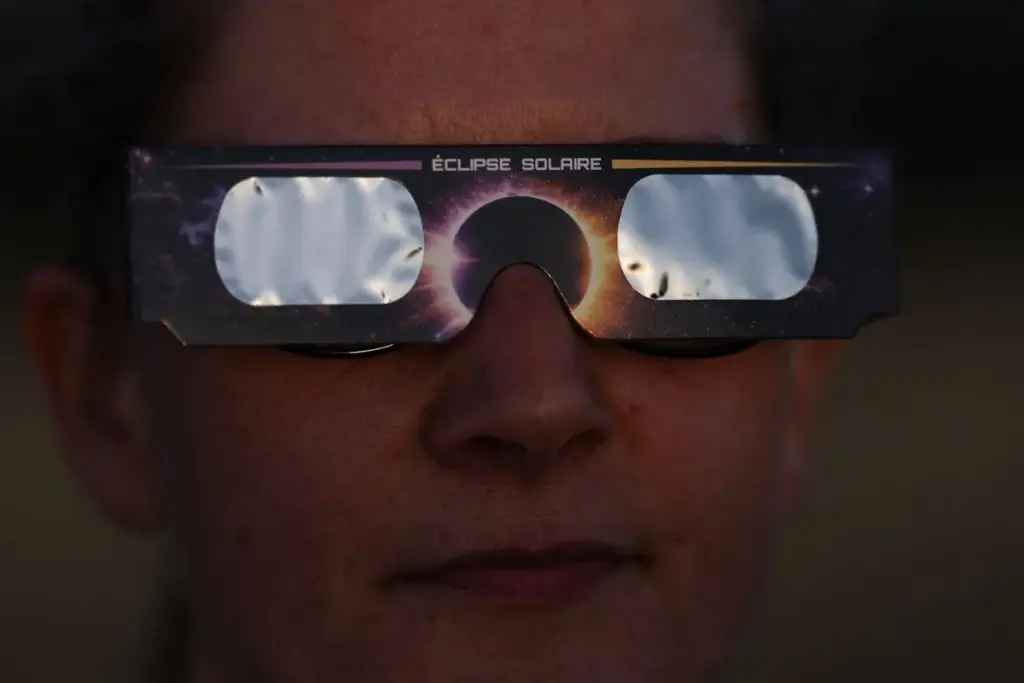
Coming hot on the heels of a near-total solar eclipse that captivated observers across the British Isles just over two weeks ago, this event offers a vastly different viewing experience. Unlike solar eclipses—which demand strict safety precautions and specialized filters—this lunar alignment is entirely safe for the naked eye. Observers will not need any protective eyewear to witness the full sweep of the cosmic alignment.
However, success for astronomers and casual stargazers alike will hinge significantly on local meteorological conditions. While forecasters at the Met Office predict favorable early-morning viewing windows across select regions of southern and eastern England, thickening cloud cover threatens to obscure the climax of the event for many. Spanning several hours in the dead of night, the eclipse offers a compelling window into the dynamic mechanics of our solar system, uniting millions of global observers in a shared moment of astronomical wonder.
DETAILED CHRONOLOGY: TIMINGS OF THE ECLIPSE
For those willing to brave the early-morning hours, the lunar eclipse unfolds across several distinct, meticulously timed phases. Because the event occurs in the pre-dawn hours of Friday, understanding the precise schedule is crucial for anyone hoping to catch the peak moments before the Moon sets or the sun washes out the sky.

[02:23 BST] Penumbral Phase Begins (Faint outer shadow touches Moon)
    │
    ▼
[03:33 BST] Partial Eclipse Commences (Dark umbral shadow makes contact)
    │
    ▼
[05:12 BST] Maximum Eclipse (93% of Moon engulfed in umbra; peak copper hue)
    │
    ▼
[06:15 BST] Moonset Begins (Moon dips below horizon in London and southern regions)
    │
    ▼
[06:51 BST] Partial Eclipse Officially Concludes
The Penumbral Phase (02:23 BST)
The cosmic sequence kicks off at 2:23 am British Summer Time (BST) as the Moon enters the penumbra—the lighter, outer fringe of Earth’s shadow. During this initial stage, the change in the Moon’s appearance is subtle. Casual observers might notice only a very faint shading on one side of the lunar disc, as the Earth blocks only a fraction of the Sun’s direct rays from reaching the Moon.
The Partial Eclipse Commences (03:33 BST)
The spectacle intensifies significantly at 3:33 am. This is the moment when the Moon officially crosses into the umbra, the central and darkest region of Earth’s shadow. As the umbral shadow creeps across the lunar landscape, a distinct, dark bite appears to be taken out of the bright white sphere, setting the stage for the dramatic color transformations to follow.
Maximum Eclipse (05:12 BST)
The climax of the celestial event arrives at 5:12 am. At this exact juncture, approximately 93% of the Moon will be submerged within the Earth’s umbral shadow. As sunlight filters through the dense layers of Earth’s atmosphere, shorter wavelengths of light (like blue and violet) scatter, while longer wavelengths (red and orange) bend—or refract—around the curvature of the planet and illuminate the lunar surface. This atmospheric lensing is what grants the Moon its famous, haunting copper or blood-red tint.
Moonset and Conclusion (06:15 AM – 06:51 AM)
As the Earth continues its rotation, the Moon will begin to set below the horizon in regions such as London at approximately 6:15 am, cutting short the final stages of the eclipse for urban observers in the south. The partial eclipse officially concludes globally at 6:51 am, though by that time, morning twilight will have rendered the fading shadows largely invisible to the naked eye.
SUPPORTING CONTEXT & METRICS: SCIENCE AND VISIBILITY
Global Reach and Time Zones
While the British Isles enjoy prime positioning for the tail end and maximum of the event, the eclipse is truly a global phenomenon. Observers across North and South America, as well as vast swathes of Africa and the European continent, will have front-row seats. Due to longitudinal differences, the event will span two calendar dates: citizens in western regions will witness the eclipse unfolding during the late evening hours of Thursday, August 27, while those in the UK, Ireland, and Europe will experience the spectacle in the predawn hours of Friday, August 28.

The Physics of the "Blood Moon"
To truly appreciate Friday’s event, one must look at orbital mechanics. A lunar eclipse can only occur during a full moon, when the Earth sits directly between our star and its natural satellite.
If the Earth possessed no atmosphere, the Moon would go completely black as it passed into the umbra. However, our planet is blanketed by an atmosphere rich in gases, water vapor, and particulate matter. As sunlight grazes the edge of the Earth, it passes through this thick atmospheric filter.
[Sun] ──> [Earth + Atmosphere] ──(Scattering & Refraction)──> [Red/Copper Light] ──> [The Moon (In Umbra)]This process, known as Rayleigh scattering—the same phenomenon responsible for brilliant red sunsets—bends the red-shifted light onward toward the Moon. The intensity and exact hue of the "blood moon" can vary dramatically from one eclipse to the next, heavily influenced by global atmospheric conditions, such as recent volcanic eruptions or wildfire smoke levels, which add particulate matter to the stratosphere.
Safety First: No Filters Required
A common point of confusion among the general public relates to eye safety during astronomical alignments. Following the partial solar eclipse two weeks prior—an event that mandated certified solar viewing glasses to prevent permanent retinal damage—astronomers have emphasized that lunar eclipses operate under entirely different physical principles.
Because the Moon is merely reflecting sunlight rather than emitting or focusing it intensely toward our eyes, viewing a lunar eclipse poses zero threat to human vision. Observers can comfortably view the event with the naked eye, binoculars, or telescopes for hours on end without any protective gear.

OFFICIAL STATEMENTS AND METEOROLOGICAL FORECASTS
The Met Office Outlook
As anticipation builds, attention has inevitably turned to the weather. The Met Office has issued regional forecasts indicating that while clear skies will bless certain areas, cloud cover threatens to put a damper on the viewing experience for a significant portion of the population.
According to Met Office forecasters, southern and eastern England hold the highest probability of clear or broken skies during the crucial early stages of the eclipse. However, a developing weather front is expected to push more extensive cloud cover across the country as the night progresses.
"While southern and eastern regions of England stand the best chance of catching the initial phases under clearer skies, patchy and thickening cloud cover is forecast to spread overnight," a Met Office spokesperson noted. "Observers further north and west may need to contend with overcast conditions, though breaks in the clouds could offer fleeting glimpses of the copper-tinted Moon at its peak."
Public and Academic Response
Planetariums and astronomical societies across the UK and Ireland have reported a surge in late-night ticket sales and inquiries. Social media channels dedicated to stargazing have been flooded with tips on finding dark-sky locations away from light pollution, ensuring that even urban dwellers positioned high in apartment buildings can maximize their chances of capturing the event.
Astrophotographers have also been busy prepping long-lens cameras, tripods, and telephoto setups. Because 93% of the lunar disc will be swallowed by the umbra, the contrast between the dark, reddish umbral shadow and the remaining sliver of illuminated lunar surface is expected to yield exceptional photographic compositions, provided the atmospheric haze cooperates.

FUTURE OUTLOOK: THE UPCOMING LUNAR CALENDAR
For those who miss out on Friday’s spectacle—whether due to overcast skies, geographical constraints, or simply oversleeping—the science of orbital mechanics ensures that the cosmic dance between the Sun, Earth, and Moon will continue uninterrupted.
Lunar eclipses occur roughly two to four times each year, though they are not always visible from every point on Earth. Partial eclipses, such as this late-August event, are relatively common, but deep partials reaching the 93% threshold offer a visual impact that approaches that of a total lunar eclipse.
Astronomers note that the next series of notable lunar events visible from the British Isles will occur over the coming years, with several deep partial and total eclipses currently mapped out on planetary calendars. However, the unique timing, high umbral immersion, and favorable seasonal temperatures make this late-summer event one of the most accessible and visually arresting astronomical highlights of the year.
As the countdown to 2:23 am continues, amateur astronomers and casual stargazers alike are urged to check their local weather apps, set their alarms, and step outside into the quiet pre-dawn hours to witness the Earth casting its grand shadow across the heavens.