Reality television has long relied on manufactured tension, high-stakes drama, and interpersonal rivalry to drive ratings. However, the eighth cycle of Love Island USA charted a distinct cultural shift, proving that the true heartbeat of the format lies not in the competitive pursuit of romance, but in the unyielding solidarity of female friendship.
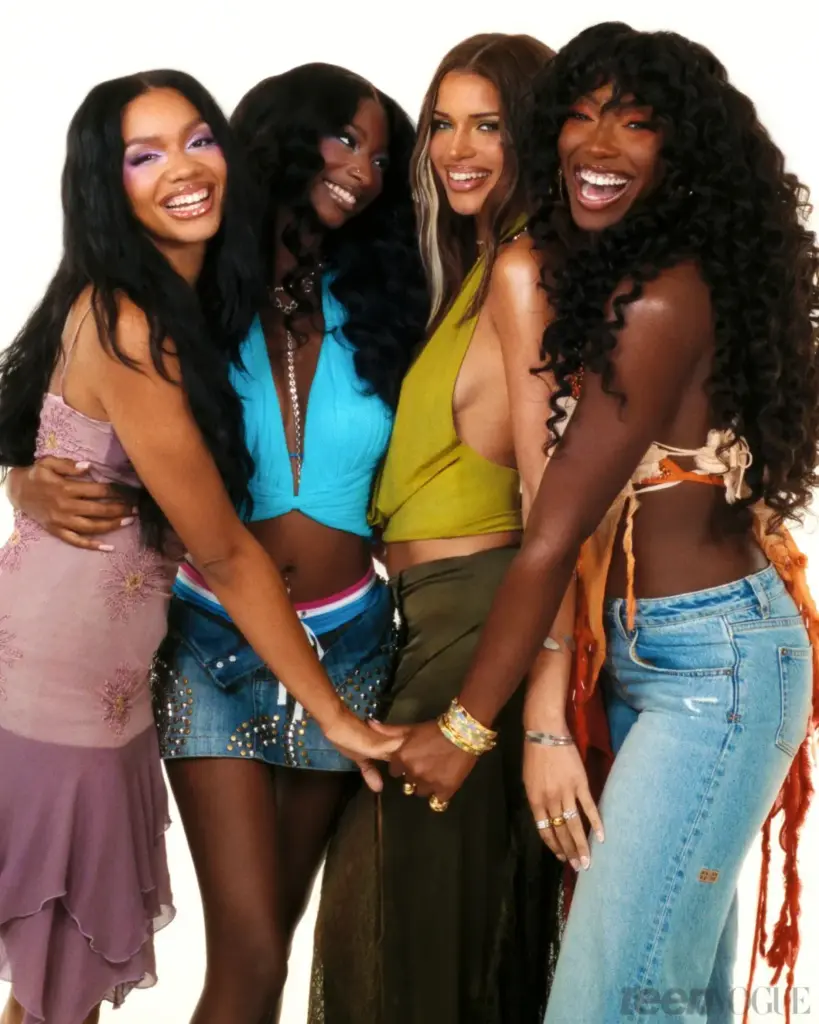
In this comprehensive retrospective, the season’s final four women—Trinity Tatum, Kayda Bosse, Aniya Harvey, and Melanie Moreno—sit down with Teen Vogue to unpack the realities of life inside the Fiji villa. From navigating the profound psychological disorientation of timelessness and isolation to managing the whiplash of overnight internet fame, the quartet offers an unfiltered look at the modern reality television landscape.
Beyond personal reflections, this core group made history by representing a diverse spectrum of Black womanhood—including Afro-Latina and biracial representation—in the show’s final configuration. In doing so, they have redefined the cultural expectations placed upon women of color in media, setting a new precedent for reality television casting, audience engagement, and post-show resilience.
Detailed Chronology: From Fiji Isolation to Overnight Stardom
Entering the Bubble: Culture Shock and the Loss of Time
The transition from ordinary life to the hyper-scrutinized environment of the Love Island USA villa is notoriously abrupt. For the season eight finalists, the initial adjustment period was defined by sensory overload and structural deprivation.

"The timeframe of getting ready… wake up, get into makeup," Aniya Harvey recalls, highlighting the frantic pace demanded by production schedules. Kayda Bosse echoes this sentiment, noting a drastic lifestyle compression: "I used to take three hours to get ready. Now I could do it in 30 minutes."
Yet, the most psychologically taxing element was not the physical upkeep, but the total erasure of temporal markers. Melanie Moreno points out the profound disorientation of losing track of time and date: "You could be up at four in the morning and you don’t know. In your head, it’s like, ‘Oh, it’s 10:00 p.m.’" Trinity Tatum likens the experience to operating within a simulation game: "It felt like being a Sim, legit. You got the people around you [production] who know the time, they know the date, they know what’s going on in the world… and you don’t know nothing."
Compounding this isolation was the complete severance of contact with familial support systems. Melanie notes that this vulnerability accelerated their reliance on one another: "Not having that support of your family, I think that’s why we relied on each other so much. You think you know what you’re getting yourself into, and then you get there and it’s the complete opposite."
Sisterly Dynamics: Frictional Intimacy in Close Quarters
Confined to a high-pressure environment with cameras recording up to 16 hours a day, the women formed a bond akin to familial siblinghood. This relationship model was characterized by rapid cycles of intense, micro-level friction followed by immediate resolution.

The group admits to arguing daily over trivial matters, ranging from wardrobe coordination to musical selections. Kayda’s penchant for wearing black necessitated formal color-coding agreements among the group, while a dispute over auxiliary cord privileges involving country versus rap music led to an unforgettable, high-stakes standoff.
"We’d literally be joking, though, and [the producers] would come and be like, ‘Guys, what’s going on?’" Melanie explains. "I’m like, ‘We’re literally joking. We grew up talking to our siblings like that, that’s why we talk to each other like that.’"
The Re-Entry Shock: Navigating Public Perception and Social Media
Leaving the villa resulted in an immediate, jarring transition from isolated obscurity to national visibility. Trinity describes the dichotomy succinctly: "You left as a random person and you come out as the most talked-about person in America right now."
Public recognition quickly manifested in surreal ways, from casual encounters at hair salons and car washes to unexpected fan interactions in public venues. However, this visibility also exposed the cast to the toxic underbelly of internet culture. Facing baseless rumors questioning the authenticity of their relationships—such as accusations directed at Trinity and her partner, Bryce Alakai—the women relied on their collective solidarity to maintain psychological grounding.

"If I didn’t walk out with friends as great as you guys are… I would’ve been in my bed right now," Kayda admits, emphasizing the protective cocoon their friendship provided against online vitriol.
Supporting Context & Metrics: Diversity and Representation in Reality TV
The success of season eight’s final four marks a pivotal watershed moment for the Love Island franchise and the broader dating-show ecosystem. For years, critics and audiences have tracked the systemic underrepresentation or tokenization of women of color in mainstream dating competition formats.
Following the blueprint laid by season six breakout stars Leah Kateb, Serena Page, and JaNa Craig (collectively known as "PPG"), season eight elevated the concept of female-centric narratives to the forefront. More importantly, it achieved unprecedented intersectional visibility.
As Trinity Tatum highlights:

"Not only are we Black women, we have so many shades of Black women that’s in the final four, and I think we have so much representation. We have Afro-Latina representation. We have dark-skinned women for representation. You have mixed girl representation, biracial."
This historic alignment signifies a broader demographic shift in casting strategies. By ensuring that diverse identities are not merely present as episodic interlopers but are centered as the emotional core and victors of the narrative, production teams have cultivated a wider, more deeply invested audience base. Furthermore, the extension of this community-building into the contestants’ families—evidenced by the close friendships formed between the contestants’ mothers—underscores a generational and cultural resonance that extends far beyond the broadcasted episodes.
Official Statements & Cast Insights
On Vulnerability, Dating Standards, and Red Flags
Reflecting on the psychological experiment of the villa, the cast offered pragmatic insights into modern dating dynamics, shaped by the accelerated intimacy of the show.
- Aniya Harvey on the Foundations of Partnership: "You need to find someone that you know really respects you as a person and your beliefs and your morals… Having a partner by your side who can see the ugly, can see the beautiful, and still stand by you and cherish you—I think that’s one of the most important things."
- Trinity Tatum on Modern Relationships vs. Traditional Rules: "When you’re in the villa… you can’t really bring traditional values into Love Island. Which is so true, because when are you ever going to be in a position where you can talk to multiple people at once and not get in trouble for it? It’s more honest… In this day and age, I think everybody wants to be perfect, and I think social media has everyone in a chokehold."
- On Contemporary Dating Fears: When asked about their primary apprehensions regarding modern men, the consensus centered squarely on foundational trust. Trinity identified "a double life" as her primary fear, noting the prevalence of dishonesty in contemporary dating pools. Aniya and Kayda reinforced this, emphasizing that absolute honesty and unwavering loyalty remain non-negotiable prerequisites.
On Production Edits and Unseen Realities
Addressing the discrepancies between their lived villa experiences and the final broadcasted edits, the women expressed a desire for greater transparency regarding their lighter and more complex moments.

- Aniya Harvey: "I wish they showed more of my goofy side. I feel like I was so serious all the time on camera because I was stressed out."
- Kayda Bosse: "I wish they showed more of my jokes. I was always making jokes. I feel like me and Zach were always laughing together."
- Trinity Tatum: "I wish they showed more, like, intimate conversations. Had that been shown, a lot of miscommunication from the viewers wouldn’t have happened."
Future Outlook: The Post-Love Island Trajectory
As Trinity, Kayda, Aniya, and Melanie transition from reality television contestants to public figures, their trajectory points toward a changing cultural paradigm for unscripted television alumni.
The durability of their bond—tested by intense public scrutiny, social media fabrication attempts, and the logistical challenges of long-distance post-show schedules—proves that modern audiences are increasingly drawn to authentic female solidarity over manufactured romantic drama.
For the casting directors and network executives steering the future of dating television, the success of season eight establishes a clear directive: viewers respond to diverse, multifaceted casts who are permitted to be fully human, flawed, and fiercely loyal to one another. As these four women continue to leverage their platforms, their legacy will likely serve as a foundational blueprint for how contestants navigate the tumultuous waters of sudden fame, representation, and sisterhood in the digital age.