The modern pop-culture landscape is undergoing a quiet, sartorial revolution, and its epicentre is not a multi-million-dollar estate in Palm Beach or a private Mediterranean island, but the municipal offices of city halls around the world. When Dua Lipa and Callum Turner descended the stone steps of Old Marylebone Town Hall on May 31 following a civil ceremony, Lipa stepped out in a Bianca Jagger-esque custom Schiaparelli couture pencil skirt, a sharply tailored blazer, and a wide-brimmed hat that instantly commanded the global fashion lexicon. Her radiant smile signaled a growing trend among contemporary cultural icons: a decisive pivot away from the exhausting theatricality of mega-weddings and toward the understated romance of the civil union.
This high-profile registry office romance immediately evoked memories of the previous summer, when Charli xcx married The 1975’s George Daniel at London’s Hackney Town Hall, clad in quintessential Vivienne Westwood. Both Lipa and Charli xcx balanced their minimalist, bureaucratic beginnings with sun-drenched, hedonistic European after-parties—Lipa’s in Palermo, complete with a casual cigarette buffet. Yet, the enduring image of these unions remains firmly rooted on the steps of the local town hall.
Courthouse weddings have transformed into the cultural touchstone of a generation weary of hyper-curated, multi-day performance art masquerading as matrimony. As Gen Z increasingly reshapes the economic and social fabric of the global wedding industry—which now comfortably exceeds $1 trillion annually—the city hall elopement has emerged as the ultimate anti-establishment statement. It is a calculated rejection of rigid societal scripts, exorbitant budgets, and the crushing logistical anxiety of the modern hosting gig. This investigative feature examines the mechanics of the city hall renaissance, tracking its historical lineage, analyzing macroeconomic data, exploring shifting cultural philosophies, and evaluating how pop culture’s elite are redefining what it means to tie the knot.
Detailed Chronology: From Registry Offices to Pop Culture Milestones
The marriage of convenience—or rather, the marriage of civil efficiency—is far from a modern invention. To fully understand the gravity of Dua Lipa and Charli xcx’s recent nuptials, one must trace a historical lineage that connects today’s pop royalty with mid-century icons.
Historical Precedents
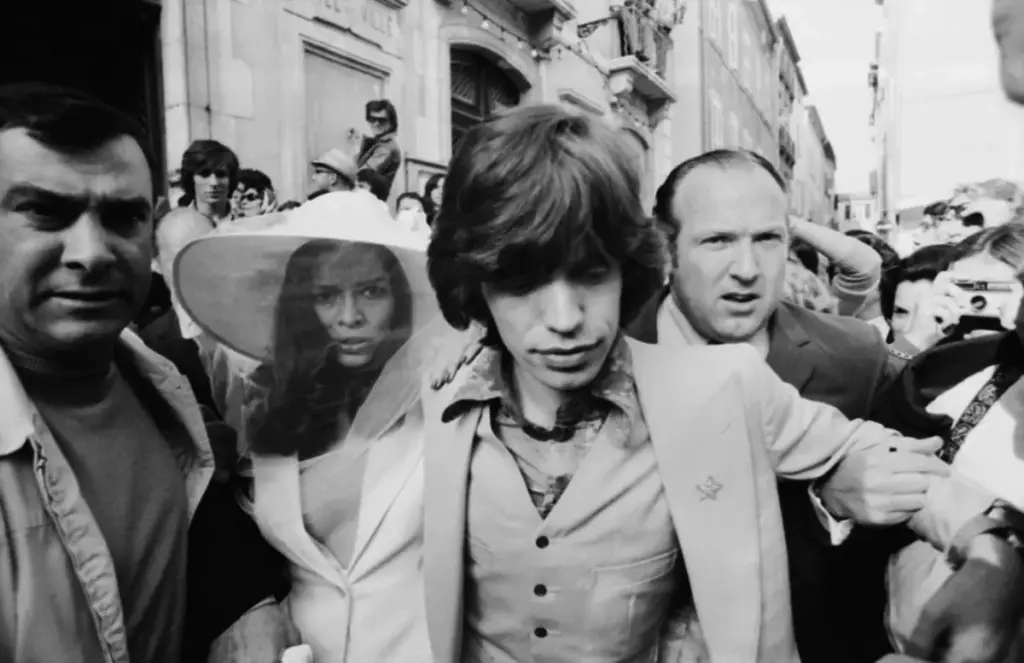
Decades before Instagram algorithms prioritized town hall aesthetics, counter-cultural and silver-screen legends were already bypassing traditional religious and institutional venues. In 1954, Marilyn Monroe and Joe DiMaggio exchanged vows in a swift, understated civil ceremony at San Francisco City Hall. A decade later, in 1965, George Harrison and Pattie Boyd married quietly at the Epsom register office in Surrey, cementing a template of understated British cool. Perhaps most famously, in 1971, Mick and Bianca Jagger wed at St. Tropez Town Hall, with Bianca wearing her legendary Yves Saint Laurent Le Smoking white suit and wide-brimmed hat—a direct blueprint for Dua Lipa’s Schiaparelli homage decades later.
The Post-COVID Acceleration
While these historical examples existed as anomalies in an era of grand productions, the contemporary city hall trend was forged in the crucible of the post-COVID landscape. The pandemic era forced couples to rethink the timeline, scale, and very necessity of large gatherings. Weddings were postponed, minimized, or digitized out of necessity. When pandemic restrictions lifted, rather than returning blindly to the bloated, multi-event spectacles of the 2010s, a segment of the population retained the lessons learned during lockdown: that a legal union requires remarkably little infrastructure.
The 2024–2026 Shift
The summer of 2024 marked a turning point when Charli xcx and George Daniel tied the knot at Hackney Town Hall, followed by an impromptu, highly relatable stroll down the street to local eatery Dalla. Just under a year later, Dua Lipa and Callum Turner’s Old Marylebone Town Hall appearance in May 2026 solidified the movement. These events proved that contemporary superstars could leverage the highest echelons of global fashion houses for their civil ceremonies while maintaining an air of accessible reality. The resulting media cycles—spanning traditional outlets like the BBC and digital hubs like TikTok and Reddit—demonstrated a profound cultural appetite for weddings that prioritized intimacy and personal style over exhaustive production value.
Supporting Context & Metrics: The Economics of Modern Matrimony
The pivot toward civil ceremonies is not merely an aesthetic choice dictated by pop stars; it is underpinned by shifting macroeconomic realities and generational shifts in consumer behavior.
Market Realities and Financial Pressures
According to comprehensive data from The Knot Real Weddings Study, over 2 million couples married in the United States alone in recent years, with average wedding costs hovering around $34,000. On a global scale, the wedding services market surpasses a staggering $1 trillion. However, these figures fail to account for the hidden, compounding costs of modern wedding culture.
The traditional wedding has metastasized into an endurance test of hosting. The modern matrimonial timeline frequently demands:
- Engagement shoots and engagement parties
- Bridal showers and couple’s showers
- Multi-day bachelorette/bachelor trips with color-coded, mandatory wardrobes
- Welcome dinners, the main ceremony, formal receptions, and farewell brunches
Industry analyses indicate that being a bridesmaid alone can easily set an individual back anywhere from $1,500 to $5,000 once travel, lodging, attire, and gifts are tallied. For guests and couples alike, the financial strain has reached a boiling point.
The Rise of Gen Z Spending Habits
Generation Z now accounts for roughly 40 percent of the domestic wedding market, a demographic share projected to expand exponentially over the coming decade. Unlike their Millennial predecessors—who popularized the rustic barn wedding and the bohemian DIY aesthetic—Gen Z approaches major life milestones with pragmatism, financial literacy, and a fierce prioritization of personal autonomy over institutional tradition.
Digital search trends reflect this psychological shift. Google search queries for terms such as "city hall wedding," "courthouse wedding," and "town hall wedding" have reached all-time highs. Concurrently, online forums, Reddit threads, and location-specific guides (such as Manhattan versus Brooklyn municipal clerk comparisons) are experiencing unprecedented traffic. Influencers and content creators, such as Hannah Chody (who married at Austin City Hall) and Halley Kate, have actively demystified the elopement process for millions of followers, openly advocating for financial prudence over performative pageantry. As one viral TikTok commenter succinctly advised: "Buy a home instead of a wedding!"
Official Statements & Cultural Commentary
The discourse surrounding the city hall renaissance has drawn commentary from cultural critics, lifestyle analysts, and public figures alike, highlighting a growing tension between authentic human connection and the commercialization of romance.
The Anti-Production Manifesto
When influencer Halley Kate took to TikTok to explain her decision to forgo a traditional mega-wedding in favor of a quiet elopement and intimate dinner party, her perspective struck a nerve.
"You are just as legally married if you spend zero dollars on a courthouse wedding or $1 million on a 500-person wedding," Kate stated to her audience. "I just feel like we’ve kind of lost the plot of, like, what a wedding is."
The comment section erupted with testimonials from everyday couples who celebrated their unions for under $100 at local municipal offices, redirecting their life savings toward real estate, travel, or debt elimination. This sentiment echoes a broader cultural fatigue with weddings as content creation engines.
The Performance vs. The Partnership
Sociological assessments of modern nuptials argue that weddings have transformed into high-stakes theatrical productions where the couple acts primarily as hosts rather than participants. The bride and groom become performers navigating a script written by wedding planners, lifestyle magazines, and algorithmic trends.
In contrast, the city hall wedding strips away the excess. As a recent newlywed observed regarding their decision to elope: "We didn’t have to deal with the headache and logistics of planning a party for 200 people, so we could just focus on enjoying the weekend how we wanted to."
The genius of the celebrity city hall wedding—as executed by Lipa, Turner, Charli xcx, and Daniel—lies in its clever hybridization of worlds. They utilize the municipal office for its legal and symbolic simplicity, then retreat to private, highly exclusive celebrations abroad. Yet, the public-facing anchor remains the modest town hall. It offers a masterclass in modern public relations: projecting accessibility and class while retaining the unyielding mystique of superstardom.
Future Outlook: The Death of the Cookie-Cutter Wedding
As we look toward the remainder of the decade, the trajectory of the wedding industry points toward radical hyper-personalization. The "Millennial Barn Wedding" era of uniform aesthetics, rustic chalkboards, and mason jar centerpieces has officially given way to the era of intentional curation.
The Institutional Deconstruction
The city hall renaissance signals a broader cultural desire to deconstruct bloated social institutions. When couples look at a centuries-old bureaucratic process and decide to keep only the elements that serve them—a government official, a tailored outfit, and a life partner—they are actively rewriting the rules of adulthood.
This mindset is spreading beyond celebrities and Gen Z influencers. Wedding planners report an increasing number of inquiries regarding "hybrid" packages: micro-ceremonies at local municipal buildings followed by restaurant buyouts or destination dinners, entirely bypassing traditional catering halls and rigid ballroom minimums.
What Lies Ahead
Ultimately, the enduring appeal of the city hall wedding is its implicit permission slip for couples to do things their own way. Whether it costs $25 at the New York City Clerk’s office or involves a custom Schiaparelli suit on the steps of Old Marylebone Town Hall, the courthouse wedding proves that romance does not require a production budget.
As cultural norms continue to evolve, the question facing future generations of engaged couples is disarmingly simple: If a wedding can be anything you want it to be, why keep pretending it has to be the same thing? The answer, echoing off the stone walls of city halls around the world, is that true modern luxury is the freedom to walk away from the script entirely.