Executive Overview
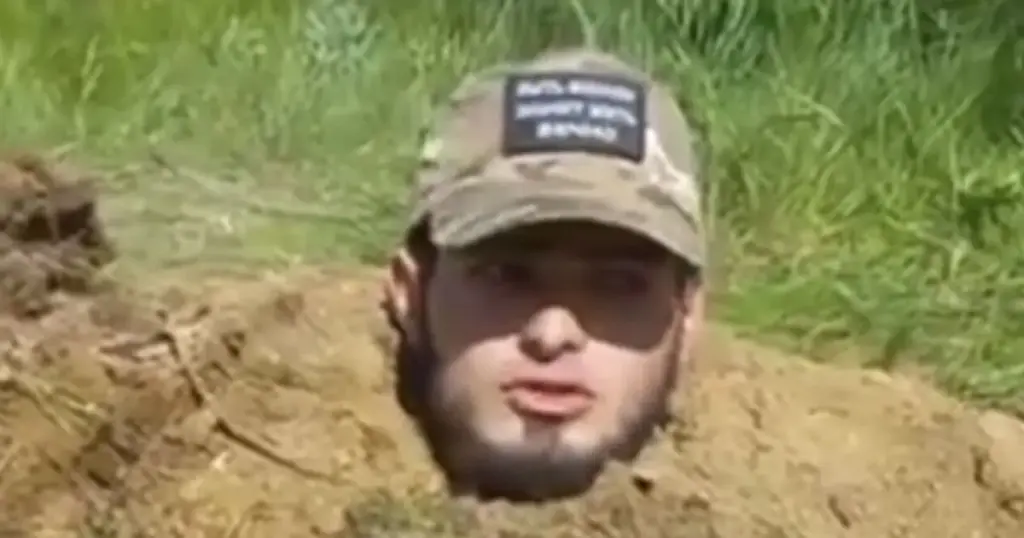
A disturbing video circulating across international intelligence and social media networks has brought renewed scrutiny to the internal disciplinary methods of the Russian Armed Forces fighting in Ukraine. The footage, first publicized by Ukrainian commentator Anton Gerashchenko, depicts a Russian soldier submerged and buried in a dirt pit up to his neck, an archaic and brutal punishment allegedly meted out by his commanding officers.
According to the soldier in the video, the harrowing retribution was ordered because he refused to participate in what he characterized as a "senseless combat mission" designed to send him and his unit to certain death. Wearing a camouflage cap and speaking directly to the camera from a grassy exterior location, the captive soldier meticulously names his direct superiors using their operational call signs.
This latest revelation aligns with a vast, harrowing body of evidence compiled by independent human rights organizations, investigative journalists, and defectors throughout the protracted Russia-Ukraine war. The evidence consistently points toward a systemic culture of coercion, physical intimidation, and psychological torture used by Russian commanders to enforce compliance, quell mutinies, and drive under-equipped troops into high-casualty frontal assaults—commonly referred to in military vernacular as "meat assaults."
While the precise geolocation and timeline of the recording remain subject to verification—with some open-source intelligence analysts suggesting the video may date back to late 2025—the persistence of such imagery underscores a deeply entrenched crisis of morale, military justice, and human rights within the Russian military apparatus.
Detailed Chronology: The Anatomy of a Frontline Mutiny and Retribution
The emergence of the video adds another grim data point to the escalating friction between frontline Russian servicemen and their military hierarchy.
The Video’s Release and Content
The clip surfaced on digital platforms in late August 2026, rapidly drawing millions of views and igniting intense debate among military analysts. In the video, the unnamed soldier is framed from the chest up, effectively immobilized by packed earth. His surroundings indicate an open field or improvised military camp behind the immediate forward line of engagement.
Facing the camera with a mix of exhaustion and defiance, the soldier explicitly identifies the chain of command responsible for his inhumane confinement. He lists:

- "Lotos" – Battalion Commander
- "Klever" – Deputy Battalion Commander
- "Myasnik" – Deputy Company Commander (whose call sign literally translates to "The Butcher")
- "Poet" – Company Commander
"They buried me in a pit for refusing to go on a combat mission where I would have been sent to die," the soldier states in the recording. "For a completely senseless mission where I could have been killed. They put me in a pit."
The Escalation of Internal Discipline
In military structures governed by standard international law, refusal to obey an order is handled through formal court-martial proceedings, detention in military prisons, or administrative discharges. However, across various segments of the Russian forces deployed in Ukraine—particularly those incorporating mobilized personnel, penal colony recruits (Storm-Z units), and contract soldiers (kontraktniki)—informal, medieval-style punishments have reportedly become normalized.
According to testimonies gathered by human rights monitors, soldiers who express hesitation or outright refusal to advance into heavily fortified Ukrainian positions are rarely granted the legal recourse of formal disciplinary tribunals. Instead, commanders under immense pressure from Moscow to achieve territorial gains resort to field justice. This includes public shaming, physical beatings, deprivation of rations, and confinement in subterranean makeshift prisons known colloquially as "pits" or "zindans."
Supporting Context & Metrics: The Mechanics of "Meat Assaults"
To understand the desperate act of defiance that led to the soldier’s punishment, one must examine the operational tactics that have dominated Russian offensive strategy throughout the war.
The Rise of the "Meat Assault"
Faced with formidable Ukrainian defensive lines, heavily fortified by drone surveillance, artillery registration, and intricate minefields, Russian military doctrine has frequently relied on attrition-heavy infantry charges. These operations—widely dubbed "meat assaults"—involve small, poorly supported groups of infantry tasked with locating and drawing enemy fire to map defensive positions, regardless of the staggering casualty rates incurred.
- High Attrition Rates: Independent estimates and Western intelligence assessments suggest that Russian casualties have routinely numbered in the hundreds or thousands per day during peak offensive periods in regions like Avdiivka, Bakhmut, and the Donbas.
- Lack of Fire Support: Survivors and defectors frequently report being sent forward without adequate armored vehicle support, counter-battery suppression, or logistical logistics, effectively turning reconnaissance-in-force missions into suicide runs.
- The "Refusenik" Phenomenon: As the reality of these operations has set in among mobilized troops and newly recruited contract soldiers, instances of insubordination and collective refusals to advance have multiplied.
Coercive Apparatus and Illegal Detention Facilities
The Russian independent media outlet Astra and various human rights organizations have extensively documented the infrastructure of punishment utilized by Russian commanders. Far from being isolated incidents, these punitive measures form part of a structured network of intimidation:
- Frontline Basements and Pits: Soldiers refusing orders are routinely stripped of their weapons, communication devices, and personal gear, then thrown into damp basements or hastily dug pits without proper clothing, food, or medical attention.
- Extortion and Bribery: Numerous reports indicate that commanders use these detentions to extort money from soldiers or their families, demanding cash payments in exchange for release or reassignment away from the front line.
- Physical Violence and Coercion: Beatings with rifle butts, truncheons, and improvised tools are common. In extreme cases, recalcitrant troops are threatened with execution or deliberately placed in the most exposed sectors of the trench network as a warning to others.
- Concealment of Casualties: When soldiers subjected to these punishments die from exposure, lack of medical care, or subsequent forced assaults, their deaths are frequently recorded by their units as "missing in action" (MIA) or standard combat fatalities, allowing commanding officers to mask internal purges and avoid investigations.
Official Statements and Institutional Silence
The response—or lack thereof—from official Russian state institutions regarding these persistent allegations highlights a systemic institutional tolerance, if not tacit approval, of brutal disciplinary methods.

The Kremlin and Ministry of Defense
To date, the Russian Ministry of Defense has maintained strict silence on viral videos depicting field punishments such as pit burials. Official channels routinely dismiss such media as sophisticated Ukrainian information operations, deepfakes, or Western propaganda designed to undermine the morale of the Russian armed forces.
Independent legal experts note that Russian federal law does not provide for or authorize the use of corporal punishment, public humiliation, or arbitrary subterranean detention by military commanders. Article 286 of the Criminal Code of the Russian Federation (abuse of official authority) theoretically criminalizes such acts. However, in the context of the ongoing "Special Military Operation," military prosecutors and investigative committees have exhibited a severe lack of appetite for prosecuting commanding officers who deliver operational results, prioritizing battlefield momentum over adherence to military code.
Human Rights and International Reactions
International human rights organizations have repeatedly condemned these practices, classifying them as severe violations of international humanitarian law, including the Geneva Conventions regarding the treatment of combatants and prisoners of war within one’s own ranks.
United Nations monitors have noted that the use of torture and inhumane treatment against Russian soldiers by their own commanders demonstrates a profound breakdown in the rule of law within military formations. Legal scholars argue that such systemic abuses could ultimately form the basis of domestic and international war crimes investigations should accountability mechanisms be established in the future.
Future Outlook: Morale, Cohesion, and the Trajectory of the Conflict
As the war grinds forward, the psychological toll on ordinary Russian soldiers remains a critical variable influencing the stability of the front lines.
Fractured Morale vs. Institutional Coercion
The emergence of videos featuring named commanders like "Lotos," "Klever," "Myasnik," and "Poet" illustrates a dangerous erosion of trust within the military hierarchy. While coercive measures and field punishments have temporarily succeeded in compelling compliance and maintaining offensive pressure in certain sectors, they carry long-term strategic liabilities:
- Degraded Operational Effectiveness: Troops motivated purely by the terror of internal punishment rather than tactical cohesion or ideological commitment are inherently more fragile under heavy combat stress.
- Rising Desertion and Fragging: Incidents of soldiers turning on their commanding officers—historically termed "fragging"—as well as increased rates of desertion and surrender to Ukrainian forces, are direct symptoms of a fractured internal command climate.
- Post-War Social Fallout: The return of thousands of traumatized veterans, many of whom have witnessed or experienced extreme institutional brutality, poses a profound long-term security and social challenge for Russian civil society.
Conclusion
The haunting image of a soldier buried up to his neck for questioning a suicidal order serves as a stark metaphor for the human cost of the conflict. While Russian authorities continue to shield military leadership from accountability, the relentless leaking of such footage ensures that the dark reality of internal frontline discipline cannot be easily concealed. As long as military doctrine prioritizes territorial advancement over human preservation through tactics of attrition and terror, the internal fractures within the Russian ranks are destined to widen.