Executive Overview
For decades, Bath & Body Works has held a nostalgic, aromatic stronghold in suburban shopping malls across North America. Mention the brand, and most consumers are instantly transported to memories of testing cucumber melon body splashes in the late 1990s, stocking up on antibacterial pocket-sized hand sanitizers during the mid-2000s, or hunting down the latest holiday-themed three-wick candles. However, the retail landscape has shifted dramatically over the past ten years. E-commerce dominance, changing consumer demographics, shifting shopping behaviors away from traditional enclosed malls, and an influx of nimble, digitally native beauty brands have combined to challenge legacy retailers.
It is against this backdrop of evolving consumer habits that Bath & Body Works reported its second-quarter financial results for fiscal 2026. On Wednesday, the Ohio-based body-care and fragrance titan announced net sales of $1.5 billion, marking a 2.3% decline compared to the same period in the previous year. To the casual observer, a drop in quarterly sales might signal distress. Yet, within the corporate suites of the company’s headquarters, leadership is framing these figures through a lens of cautious optimism.
According to CEO Daniel Heaf, the Q2 results are entirely in line with internal forecasts and serve as a constructive barometer for the brand’s ongoing turnaround initiative, internally dubbed the “Consumer First Formula.” Introduced roughly nine months ago, this sweeping multi-year strategy aims to modernize the brand, capture a younger and more affluent demographic, and streamline operational efficiencies without losing the whimsical, experiential magic that built the enterprise.
Far from offering a quick fix, Heaf and his executive team have been transparent about the heavy lifting required to return Bath & Body Works to sustainable, long-term growth. The strategic pivot involves a delicate balancing act: aggressively expanding into high-traffic digital and wholesale channels like Amazon and Ulta Beauty, trimming underperforming peripheral categories, leaning into celebrity-backed franchises, and reshaping its physical store footprint to favor accessible off-mall strip centers over declining enclosed malls. This in-depth report examines the layers of Bath & Body Works’ transformation, analyzing the quarterly metrics, the multi-channel evolution, strategic product realignments, and the road ahead for a retail institution striving to reinvent itself for a new generation of shoppers.
Detailed Chronology: The Evolution of the "Consumer First Formula"
To understand where Bath & Body Works stands today, it is necessary to trace the timeline of strategic milestones that have defined its recent turnaround. The genesis of the current transformation dates back approximately nine months, when leadership recognized that incremental adjustments would no longer suffice in a hyper-competitive beauty and personal care market.
Phase One: Diagnosis and Foundation (Late 2025 – Early 2026)
When the "Consumer First Formula" was first conceptualized and rolled out, the mandate was clear: evaluate every facet of the business—from product portfolios and supply chains to distribution channels and marketing touchpoints—through the eyes of the modern consumer. The brand had long relied on its proprietary brick-and-mortar stores and web store, but consumer friction points were mounting. Shoppers increasingly demanded convenience, immediacy, and discovery in spaces where they were already spending time.
This realization catalyzed a historic shift in distribution strategy. In February, Bath & Body Works executed a major strategic pivot by launching a curated product selection on Amazon. For a brand historically protective of its direct-to-consumer ecosystem, entering the world’s largest online marketplace was a bold gamble. It was designed to capture shoppers who prioritized rapid shipping and frictionless checkout over a traditional store visit.
Phase Two: Expansion and Trial (Spring – Summer 2026)
Building on the early momentum of the Amazon launch, the company pressed forward with additional wholesale partnerships and high-profile marketing plays. In July, Bath & Body Works made its official debut at Ulta Beauty stores nationwide. This move was specifically engineered to capture the specialty beauty consumer, leveraging travel-sized and trial-sized offerings as low-risk entry points for brand discovery.
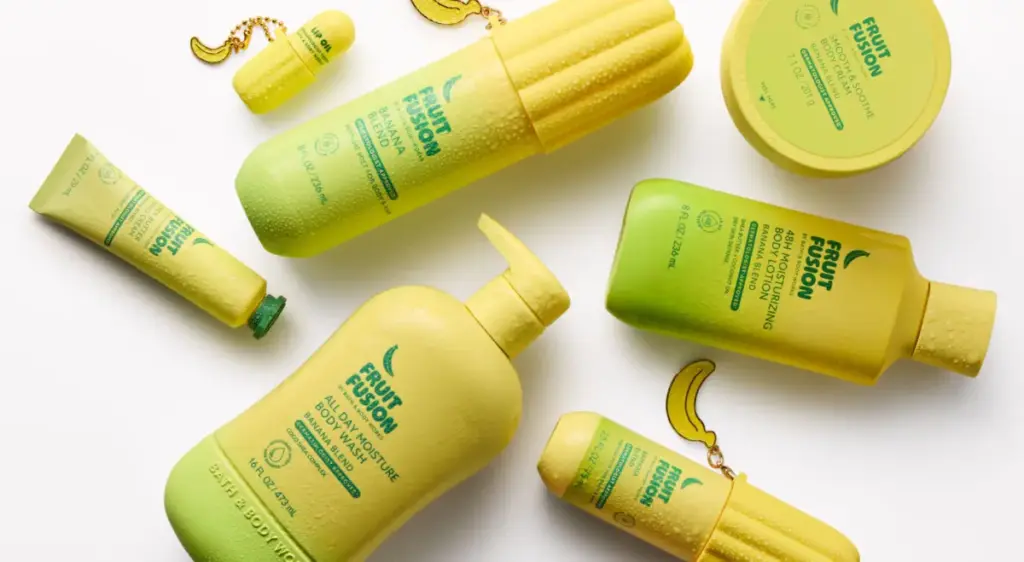
Concurrently, July marked the introduction of the company’s first major celebrity-backed campaign. Tapping pop culture icon Hilary Duff to front the newly launched Fruit Fusion body-care franchise, Bath & Body Works signaled a modernizing approach to marketing. The campaign was heavily supported by social media creators and cross-promoted via Amazon, establishing a hybrid playbook for how future product lines would be launched and scaled.
Phase Three: Rationalization and Concentration (Mid-2026 and Beyond)
As the company navigated through the second quarter of 2026, the focus shifted from pure expansion to strategic rationalization. Leadership critically evaluated low-margin, high-complexity segments of the business. This led to the definitive decision to shutter the home category—encompassing laundry and kitchen products—which accounted for a negligible fraction of annual sales. Simultaneously, the company doubled down on proven winners, planning expansions for its viral Everyday Luxuries franchise (famed for designer-inspired scent dupes) and preparing for the launch of the elevated Reserve Collection candle line.
Supporting Context & Metrics: Unpacking the Q2 2026 Financials
While net sales dipped 2.3% to $1.5 billion in Q2 2026, financial analysts and company executives are urging stakeholders to look beyond the top-line contraction to evaluate the underlying composition of the business. Transformations of this magnitude rarely happen in a straight line, and the mechanics driving the current metrics reveal telling shifts in consumer behavior and operational strategy.
The Amazon Multiplier and Audience Shifts
The crown jewel of Bath & Body Works’ recent digital expansion has undeniably been its partnership with Amazon. According to CEO Daniel Heaf, sales on the Amazon platform "tripled" during the second quarter compared to the first quarter of the year.
More importantly than pure volume is the quality of the customer acquisition happening on the platform. Heaf noted that the Amazon channel is successfully attracting a distinct demographic mix:
- New-to-Brand Consumers: A significant percentage of Amazon buyers have never previously purchased from Bath & Body Works.
- Younger and More Affluent Demographics: The channel skews toward younger shoppers and higher household income brackets than the brand’s legacy customer base.
- Higher Average Unit Retail (AUR): Products sold on Amazon are commanding higher price points, proving that consumers are willing to pay a premium for convenience and accessibility on trusted third-party platforms.
Physical Real Estate Optimization
Even as digital marketplaces surge, Bath & Body Works remains fundamentally committed to physical retail. However, the nature of that physical footprint is undergoing a deliberate geographic correction.
During the second quarter, the company executed a calculated real estate maneuver:
- Store Openings: Bath & Body Works opened 24 new stores, with a heavy emphasis on accessible, open-air, off-mall strip centers. Furthermore, international franchise partners opened an additional 17 stores globally.
- Store Closures: The company shuttered 10 legacy stores, primarily located within traditional enclosed shopping malls that continue to experience foot-traffic declines.
This pruning and replanting strategy ensures that the brand meets consumers in high-convenience suburban shopping hubs rather than relying solely on destination mall trips. Crucially, leadership maintains that wholesale expansions into Amazon and Ulta are entirely complementary rather than cannibalistic. Data indicates that physical stores continue to thrive, particularly for consumers seeking the immersive, seasonal, and sensory experience that only a dedicated brand environment can provide.
Official Statements: Perspectives from Leadership
Navigating a corporate turnaround requires steady leadership, clear messaging, and unflinching candor with investors, employees, and consumers. In his post-earnings commentary, CEO Daniel Heaf addressed the realities of the company’s current financial standing while projecting confidence in the long-term strategic roadmap.
"While the underlying business remains pressured and our performance is not yet where we want it to be, we are where we expect it to be," stated CEO Daniel Heaf during Wednesday’s earnings call. "We have been clear since introducing the Consumer First Formula nine months ago that returning Bath & Body Works to sustainable growth is a multi-year transformation."
Heaf was quick to demystify the rationale behind expanding into external wholesale channels, clarifying that store count expansion is never pursued for its own sake.
"At the end of the day, we’re not expanding our distribution to just add more doors. We’re really going after new consumers, and each partnership has a distinctive strategic need. Amazon is about convenience, and Ulta is about trial and discovery within a specialty beauty environment," Heaf explained. "If you want the full Bath & Body Works experience, you want all of our seasonal products, you want our collabs, our own channels are still the places to go and get that."
Addressing product development and brand architecture, Heaf emphasized a return to disciplined portfolio oversight, specifically pointing to the Fruit Fusion rollout as a masterclass in modern franchise management.
"The other important point about Fruit Fusion, which is a big learning and I think a return to what Bath & Body Works does so well, is franchise management," Heaf noted. "Fruit Fusion isn’t in this door and out the next. We are really getting back to that disciplined franchise management that the business was known for."
Future Outlook: Pruning the Portfolio and Scaling What Works
As Bath & Body Works looks toward the second half of fiscal 2026 and beyond, the strategic blueprint is clear: double down on high-performing scent franchises, elevate core product categories, and mercilessly eliminate operational drag.
Strategic Exits: Saying Goodbye to the Home Category
One of the most decisive operational moves announced alongside the Q2 results is the complete discontinuation of the brand’s home category, which included specialized laundry detergents and kitchen cleaning products. While diversification has been a buzzword in retail for years, Heaf and his team conducted a rigorous cost-benefit analysis that made the path forward undeniable.
The home category represented less than 1% of the company’s annual sales. Despite this negligible revenue contribution, the category introduced disproportionate product development, inventory, and operating complexities. Because it failed to generate the productivity or incremental consumer demand required to justify its overhead, leadership made the pragmatic choice to wind it down, freeing up capital and operational bandwidth to focus on core competencies.
Doubling Down on Scents: Everyday Luxuries and the Reserve Collection
With peripheral categories cleared away, Bath & Body Works is refocusing its immense creative energy where it has historically dominated: fragrance.
- Everyday Luxuries Expansion: The company’s viral Everyday Luxuries franchise—celebrated by beauty enthusiasts on TikTok and Instagram for offering sophisticated interpretations ("dupes") of high-end designer and luxury perfumes—will see a major expansion in the back half of the year. The brand plans to introduce new scent profiles featuring "higher fragrance loads," directly catering to modern consumer demands for long-lasting, high-intensity scent projection.
- The Reserve Collection: Demonstrating that it can cater to the luxury-seeking home fragrance consumer, the brand debuted its elevated Reserve Collection candle line. Designed to appeal to design-conscious consumers looking for premium aesthetic and olfactory experiences, the Reserve Collection represents an upscale evolution of the brand’s legendary candle business.
- Fruit Fusion Evolution: Following its successful summer debut with Hilary Duff, the Fruit Fusion franchise will expand in the third quarter with the addition of two brand-new seasonal scents. The line will continue to serve as the foundational template for future multi-channel, creator-backed product rollouts.
Conclusion: A Fragrant Path Forward
Retail transformations are rarely linear affairs, and Bath & Body Works’ 2.3% sales dip in Q2 2026 is a reminder of the persistent headwinds facing brick-and-mortar-rooted brands in an era of rapid digital disruption. Yet, beneath the headline figures lies a company executing a deeply thoughtful, highly disciplined operational metamorphosis.
By meeting consumers where they prefer to shop—whether through rapid e-commerce convenience on Amazon, prestige beauty exploration at Ulta, or localized discovery in off-mall strip centers—Bath & Body Works is successfully widening its demographic funnel. By ruthlessly shedding complex, low-yield categories like home care while supercharging high-demand fragrance franchises like Everyday Luxuries and Fruit Fusion, leadership is proving that heritage brands can modernize without losing their soul. For investors, shoppers, and beauty industry watchers alike, the multi-year journey of the "Consumer First Formula" is proving to be a masterclass in purposeful retail evolution.