Executive Overview
Live television is a high-wire act where the margin for error is razor-thin. Millions of viewers tune in daily, expecting seamless broadcasts, pristine audio, and unflappable professionalism from the journalists and meteorologists delivering the news. Yet, it is precisely this rigid demand for perfection that occasionally creates the breeding ground for television’s most enduringly human moments.
On August 25, 2026, WABI TV 5 weekend meteorologist Patrick Osborn found himself at the center of a viral storm—not due to an extreme weather event threatening the state of Maine, but because of an unstoppable, highly contagious fit of hysterical laughter that completely derailed his broadcast. What began as a standard weather segment covering localized rain showers and thunderstorms quickly devolved into a comedic disaster, complete with high-pitched squeals, apologetic gasps, and a frantic attempt to remain on-screen.
As the clip made its rounds across digital platforms, accumulating over a million views on X (formerly Twitter) within hours, it joined a storied lineage of broadcast bloopers that remind audiences of the vulnerability hidden behind the anchor desk. This comprehensive report examines the chronology of the incident, the technical and psychological factors that fueled the breakdown, the behind-the-scenes prank that triggered the chaos, and the broader cultural phenomenon of live television slip-ups in the modern media landscape.
Detailed Chronology of the Broadcast Breakdown
The incident occurred during a routine weekend weather update for WABI TV 5, a CBS-affiliated television station broadcasting out of Bangor, Maine. Osborn, who joined the station as a weekend meteorologist in 2024 after building a portfolio as a freelance meteorologist for ABC22/FOX44, stepped before the green screen to deliver the latest meteorological forecasts for the region.
At the onset of the segment, the broadcast proceeded normally. Osborn pointed toward various geographic markers, detailing upcoming precipitation patterns and shifting barometric pressures. However, subtle vocal cracks began to emerge midway through the report. According to later disclosures, internal studio dynamics had already set the stage for disaster during the preceding commercial break.
As Osborn attempted to maintain his professional composure, his voice rapidly ascended into a comically high-pitched squeal—a vocal phenomenon swiftly compared by viewers to the iconic timbre of Mickey Mouse. Struggling to process sentences, Osborn momentarily covered his mouth in a futile effort to suppress the physical spasms of laughter.

Realizing he was losing control of the broadcast environment, Osborn briefly stepped off-screen, his muffled voice bleeding through the studio microphone as he muttered:
"Ok, let me get it together real quick. I’m so sorry."
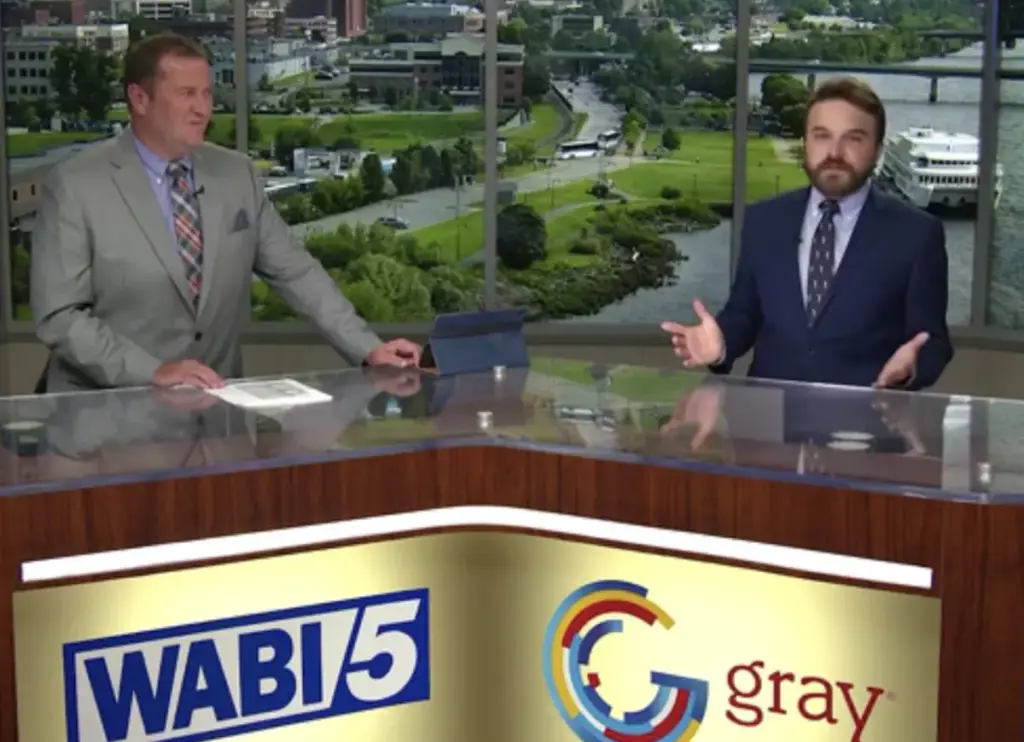
Despite the physical impossibility of delivering coherent meteorological data, Osborn heroically—if hilariously—stumbled back into the frame. He attempted to articulate the remaining forecast points, though his words were entirely obscured by breathless giggles and breathless noises. He managed to limp across the finish line of his segment, desperately tossing the broadcast back to his colleague, anchor and reporter Josh Gabbard.
Gabbard, attempting to salvage the professional decorum of the newsroom, deadpanned a line that instantly cemented the moment in television history:
"What ever happened to professionalism, Patrick?"
The Anatomy of a Prank: Unpacking the Behind-the-Scenes Catalyst
Hours after the broadcast went viral, Osborn appeared on-air alongside anchor Brian Sullivan to demystify the sequence of events that led to his on-screen collapse. Far from being a random psychological snap, the laughing fit was the unintended casualty of a studio prank that catastrophically backfired.

According to Osborn, the trouble began during the commercial break immediately preceding his weather hit. He, along with reporter Josh Gabbard and producer Zoe, had been bantering off-air. Gabbard, whom Osborn playfully accused of "yapping away" through the ad break, became the primary target of lighthearted office teasing.
In retaliation for the extended chatter, the production team prepped a classic sound effect to poke fun at Gabbard when he returned to work: the iconic, melancholy "Charlie Brown wa-wa-wa-wa" trombone motif.
However, a timing miscalculation meant the audio cue bled directly into the live countdown, activating just as Osborn stepped up to deliver his opening meteorological lines. The absurdity of the sound effect, combined with the shared private joke among the crew behind the camera, instantly short-circuited Osborn’s professional filter.
"The rest is history, as they say," Osborn confessed during his post-incident interview with Sullivan, noting that once the psychological barrier of restraint was breached, recovery became mathematically impossible. Studio insiders reported that Gabbard himself was forced to temporarily evacuate the immediate studio floor during the segment due to secondary, uncontrollable waves of laughter.
Supporting Context & Digital Metrics: The Viral Phenomenon
The rapid trajectory of Osborn’s broadcast blunder from local news curiosity to international viral sensation highlights the algorithmic appetite for authentic, unscripted human moments on television.
Within hours of hitting social media platforms, the clip was amplified by high-profile accounts, including digital commentator Collin Rugg, who aptly summarized the meteorologist’s plight for his millions of followers by writing: "This guy was fighting for his life."

Public response on X and other platforms was overwhelmingly empathetic and humorous:
- Sophia, commenting on the irony of reporting harsh weather conditions while descending into hysterics, noted: "He saw the snow and chose joy."
- Jessica S reflected on the universal psychology of suppressed laughter, writing: "His laugh is contagious. I have been cursed with laughing uncontrollably too many times, and knowing you shouldn’t laugh is what makes it worse."
This incident adds to a vibrant August 2026 media cycle dominated by accidental live-television hilarity. Just weeks prior, US audiences witnessed a viral moment on QVC when a host accidentally uttered a notorious NSFW malapropism while advertising a wig, mistakenly promising a "blow job" instead of a "blowout." Simultaneously, across the Atlantic, British broadcaster Kate Garraway left Good Morning Britain viewers and guests in stitches after an innocent linguistic slip-up concerning the "skill of fingering" while discussing piano performance.
Together, these incidents underscore a collective cultural fatigue with hyper-polished, robotic media delivery, demonstrating that audiences increasingly value the unvarnished, vulnerable humanity of broadcasters when things go delightfully wrong.
Official Statements and Industry Impact
WABI TV 5 management handled the minor on-air catastrophe with good humor, recognizing that embracing the mistake was far more effective than attempting to sweep it under the rug. By platforming Osborn later in the news cycle to explain the "Charlie Brown" prank, the station not only humanized its newsroom staff but also capitalized on the organic engagement generated by the clip.
Broadcasting experts note that incidents of this nature, while terrifying for the individuals involved in real-time, frequently yield positive long-term public relations outcomes for local news stations. In an era where linear television struggles to compete with on-demand streaming services, viral broadcast moments drive massive cross-platform awareness, introducing regional anchors and meteorologists to a global digital audience.
Osborn’s professional background—spanning his time as a freelance meteorologist for ABC22/FOX44 and his subsequent role as Weekend Meteorologist at WABI TV 5 since 2024—demonstrates a solid foundational career built on accuracy and dedication. However, it is safe to assume that future broadcasts will feature a much more rigorous verification of audio levels and soundboards before the red "LIVE" light turns on.

Future Outlook: The Resiliency of Live Broadcasting
As television production continues to evolve with automated systems, remote control rooms, and complex multi-platform integrations, the human element remains the most unpredictable variable in the equation.
Patrick Osborn’s viral giggle fit serves as a timely reminder that behind every high-definition forecast, satellite map, and severe weather warning are real people navigating exhaustion, workplace camaraderie, and the immense pressure of live performance. While station executives will undoubtedly tighten pre-show protocols to prevent soundboard mishaps from bleeding into live segments, viewers can take comfort in the knowledge that television remains wonderfully, gloriously fallible.
For Osborn, the viral fame—and the inevitable good-natured teasing from colleagues across the broadcasting industry—will likely persist for months to come. Yet, as he demonstrated both during his breathless weather report and his subsequent studio confession, the best way to handle a live television catastrophe is simply to laugh along with the rest of the world.