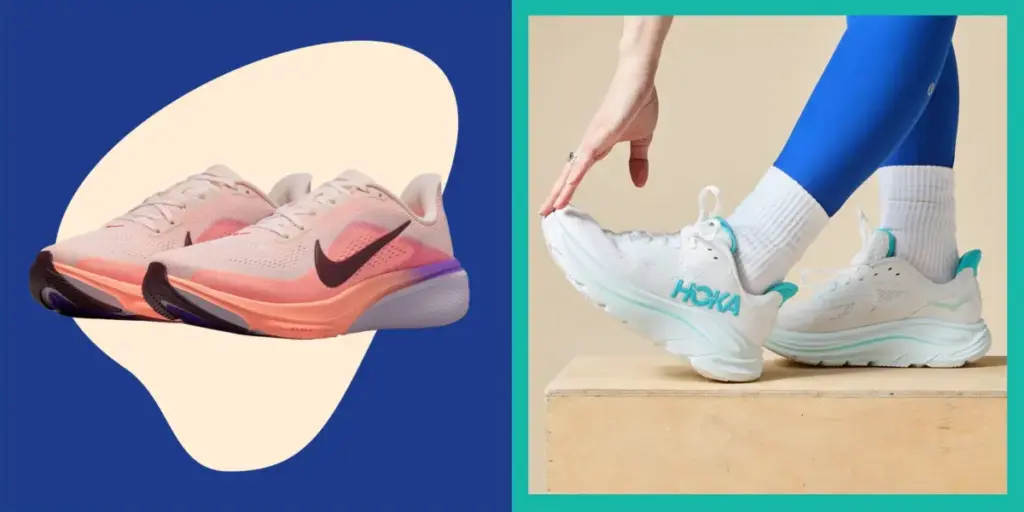
Executive Overview
The landscape of modern athletic footwear has undergone a dramatic paradigm shift over the past decade. No longer viewed simply as utilitarian equipment for running tracks or gym floors, high-performance sneakers have evolved into sophisticated biomechanical tools. Today’s consumers—ranging from competitive endurance athletes to individuals managing chronic lower-extremity pathologies—demand footwear that harmonizes clinical-grade orthopedic support, advanced material science, and contemporary aesthetic versatility.
This comprehensive report examines the state of the walking and running shoe market through rigorous product analysis, expert podiatric insights, and current consumer trends. Backed by leading foot and ankle surgeons, physical therapists, and industry insiders, this evaluation highlights nine standout footwear models that address specific biomechanical challenges, including plantar fasciitis, overpronation, supination, and general postural fatigue.
By analyzing innovations such as nitrogen-infused cushioning foams, proprietary rollbar stability systems, and rocker-bottom sole geometries, this investigation provides an authoritative guide for selecting footwear that prioritizes long-term musculoskeletal health without compromising on daily utility.

Detailed Chronology & Industry Evolution: From Utility to Biomechanical Engineering
To understand why contemporary sneakers command high standards of technical performance, it is vital to trace the evolution of athletic footwear manufacturing. For decades, running and walking shoes were constructed with relatively simple layers of ethyl-vinyl acetate (EVA) foam sandwiched between a rubber outsole and a synthetic upper. While functional for basic impact attenuation, these legacy designs frequently failed to address the complex, multi-planar movements of the human foot.
The Rise of Specialized Biomechanics (2010–2018)
During the early 2010s, footwear brands began collaborating extensively with podiatrists, kinesiologists, and biomechanical engineers. The focus shifted away from generic cushioning toward targeted stability control. Brands like Brooks introduced localized support systems (such as holistic GuideRails technology), while Asics refined its long-standing Gel cushioning platforms to mitigate the risks associated with overpronation—a gait abnormality where the ankle rolls excessively inward during foot strike. During this era, running shoes became clearly demarcated from casual walking shoes, establishing a market sector dedicated to corrective alignment.
The Foam Revolution and Maximalist Design (2019–Present)
The most profound shift in recent history occurred with the mainstream adoption of maximalist cushioning and advanced polymer science. Pioneered in part by brands like Hoka, thick, highly resilient midsoles demonstrated that maximum shock absorption did not necessarily equate to excessive weight or instability.

Concurrently, chemical engineering transformed midsole construction. The introduction of supercritical and nitrogen-infused foams—such as those utilized in the Brooks Ghost series—allowed manufacturers to trap gas within EVA or TPU matrices under extreme pressure. This innovation yielded midsoles that are extraordinarily lightweight, remarkably springy, and remarkably resistant to compression set (the tendency of foam to pack down and lose its shock-absorbing properties over time).
Today, the boundary between running shoes, walking shoes, and everyday lifestyle footwear has blurred. Consumers increasingly favor technical comfort for daily commuting, professional environments requiring prolonged standing, and leisure activities, driving manufacturers to engineer hybrid models that excel across multiple domains.
Supporting Context & Metrics: Clinical Insights and Product Evaluations
Selecting the appropriate shoe requires matching individual foot morphology and pathological conditions with specific mechanical properties. The following detailed product breakdown synthesizes expert recommendations from podiatric surgeons, physical therapists, and industry reviewers.

+--------------------------+-----------------------+----------------------------------+-----------------------------+
| Shoe Model               | Brand                 | Primary Clinical/Use Benefit     | Key Technological Feature   |
+--------------------------+-----------------------+----------------------------------+-----------------------------+
| Clifton 10               | Hoka                  | Plantar Fasciitis / Rocker Form  | Meta-Rocker Geometries      |
| Ghost 17                 | Brooks                | All-Purpose Versatility          | Nitrogen-Infused Cushioning |
| Time Off Sneaker         | Dr. Scholl's          | Lifestyle & Travel Platform      | 1.5-inch Comfort Platform   |
| Adrenaline GTS 24        | Brooks                | Stability & Overpronation        | GuideRails Technology       |
| Gel-Kayano 32            | Asics                 | Flat Feet & Severe Pronation     | Dual-Density Foam Borders   |
| Pegasus 42               | Nike                  | Smooth Cadence & Breathability   | Curvey Toe Box / Mesh Lining|
| 608 V5 Casual Trainer    | New Balance           | Joint Impact Reduction           | ABZORB Midsole Compression  |
| Go Walk Flex Azriel      | Skechers              | Slip-On Convenience & Ergonomics | Breathable Mesh Upper       |
| 1540v3 Sneaker           | New Balance           | Maximum Motion Control           | Rollbar Stability System    |
+--------------------------+-----------------------+----------------------------------+-----------------------------+
1. Hoka Clifton 10: The Gold Standard for Plantar Fasciitis and Forward Propulsion
- Price: ~$124
- Target Audience: Walkers and runners experiencing arch pain, plantar fasciitis, or fatigue from prolonged standing.
According to Dr. Diana Rogers, a podiatric foot and ankle surgery specialist in Crystal Lake, Illinois, and Dr. Casey Pidich, a podiatrist and foot and ankle surgeon based in the Bronx, New York, Hoka’s Clifton series remains a premier recommendation for clinical arch support.
Dr. Pidich highlights that the shoe’s structural design encourages proper gait mechanics by ensuring that the foot rocks smoothly off the ground rather than forcing an unnatural, high-pressure push-off from the toes. Dr. Rogers specifically prescribes the model to patients suffering from plantar fasciitis—an inflammation of the thick band of tissue spanning the bottom of the foot—due to its lightweight construction. "The lightweight feel on this shoe propels feet forward rather than making them do extra work," she notes.
2. Brooks Ghost 17: The Ultimate Do-It-All Daily Trainer
- Price: ~$120
- Target Audience: Individuals seeking a versatile hybrid shoe for running, long walks, and all-day standing.
The Brooks Ghost 17 elevates the renowned franchise by incorporating upgraded nitrogen-fused cushioning. This manufacturing process injects liquid nitrogen into the foam compound, creating uniform gas bubbles that enhance energy return while reducing overall density.

Despite an increased stack height at the heel compared to its predecessor, the shoe avoids feeling excessively soft or wobbly. The balanced midsole absorbs vertical impact forces efficiently without inducing a "marshmallowy" sensation. Furthermore, an engineered air-mesh upper and a plush, non-chafing ankle collar provide an unrestrictive, secure fit.
3. Dr. Scholl’s Time Off Sneaker: Where Style Meets Ergonomic Support
- Price: ~$75
- Target Audience: Urban commuters, travelers, and style-conscious wearers seeking all-day comfort.
Earning high praise across digital style communities and travel guides, the Dr. Scholl’s Time Off Sneaker bridges the gap between orthopedic mindfulness and contemporary streetwear aesthetics. Featuring a 1.5-inch platform sole, it elongates the silhouette and adds height without the heavy, clunky weight typical of traditional platform shoes. Its anatomical cushioning insole ensures that users can navigate urban environments for hours without experiencing foot fatigue.
4. Brooks Adrenaline GTS 24: Award-Winning Stability for Gait Correction
- Price: ~$105
- Target Audience: Walkers and runners requiring structural guidance to prevent excessive inward foot rolling.
Recognized as a leading footwear option for mitigating heel pain and chronic strain associated with plantar fasciitis, the Brooks Adrenaline GTS 24 relies on holistic stability mechanisms. Rather than utilizing rigid, intrusive arch wedges, the shoe incorporates comprehensive support infrastructure that guides the body along its natural path of motion, safeguarding the plantar fascia over extended distances.

5. Asics Gel-Kayano 32: Engineered for Overpronation and Flat Feet
- Price: Varies by retailer
- Target Audience: Individuals with flat feet, low arches, or severe overpronation.
Asics continues its legacy of structural reliability with the Gel-Kayano line. Designed specifically for runners and walkers whose ankles roll inward upon impact, this model features thick, supportive foam borders flanking the midsole to enforce proper alignment. Deep heel cups anchor the foot securely, ensuring that arches remain supported throughout the entire gait cycle.
6. Nike Pegasus 42: Lightweight Cadence and Breathability
- Price: ~$98
- Target Audience: Active walkers and runners prioritizing a streamlined heel-to-toe transition.
The Nike Pegasus 42 refines its predecessor’s profile by shedding excess weight and introducing a curvier toe box. This geometric adjustment enhances "toe spring"—the upward curvature at the front of the shoe—which facilitates a smoother, more efficient roll through the terminal stance phase of walking. Lined with advanced breathable mesh, it keeps thermal accumulation to a minimum during intensive use.
7. New Balance 608 V5 Casual Comfort Cross Trainer: High-Volume Durability
- Price: ~$60
- Target Audience: Individuals seeking reliable joint protection across narrow, standard, and wide sizing options.
Amassing tens of thousands of positive reviews, the New Balance 608 V5 is celebrated for integrating the brand’s proprietary ABZORB midsole technology. This unique foam blend combines compression resistance with high-level cushioning, effectively dampening the mechanical shock transmitted to the knees, hips, and lower back during high-impact walking routines.

8. Skechers Go Walk Flex Azriel: Effortless Slip-On Ergonomics
- Price: ~$57
- Target Audience: Everyday errand-runners, pet owners, and those who prefer laceless convenience.
Highlighting the practical utility of modern footwear, Associate Style and Reviews Editor Shannen Zitz notes, "This is a solid no-frills walking shoe that’s perfect for errands, quick hot girl strolls, or for walking your dog. I love that it slips on easily while still having the appearance of a classic sneaker with bungee laces that never come undone." A lightweight mesh upper pairs with an ultra-cushioned midsole to provide foundational arch support.
9. New Balance 1540v3 Sneaker: Maximum Motion Control for Complex Biomechanics
- Price: ~$70
- Target Audience: Walkers struggling with extreme overpronation, supination (outward rolling), or requiring structural lockdown.
For individuals whose biomechanical deviations require uncompromising stability, the New Balance 1540v3 utilizes a patented "Rollbar stability post system." Constructed from molded TPU components affixed to the medial and lateral sides of the heel, this system physically restricts excessive lateral and medial movement. Dense EVA midsole foam provides sustained arch support, while extra-wide sizing options accommodate specialized orthotic inserts.
Official Statements & Expert Perspectives
The intersection of footwear design and medical science underscores the importance of intentional shoe selection. Industry leaders and medical professionals emphasize that footwear should be treated as an extension of one’s musculoskeletal health rather than a mere fashion accessory.

"When evaluating footwear for patients with chronic lower extremity discomfort, our primary objective is to reduce aberrant mechanical stress on the plantar fascia and intrinsic foot muscles," explains Dr. Diana Rogers. "Shoes equipped with appropriate rocker profiles and responsive cushioning minimize the muscular work required during the propulsive phase of gait, allowing healing tissues to recover while maintaining physical activity."
Dr. Casey Pidich adds, "The evolution of technical foams has fundamentally changed how we manage load distribution. In the past, achieving stability meant wearing a rigid, uncomfortable shoe. Today, engineering allows us to combine plush, energy-returning foams with sophisticated guidance systems that support natural movement without punishing the foot."
Future Outlook: The Next Frontier in Footwear Technology
As material science and biomechanical research continue to advance, the future of walking and running footwear points toward hyper-personalization and sustainable engineering. Industry analysts project several key trends shaping the next decade of development:

- 3D-Printed Custom Midsoles: Moving away from generalized foam densities, brands are actively developing scalable 3D-printing techniques to fabricate lattice-structured midsoles tailored to an individual’s specific pressure-mapping profile and gait analysis data.
- Smart Sensors and Gait Feedback: Emerging prototypes integrate micro-sensors within the sockliner to monitor stride symmetry, ground reaction forces, and fatigue indicators in real-time, transmitting data directly to mobile applications to prevent overuse injuries.
- Circular Manufacturing and Eco-Friendly Polymers: With environmental scrutiny intensifying, footwear brands are investing heavily in bio-based polyurethane foams, biodegradable upper textiles, and closed-loop recycling programs that eliminate landfill waste without sacrificing mechanical integrity.
Conclusion
Investing in the right pair of walking or running shoes is a proactive step toward safeguarding long-term mobility and musculoskeletal health. Whether managing a clinical pathology such as plantar fasciitis, correcting overpronation, or simply seeking all-day comfort during urban exploration, modern footwear offers scientifically backed solutions tailored to every unique biomechanical need. By prioritizing structural support, appropriate cushioning, and proper fit, consumers can ensure that every step taken is firmly grounded in health and performance.