Executive Overview
In an era dominated by high-intensity interval training (HIIT) sweatboxes, CrossFit boxes, and grueling endurance marathons, the fitness industry’s most viral sensation is deceptively simple: walking in place.
As modern lifestyles become increasingly sedentary, millions of people worldwide struggle to hit their daily step goals. For remote workers tethered to their desks, busy professionals with packed schedules, and parents juggling limited childcare options, carving out an hour for the gym can feel like an insurmountable challenge. Enter the indoor walking workout—a low-impact, accessible fitness trend that has taken platforms like YouTube by storm.
At the pinnacle of this movement is the 1.0 Mile Happy Walk created by fitness pioneer Leslie Sansone under her renowned Walk at Home brand. Having amassed a staggering 150 million views across its original and reposted iterations, this 15-minute routine stands as the most-watched indoor walking workout on the internet.
To understand its massive cultural and physical appeal, this publication put the viral session to the test. Examining its mechanics, physiological impacts, and psychological benefits reveals why this humble 15-minute routine is quietly redefining how millions approach daily physical fitness. Far from a mere step-counting gimmick, the 1.0 Mile Happy Walk offers a masterclass in functional movement, low-impact cardio, and accessible wellness.
Detailed Chronology: Testing the Internet’s Most-Watched Walking Routine
To evaluate the viral workout objectively, our fitness desk integrated the 1.0 Mile Happy Walk into a typical, time-crunched workday. Without the luxury of a prolonged gym session, the routine was executed during a standard lunch break in a confined home-office space.
Phase 1: The Setup and Accessibility Factor
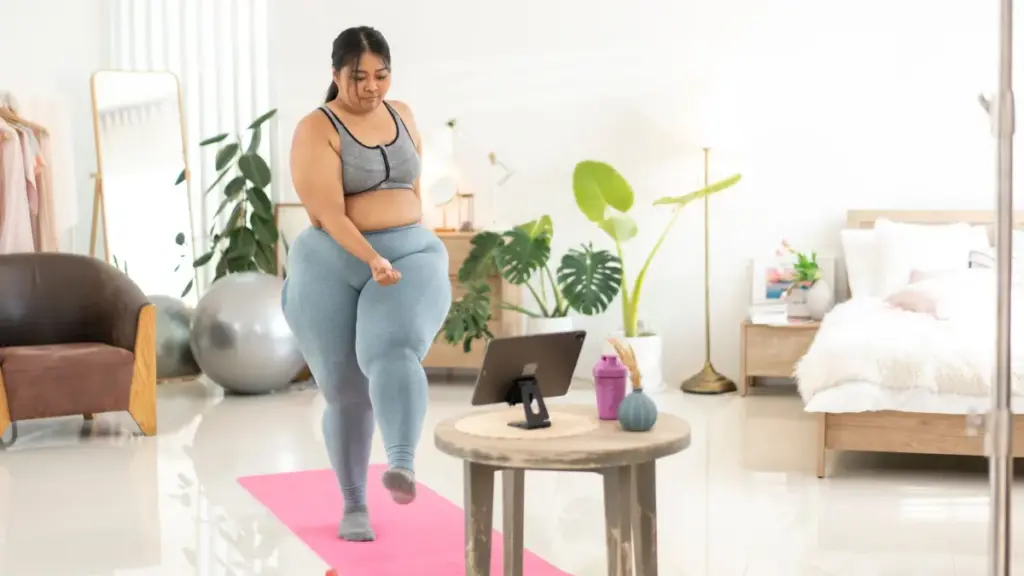
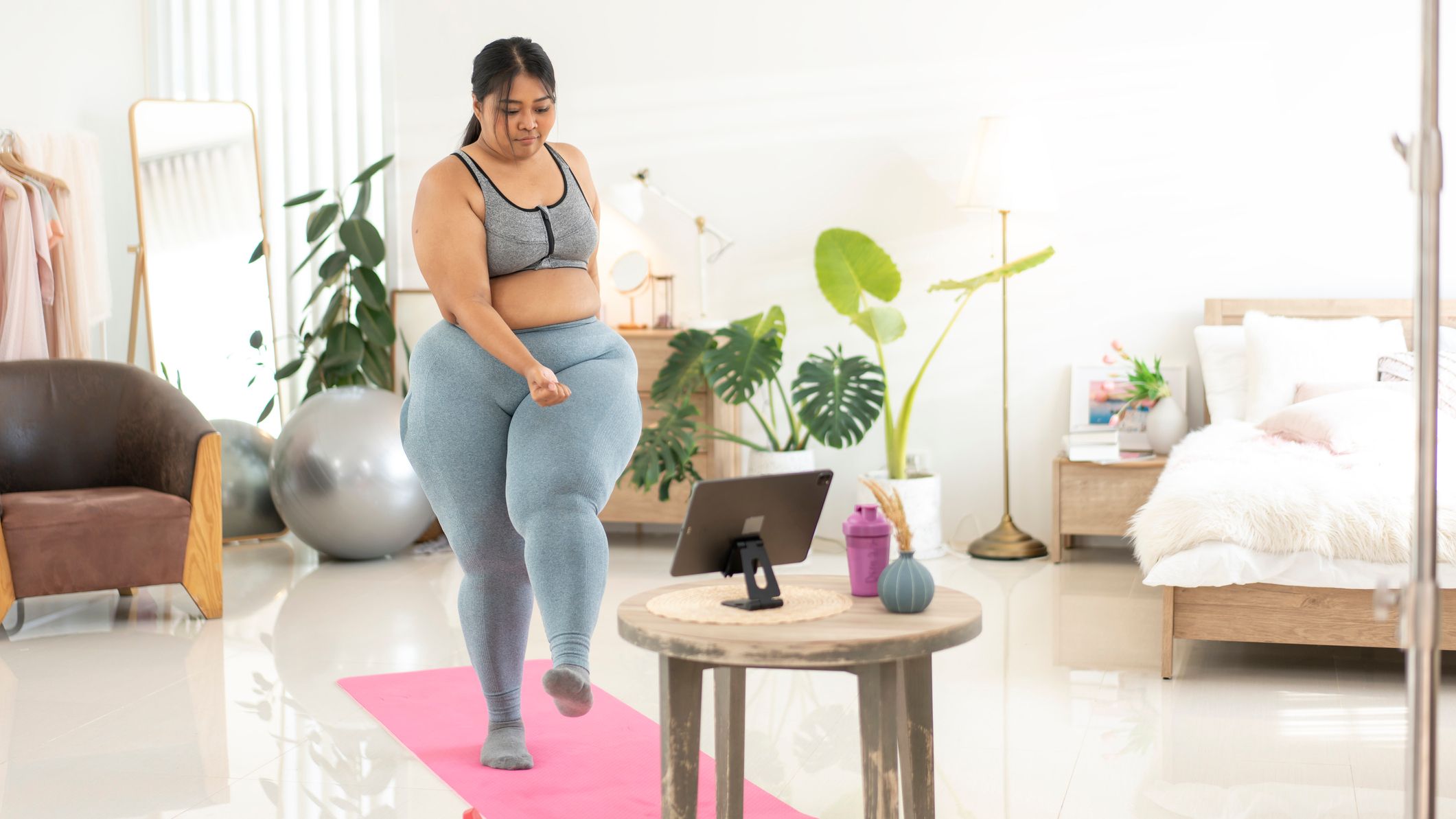
The immediate standout characteristic of the 1.0 Mile Happy Walk is its frictionless entry barrier. Requiring zero equipment, no specialized footwear (though supportive sneakers are always advised), and roughly a six-by-six-foot patch of floor space, the video eliminates every traditional excuse for skipping a workout.
The routine spans precisely 15 minutes, making it perfectly tailored for a mid-day slump or a transition between professional meetings. The structural choreography relies on four fundamental, easily digestible movements:
- Classic Walking on the Spot: The baseline movement keeping the heart rate elevated.
- Side Steps: Introducing lateral motion to engage the glutes and outer thighs.
- Kicks: Adding dynamic range of motion to challenge balance and hip flexors.
- The March: Providing an energetic reset between sequences.
Unlike complex step aerobics or intricate dance cardio routines that require cognitive load to master, Sansone’s choreography is instantly intuitive. Participants are guided through variations of moving forward and backward, as well as side-to-side. For individuals recovering from injuries, those returning to exercise after a prolonged hiatus, or those navigating joint sensitivities, this low-impact paradigm ensures safety without sacrificing engagement.
Phase 2: Total-Body Engagement
A common misconception regarding walking workouts is that they are exclusively lower-body exercises. However, as the session progressed, it became evident that Sansone’s design incorporates upper-body and core recruitment.
Rather than letting the arms hang passively, the routine actively integrates functional upper-body conditioning. Throughout the 15 minutes, participants transition through:
- Overhead presses to target the shoulders and upper back.
- Controlled shoulder rolls to alleviate desk-bound tension.
- Lateral side reaches to engage the obliques.
- Rhythmic arm pumps synchronized with power-walking sequences.
Further intensifying the workout are compound movements such as hamstring curls paired with arm pull-backs, standing core crunches, and the classic grapevine step—a nostalgic nod to traditional aerobic conditioning that requires lateral coordination and rhythm. This multi-planar movement profile transforms a simple walk into a comprehensive, total-body conditioning session.
Phase 3: The Physiological Curve
While 15 minutes of indoor walking may sound gentle to seasoned athletes, the physiological data collected during the session paints a nuanced picture of cardiovascular engagement.
Using an Apple Watch to monitor metrics throughout the session, the baseline heart rate sat at a resting 93 beats per minute (bpm) prior to starting. As the pacing picked up and upper-body movements were integrated, the heart rate steadily climbed, peaking at 131 bpm and maintaining an average of 116 bpm over the course of the 15 minutes.
Total estimated active energy expenditure registered at approximately 98 calories. While this does not compete with a high-intensity spin class or a heavy lifting session, the sustained, continuous low-impact cardio provides significant cardiovascular stimulus. The absence of excessive post-workout fatigue or heavy sweating makes it an ideal "grease-the-groove" activity that can be performed multiple times a week without triggering burnout.
Supporting Context & Metrics: The Science of Low-Impact Movement
To contextualize the success of Leslie Sansone’s routine, it is essential to examine the broader physiological and psychological benefits of indoor walking workouts within the modern wellness landscape.
The Step-Count Imperative
In recent years, public health guidelines have increasingly emphasized step counts as a vital indicator of all-cause mortality and cardiovascular health. While the ubiquitous "10,000 steps a day" benchmark originated largely as a marketing campaign in 1965 rather than rigorous clinical research, modern epidemiological studies consistently show that substantial health benefits—including reduced risk of type 2 diabetes, cardiovascular disease, and cognitive decline—begin accumulating at much lower thresholds, often around 7,000 to 8,000 steps daily.
For individuals working remotely or living in urban environments with harsh weather, accumulating these steps organically can be remarkably difficult. Indoor walking videos bridge this gap. By offering a guided, structured environment, they remove the psychological friction of outdoor walking (such as traffic, weather, and safety concerns) and replace it with external motivation.
Low-Impact vs. High-Impact Stress
High-impact exercises like running or jumping rope place significant mechanical loads on the joints—often subjecting the knees and ankles to forces up to three times a body weight per stride. While beneficial for bone mineral density, high-impact training carries a higher risk of overuse injuries, particularly for overweight individuals, postpartum mothers, or those with joint degenerative conditions.
Low-impact steady-state (LISS) cardio, exemplified by the 1.0 Mile Happy Walk, keeps at least one foot in contact with the ground at all times. This dramatically reduces the shock transmitted to the skeletal system while still elevating the heart rate into the fat-burning and aerobic training zones. Consequently, participants can achieve cardiovascular conditioning without compromising joint health.
Neurological and Mood-Enhancing Benefits
Beyond the physical metrics, the psychological impact of the 1.0 Mile Happy Walk deserves notable recognition. The session’s upbeat pacing, coupled with Sansone’s encouraging coaching style, functions as an effective mental reset.
For knowledge workers experiencing cognitive fatigue, stepping away from a glowing monitor to engage in rhythmic, playful movement triggers the release of endorphins and brain-derived neurotrophic factor (BDNF). This acute bout of physical activity enhances focus, reduces cortisol levels, and elevates mood, serving as an effective antidote to modern occupational burnout.
Official Perspectives and Industry Reception
The explosion of indoor walking workouts on digital platforms has not gone unnoticed by the broader fitness and medical communities.
Industry analysts point out that digital fitness has undergone a seismic shift away from punishing, elite-only bootcamps toward inclusive, longevity-focused movement. Brands like Walk at Home have capitalized on this philosophical pivot by championing the mantra that "any movement is good movement."
Exercise physiologists and physical therapists have increasingly endorsed indoor walking routines for specific demographics:
- Rehab and Recovery: Patients transitioning out of physical therapy find the predictable, controlled nature of indoor walking an ideal stepping stone back to full activity.
- Geriatric Fitness: Older adults looking to maintain mobility, balance, and cardiovascular health safely within the confines of their living rooms utilize these videos to prevent falls and maintain independence.
- Postpartum and Prenatal Wellness: New mothers navigating pelvic floor recovery or limited mobility appreciate the low-impact nature of the exercises.
Leslie Sansone’s enduring philosophy centers on the removal of intimidation from exercise. By stripping away complicated equipment, intimidating gym environments, and unattainable performance metrics, the Walk at Home methodology democratizes physical activity. The staggering 150 million views on YouTube validate a fundamental truth of human behavior: when exercise is fun, accessible, and low-friction, people will show up for it.
Future Outlook: The Evolution of Accessible At-Home Fitness
As we look toward the future of the wellness industry, the trajectory of indoor walking workouts points toward continued exponential growth. Several key trends are shaping this evolution:
- Technological Integration: The fusion of indoor walking with virtual reality (VR) environments and immersive gamification is on the horizon. Imagine walking a virtual trail through the Swiss Alps while following structured pacing prompts in your living room.
- Corporate Wellness Adoption: Forward-thinking companies are beginning to incorporate micro-workouts and active desk breaks into daily remote-work culture, recognizing that 15 minutes of movement yields massive dividends in employee productivity and mental well-being.
- Expansion of Niche Programming: While the 1.0 Mile Happy Walk remains the gold standard for quick cardio bursts, the genre is expanding to include weighted walking variations, senior-specific pacing, and cognitive-dual-task walking sessions designed to support brain health.
Ultimately, the enduring success of Leslie Sansone’s viral creation serves as a powerful reminder that fitness does not need to be agonizing to be effective. Whether you are a single parent managing a tight schedule, a desk-bound professional fighting the afternoon slump, or simply someone looking to infuse more movement into your day, the path to better health can begin right where you are standing.