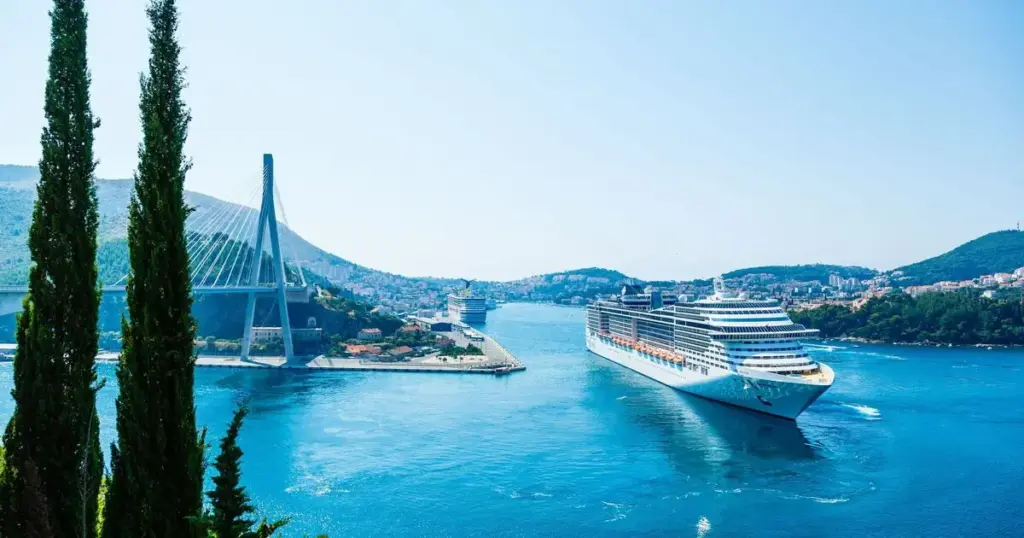
For years, the medieval, sun-drenched walled city of Dubrovnik stood as a cautionary tale for the modern travel industry. Famed globally for its limestone-paved Stradun, pristine Gothic-Renaissance architecture, and crystalline Adriatic waters—not to mention its star-turning role as King’s Landing in HBO’s Game of Thrones—this UNESCO World Heritage site was slowly becoming a victim of its own success. By the mid-2010s, the city found itself routinely topping global hit-lists of destinations to actively avoid. Crushing summer crowds, gridlocked historic thoroughfares, and fleets of massive cruise liners discharging tens of thousands of day-trippers into a tiny, centuries-old footprint pushed local infrastructure to the absolute brink.
Yet, in a stunning reversal of fortune that has captured the attention of urban planners and municipal leaders worldwide, Dubrovnik has successfully pulled itself back from the edge. Rather than surrendering to the pressures of mass tourism, city leadership enacted a series of bold, highly contentious, and ultimately visionary policy interventions. By fundamentally rethinking how cruise tourism operates within its gates, Dubrovnik has transformed a debilitating bottleneck into a balanced, highly lucrative engine of sustainable growth.
Today, the city’s economy is described by its leadership as "flourishing," operating under a model that protects the local quality of life while maintaining robust commercial health. As European destinations from Venice to Barcelona continue to grapple with the existential threat of overtourism, Dubrovnik’s journey offers an authoritative blueprint for how visionary governance can reclaim a historic city from the brink of commercial collapse.
Detailed Chronology: The Rise, Fall, and Reformation of Dubrovnik
The Breaking Point: The Peak of the Overtourism Nightmare
To understand the magnitude of Dubrovnik’s turnaround, one must look back at the chaotic height of its overtourism crisis. A decade ago, the city’s historic core—measuring less than a square kilometer—was subjected to staggering logistical strains. On peak summer days, up to six massive cruise ships would anchor off the coast simultaneously.
Within minutes of docking, thousands of passengers would flood through the Pile and Ploče gates, inundating the ancient streets in a sea of humanity. Local residents found themselves trapped behind impenetrable human grids, unable to run basic errands or access essential services. The economic return on this influx was notoriously poor: day-trippers typically spent mere hours ashore, clogging local monuments and straining municipal waste and sanitation services while contributing very little to local restaurants, hotels, or independent businesses.
The physical wear and tear on Dubrovnik’s marble-paved pedestrian zones were immense, and the soul of the community was rapidly draining away as long-term residents fled the historic center, priced out and overwhelmed by the relentless commercialization of their neighborhoods.
The Turning Point: Radical Intervention
Recognizing that the city’s heritage and liveability were facing an existential threat, Dubrovnik’s municipal government decided to take drastic action. Spearheaded by Mayor Mato Franković, the administration initiated a multi-phase strategic overhaul. The centerpiece of this strategy was a direct confrontation with the cruise ship industry—a sector that had long held immense economic leverage over coastal destinations.
Instead of passively accepting the status quo out of fear of economic retaliation, the city implemented a strict, non-negotiable regulatory framework for cruise liners. The policy centered on three core mandates:
A hard cap of two cruise ships per day allowed in the port.
A strict daily ceiling of 4,000 cruise passengers permitted to disembark.
A mandatory minimum eight-hour stay for every docked vessel.
When these rules were first unveiled, they were met with fierce, unyielding resistance. Cruise executives warned of economic ruin, and local business owners feared the sudden evaporation of foot traffic. Critics accused the mayor of political suicide, arguing that he fundamentally misunderstood the mechanics of modern tourism.
Yet, Mayor Franković and his administration stood their ground. They reasoned that spreading arrivals evenly across the calendar week and forcing ships to linger longer would fundamentally alter passenger behavior—shifting the dynamic from rapid-fire, low-value sightseeing to immersive, economically beneficial exploration.
Supporting Context & Metrics: The Mechanics of Sustainable Tourism
The transformation of Dubrovnik’s economy following the implementation of these regulations challenges traditional economic assumptions about visitor volume versus revenue generation. Conventional wisdom suggested that limiting visitor numbers would inevitably lead to financial contraction. In practice, the opposite occurred.
Redefining the Passenger Experience
Under the old system, six ships arriving simultaneously meant that thousands of tourists were funneled into the city for an average of just four hours. During this narrow window, visitors rushed frantically from one landmark to another, frequently avoiding sit-down dining out of time constraints and overwhelming public amenities.
The introduction of the eight-hour minimum stay—which in practice often extends to nearly ten hours—completely reshaped passenger itineraries. Freed from the anxiety of an imminent departure whistle, visitors began treating Dubrovnik as a destination rather than a quick photo-op.
Economic Indicators and Local Perception
According to municipal data and executive statements, the city’s economic vitality under the new rules has exponentially outpaced the chaotic peak years.
Diversified Spending: Rather than buying cheap souvenirs and immediately returning to the ship for meals, longer-stay passengers now patronize local taverns, book guided excursions, and explore peripheral neighborhoods within the historic center.
Infrastructure Relief: Spreading the 4,000 daily passenger cap evenly across every day of the week—rather than concentrating massive crowds on Thursdays, Fridays, and Saturdays—has eliminated structural gridlock. Municipal sanitation, water, and security systems operate well within safe capacity thresholds.
Community Re-engagement: Local sentiment has undergone a profound shift. Residents who once viewed every arriving vessel with dread now report a vastly improved daily living experience, fostering a healthier symbiosis between the community and the tourism sector.
Official Statements and Leadership Insights
In an exclusive interview with the press, Dubrovnik Mayor Mato Franković reflected on the fierce political battles that paved the way for the city’s current prosperity.
"At the beginning, they were chasing me around and saying that I do not understand tourism, and that I’m going to kill cruise tourism, that I hate cruise tourism," Mayor Franković recalled, addressing the intense skepticism he faced when the policies were first introduced.
The reality that emerged on the ground, however, completely debunked the doomsday predictions of industry lobbyists.
"The truth was absolutely opposite," Franković asserted. "Our economy is now 10 times better than it was at the time when we had six cruise ships at the same time. Today we have two cruise ships every single day… The perception of the locals is completely different because those people are now going into restaurants, they are taking excursions, going around [the city]."
The mayor’s perspective emphasizes that modern destination management is not about slamming the doors shut on visitors, but rather about enforcing smart, disciplined boundaries that protect the integrity of the host community while cultivating high-quality, responsible tourism.
Future Outlook: Tackling the Short-Term Rental Crisis
Having successfully stabilized its cruise tourism sector, Dubrovnik is far from resting on its laurels. City leadership has already identified and mobilized against the next major threat to the city’s long-term survival: the unchecked proliferation of short-term holiday rentals, such as Airbnb and similar platforms.
The Threat of the Seasonal "Ghost Town"
While cruise ships bring daytime crowds, short-term rentals present a more insidious, year-round danger to urban communities: the hollowing out of residential neighborhoods. Mayor Franković has issued stark warnings that if private residential apartments continue to be converted en masse into tourist accommodations, historical quarters risk morphing into desolate "ghost towns" during off-peak months.
The consequences of this trend are profound. As properties are swallowed up by the short-term rental market, long-term housing stock plummets, driving rental prices and property values beyond the reach of local families. Young professionals and new generations are increasingly priced out of their ancestral homes, threatening to turn vibrant cities into sterile, seasonal theme parks inhabited solely by transient visitors.
Groundbreaking Legislation and Global Implications
To combat this demographic erosion, the Dubrovnik city council has partnered with the University of Dubrovnik to draft groundbreaking, evidence-backed legislation. The core of this new municipal policy is an outright ban on the issuance of new short-term rental permits within residential buildings.
"We have a strict decision that there will not be allowance of any more new short-term rental apartments," Franković stated firmly.
Looking beyond Croatia’s borders, the mayor advocates for a coordinated European-wide response to regulate the short-term rental economy.
"My personal belief is that [Europe] should definitely deliver a decision which will limit the number of short-term rentals, which will forbid the short-term rentals in living spaces," he urged. "With [policies like] this, we could save many—not just European cities, many cities across the world—because all of us are having absolutely the same problem."
Conclusion
Dubrovnik’s evolution from a poster child for overtourism to a model of sustainable urban management is a landmark achievement in modern travel governance. By prioritizing community preservation through courageous legislative action, data-driven planning, and a refusal to bow to short-term commercial pressures, the Pearl of the Adriatic has proven that heritage cities can protect their past while securing a prosperous, liveable future.