For decades, mainstream fitness culture has been dominated by a singular, highly restrictive narrative: a relentless obsession with aesthetics, weight loss, and an unattainable standard of physical perfection. Fueled by entrenched systemic biases—including fatphobia, heteronormativity, and cisnormativity—digital fitness spaces like "FitTok" often reduce physical activity to a punitive mechanism for body modification.
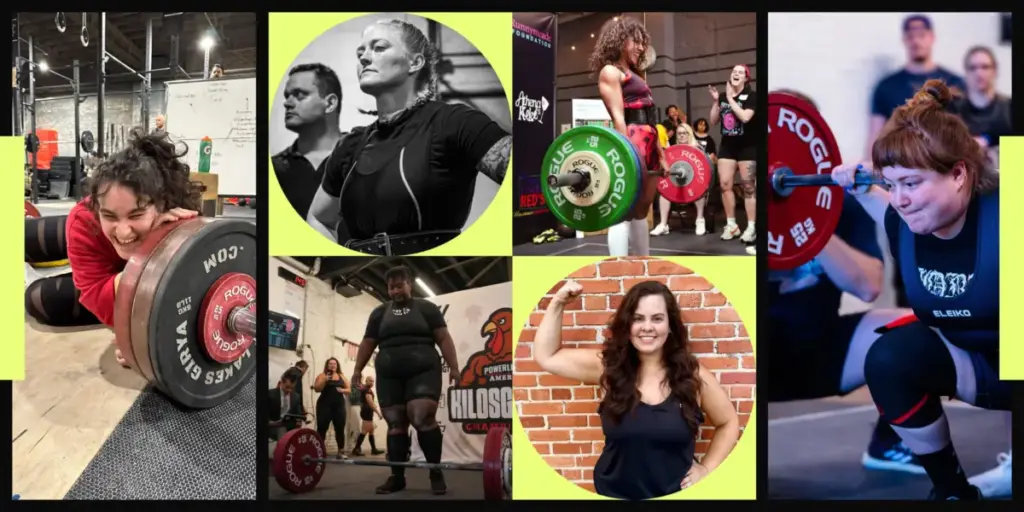
However, a cultural counter-revolution is underway on the platform of the squat rack. Powerlifting—a strength sport centered on the squat, the bench press, and the deadlift—is aggressively dismantling the narrow boundaries of traditional exercise. By pivoting the athletic focal point away from how a body looks and redirecting it entirely toward what a body can accomplish, powerlifting has emerged as a radical, body-affirming practice.
Far from the homogenous images often broadcast by commercial gym chains, the modern powerlifting community is remarkably diverse. From larger-bodied athletes and queer, trans, nonbinary, and intersex individuals to trauma survivors and older adults, this discipline offers a rare sanctuary where participants are encouraged to take up space without apology. Through personal testimonials from nine distinct athletes, coaches, and gym owners, this report explores how heavy barbells are helping people unlearn decades of societal conditioning, heal from body dysmorphia and eating disorders, and forge a fierce, collective sense of belonging.
Detailed Chronology: The Evolution and Modern Resurgence of Inclusive Powerlifting
While the roots of competitive powerlifting trace back to the strength shows of the 1950s and 1960s—evolving into an internationally governed sport by the early 1970s—its cultural ecosystem has undergone a profound transformation over the last decade.
2014: Recognizing a severe lack of safe, inclusive spaces for queer and trans individuals to build strength, coach and entrepreneur Olivia Cadence Luxe founds the Ground-Up Barbell Club in Philadelphia, pioneering a micro-community focused on marginalized lifters.
2018–2020: A surge in grassroots, independent barbell clubs and queer-led lifting unions begins to challenge traditional, highly bureaucratized competitive federations. Athletes navigating recovery from injuries, eating disorders, and body dysmorphia increasingly turn to barbell training as a form of somatic healing.
2021–2023: Social media activism and digital fitness communities begin to push back against toxic aesthetic-driven fitness trends. Unsanctioned local meets and inclusive "recitals" gain traction, offering alternative competitive formats that bypass restrictive, gender-binary, and weight-class-bound regulations.
Present Day: Powerlifting is experiencing a renaissance as a vital intersection of athletic performance and social justice. Athletes across North America are actively organizing to rewrite exclusionary federation policies, ensuring that strength sports remain open to all bodies, regardless of size, gender identity, or physical ability.
Supporting Context & Metrics: The Anatomy of Powerlifting
At its core, powerlifting is deceptively simple. Unlike bodybuilding, which evaluates athletes based on muscular symmetry, definition, and leanness, powerlifting is an objective test of raw, functional strength.
The "Big Three" Movements
The Squat: A foundational lower-body movement that engages the quadriceps, glutes, hamstrings, and core. Beyond the platform, the mechanics mirror everyday functional actions like rising from a chair.
The Bench Press: An upper-body pressing movement targeting the pectorals, anterior deltoids, and triceps, serving as a primary metric for upper-body pushing power.
The Deadlift: The ultimate test of posterior chain strength, requiring an athlete to lift a loaded barbell off the floor to hip level. This movement directly translates to daily tasks such as lifting heavy objects from the ground.
Demographics and Accessibility
While competitive powerlifting features formal weight classes and strict judging criteria, the modality itself boasts an exceptionally low barrier to entry. According to personal trainer and powerlifting coach Mia Nikolajev, CSCS, the movements can be universally scaled to accommodate diverse mobility needs and accessibility requirements.
Despite persistent barriers within certain conservative athletic federations—such as restrictive policies targeting transgender, nonbinary, and intersex athletes, or those utilizing hormone therapy—the grassroots movement continues to expand. Local, unsanctioned meets are bridging this gap, offering inclusive divisions where athletes are judged solely on their athletic output and mutual community support.
Official Statements & Athlete Perspectives
The transformative power of the barbell is best understood through the lived experiences of those who have reclaimed their bodies through the sport.
Keri Harvey (She/Her)
Gym Co-Founder and Personal Trainer, 31 — Brooklyn, NY
As a NASM-certified trainer and owner of FORM Fitness BK, Keri Harvey understands physical conditioning, yet she admits that powerlifting provides a unique psychological release. Introduced to barbell training four years ago, Harvey found that lifting heavy objects allowed her to quiet her mind and trust her physical vessel.
"The sport of powerlifting is not about aesthetics, but instead about power, and the athletic ability of a powerlifter," Harvey explains.
Training alongside bodies that look completely different from her own has offered a powerful antidote to image-focused toxic fitness culture. Her training tip:"Give yourself permission to be bad at something. Consistency will help you navigate your plateaus."
Brittany Billings (She/Her)
Athlete, 39 — Fort Wayne, IN
Having cycled through soccer, ultramarathons, triathlons, and bodybuilding, Brittany Billings struggled to find an athletic home until she discovered powerlifting four years ago. Growing up in a society that erroneously equates femininity with smallness left her with decades of negative self-talk.
"In the four years I’ve been powerlifting, decades of negative self-talk and looking for ways to fit into a societal mold have nearly vanished," Billings shares.
Her training tip:"Celebrate the wins and move past your failures. If you stick with it, you’ll reach goals you never believed you could."
Annika Hansteen-Izora (She/They/He)
31 — Brooklyn, NY
For Annika Hansteen-Izora, a Black, queer, femme nonbinary person, powerlifting became an avenue for radical self-expression and gender euphoria. After participating in a queer and trans pride lifting competition, Hansteen-Izora experienced a profound shift away from societal pressures to "contain" their body and voice.
"Lifting 300 pounds with my long bejeweled nails curled around the bar is how I get free in my body," they state. "It’s strength without apology."
Olivia Cadence Luxe (She/Her)
Gym Owner and Coach, 42 — Philadelphia, PA
As the founder of Ground-Up Barbell Club, Olivia Cadence Luxe has spent over a decade creating spaces for trans individuals, people of color, and larger-bodied athletes. For Luxe, the physical adaptations brought on by heavy lifting are profoundly gender-affirming.
"I definitely have found confidence in my body and gender throughout lifting. The muscles I have built are gender-affirming for me. I’ve felt more like a woman than I ever have," she notes.
Sydney Crowe (She/They)
Athlete, 30 — Toronto, Canada
After retiring from a lifelong competitive soccer career, Sydney Crowe navigated years of body dysmorphia and adjustment struggles. Powerlifting provided a vital framework to shift perspectives.
"Powerlifting changed how I view my body, shifting away from how it looks (strong as hell) to what it’s capable of," Crowe reflects.
Erika Owen (She/Her)
Athlete, 35 — Brooklyn, NY
Encountering a narrow, restrictive vision of femininity throughout her life, Erika Owen found liberation through the structured progression of barbell training.
"Seeing body changes as data instead of emotional reactions has been a massively positive pivot," Owen explains, highlighting how tracking performance metrics replaces toxic emotional self-judgment.
Audrey Caprio (She/Her)
Athlete, 30 — Florida
Discovering powerlifting via social media in 2022, Audrey Caprio emphasizes the welcoming nature of the community.
"Powerlifting is one of the sports that you can truly come as you are," Caprio says, noting that spectators cheer equally for lifters regardless of their experience level or weight class.
Lizzie (They/Them)
Athlete, 30 — Seattle, WA
Having faced fatphobia and microaggressions in other fitness environments, Lizzie found refuge in a queer- and trans-inclusive powerlifting union.
"It has helped me separate strength from aesthetics, feel confident in myself, and explore the capabilities of my body without the intrusion of diet culture," Lizzie notes.
Katie Orlic (She/Her)
Athlete and Coach, 31
Surviving anorexia and bulimia, Katie Orlic found her way to the barbell as a path toward healing. With a state-record-breaking squat of 385 lbs, a 187-lb bench press, and a 413-lb deadlift, Orlic’s athletic achievements are staggering. Yet, the emotional healing outweighs the numbers.
"Finding a space where everyone around you is cheering for your capability instead of your appearance was so healing to me," Orlic shares.
Future Outlook: The Horizon of Inclusive Strength Sports
As the cultural conversation around fitness shifts away from toxic diet culture and aesthetic gatekeeping, powerlifting stands at the vanguard of a progressive athletic movement. The ongoing efforts of independent gym owners, queer lifting unions, and grassroots organizers are actively dismantling the bureaucratic and cultural barriers that have historically excluded marginalized populations.
The future of powerlifting points toward an expansion of unsanctioned, community-led competitions, more nuanced and equitable coaching methodologies, and a wholesale rejection of body-shaming rhetoric. By anchoring athletic achievement in performance, resilience, and mutual support, powerlifting is not merely shaping stronger bodies—it is forging a more inclusive, liberated cultural landscape for athletes of every background, identity, and size.