Executive Overview
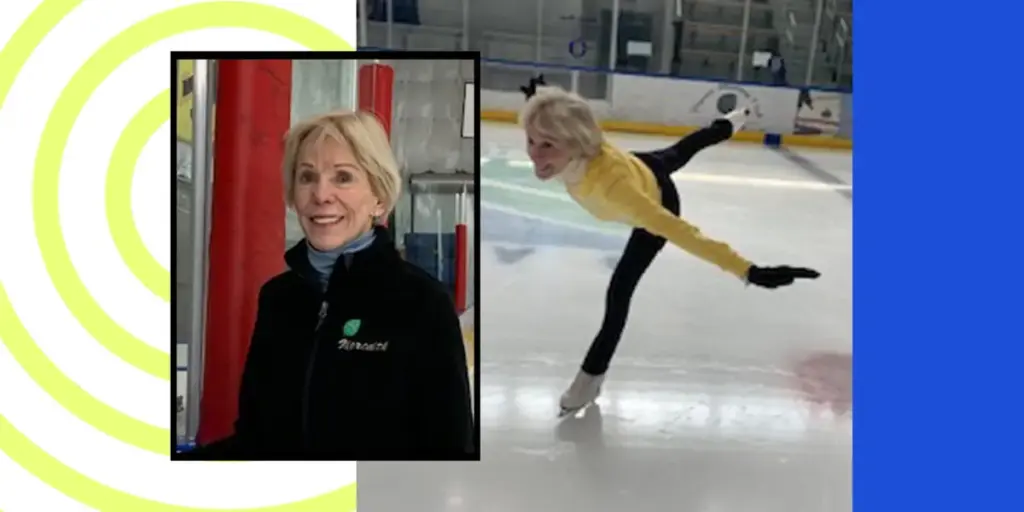
In a world obsessed with youth, aging is frequently framed as a narrative of inevitable decline—a slow, quiet retreat from high-intensity passions, athletic feats, and physical prowess. Yet, defying conventional expectations of aging stands an extraordinary athlete who is rewriting the rulebook on longevity and athletic perseverance. At 86 years old, she laces up her figure skates, steps onto the gleaming sheet of ice, and executes jumps, spins, and precise edge work with the enthusiasm of a teenager.
What sounds like a heartwarming anomaly is, upon closer inspection, a masterclass in physiological resilience, neurological muscle memory, and the healing power of long-term remission. Her journey back to competitive-style training began not in her youth, but at age 78, following a staggering 55-year hiatus enforced by a debilitating autoimmune disorder. Today, she trains five days a week, blending on-ice technical mastery with off-ice cardiovascular endurance and targeted plyometric conditioning.

This in-depth investigative feature explores the remarkable second act of her athletic career. Through a careful examination of her medical history, training regimen, coaching philosophy, and the profound psychological implications of refusing to let a calendar number dictate capability, this article reveals how movement, mindset, and unwavering determination can successfully break through the boundaries of age.
Detailed Chronology: From International Competitor to Forced Hiatus and Triumphant Return
The Early Years: A Heart Captured by the Ice
Long before she became an internet-famed octogenarian skater, she was a vibrant young athlete driven by a relentless desire to push her physical limits. Growing up with an innate passion for high-output physical activity, she divided her time between running track and riding horses. Yet, among all athletic pursuits, figure skating held an undisputed monopoly on her heart.

Throughout her teens and early twenties, she traveled internationally, competing in rinks across the globe. She experienced the unique, soaring liberty of the glide, the sharp crunch of steel blades biting into frozen water, and the intense, adrenaline-fueled focus required to execute complex aerial maneuvers. Skating was not merely a hobby; it was the primary vehicle through which she expressed confidence, grace, and personal agency.
The Turning Point: Diagnosis and Devastation
The trajectory of her life shifted abruptly shortly after her 24th birthday. Plagued by an inexplicable, overwhelming loss of physical strength and coordination, she sought medical evaluation and received a life-altering diagnosis: myasthenia gravis.

Myasthenia gravis is a chronic, progressive autoimmune neuromuscular disease caused by antibodies that block or destroy nicotinic acetylcholine receptors at the neuromuscular junction. This disruption prevents nerve impulses from properly communicating with muscles, resulting in varying degrees of voluntary muscle weakness. For a competitive figure skater, the diagnosis was catastrophic.
Suddenly, her body refused to cooperate with her commands. She lost the explosive lower-body power required for jumps, the rotational core stability needed for spins, and even the upper-body endurance necessary to simply lift her arms. Because myasthenia gravis has no known cure, standard medical protocols at the time heavily emphasized symptom management through pharmacology and strict physical conservation. Her care team advised her to step away from all high-intensity exercise, warning her that overexertion could trigger severe muscular crises.

Heartbroken, she packed away her dresses, stored her equipment, and hung up her skates. For nearly six decades, the ice remained a distant, painful memory.
Navigating the Decades: Alternative Movement and Quiet Perseverance
Stepping away from competitive skating did not extinguish her love for physical culture. Over the ensuing decades, she adapted her lifestyle to accommodate her medical reality while honoring her innate need for movement. She maintained an active routine through walking, jogging, and recreational skiing. Furthermore, she engaged periodically with professional personal trainers to preserve baseline functional strength, joint mobility, and neuromuscular balance as she aged.

While these alternative modalities kept her robust and healthy, they could not fully replace the profound psychological and artistic fulfillment she had once found on the ice. She lived with a quiet acceptance that her competitive chapter was closed forever—until an unexpected medical milestone completely altered her horizon.
The Miracle at 78: Remission and Reawakening
Following a relocation to a new town in her late seventies, she consulted a new specialist to manage her lifelong history with myasthenia gravis. Following a comprehensive series of diagnostic evaluations, the physician delivered news she had spent nearly sixty years praying to hear: her condition had entered a state of complete clinical remission. The autoimmune activity had quieted down, meaning the disease was no longer actively attacking her neuromuscular junctions.

"I was shocked, but so happy and relieved," she recalls. "Almost immediately, I knew I wanted to return to the ice."
The very next chapter of her life unfolded with swift intent. Within weeks, she sourced a specialized local coach, purchased new equipment, and stepped back onto a frozen rink for the first time in 55 years. Far from starting completely from scratch, she discovered a fascinating biological phenomenon waiting beneath the surface: deep, unyielding muscle memory.

Within a month of consistent, careful practice, she was executing basic jumps and spins once again. While her execution lacked the pristine aerodynamic perfection of her youth, the core joy remained entirely intact. She was back where she belonged.
Supporting Context & Metrics: The Modern Training Regimen of an 86-Year-Old Athlete
Today, at 86 years old, her weekly routine resembles that of a dedicated, high-performance club athlete. Her training schedule is meticulously engineered to balance cardiovascular health, bone mineral density, muscular endurance, and joint mobility, minimizing injury risk while maximizing athletic longevity.

Weekly Training Architecture
- Frequency: Trains 5 days a week across multiple modalities.
- On-Ice Sessions: 3 to 4 times a week, focusing on technical skill acquisition, edge work, and foundational execution.
- Cardiovascular Endurance: 3 to 4 times a week on the treadmill, utilizing high-intensity interval training (HIIT).
- Strength & Stability Training: Daily integration of targeted lower-leg, ankle, and tendon reinforcement protocols.
Pre-Ice Warm-Up Protocol
Before lacing up her skates and stepping onto the rink, she prepares her musculoskeletal system with a comprehensive, multi-phase activation sequence:
- Joint Mobility Exercises: Hip circles, controlled ankle rolls, and sweeping leg swings to lubricate synovial joints and elevate core body temperature.
- Plyometric Drills: Low-impact explosive movements, including squat jumps and bunny hops, designed to recruit fast-twitch muscle fibers and prime neuromuscular pathways.
- Perimeter Aerobic Activation: Jogging several laps around the outer perimeter of the ice rink to accelerate systemic blood flow and prepare the cardiovascular system.
On-Ice Technical Focus
Once on the ice, her coaching sessions emphasize deliberate practice over reckless ambition. Training blocks are systematically divided:

- Edge Work: Precision drills focusing on how the steel blade cuts into the frozen surface, developing deep knee bend, balance, and fluid curves.
- Advanced Elements: Controlled execution of jumps and spins.
- Regressive Problem-Solving: If an element feels uncoordinated or structurally weak, she refuses to force it. Instead, she collaborates with her coach to deconstruct the movement back to its fundamental posture and mechanics.
Off-Ice Cross-Training
To sustain the intense physical demands of figure skating, her off-ice regimen is equally robust:
- Treadmill Interval Training: Alternating between one minute of running and two minutes of active walking for four to five consecutive rounds. This builds formidable cardiovascular endurance without placing undue, chronic stress on her joints.
- Lower-Extremity Tendon Conditioning: Daily execution of calf raises and weighted tiptoe walks (both forward and backward) while wearing specialized ankle weights. These movements specifically target the soleus, gastrocnemius, and Achilles tendons, ensuring the absolute ankle stability required for landing jumps on a slippery surface.
Official Insights & The Three Pillars of Longevity
Behind her extraordinary physical feats lies a carefully cultivated philosophy of sport, health, and mental fortitude. Her athletic success rests upon three foundational pillars that offer profound lessons for individuals of any age.

Pillar 1: Cultivating Coaches Who See Potential, Not Limitations
When returning to a high-risk sport after a five-decade absence, the choice of mentorship is paramount. She deliberately sought out professional coaches who possessed a rare combination of technical expertise, patience, and progressive vision.
"I wasn’t looking for someone to lower their expectations because of my age or focus only on what I shouldn’t do," she explains. "I wanted someone who would challenge me while putting my safety first."

Throughout her return, she has worked with three distinct coaches who championed her progress, celebrated small victories, and gently pushed her past her comfort zone. By surrounding herself with professionals who visualize human capability rather than chronological limitations, she built the psychological safety net required to take physical risks on the ice.
Pillar 2: Radical Body Awareness and Graceful Adaptation
At 86, physical feedback is immediate and unmistakable. One of the most critical lessons she has embraced is the absolute necessity of listening to her body. This involves a daily honest assessment of her physical and mental state:

- On days when her balance, coordination, and energy are optimal, she leans into challenging jumps and complex spin variations.
- On days when her body feels heavy or fatigued, she pivots gracefully, stripping away advanced maneuvers to focus exclusively on slow, grounding foundational mechanics.
Furthermore, she has abandoned the trap of cross-generational comparison. She does not measure today’s output against yesterday’s triumphs, nor does she lament that her jumps lack the soaring altitude they possessed in her twenties. By prioritizing long-term consistency over fleeting perfection, she maintains a healthy, sustainable relationship with physical activity.
Pillar 3: Deconstructing the Stigma of Age
Perhaps her most radical contribution to the cultural conversation surrounding aging is her complete indifference to chronological categorization. When strangers express shock at her athletic endeavors—frequently uttering variations of "I can’t believe you’re still skating at 86"—she redirection the focus entirely away from the numerical metric.

"I don’t spend much time thinking about my age," she notes. "Instead, I think about how I feel when I step onto the ice, the excitement of landing a jump I’ve been practicing, and the joy of continuing to challenge myself and improve."
Her philosophy challenges the institutionalized ageism prevalent in modern fitness culture, proving that physical decline is often accelerated by cultural permission to quit rather than biological necessity.

Future Outlook: Redefining What Is Possible After 80
The narrative of this 86-year-old figure skater transcends the boundaries of sports journalism; it serves as a powerful medical and sociological case study in human vitality. As global life expectancies rise, public health initiatives increasingly emphasize "healthspan"—the number of years a person lives free from chronic disease and debilitating frailty—rather than mere lifespan.
Her story demonstrates that structured athletic training, combined with modern medical management of chronic conditions like myasthenia gravis, can unlock extraordinary levels of physical autonomy late in life. By maintaining a rigorous routine of strength, balance, cardio, and skill acquisition, she has effectively fortified her skeletal and muscular systems against the ravages of sarcopenia and age-related balance decline.

As she continues to train five days a week, her eyes remain fixed firmly on the horizon. She is not resting on the novelty of her achievements; she is actively pushing the boundaries of what society deems permissible for an octogenarian.
Her ultimate message to the world remains as sharp and clean as a blade carving an outer edge: Growing older does not mean surrendering the things that bring you joy. Age should never be the definitive boundary that stops you from doing what you love—or the reason you refuse to start again.