
Executive Overview
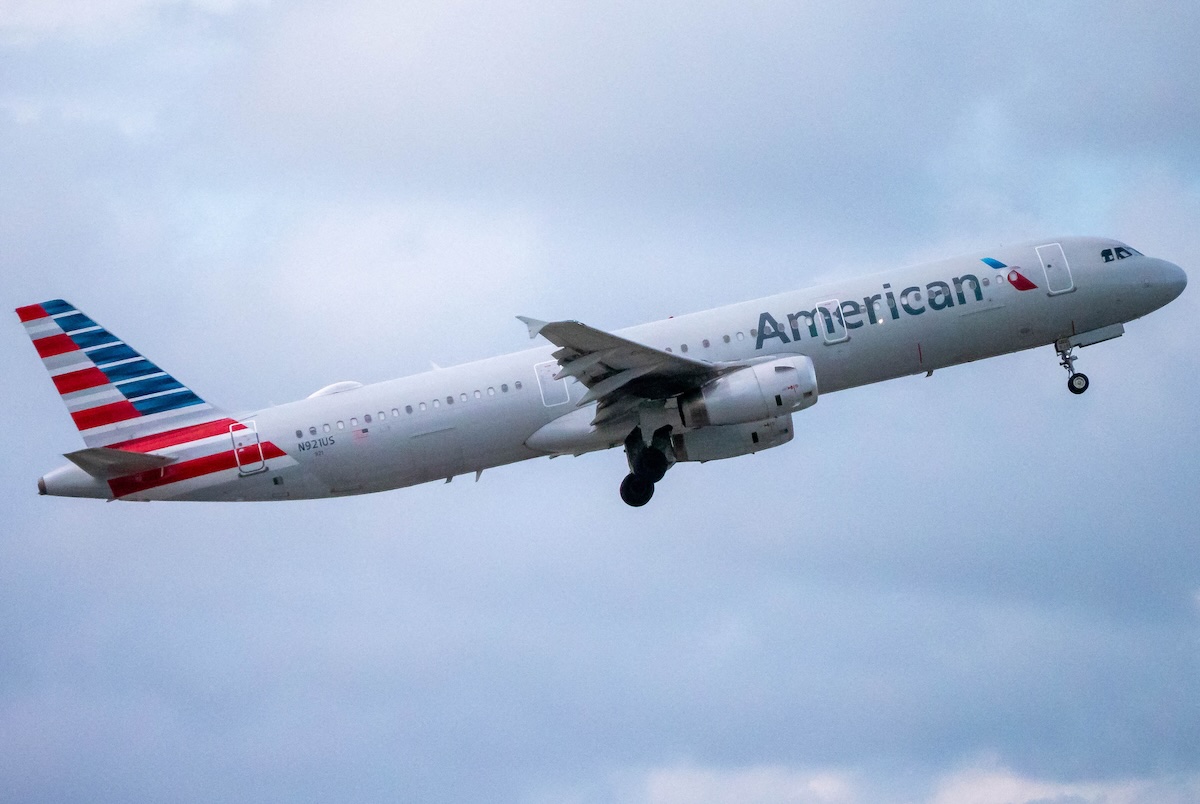
An in-flight hazardous material incident aboard an American Airlines flight resulted in passenger injuries and an emergency response after a laptop computer’s lithium-ion battery suffered catastrophic thermal runaway during final descent. Flight 2398, operating from Hartsfield-Jackson Atlanta International Airport (ATL) to Dallas-Fort Worth International Airport (DFW) with 133 passengers on board, experienced an sudden breach of passenger compartment safety when smoke and extreme thermal energy were released mid-cabin.
Although the flight crew successfully deployed onboard containment protocols to suppress the source of the fire, air traffic control communications revealed that between four and five passengers sustained thermal burns during the incident. Upon landing safely at DFW, emergency responders met the aircraft at the gate, where at least one passenger received immediate medical treatment.
The event underscores a growing operational challenge for global aviation authorities: the proliferation of high-capacity personal electronic devices (PEDs) powered by volatile lithium-ion batteries. With federal aviation data showing a persistent rise in thermal runaway incidents aboard commercial aircraft, regulatory bodies and carrier operations face renewed pressure to evaluate cabin safety procedures, passenger awareness campaigns, and containment infrastructure.
       FLIGHT PATH & INCIDENT TIMELINE (AA 2398)
       -----------------------------------------
[ATL] Hartsfield-Jackson Atlanta International Airport
  │
  ├── Normal Cruise Phase (~133 Passengers Onboard)
  │
  ├── Final Descent / Approach to Dallas-Fort Worth (DFW)
  │     └─► Thermal runaway triggered in passenger laptop mid-cabin
  │     └─► Flight attendants deploy Halon/containment protocols
  │     └─► Pilot alerts DFW Air Traffic Control (4-5 reported burns)
  │
  ├── Safe Touchdown at DFW
  │     └─► Aircraft taxies to gate under its own power
  │
[DFW] Gate Arrival & Emergency Response
        └─► Ground crews and medical team board aircraft
        └─► Triage administered; one passenger formally treated & released
Detailed Chronology of Events
Flight Profile and Descent
American Airlines Flight 2398 departed Hartsfield-Jackson Atlanta International Airport on Friday morning, operating a routine domestic passage westbound toward Dallas-Fort Worth International Airport. The main cabin accommodated approximately 133 passengers alongside a standard flight and cabin crew complement.
The flight proceeded without event through cruise altitude. However, as the aircraft entered its final arrival vector into the Dallas-Fort Worth airspace and initiated its descent, a passenger’s laptop computer suffered a severe internal failure, entering thermal runaway—a self-sustaining chemical reaction that rapidly produces high heat, toxic smoke, and open flames.
Cabin Mitigation and Radio Communications
Inside the cabin, the localized failure led to an immediate discharge of intense heat and smoke around the mid-aircraft section. Cabin attendants executed trained emergency suppression procedures, isolating the offending device and utilizing aboard fire suppression assets—such as specialized thermal containment bags and fire extinguishers—to prevent the thermal failure from spreading to airframe materials or adjacent seating.
Simultaneously, the flight deck crew contacted Dallas-Fort Worth Ground Control to report the hazard and coordinate emergency services for arrival. Air traffic control (ATC) audio recordings captured the pilot outlining the severity of the cabin situation:
"I think we have about four to five passengers that were burned by the laptop. The laptop is contained about mid-aircraft. Once we taxi clear, I guess the best plan to follow is to the gate or any way you guys can board?"
The flight crew confirmed that while the active chemical burn had been managed and localized, physical contact with the overheating unit or thermal radiation during the initial flash had impacted multiple individuals in close proximity.
Landing, Taxi, and Emergency Medical Triage
Flight 2398 executed a normal touchdown on DFW’s runway surface. Rather than executing an emergency evacuation on the active taxiway—which presents significant collateral hazards—the flight crew maintained control of the cabin atmosphere and taxied the aircraft to the gate under its own power.
Upon arrival at the terminal gate, emergency first responders from the DFW Department of Public Safety immediately boarded the airframe. Emergency medical personnel initiated a triage of passengers seated in the immediate vicinity of the thermal event. While initial radio transmissions estimated four to five exposed individuals, official post-flight assessments confirmed that one passenger required formalized medical treatment at the scene before being released by paramedics.
Supporting Context & Industry Metrics
Mechanics of Lithium-Ion Thermal Runaway
The incident on Flight 2398 illustrates the unique physics of energy storage hazards in modern consumer electronics. Lithium-ion batteries store substantial electrical energy in a compact volume utilizing volatile organic electrolytes. Thermal runaway occurs when an internal short circuit, structural puncture, manufacturing micro-defect, overcharging, or external heat exposure causes the battery’s internal separator layer to compromise.
       LITHIUM-ION THERMAL RUNAWAY CASCADE
       -----------------------------------
   +-----------------------------------------------+
   | Internal Short / Mechanical / Thermal Shock  |
   +-----------------------------------------------+
                           │
                           ▼
   +-----------------------------------------------+
   | Rapid Exothermic Temperature Rise (>150°C)   |
   +-----------------------------------------------+
                           │
                           ▼
   +-----------------------------------------------+
   | Electrolyte Breakdown & Toxic Gas Generation  |
   +-----------------------------------------------+
                           │
                           ▼
   +-----------------------------------------------+
   |  Pressure Vessel Rupture / Flame / Thermal    |
   |      Radiation to Surrounding Cabin Material  |
   +-----------------------------------------------+
Once a single cell enters thermal runaway, temperatures can quickly exceed $600^circtextC$ ($1,112^circtextF$). This thermal spike frequently triggers adjacent cells within the battery pack to fail sequentially, creating a chain reaction characterized by:
- High-velocity particulate and toxic vapor discharge (fluorinated hydrocarbons, carbon monoxide).
- Direct flame jetting and intense radiant thermal emission.
- Risk of thermal transfer to cabin carpeting, personal carry-on items, and seat upholstery.
FAA Incidents Trends and Historical Data
Data monitored by the Federal Aviation Administration (FAA) shows a continuous, long-term upward trend in thermal runaway incidents involving consumer devices carried into passenger cabins.
| Year Period | Recorded In-Flight Lithium-Ion Incidents (FAA Data) | Primary Devices Involved |
|---|---|---|
| 2021 | 54 | E-cigarettes, Power Banks, Phones |
| 2023 | 77 | Laptops, Portable Chargers, E-cigarettes |
| 2025 | 88 | Laptops, Personal Mobility Devices, Power Banks |
| 2026 (Through August) | 58 | Laptops, Power Banks, Personal Electronics |
Note: FAA metrics specifically track verified events involving smoke, fire, extreme heat, or explosion on passenger and cargo airliners.
The regulatory requirement that all high-capacity personal lithium-ion devices remain in the passenger cabin rather than in checked cargo holds is deliberate. While an in-cabin event poses localized risks to nearby passengers—as occurred on Flight 2398—it allows trained crew members to detect smoke immediately, apply extinguishing agents, and place the unit into containment. A similar failure within an inaccessible cargo hold risks compromising passive fire suppression systems and jeopardizing structural airworthiness.
Official Statements & Regulatory Standards
Airline and Airport Operational Responses
Following the flight’s arrival, representatives from American Airlines and local airport authorities issued statements confirming the operational chain of events and crew response.
American Airlines confirmed the incident details in a formal release:
"American Airlines Flight 2398 landed safely at DFW after reports of smoke from a customer’s device during landing. We thank our crew for their professionalism and swift response to quickly contain the device."
A spokesperson for American Airlines and Dallas-Fort Worth International Airport added:
"After landing, the aircraft taxied to the gate under its own power. Per procedure, emergency personnel met the aircraft upon arrival to the gate."
Federal Aviation Administration Safety Framework
The FAA’s Office of Hazardous Materials Safety tracks, investigates, and analyzes all lithium-battery incidents reported within U.S. airspace. Regulatory guidance highlights that modern consumer laptops often utilize multi-cell lithium-ion packs capable of sustained heat release.
Under current FAA guidelines:
- Personal electronic devices (PEDs) containing lithium-metal or lithium-ion batteries must be carried in carry-on baggage.
- Passengers are instructed to immediately inform flight crews if a device becomes excessively hot, expands, or falls into the electrical mechanics of reclining seats—a frequent cause of mechanical battery crushing.
- Airlines are advised to equip passenger aircraft with specialized thermal containment bags capable of suppressing temperatures exceeding $1,000^circtextC$.
Future Outlook & Regulatory Considerations
Enhanced Crew Equipment and Training Standards
The Flight 2398 incident underscores the necessity of ongoing capital investment in specialized cabin safety equipment. Modern commercial carriers are progressively updating their onboard emergency inventories to include advanced Burn Containment Bags (BCBs). These multi-layered fire-resistant sleeves are engineered to enclose an active thermal runaway event, absorbing thermal energy while venting gases through specialized filtering fabrics.
       TYPICAL ONBOARD INCIDENT MANAGEMENT PROTOCOL
       --------------------------------------------
[1. DETECT]    --> Flight crew notices visible smoke/odor or passenger alarm.
[2. SUPPRESS]  --> Application of Halon/water to reduce core temperature.
[3. ISOLATE]   --> Device moved into Thermal Containment Sleeve via protective gloves.
[4. MONITOR]   --> Continuous surveillance of device until gate arrival.
[5. REPORT]    --> Mandatory reporting to FAA Hazardous Materials database.
Aviation safety experts continue to advocate for standardized, fleet-wide deployment of thermal containment technology across all regional and mainline operators.
Passenger Awareness and Device Screening Innovations
As passenger dependence on multi-device technology grows, regulatory agencies face the challenge of updating risk mitigation strategies without unnecessarily disrupting commercial travel. Key areas of prospective regulatory reform include:
- Pre-Flight Announcements & Visual Briefings: Expanding safety videos to explicitly detail the signs of thermal runaway and warn against squeezing or adjusting seats if a device slips between frame components.
- Third-Party Battery Integrity Oversight: Heightened scrutiny surrounding aftermarket, uncertified, or non-OEM replacement lithium-ion batteries, which lack built-in thermal management chips and present higher failure rates.
- Advanced Airport Security Screening: Integration of advanced Computed Tomography (CT) scanners at TSA checkpoints capable of identifying structural swelling, internal degradation, or unauthorized modification of high-capacity consumer batteries.
The successful containment of the fire aboard American Airlines Flight 2398 prevented a far more dangerous inflight emergency. However, as cabin device density continues to climb, the event serves as a clear warning to aviation stakeholders that managing hazardous materials in the sky remains a critical priority for modern airline safety.