Executive Overview
As the global population ages, the medical and wellness communities are increasingly converging on a singular, evidence-based consensus: the human body requires structured mechanical resistance to maintain structural integrity, metabolic health, and functional longevity. For adults navigating midlife and beyond, lifting weights is no longer viewed merely as an aesthetic pursuit or a secondary component of physical fitness; it is recognized as an essential intervention against the physical degradation associated with aging.
Biological reality dictates that after reaching the age of 30, adults naturally experience a progressive and steady decline in muscle mass, typically losing between 3% and 8% every decade. This process, clinically termed sarcopenia, accelerates sharply during and after midlife, threatening metabolic health, bone density, balance, and overall physical independence. To combat this decline, fitness pioneers are developing targeted training methodologies designed to make strength training accessible, sustainable, and empowering for populations that have historically been underserved by mainstream fitness culture.
Among these leaders is Holly Fivian, founder of Holsm—a specialized strength workout platform tailored explicitly for midlife women. Fivian’s work addresses a critical gap in the fitness landscape: providing structured, progressive resistance training that accounts for the unique physiological shifts occurring during midlife. For individuals stepping into the gym or starting a home routine for the first time, Fivian advocates a deliberate, phased approach. By mastering fundamental movement patterns through bodyweight training before introducing light to medium dumbbells, beginners can build a neurological and structural foundation that minimizes injury risk while maximizing long-term functional capacity. This comprehensive guide examines the science of midlife muscle preservation, the philosophy of progressive overload, and an exclusive, step-by-step beginner dumbbell workout designed by Fivian to safely introduce foundational strength training into daily life.
Detailed Chronology: The Evolution of Midlife Strength Training
The Paradigm Shift from Cardio to Resistance
For decades, mainstream fitness advice for adults entering their forties and fifties centered primarily on cardiovascular exercise—running, cycling, and low-impact aerobics. While these modalities remain vital for cardiovascular health, endurance, and metabolic regulation, they fail to address the fundamental musculoskeletal demands of aging.
In the late 20th and early 21st centuries, sports science and geriatric medicine began to reevaluate the role of skeletal muscle. Researchers discovered that muscle tissue is not merely an engine for movement, but a crucial endocrine organ that regulates glucose homeostasis, influences systemic inflammation, and secretes myokines that protect brain and bone health. As this clinical data emerged, fitness professionals observed a widening demographic gap: women in midlife, often navigating the hormonal transitions of perimenopause and menopause, were largely ignored by high-intensity bodybuilding cultures or left with generalized, ineffective advice centered on light resistance bands and endless repetitions.
The Rise of Specialized Platforms
Recognizing that midlife women required a different approach—one rooted in progressive overload, compound movements, and recovery optimization—innovators like Holly Fivian established specialized platforms such as Holsm. The philosophy behind these initiatives breaks away from the "go hard or go home" mentality that frequently leads to injury among novices. Instead, the focus shifted toward progressive movement mastery:
- Phase 1: Neuromuscular Adaptation. Teaching the nervous system how to recruit muscle fibers efficiently through unweighted bodyweight exercises.
- Phase 2: External Resistance Introduction. Integrating light to medium dumbbells to challenge stabilizing muscles and stimulate bone mineral density.
- Phase 3: Variation and Periodization. Adjusting ranges of motion, tempos, and load to sustain engagement, prevent plateaus, and maintain long-term physical adaptability.
Supporting Context & Metrics: The Science of Sarcopenia and Bone Health
Understanding Sarcopenia
Sarcopenia is characterized by the degenerative loss of skeletal muscle mass, quality, and strength associated with aging. While the process begins stealthily in the fourth decade of life, its clinical manifestations typically become apparent in the sixth decade and beyond. The metrics paint a clear picture:
- Decadal Loss: Adults lose 3% to 8% of their muscle mass every decade after turning 30.
- Metabolic Impact: Skeletal muscle is the primary site for glucose disposal. As muscle mass diminishes, basal metabolic rate decreases, predisposing aging adults to insulin resistance, visceral fat accumulation, and type 2 diabetes.
- Functional Decline: Loss of type II (fast-twitch) muscle fibers impairs balance and reaction time, significantly elevating the risk of falls—a leading cause of morbidity and mortality in older adults.
The Osteogenic Response
Beyond muscle preservation, weightlifting triggers a critical mechanical process known as bone remodeling. Bones are living tissues that respond dynamically to the physical forces placed upon them. When an individual lifts weights, the mechanical pull of tendons on bone, combined with muscular compression, signals osteoblasts (bone-forming cells) to lay down new mineral matrix. This osteogenic response is vital for preventing osteopenia and osteoporosis, conditions that disproportionately affect women following the drop in estrogen levels during menopause.
Official Statements & Trainer Insights
Holly Fivian emphasizes that training should evolve from a clinical obligation into an engaging, dynamic aspect of daily life. When discussing the transition from absolute beginner to a confident weightlifter, Fivian outlines the psychological and physical journey:
"Once these movement patterns become habitual and you know what good form looks and feels like, you can start playing around with movement. You can add heavier weights, change your arm or hand position, try different squat, hinge, push, pull and lunge variations, or change your tempo or range of movement. This is where training becomes fun."
According to Fivian, the initial barrier to entry is rarely physical capability; rather, it is unfamiliarity with movement mechanics. By breaking movements down into fundamental functional categories—squatting, hinging, lunging, pushing, and pulling—beginners can rapidly develop body awareness.
Holly Fivian’s Beginner Dumbbell Workout Blueprint
To bridge the gap between theory and practice, Fivian has designed a foundational five-movement dumbbell workout tailored specifically for individuals who are new to resistance training or returning after an extended hiatus.
Workout Protocol Overview
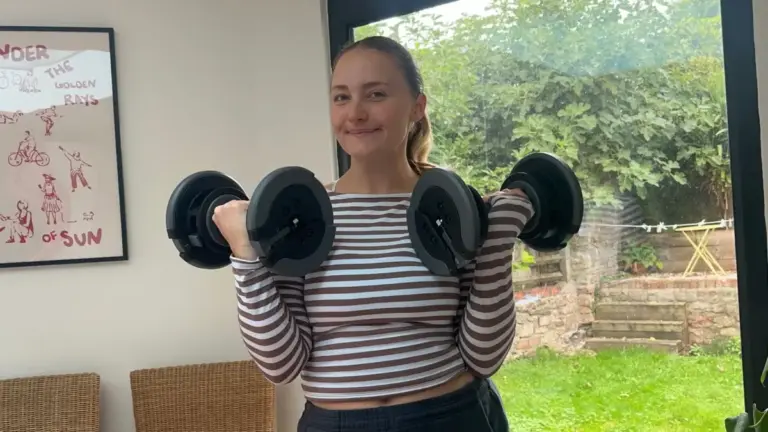
- Equipment Needed: A pair of medium-weight dumbbells (choose a weight that challenges your muscles by the end of each set while allowing you to maintain strict form).
- Structure: Perform each exercise for 30 seconds, followed by 15 seconds of rest. Complete 3 full rounds (sets) of the entire circuit.
1. Goblet Squat
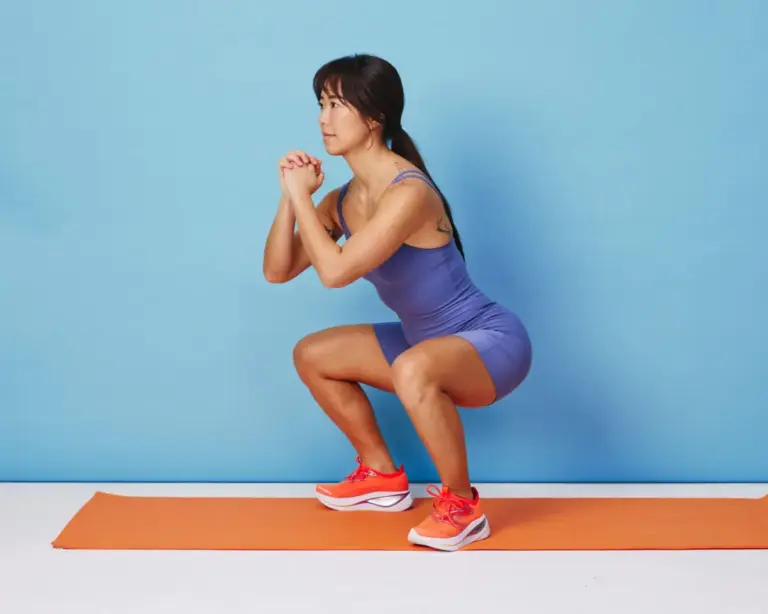
The goblet squat is the quintessential lower-body exercise for teaching proper torso posture and hip mechanics. Holding a single dumbbell vertically against the chest counterbalances the torso, allowing for a deeper, safer squat.
- Sets: 3
- Work Time: 30 seconds
- Rest: 15 seconds
- Execution: Hold one dumbbell vertically against your chest with both hands. Stand with feet slightly wider than shoulder-width apart. Initiate the movement by sitting your hips back and down, bending at the knees while keeping your chest proud and core braced. Lower down until your thighs are roughly parallel to the floor, then drive through your heels to return to the starting position.
- Trainer Tip: "Think: knees gently out, heels grounded, glutes on."
2. Romanian Deadlift (RDL)
Unlike the squat, which is knee-dominant, the Romanian deadlift is a hip-hinge movement that targets the posterior chain—specifically the hamstrings, glutes, and erector spinae.
- Sets: 3
- Work Time: 30 seconds
- Rest: 15 seconds
- Execution: Hold a dumbbell in each hand in front of your thighs, palms facing your body. Stand with feet hip-width apart and a soft bend in your knees. Keeping your spine neutral and shoulders back, hinge at your hips, sending your glutes backward toward the wall behind you. Lower the dumbbells smoothly down the front of your legs until you feel a stretch in your hamstrings, then squeeze your glutes to drive your hips forward and return to standing.
- Trainer Tip: "This is a hinge rather than a squat. Think about sending the hips backwards."
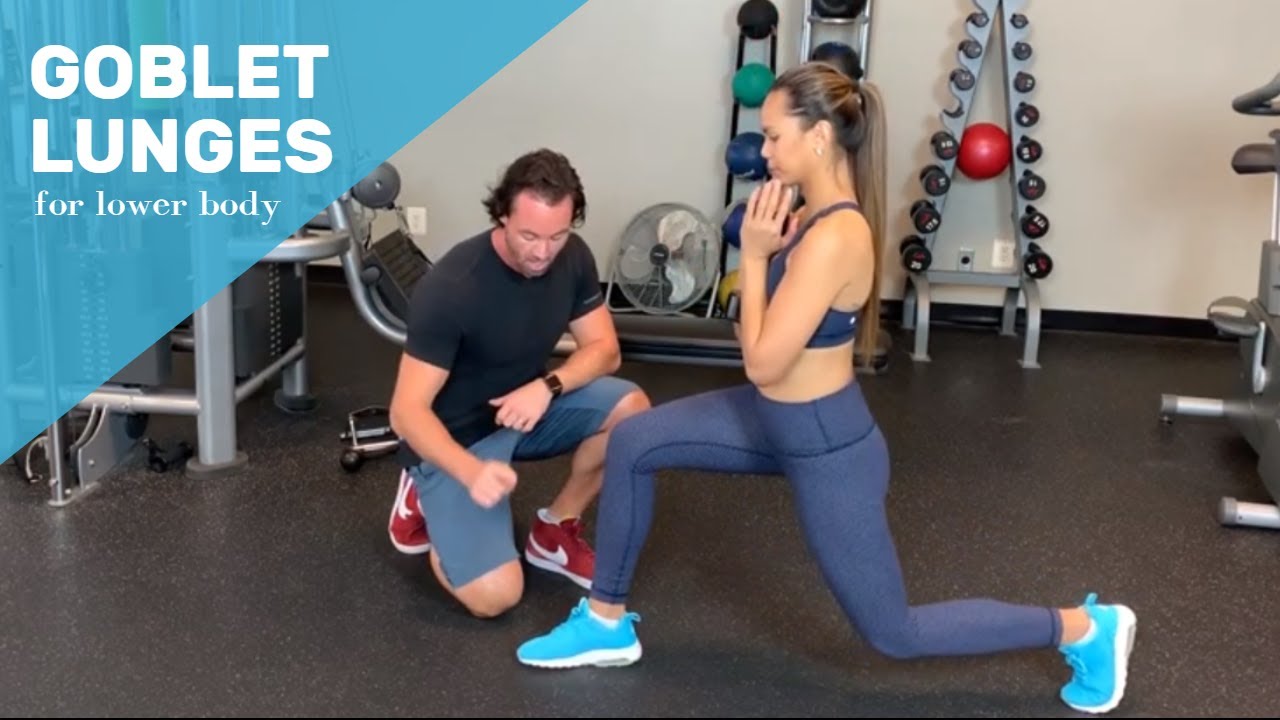
3. Dumbbell Lunge
Lunges challenge unilateral stability, balance, and coordination, forcing the stabilizing muscles of the hips and core to work overtime.
- Sets: 3
- Work Time: 30 seconds
- Rest: 15 seconds
- Execution: Hold a pair of dumbbells by your sides (or in a goblet position at your chest). Take a controlled step forward with your right foot, lowering your hips straight down until both knees are bent at approximately 90-degree angles. Your back knee should hover just above the floor without resting on it. Push off your front foot to return to the starting position, then alternate legs.
- Trainer Tip: "Use a wall or chair for additional stability if needed."
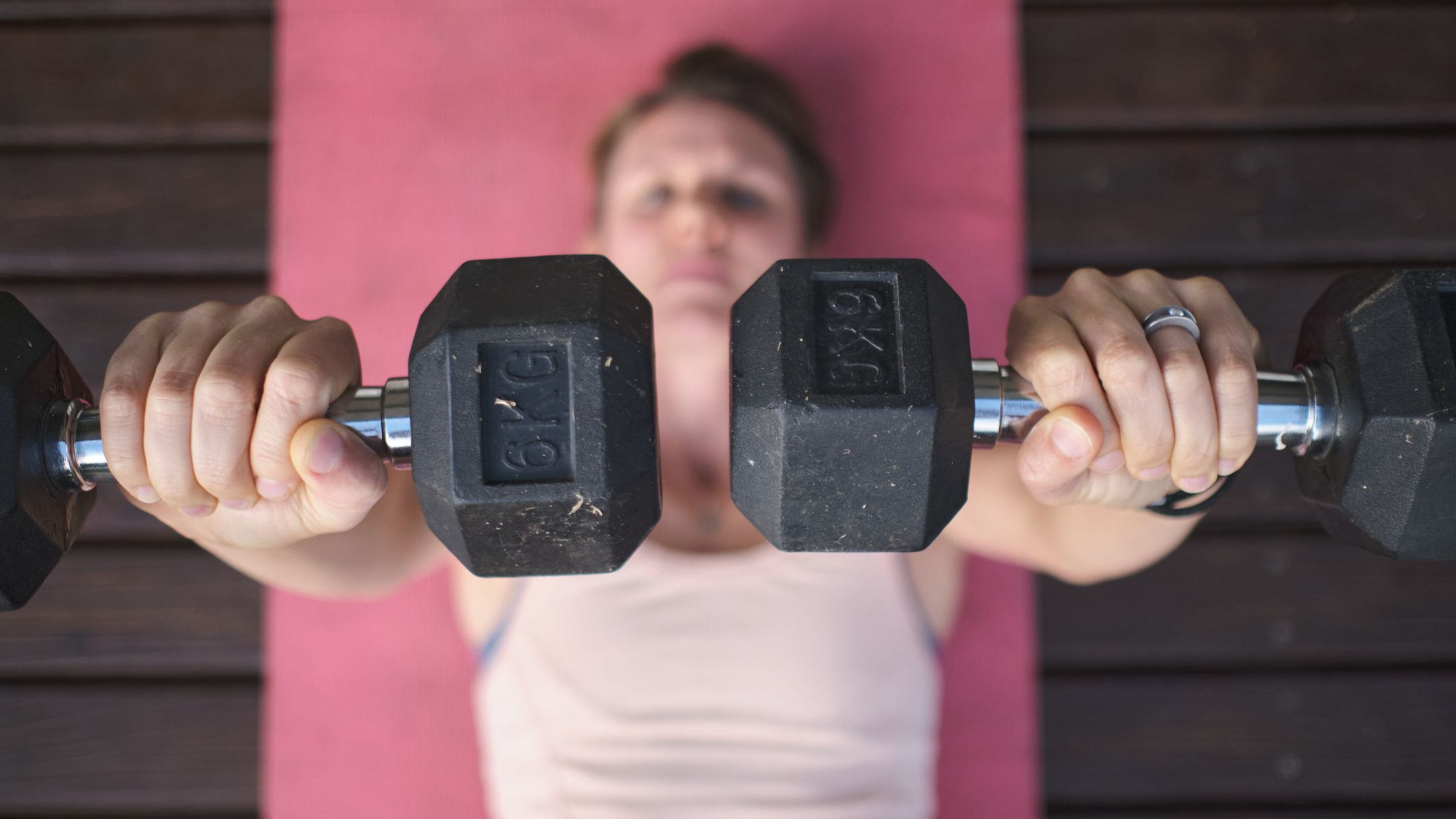
4. Dumbbell Chest Press (Floor Press Variation)
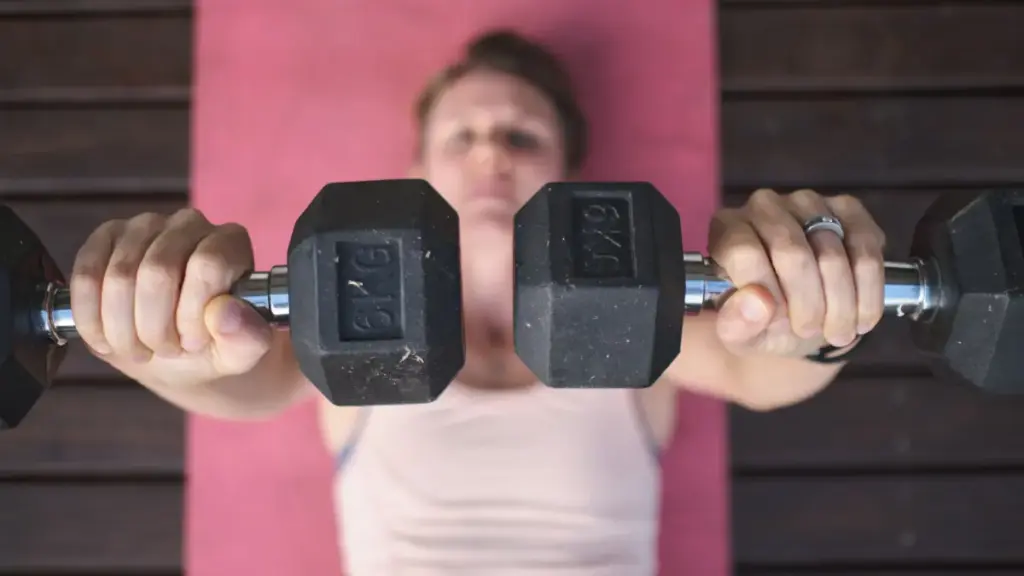
The chest press strengthens the pectoral muscles, anterior deltoids, and triceps while protecting the shoulder joints through a stable range of motion. Performing this movement on the floor provides a safe, beginner-friendly alternative to a traditional bench press.
- Sets: 3
- Work Time: 30 seconds
- Rest: 15 seconds
- Execution: Lie flat on your back with your knees bent and feet flat on the floor. Hold a dumbbell in each hand at the sides of your chest, elbows bent at a 45-degree angle relative to your torso. Press the weights straight up over your chest until your arms are fully extended, then lower them under control until your upper arms gently touch the floor.
- Trainer Tip: "Engage the core by tucking the ribs and the pelvis before pressing the dumbbells overhead."
5. Bent-Over Dumbbell Row
To balance the pushing motion of the chest press, the bent-over row targets the upper back, latissimus dorsi, and rear shoulders, counteracting the postural slouch associated with desk work and aging.
- Sets: 3
- Work Time: 30 seconds
- Rest: 15 seconds
- Execution: Hold a dumbbell in each hand, hinge forward at the hips to roughly a 45-degree angle, and keep your spine straight with your core tightly engaged. Let your arms hang straight down toward the floor. Pull the dumbbells up toward your hip crease, driving your elbows back and squeezing your shoulder blades together at the top of the movement. Lower the weights with control.
- Trainer Tip: "Keep your head in line with your spine, shoulders away from your ears and torso strong and still. The movement comes from your arms and back, not from swinging your body to get the weights up."
Future Outlook: The Next Frontier in Longevity Fitness
As research into aging, cellular health, and functional medicine continues to expand, the cultural perception of weightlifting in midlife is undergoing a permanent transformation. The medical community no longer views sarcopenia and bone density loss as inevitable consequences of aging; instead, they are recognized as manageable—and preventable—conditions responsive to progressive mechanical loading.
Platforms like Holsm and expert trainers like Holly Fivian are at the vanguard of this movement, dismantling the intimidation factor associated with strength training and replacing it with structured education. By encouraging beginners to master fundamental mechanics, embrace progressive overload, and prioritize consistency over intensity, the fitness industry is empowering midlife adults to build resilient, injury-resistant bodies.
Ultimately, investing time in a simple, structured dumbbell routine today is an investment in future autonomy. Whether the goal is carrying groceries without strain, maintaining balance on uneven terrain, or preserving metabolic vitality for decades to come, the path forward is clear: pick up the weights, respect the process, and build strength for life.