Executive Overview
Netflix’s latest addition to its expanding catalog of international crime thrillers, the Swedish drama Blood Sacrifice created by George Kay, delivers all the moody atmosphere and intricate plotting that aficionados of the "Nordic noir" genre have come to expect. Set against the hauntingly luminous backdrop of a Stockholm summer—where the northern sun refuses to let the night fall completely dark—the series kicks off with a flurry of chilling, ritualistic murders that immediately test the limits of the local police force.
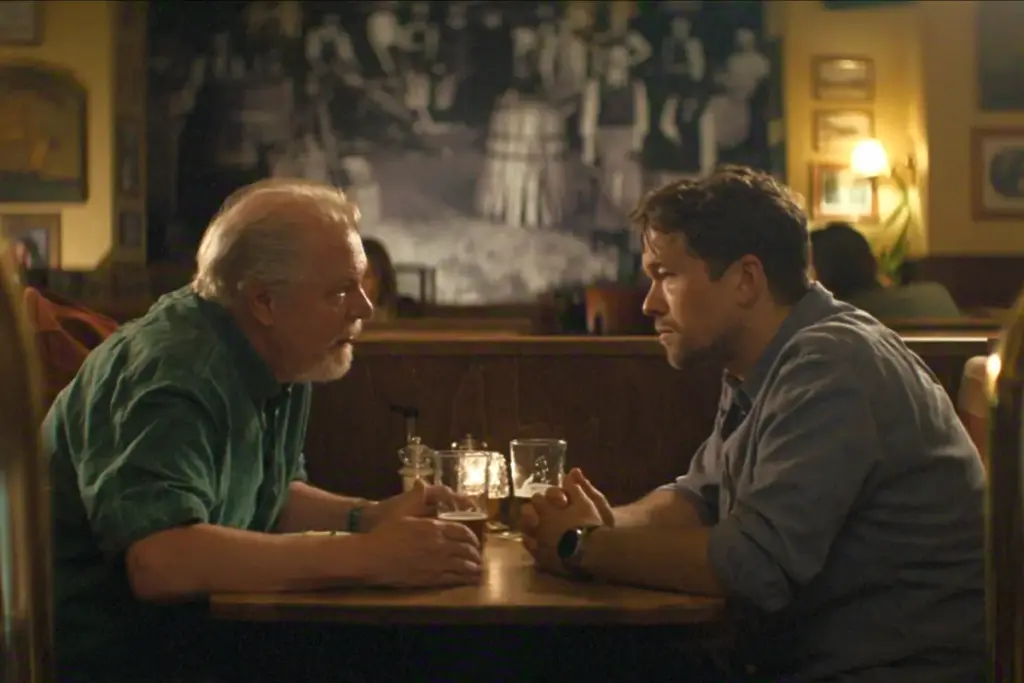
At the center of the narrative is Detective Thomas Berg (portrayed with hardened determination by Jakob Oftebro), who finds himself investigating a series of decapitation-style homicides that bear eerie similarities to a previous, supposedly solved case in Söderhamn. Desperate for an edge against a diabolically clever adversary, Thomas crosses a personal Rubicon, turning to his estranged father, Alfred Berg (Peter Andersson). A disgraced, reclusive ex-cop who now spends his days nursing beers and building model trains, Alfred represents an untapped reservoir of old-school investigative prowess.
While Blood Sacrifice establishes a compelling and deeply complex central mystery—complete with false footprint trails, eerie audio manipulation, and a chillingly precise 1:15 AM modus operandi—the series walks a tightrope between conventional police procedural and a character-driven familial drama. The initial setup of the father-son alliance borders on the contrived, yet the atmospheric world-building, standout performances, and deeply ingrained psychological weight suggest that the series holds significant potential. For fans of classic Scandi noir like Jo Nesbø’s Detective Hole and The Åre Murders, Blood Sacrifice is an undeniable must-watch, provided viewers are willing to forgive a few narrative leaps in exchange for high-stakes, chilling entertainment.
Detailed Chronology: The Pilot Episode Breakdown
The narrative architecture of Blood Sacrifice relies heavily on precise pacing, dropping the viewer directly into the frantic, high-stress environment of emergency dispatch before plunging into the macabre details of a multi-jurisdictional murder spree.
The Dispatch and the Massacre in Värmdö
The series opens with a masterclass in tension building. Viewers are introduced to the claustrophobic, high-velocity environment of an emergency dispatch center in Stockholm. Amidst the cacophony of incoming pleas for help, a dispatcher fields a blood-curdling call from a woman screaming that an intruder with a knife is about to take her life.
Swiftly responding to the alert, two police officers are dispatched to the affluent Stockholm suburb of Värmdö. Upon arrival, one officer enters the residence to secure the perimeter, only to urgently call for backup. The intervention comes too late; both officers are brutally ambushed and murdered in a chillingly ritualistic fashion.
The Crime Scene and the Söderhamn Connection
By daylight, the grim reality of the attack comes to light. Detective Thomas Berg arrives at the morgue to inspect the bodies, discovering a horrifying signature: both officers have been systematically decapitated. At the bloody crime scene, forensic specialists confirm that the killer utilized a surprisingly small, serrated knife to sever the heads—a detail requiring immense physical exertion and chilling composure.
As Thomas digs deeper into the case file, he notices striking parallels to a recent murder in Söderhamn, where a police officer was stabbed to death and her throat slashed to the point of near-decapitation. Despite the local authorities having already detained a suspect for the Söderhamn slaying, Thomas is convinced they have locked up the wrong person. He aggressively lobbies his supervisor, Rebecca Björklund (Irina Björklund), for access to the Söderhamn files.
Bureaucratic Obstacles and a Secret Partnership
Realizing the political and jurisdictional sensitivities of undermining an ongoing investigation, Rebecca’s superior offers a compromise: Thomas is permitted to investigate the connection, but strictly on the down-low, running a parallel inquiry off the books. To assist him, he is assigned a single partner—Natalie Eklund (Electra Hallman), a young, fiercely dedicated detective whose eager eyes and sharp instincts quickly prove indispensable.
As the team begins to piece together the clues, Thomas’s domestic life offers a stark contrast. His wife, Charlotte (Lisette T. Pagler), pressures him to attend an upcoming birthday dinner and insists on extending an olive branch to his estranged father, Alfred. Thomas resists, reflecting years of bitterness toward the disgraced former detective who retreated into self-imposed exile, drowning his grievances in alcohol and microscopic model trains.
The Reconciliation and the Inciting Incident
When Alfred inexplicably fails to show up for his own son’s birthday dinner, Thomas decides to visit his father’s notoriously cluttered home. Knocking on a window to rouse the older man, Thomas is greeted with characteristic gruffness. However, Alfred quickly demonstrates that his investigative instincts are far from dulled. Before Thomas can even deliver his complaints about missed family dinners, Alfred cuts straight to the core: he knows the real reason his son is standing on his porch. Thomas needs his help to untangle the web of police murders.
The episode culminates with a chilling reminder of the killer’s discipline. Just as the investigation begins to take shape, another emergency call hits the dispatch center precisely at 1:15 AM—the exact time of the previous attacks. The voice screaming for help on the line is identified as the female officer who was originally slaughtered in Värmdö, hinting at a deeply disturbing psychological game played by the perpetrator.
Supporting Context & Metrics: Decoding the Killer’s Mind
To fully appreciate the narrative tension of Blood Sacrifice, one must examine the forensic clues and psychological profiles established in the opening chapter. The killer is not merely an erratic street criminal; they are executing a calculated, highly orchestrated campaign against law enforcement.
Forensic Sophistication
- The Footprint Deception: The perpetrator goes to extraordinary lengths to misdirect investigators. By wearing two entirely different pairs of shoes during the commission of the crimes, the killer ensures that forensic footprints left at the scene indicate the presence of multiple suspects, muddying the waters for crime scene investigators.
- The Audio Weaponization: As Thomas and Alfred uncover toward the conclusion of the premiere, the killer utilizes digital technology to confound emergency responders. By recording audio of a victim’s screams and playing it back during subsequent emergency calls, the perpetrator creates false flag operations that draw police resources away from actual threats and disorient dispatchers.
- The Weapon Profile: Given the immense physical strength required to cleanly sever a human head using a small, serrated knife, investigators theorize that the killer is a male possessed of unusual upper-body strength and exceptional emotional detachment.
Environmental and Psychological Backdrop
Set during the Stockholm summer, the show capitalizes on a unique geographic phenomenon: the perpetual twilight of the northern summer. At 1:15 AM, when the murders take place, the city is not draped in pitch darkness, but rather an eerie, washed-out gloom. This atmospheric choice mirrors the psychological state of the characters—living in a gray area between truth and deception, past glory and present failure.
Official Statements and Production Insights
Created by George Kay—a prominent voice in modern television writing—Blood Sacrifice aims to revitalize the tropes of Scandinavian crime drama by leaning heavily into generational trauma.
While formal press releases from Netflix emphasize the pulse-pounding thrills of the cat-and-mouse game between Stockholm’s finest and a cunning killer, behind-the-scenes discussions focus heavily on the interpersonal dynamics. Showrunners and directors have noted that the narrative engine of Blood Sacrifice is fundamentally fueled by the friction between professional duty and familial baggage. The decision to cast veteran actor Peter Andersson alongside Jakob Oftebro was intentional, designed to create an on-screen dynamic that feels lived-in, abrasive, and fraught with unspoken history.
Furthermore, production notes highlight the meticulous attention paid to the depiction of modern forensic procedures in Sweden, contrasting the sterile, high-tech labs of Stockholm with the dusty, melancholic isolation of Alfred’s domestic sanctuary.
Future Outlook: Will Blood Sacrifice Deliver on Its Promise?
As Blood Sacrifice streams globally on Netflix, early critical consensus points to a show with immense ceiling capabilities, provided it successfully balances its twin ambitions.
The Procedural vs. The Personal
The greatest challenge facing the series moving forward is narrative integration. As noted by early reviewers, the initial catalyst driving Thomas into his father’s arms feels slightly contrived—a necessary narrative shortcut to get two estranged characters into the same room working the same board. However, once that bridge is crossed, the potential for deep character exploration is vast.
The interplay between Thomas’s rigid, by-the-book desperation and Alfred’s rule-breaking, world-weary cynicism provides a rich comedic and dramatic contrast. Coupled with the youthful enthusiasm of Detective Natalie Eklund, the investigative unit possesses a three-generational dynamic that could elevate the series above standard procedural fare.
Genre Longevity
Nordic noir has historically thrived on serialized storytelling that examines societal decay, corruption, and personal redemption. If Blood Sacrifice can maintain the breathless pacing of its pilot while resisting the temptation to rely solely on gruesome shock value, it has all the makings of a breakout international hit.
Viewers tuning into the remaining episodes will be looking for answers not just to who is murdering Stockholm’s police officers, but whether Thomas and Alfred can repair the fractures in their own lineage before the killer strikes again at 1:15 AM. For those seeking an intelligent, atmospheric, and deeply gripping mystery, Blood Sacrifice earns a definitive stream recommendation.