Executive Overview
OXFORDSHIRE, UK — In what local residents are calling a senseless and bizarre crime, a meticulously cultivated hedge sculpture of the beloved children’s television character Peppa Pig has been brutally "beheaded." The popular topiary, which stood proudly along Buckingham Road near Newton Purcell on the route toward Bicester, had spent years growing into a recognizable and cheerful local landmark.
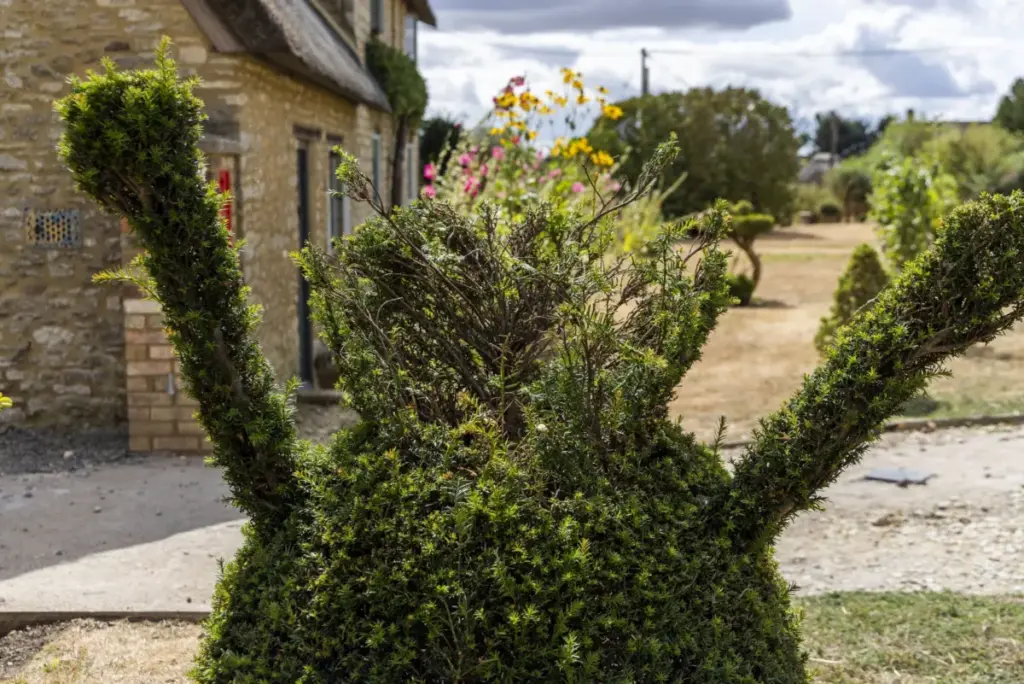
Sometime between the evening of August 13 and the morning of August 15, perpetrators descended upon the property with a saw, methodically hacking away the upper portion of the living sculpture across four distinct wooden stumps. The severed head was not left at the scene, suggesting the vandals took it with them as a bizarre trophy or to conceal evidence.
The incident has triggered an outpouring of grief and frustration from the owners and the wider community, transforming a symbol of local joy into a stark reminder of petty criminality. Thames Valley Police have launched an official investigation into the criminal damage, appealing to motorists, local homeowners, and businesses for dash-cam, doorbell, or CCTV footage that might shed light on the perpetrators. As horticulturalists and local authorities weigh the damage, questions are being raised not only about the motive behind such a targeted attack on garden art, but also about the increasing vulnerability of rural landmarks.
Detailed Chronology
Years of Dedication Met with Sudden Destruction
The creation of the Peppa Pig topiary was no accident; it was the product of immense patience, botanical skill, and years of careful pruning. Topiary—the art of training live perennial plants by clipping the foliage and twigs of trees and shrubs to develop and maintain clearly defined shapes—demands strict discipline. Every season requires careful shaping, fertilizing, watering, and protection from pests and weather anomalies.
For the Hinton family, who cultivated and maintained the sculpture on their property along Buckingham Road, the hedge was a labor of love. Over the years, as the shrubbery thickened and took on the unmistakable silhouette of the pink-pigmented cartoon icon—complete with her signature features—it graduated from a private garden project to a cherished community landmark. Countless commuters, school children, and visitors traveling between Newton Purcell and Bicester grew accustomed to spotting the cheerful green figure, which even retained its whimsical aesthetic through clever maintenance of its surrounding environment.

The Attack Window: August 13–15
The destruction occurred during a narrow 36-to-48-hour window in mid-August. According to the property owners, the sculpture was entirely intact on the evening of Wednesday, August 13. However, by the morning of Friday, August 15, the damage had been discovered.
The method of destruction points to premeditation rather than a spur-of-the-moment act of adolescent mischief. The vandals brought a specialized tool—presumably a hand saw or a compact mechanical saw—to the rural roadside location. The cuts were calculated, severing the heavy, woody stems across four distinct main structural stumps to completely remove the head of the character. Crucially, the severed top section of the hedge was entirely removed from the premises.
Laura Hinton, speaking on behalf of the family, emphasized the brazen nature of the crime. "They must have taken it with them," Hinton noted, pointing out the peculiar logistics of the raid. "They must have also brought their own saw. This was a targeted act of vandalism that also suggests a level of concern for personal safety, as someone was around the property with a saw!"
Despite the devastation wreaked upon the upper half of the sculpture, ironic remnants of the character remain. The lower portion of the hedge, which visually represents Peppa’s iconic red rain boots, was left largely untouched, casting a haunting, headless silhouette against the Oxfordshire backdrop.
Supporting Context & Metrics: The Art and Vulnerability of Topiary
The Cultural and Botanical Significance of Topiary
Topiary is an ancient horticultural art form dating back to Roman times, experiencing major renaissances during the Renaissance and Victorian eras. Modern topiary blends landscaping with sculpture, turning privet, yew, box, and other dense-foliage plants into living art.

The psychological impact of topiary landmarks in rural or semi-rural settings is profound. Psychologists note that whimsical public art breaks the monotony of daily commutes, reduces stress levels for drivers, and fosters a sense of place and shared community identity. Peppa Pig, as a global cultural phenomenon originating from British animation studios, carries an immense amount of nostalgic and comforting value for families and young children. For a hedge shaped in her likeness to become a landmark is a testament to how humans project warmth onto shared public spaces.
The Economic and Emotional Toll of Garden Vandalism
While insurance policies can cover property damage to structural fences and gates, they rarely account for the emotional and biological time-loss associated with ornamental horticulture.
- Time Investment: Re-growing a substantial topiary figure from scratch typically takes anywhere from 3 to 7 years, depending on the species of shrub and regional climate conditions.
- Financial Re-investment: Sourcing mature replacement plants, hiring professional arborists or topiary artists to reshape new growth, and repairing structural root systems can cost hundreds—if not thousands—of pounds.
- Psychological Impact: Rural and semi-rural property crime often leaves victims feeling uniquely violated. Unlike urban vandalism, properties situated along regional roads like Buckingham Road rely on a degree of quiet trust and community insulation. The introduction of targeted destruction shatters that illusion of safety.
Furthermore, statistics from rural crime watch organizations indicate that roadside vandalism and heritage attacks have seen fluctuating trends across the UK over the past five years. While major crimes grab national headlines, low-level, high-impact community vandalism—such as the destruction of historic trees, public benches, and community art installations—often goes unsolved due to the lack of continuous surveillance in remote sectors.
Official Statements and Police Appeal
The local response was swift, with neighbors expressing profound dismay upon discovering the mutilated landmark. Social media channels and local community groups quickly flooded with messages of sympathy for the Hinton family and condemnation for the unknown culprits.
Thames Valley Police Response
Thames Valley Police have formally stepped in, treating the incident as a deliberate case of criminal damage. Authorities are urging anyone who may have witnessed suspicious activity along Buckingham Road during the nights of August 13, 14, or the early hours of August 15 to come forward.

In an official statement, a Thames Valley Police spokesperson said:
"We have received a report of criminal damage on Buckingham Road, Newton Purcell… We would ask anyone with information, dash-cam, or CCTV footage to contact the force."
Investigators are particularly interested in reviewing footage from motorists who frequently travel the Bicester route during late-night or early-morning hours. Because the perpetrators required a saw to execute the crime—a process that would have generated noise and required stationary time by the roadside—police believe someone may have inadvertently captured a vehicle or suspicious individuals parked near the property.
Anyone with details that could assist the investigation is encouraged to contact Thames Valley Police directly via their non-emergency reporting channels, quoting the relevant reference details for the Newton Purcell criminal damage case.
Future Outlook: Can Peppa Be Restored?
As the police investigation unfolds, the immediate question on the minds of local residents is whether the iconic landmark can be saved.

Horticultural experts suggest that all is not lost, though recovery will be a long-term project. Because the root system and the lower trunk structure (the "boots") remain healthy and intact, the plant itself will survive. Shrubs used for topiary are typically resilient to severe pruning—a process horticulturists call "hard rejuvenation pruning."
However, coaxing new branches to grow outward and upward into the precise geometric shape of Peppa Pig’s head will require immense patience. It will take several years of careful training, wiring, and strategic clipping before the sculpture can regain its former cheerful demeanor.
For the Hinton family, the decision to rebuild or replant remains under consideration. What remains undeniable, however, is that the "beheading" of the Newton Purcell Peppa Pig has left a temporary void in the Oxfordshire countryside—a stark reminder of the fragility of community art in the face of mindless destruction.
For more breaking news, regional updates, and investigative reporting, stay tuned to our continuous news coverage or subscribe to our daily news updates.