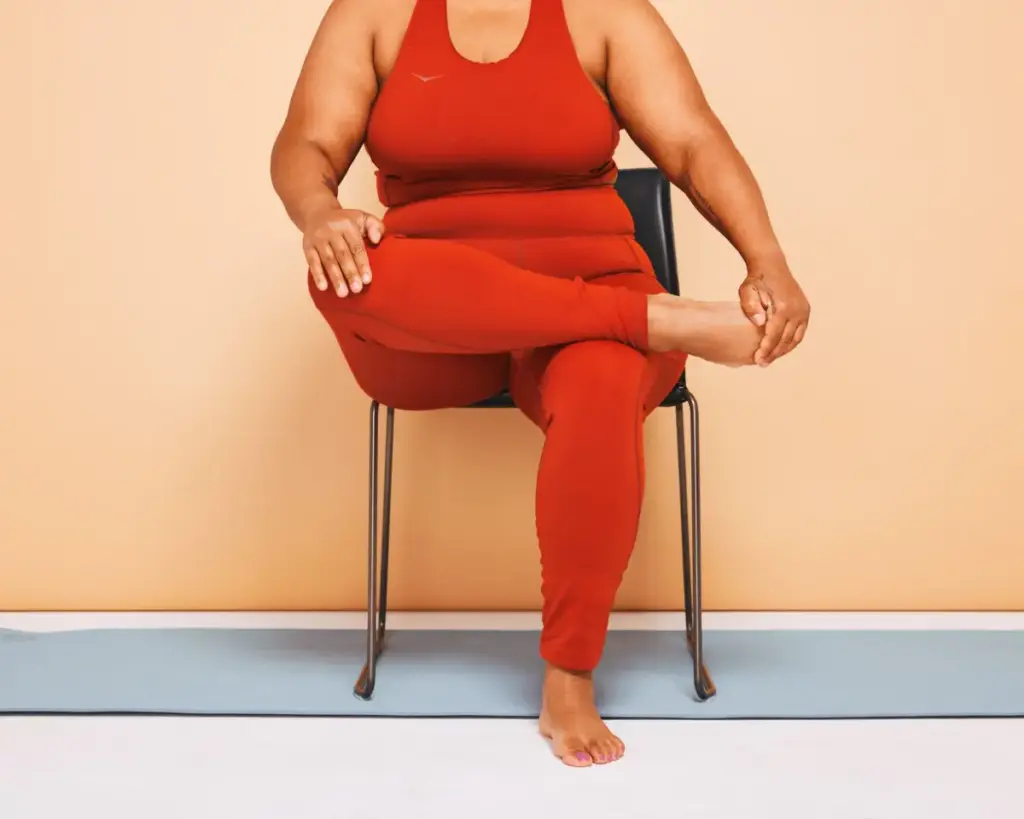
For generations, the humble chair has been pigeonholed as a sedentary anchor of modern life. It is the architectural centerpiece of desk jobs, evening dinner parties, and hours spent binge-watching television. However, a quiet revolution is underway in the fitness and physical therapy sectors, transforming this ubiquitous piece of furniture from a symbol of inactivity into a dynamic, accessible tool for core conditioning.
Fitness professionals and movement specialists are increasingly turning to standard, stationary chairs to build core strength, enhance stability, and democratize physical conditioning. Far from being a mere modification for populations with limited mobility, utilizing a chair during core exercises offers biomechanical advantages that traditional floor workouts often fail to provide. By elevating the hands or feet, reducing the range of motion to a safer threshold, and providing tangible tactile feedback, chairs allow exercisers to safely target deep stabilizer muscles—such as the transversus abdominis—while protecting the spine.
This comprehensive report examines the physiological rationale behind chair-based core training, explores expert-backed techniques for maximizing midsection strength without dropping to the floor, and outlines a structured, five-movement blueprint suitable for beginners and seasoned athletes alike.
Detailed Chronology: The Shift from Floor-Centric to Accessible Core Conditioning
The Era of Traditional Floor Training
For decades, the gold standard of core training was inextricably linked to the floor. Traditional abdominal routines demanded crunches, sit-ups, floor planks, and hollow-body holds executed directly on gym mats or carpets. While effective for individuals with baseline strength and unimpeded mobility, this paradigm created systemic barriers to entry for millions of people.
Floor-based routines frequently exacerbate lower back pain, wrist strain, and knee discomfort. Furthermore, for populations dealing with joint stiffness, pregnancy, postpartum recovery, or age-related mobility limitations, getting down to the floor—and subsequently getting back up—presents a formidable physical hurdle. Consequently, individuals who could benefit the most from core strengthening were frequently alienated by traditional programming.
The Rise of Functional, Prop-Assisted Movement
In recent years, the fitness industry has experienced a significant pivot toward functional inclusivity. Movement specialists began re-evaluating everyday props that could modify biomechanical load without sacrificing efficacy. The chair emerged as an ideal candidate.
By elevating the point of contact between the body and the floor, trainers discovered they could modify high-intensity movements—such as push-ups and mountain climbers—to match varying fitness levels. This democratization of fitness paved the way for specialized chair-based protocols that target the deep core without requiring complex equipment, expansive gym memberships, or floor access.
Supporting Context & Metrics: The Biomechanics of Chair-Based Core Activation
To understand why chair exercises are gaining traction, one must examine how the human core responds to elevated planes of motion. The core is not merely the "six-pack" rectus abdominis; it is a complex cylinder of muscles—including the internal and external obliques, the erector spinae, the diaphragm, and the deep transversus abdominis (TA)—that act as an internal corset to stabilize the spine.
Tactile Feedback and the Transversus Abdominis
Activating the transversus abdominis is notoriously difficult because it is a deep, internal stabilizer rather than a surface muscle. According to Becca Revier, a certified personal trainer and Pilates instructor at Life Time Lakeville in Minnesota, chairs provide invaluable tactile feedback during core engagement drills, such as the TA bracing drill.
When a person performs core stabilization work while supported by or interacting with a sturdy chair, the physical boundaries of the furniture offer a frame of reference for proper spinal alignment. This reduces compensatory movements, helping exercisers mentally and physically connect with their deep core musculature.
Load Modification and Joint Protection
From a mechanical standpoint, elevating the hands during exercises like planks or push-ups changes the angle of gravity relative to the body. This reduces the overall load placed on the wrists, shoulders, and lower back, making complex movements accessible while still demanding high levels of muscular recruitment.
Furthermore, exercise scientists emphasize that chair-based movements provide built-in safety parameters. For instance, performing a squat with a chair target eliminates the guesswork of depth, ensuring that the hips travel along a safe, biomechanically sound trajectory.
Expert Insights & Safety Protocols
Integrating furniture into an exercise routine requires careful consideration of safety and equipment selection. Fitness experts stress that not all chairs are created equal.
The Golden Rule: Stability First
The primary hazard of chair-based fitness is equipment failure or instability. Katie Pierson, a Montana-based certified personal trainer, issues a stern warning regarding furniture selection:
"You definitely want a chair that’s going to keep you where you need to be. Your rolling swivel chair is definitely not the smart choice here."
Exercisers must exclusively utilize heavy, stationary, non-folding chairs constructed of sturdy materials like wood or reinforced metal. The chair should sit flush against a wall or non-slip flooring to eliminate any risk of sliding during dynamic movements.
Progression and Volume Guidelines
For those looking to integrate these movements into a daily routine, moderation and consistency are key. Pierson recommends starting conservatively:
Initial Volume: Begin with 3 sets of 8 to 10 repetitions per exercise.
Integration: These movements can be executed as standalone "one-offs" between sedentary tasks (such as Zoom meetings) or strung together to form a comprehensive full-body circuit.
Progression: Gradually increase volume and complexity over weeks and months as baseline strength and neuromuscular coordination improve.
The 5 Essential Chair Exercises for Complete Core Strength
To capture the benefits of chair-based conditioning, trainers recommend incorporating the following five foundational movements. Each exercise targets specific areas of the midsection while demanding total-body stability.
1. The Elevated Push-Up (Dynamic Plank)
While frequently categorized as an upper-body pressing movement, the elevated push-up functions fundamentally as a dynamic moving plank.
The Execution: Place your hands firmly on the edges of a stable, stationary chair, stepping your feet back into a modified plank position. Lower your chest toward the chair while maintaining a rigid, straight line from your head to your heels.
Core Focus: As you press back up, your core must work overtime to stabilize your spine against gravity.
Expert Tip: Keep your pelvis in a neutral position—avoiding excessive arching or rounding of the lower back—and draw your belly button in and up to maximize deep core activation.
2. The Elevated Mountain Climber
This high-energy movement takes the traditional floor-based mountain climber and elevates it to protect the wrists and lower back while ramping up cardiovascular and muscular endurance.
The Execution: With your hands secured on the chair, drive alternating knees toward your chest in a running motion while maintaining your plank posture.
Core Focus: Your core must aggressively brace to prevent your hips from rocking side to side as your legs move. Every time a knee drives upward, you should feel an intense contraction in the upper and lower abs.
Expert Tip: Pull your shoulders down and away from your ears, keeping your spine elongated. Stability in the hips is the key to connecting directly with the transversus abdominis.
3. The Chair Squat
Often viewed exclusively as a lower-body exercise for the glutes and quads, the standard chair squat delivers exceptional, understated core work.
The Execution: Stand directly in front of your chair, facing away from it. Lower your hips backward and down until you gently tap the seat before returning to a standing position.
Core Focus: Your abdominal muscles must fire continuously to maintain upright posture and prevent your torso from collapsing forward.
Expert Tip: Direct your gaze outward at eye level—imagining you are watching television rather than staring at your feet. This prevents your chest from collapsing and ensures proper engagement of your deep stabilizers.
4. The Single-Leg Squat to Chair
A natural progression from the standard chair squat, this advanced movement introduces unilateral instability to challenge the midsection.
The Execution: Extend one leg out in front of you while keeping the other planted firmly on the floor. Lower your body under control until you are seated, then press through the grounded heel to stand back up.
Core Focus: Operating on a single leg naturally creates a lateral tipping force. Your obliques and deep core muscles must contract intensely to keep your torso upright and level.
Expert Tip: The chair acts as a vital safety net here, offering a predictable landing target that makes unilateral leg training far safer than performing unassisted pistol squats in open space.
5. The Alternating Cross Crunch
For those seeking direct stimulation of the rotational muscles of the torso, the seated or supported cross crunch is unmatched.
The Execution: Bring opposite elbows toward opposing knees in a controlled, deliberate crossing motion.
Core Focus: This movement directly targets the obliques—the lateral muscles of the torso responsible for twisting and side-bending stabilization.
Expert Tip: Focus on a powerful exhale as your elbow meets your knee. This forced expiration empties the diaphragm and maximizes muscular contraction across the entire midsection.
Future Outlook
As the boundaries between home, work, and wellness continue to blur, the demand for efficient, accessible fitness solutions will only accelerate. The mainstream embrace of furniture-assisted training signals a broader, much-needed shift within the fitness industry toward practical ergonomics and functional inclusivity.
By removing systemic barriers—such as the requirement of floor mobility or specialized gym equipment—chair-based core conditioning proves that effective physical training does not require an overhaul of one’s environment. Whether utilized by office workers seeking to counteract the health hazards of prolonged sitting, older adults maintaining functional independence, or athletes refining their core stability, the everyday chair has firmly established its place in the modern wellness toolkit.