Executive Overview
As the protracted conflict in Ukraine enters another grim chapter, a quiet, domestic panic is unfolding across the Russian Federation. Citizens and major corporations alike are rapidly pulling their capital out of traditional banking institutions, driven by growing anxiety that Vladimir Putin’s government may soon raid private savings, freeze deposits, or impose strict withdrawal caps to sustain the Kremlin’s staggering war machine.
Central bank data reveals an unprecedented, seven-month bleeding of cash from the Russian banking system. In the first two weeks of August alone, the volume of physical cash in circulation surged by a staggering 286.4 billion roubles (approximately £2.5 billion). This capital flight is compounded by the escalating physical and economic toll of the war inside Russia itself. Ukrainian long-range drone and missile strikes are increasingly piercing mainland air defenses, targeting critical military infrastructure, defense manufacturing plants, and vital energy hubs—such as an oil refinery recently hit in Ufa—triggering domestic fuel shortages and long queues at petrol stations.
Amid this mounting economic instability, geopolitical tensions have reached a boiling point. Moscow has formally accused the United Kingdom of direct military participation in the war following reports that British-supplied drones and missile technology have been deployed in strikes deep inside Russian territory. Foreign Minister Sergei Lavrov issued stark warnings of "all ensuing consequences," while British leadership remains steadfast in its defense of Ukraine. This comprehensive report examines the intersection of Russia’s domestic financial crisis, the escalating technological scope of the war, and the dangerous geopolitical friction mounting between Moscow and Western allies.
Detailed Chronology of the Russian Bank Run
The symptoms of deep-seated financial anxiety among the Russian populace are no longer speculative; they are starkly visible in central bank metrics and daily transaction ledgers. For seven consecutive months, money has steadily flooded out of Russian banks. However, the velocity of these withdrawals accelerated dramatically through the summer of 2026.
- July 2026: The Russian banking system experienced a historic liquidity shock. Over the course of the month, more than 620 billion roubles (£5.4 billion) were withdrawn by anxious citizens seeking the relative safety of physical cash.
- Early August 2026: The panic deepened rather than subsided. During the first fortnight of August, the volume of cash in circulation jumped by an additional 286.4 billion roubles (£2.5 billion).
- August 12, 2026: Russian banks suffered their single largest daily outflow of the month, hemorrhaging 56.8 billion roubles (£491.9 million) in a single 24-hour period.
- Mid-August 2026: Rumours began circulating rapidly across popular Russian Telegram channels warning of an imminent state-mandated freeze on bank deposits or strict caps on cash withdrawals.
The widespread fear is rooted in historical precedent and economic logic: as state expenditures on the war in Ukraine spiral out of control, the Kremlin faces immense budgetary pressure. Analysts suggest that ordinary Russians are bracing for the state to tap private wealth to plug gaping holes in the federal budget.
The psychological impact of these rumours forced a rare public intervention from the upper echelons of the Russian government. Anton Siluanov, the Russian Minister of Finance, was forced to issue a formal statement denouncing the reports of a coming deposit freeze as "fake news."

Despite government denials, the behavioral shift among ordinary citizens has fundamentally altered domestic liquidity. The relentless demand for physical cash has severely drained commercial banks’ rouble reserves, forcing the Central Bank of Russia to step in and aggressively expand emergency lending to stabilize the banking sector. Simultaneously, corporate actors have joined the run; large Russian companies are reportedly smuggling or transferring funds abroad to evade potential state seizures and asset expropriations.
Supporting Context & Metrics: The Economic Strain
The ongoing domestic bank run cannot be viewed in isolation; it is the direct downstream consequence of an overheated, war-driven economy buckling under the weight of international sanctions, military spending, and structural labor shortages.
Liquidity and Monetary Policy
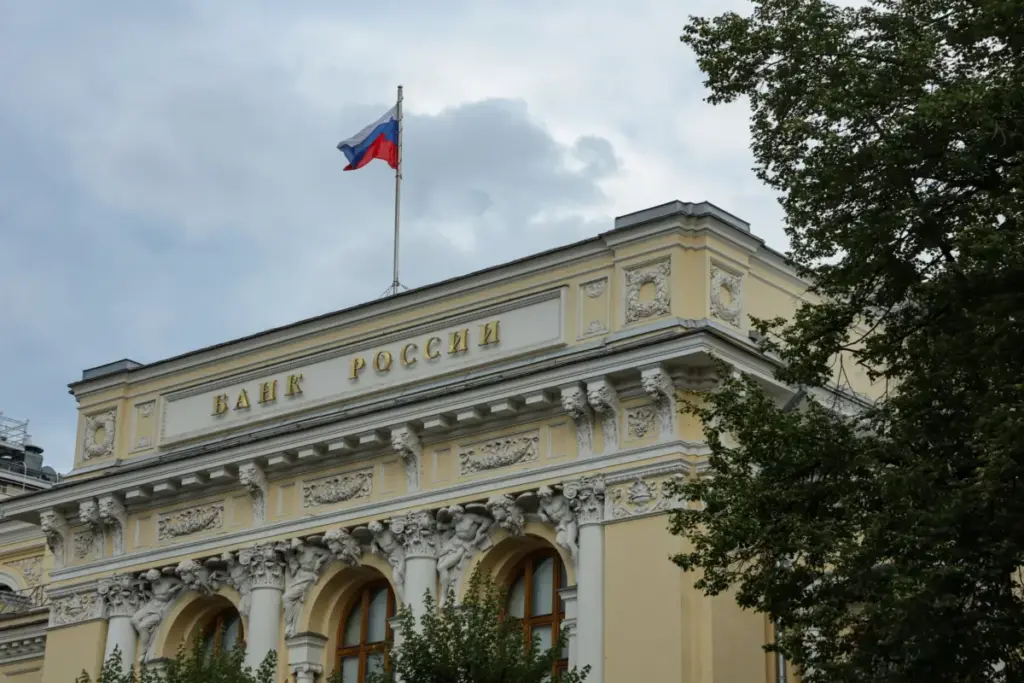
To combat inflation and steady the currency earlier in the summer, the Board of Directors of the Bank of Russia adjusted key interest rates, cutting the key rate by 25 basis points to 14% per annum on June 19, 2026. While the central bank attempts to manage macroeconomic indicators from its headquarters in Moscow, ordinary Russians appear to place less faith in monetary policy directives than in the tangible security of physical banknotes tucked away at home.
The Widening Scope of Ukrainian Strikes
The domestic financial unease is heavily fueled by the changing character of the war on the ground. For months, the conflict was largely confined to frontlines in eastern and southern Ukraine, alongside sporadic, isolated drone incursions into border regions. However, August 2026 has marked a distinct strategic evolution. Ukraine has successfully deployed sophisticated, long-range indigenous and Western-supplied drone technology to strike strategic military and industrial targets deep inside the Russian mainland.
- Tula: Home to multiple vital Russian defense manufacturing plants, Tula has experienced recent attacks that have forced authorities to confront the vulnerability of the country’s military-industrial complex.
- Ufa: A major oil capital located far from the Ukrainian border, Ufa became the site of a devastating strike on a primary oil refinery. The attack sparked a massive fire, exacerbating critical domestic petrol shortages that have already sparked long queues and rationing-like behavior at fuel stations across various Russian regions.
These strikes dismantle the Kremlin’s long-standing narrative that the "special military operation" is a distant affair that does not impact daily life within the Russian heartland. As smoke rises over industrial capitals, citizens are calculating their personal risks—prompting the rush to liquidate digital and bank-held savings into physical cash.
Official Statements and Geopolitical Escalation
While Russian citizens hoard roubles and corporations flee abroad, the geopolitical theater has reached a dangerous inflection point. The catalyst for the latest diplomatic firestorm is the active use of Western-supplied military hardware in deep-strike campaigns against Russian mainland targets.

Moscow’s Fury Over British Drones
On August 19, 2026, the Russian Foreign Ministry formally slammed the United Kingdom, accusing London of direct military complicity. Moscow alleges that weapons manufactured by two British companies, supplied directly to Ukraine, have been instrumental in the campaign targeting Russian industrial and military installations.
Foreign Minister Sergei Lavrov took to Russian state television to issue a thinly veiled, belligerent warning regarding the consequences of British involvement:
"This only means one thing. The president warned of our right to act in any part of the oceans if someone encroaches on our interests, on our property. We have the same right to view the proudly declared direct participation of British missile forces in strikes against Russia as participation in a war, with all the ensuing consequences."
Lavrov’s comments echo escalating rhetoric from the Kremlin, which insists that the provision of long-range reconnaissance, targeting data, and hardware by NATO members transforms these nations from passive supporters into active belligerents.
Westminster Stands Firm
Despite Moscow’s threats, British political leadership has refused to back down. Prime Minister Andy Burnham delivered an unequivocal reaffirmation of the UK’s commitment to Kyiv, stressing that he stands 100% behind Ukraine against what he termed an "illegal war led by Vladimir Putin."
Addressing the press, Prime Minister Burnham stated:

"Britain is providing support so that Ukraine can defend itself, and that’s been the British position all the way through this conflict by previous prime ministers; it remains the case with me. We are not fairweather friends."
This steadfast stance comes on the heels of other recent security incidents across Europe, including NATO fighter jets being forced to scramble and shoot down a stray drone over a European member state—an event that underscores how close the continent remains to a wider kinetic spillover. Furthermore, naval security debates have intensified, with defense analysts warning that the UK currently lacks the localized maritime firepower required to prevent aggressive Russian actions against shipping lanes in contested waters.
Human Cost on the Ground
While ministers exchange diplomatic blows and financial markets jitter, the human cost of the conflict continues to mount indiscriminately. In Ukraine’s contested Zaporizhzhia region, the grim reality of the war was underscored once again when a Russian guided aerial bomb slammed directly into a residential neighborhood, resulting in the deaths of at least two civilians and leaving ten others seriously injured.
Future Outlook
The convergence of internal financial flight and external geopolitical escalation points toward an increasingly volatile autumn for Russia and its adversaries.
- Banking Sector Strain: If the multi-billion-rouble monthly outflow of cash continues at its current pace, the Central Bank of Russia will be forced to choose between aggressively raising interest rates—which would further choke domestic non-military businesses—or printing more money, risking hyperinflation that would erode the very savings citizens are desperately trying to protect.
- Escalation Dynamics: Moscow’s explicit threats directed at the United Kingdom suggest that retaliatory measures may not remain purely rhetorical. Intelligence agencies across Europe are on high alert for asymmetric warfare, cyber-attacks, or sabotage operations targeting critical infrastructure in Western nations deemed "direct participants" in the conflict.
- The Domestic Front: As long as Ukrainian long-range strikes continue to hit strategic economic targets like the oil refineries in Ufa and defense plants in Tula, public confidence in the Kremlin’s security apparatus will erode further. The psychological barrier between the Russian civilian population and the realities of the war has been irrevocably breached, ensuring that economic anxiety and political discontent will remain undercurrents that Vladimir Putin’s administration must aggressively manage in the months ahead.