As human beings advance in age, shifts in physical mobility are often accepted as an inevitable byproduct of the calendar. Joints stiffen, steps shorten, and the sheer effort required to navigate daily life can subtly, yet steadily, increase. However, contemporary physical therapy and sports science suggest a vital distinction: while biological aging is an immutable reality, the rapid deterioration of functional mobility is not.
According to Courtney Fitzpatrick, a physical therapist at Hinge Health, the decline in movement does not happen all at once. Rather, it follows a distinct hierarchy, eroding specific physical attributes long before others. The movements that tend to vanish first are precisely those demanding a complex orchestration of balance, muscular power, fast-twitch reflexes, baseline strength, neuromuscular coordination, and joint mobility.
Far from being an irreversible sentence of decline, this trajectory can be actively intercepted. By understanding which foundational physical capacities are most vulnerable to the passage of time—and implementing targeted, evidence-based strength routines just a couple of times a week—older adults can systematically slow this loss. This comprehensive report examines the underlying mechanics of mobility decline, the specific movements that fade first, the structural implications for aging populations, and an authoritative physical therapy protocol designed to preserve lifelong independence.
Detailed Chronology: Understanding the Progression of Mobility Loss
To comprehend how mobility fades, one must first look at how the human body adapts to usage—or the lack thereof—over decades. The chronology of physical decline is rarely random. It begins subtly in middle adulthood and accelerates if proactive interventions are absent.
Phase 1: The Subtle Atrophy of Power and Quick Reactions (Ages 40–55)
Long before overt weakness sets in, the body begins to lose its explosive capabilities. Fast-twitch muscle fibers (Type II fibers), which are responsible for rapid, powerful movements and quick reaction times, degrade faster than slow-twitch endurance fibers if they are not consistently challenged.
The Implication: An individual might still walk comfortably, but if they trip on an uneven sidewalk, the neuromuscular system’s ability to fire a rapid corrective step diminishes. This is the foundational stage where fall risks quietly begin to take root.
Phase 2: The Loss of Multi-Planar Mobility and Balance (Ages 55–70)
As sedentary habits compound or as natural joint lubrication (synovial fluid turnover) decreases, movements outside the standard forward-and-back plane begin to feel restricted. Turning the torso to look behind a car seat, stepping sideways to avoid an obstacle, or maintaining equilibrium on a single leg becomes less intuitive.
The Implication: Balance is not merely a neurological function; it is a dynamic dialogue between the inner ear, vision, proprioceptors in the joints, and muscular strength. When any one of these components degrades without targeted cross-training, overall functional stability deteriorates.
Phase 3: The Erosion of Fundamental Strength and Functional Independence (Ages 70 and Beyond)
When power, balance, and multi-planar mobility have been compromised, the load shifts entirely to basic muscular strength. If left unaddressed, sarcopenia—the age-related loss of muscle mass and function—takes center stage. Simple daily tasks, such as rising from a low sofa, carrying groceries, or climbing a flight of stairs, transition from effortless actions to conscious physical negotiations.
Supporting Context & Metrics: The Science of Movement Preservation
The economic and personal toll of mobility decline is staggering. According to public health data, falls are the leading cause of fatal and non-fatal injuries among older adults. Yet, numerous clinical studies emphasize that targeted resistance training and mobility work can dramatically alter these outcomes.
Neuromuscular Adaptation: Research consistently shows that the human nervous system retains its plasticity well into advanced age. Resistance training does not merely build muscle; it retrains the brain to recruit motor units more efficiently, improving coordination and reaction times.
The Role of Thoracic Spine Mobility: Modern lifestyles—characterized by prolonged sitting, desk work, and forward-facing postures—wreak havoc on the thoracic spine. When the upper back loses its rotational capacity, the cervical spine (neck) and lumbar spine (lower back) are forced to compensate, leading to chronic discomfort and restricted daily functioning.
The Power of Closed-Chain Movements: Functional exercises that mimic real-world physics (such as transitioning from a seated to a standing position) stimulate bone mineral density, preserve joint integrity, and reinforce the kinetic chain from the ankles up to the shoulders.
Official Statements and Expert Insights
Industry professionals and rehabilitation specialists stress that society’s traditional view of aging and exercise requires a paradigm shift. We must move away from fragile-care models toward proactive physical empowerment.
"The movements that often become more difficult first are the ones that require balance, power, quick reactions, strength, coordination, and mobility," explains Courtney Fitzpatrick, physical therapist at Hinge Health.
Fitzpatrick notes that while these attributes are the first to disappear when neglected, they are also remarkably responsive to stimulus.
"We don’t have to accept that these movements are lost to us once we reach a certain age," Fitzpatrick asserts. "By introducing a targeted, low-frequency strength and mobility routine into your weekly schedule, you can protect your joints, maintain your independence, and keep moving healthily decades down the road."
Medical boards and geriatric specialists increasingly advocate for integrating functional strength prescriptions directly into primary care, emphasizing that physical activity is not a leisure pursuit for older adults, but a medical necessity.
The Physical Therapy Protocol: 5 Foundational Movements to Reclaim Mobility
To combat the systematic erosion of balance, power, and strength, Fitzpatrick has designed a targeted strength and mobility routine. Performing this sequence two to three times a week can profoundly impact functional longevity.
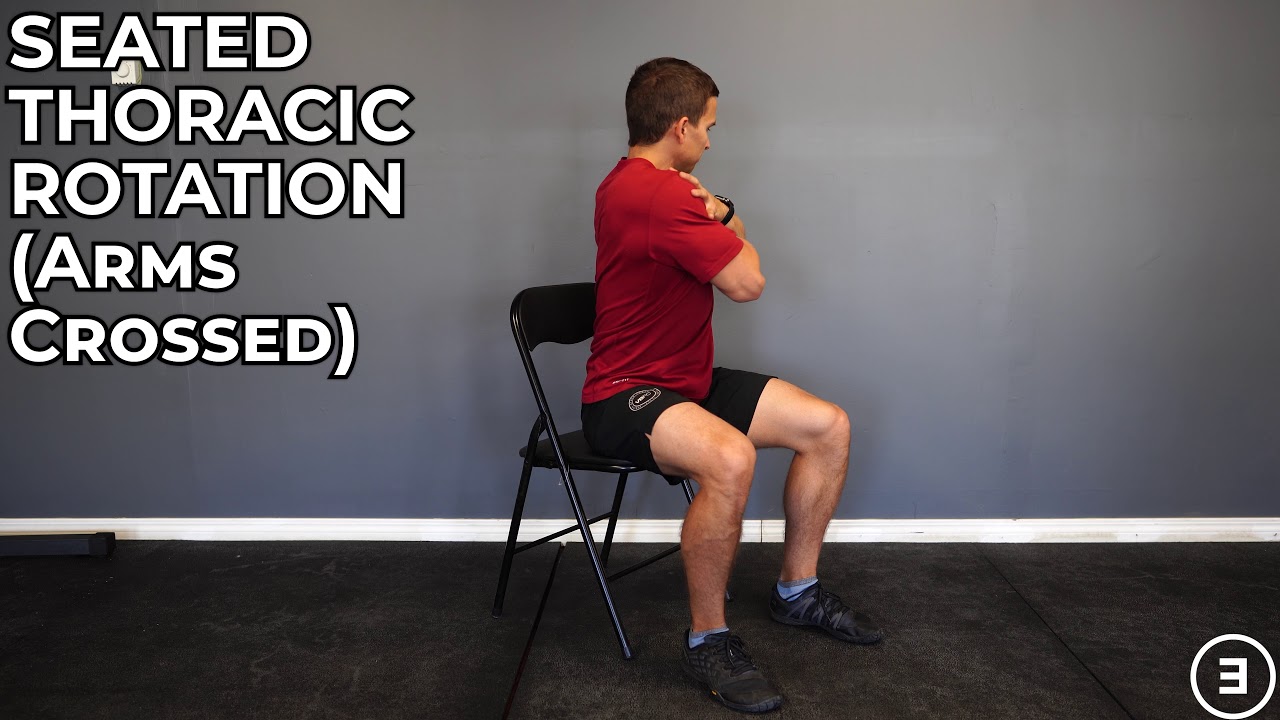
1. Seated Thoracic Twist
Prescription: 1 set, 8 repetitions on each side.
Execution: Sit upright in a sturdy chair with your feet flat on the floor. Cross your arms over your chest, placing your hands on opposite shoulders. Engage your core lightly, and slowly rotate your upper body to the right as far as comfortably possible without straining your lower back. Return to the center, then rotate to the left.
Functional Benefit: This movement directly improves upper-back rotation. Enhanced thoracic mobility is essential for everyday actions like reaching across your body, turning to look behind you while driving, and maintaining an upright posture.
2. Sit to Stand
Prescription: 2 sets, 10 repetitions. Rest for 30 to 60 seconds between sets.
Execution: Sit near the front of a sturdy, armless chair with your feet shoulder-width apart. Lean your torso forward slightly from the hips, press through your heels, and engage your glutes and quads to push yourself up into a full, upright standing position. Carefully reverse the motion, hinging at the hips and bending your knees to lower yourself back down with control.
Functional Benefit: Often considered the gold standard of functional independence, the sit-to-stand exercise builds the vital leg, hip, and core strength required for rising from low seating, getting out of vehicles, and climbing stairs safely.
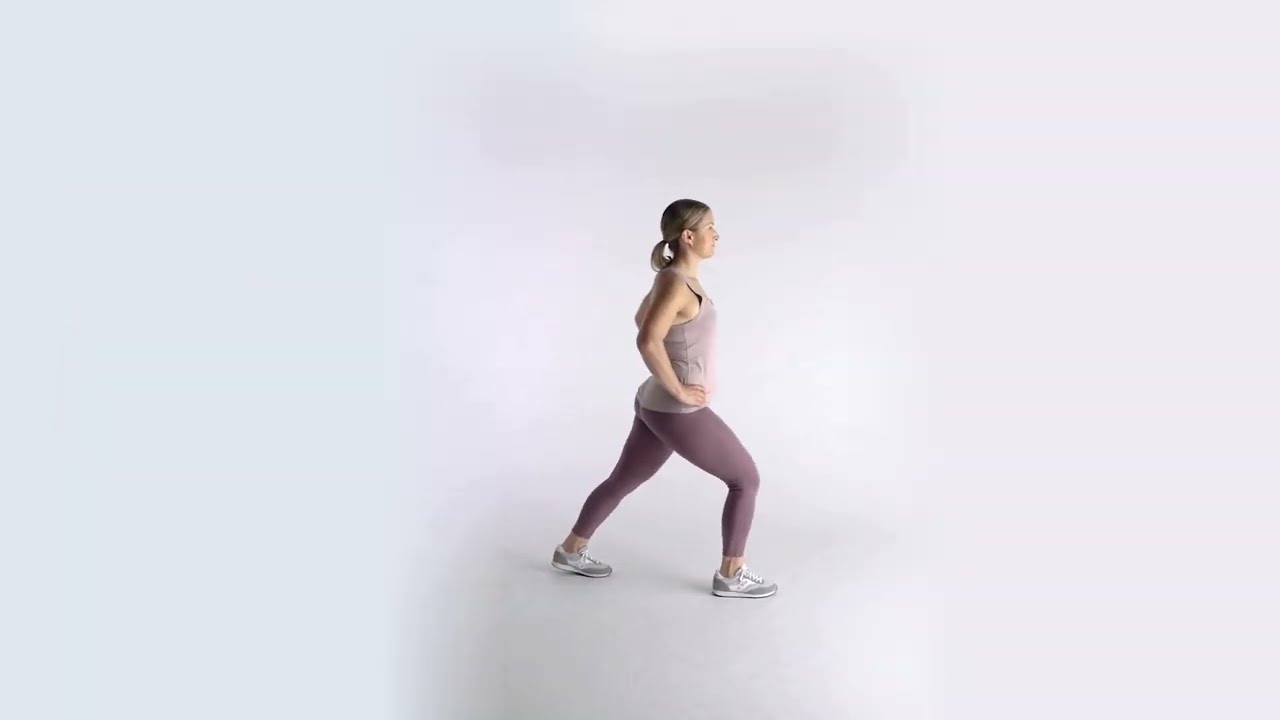
3. Standing Hip Flexor Stretch
Prescription: 1 set, 2 repetitions per side, holding for 30 seconds per stretch.
Execution: Stand tall, utilizing a wall or the back of a sturdy chair for balance if needed. Step one foot backward, keeping your heel lifted and your torso upright. Gently tuck your pelvis under and shift your weight slightly forward into the front leg until you feel a gentle, controlled stretch along the front of the hip and thigh of the back leg.
Functional Benefit: Prolonged sitting causes the hip flexors to adaptively shorten. This stretch lengthens those tight tissues, directly supporting an upright, confident posture and a more comfortable, fluid stride when walking.
4. Supported Standing Child’s Pose
Prescription: 1 set, 2 repetitions, holding for 20 to 30 seconds per repetition.
Execution: Face a sturdy elevated surface, such as a kitchen counter or the back of a high sofa. Place your hands on the surface and step your feet back, hinging forward at your hips while allowing your arms to extend and your chest to gently press toward the floor, mimicking the classic yoga posture with structural support.
Functional Benefit: This movement offers a gentle, traction-based stretch across the entire posterior chain—including the back, shoulders, and hips—while encouraging pain-free range of motion without the vulnerability of dropping all the way to the floor.
5. Shoulder Squeeze
Prescription: 2 sets, 10 repetitions, holding each squeeze for 3 to 5 seconds.
Execution: Sit or stand with a tall, neutral spine. Keep your arms relaxed by your sides or bent at a 90-degree angle. Squeeze your shoulder blades together and down, as if you are trying to hold a tennis ball between them. Hold the contraction for a few seconds before releasing back to the starting position.
Functional Benefit: Modern life encourages a forward-slumping posture. Shoulder squeezes actively target the mid-back and scapular stabilizers, promoting optimal upper-back positioning, reducing neck strain, and reinforcing an open, confident posture.
Future Outlook
As global demographics shift toward an increasingly aging population, the healthcare conversation is pivoting decisively from lifespan to healthspan—the number of years a person lives free from chronic disease and debilitating physical limitation.
The integration of physical therapy principles into everyday wellness routines represents a critical frontier in preventive medicine. By demystifying the chronology of mobility loss and providing accessible, evidence-based tools like the Hinge Health routine, modern science empowers individuals to take direct control of their physical destiny.
Ultimately, the narrative surrounding aging is being rewritten. With consistency, targeted movement, and an understanding of biomechanical preservation, advancing age does not have to mean a surrender of physical freedom. Instead, it can herald a new chapter of intentional, resilient, and uncompromised mobility.