EXECUTIVE OVERVIEW
As the global entertainment, music, and digital landscapes continue to undergo a profound demographic and cultural decentralization, Latin creators are no longer just participating in the conversation—they are defining its parameters. Against this backdrop of unprecedented cultural influence, PAPER Español recently hosted one of the most exclusive and intellectually charged gatherings of the season: an intimate private dinner at the legendary Mr Chow in Beverly Hills, designed to anchor the festivities of Latin Creators Week.
The event convened an elite cross-section of the industry’s brightest minds, including powerhouse regional Mexican group Fuerza Regida, multimedia megastar Lele Pons, rap luminary Snow Tha Product, acclaimed comedian Aida Rodriguez, and visionary culinary anthropologist Dr. Claudia Serrato. Rather than serving as a traditional, high-pressure Hollywood networking event or a performative red-carpet spectacle, the evening was engineered as a sanctuary. It was a deliberate pause button designed to allow artists, executives, designers, and digital architects to step away from the relentless algorithmic churn of social media and engage in meaningful, face-to-face discourse.
By bridging the often-siloed worlds of traditional entertainment, underground art, high fashion, and digital-native content creation, PAPER Español and host Vanessa Chow orchestrated an ecosystem of cross-pollination. The night underscored a vital industry truth: while algorithms can distribute art to millions in seconds, enduring cultural movements are forged in physical spaces, breaking bread, and sharing ideas across tables. This comprehensive report explores the dynamics of the evening, the heavy-hitting guest list, the broader socio-cultural implications of Latin Creators Week, and what this convergence signals for the future of the global creative economy.
DETAILED CHRONOLOGY: AN EVENING AT MR CHOW
Setting the Scene: Breaking Bread Beyond the Algorithm
The evening commenced as twilight settled over Beverly Hills, casting a cinematic glow over the minimalist, art-filled interior of Mr Chow. Long before the first courses of world-class cuisine were served, the atmosphere inside the dining room defied the typical formalities of high-profile industry events. There were no designated podiums, no press lines, and no forced photo-ops. Instead, the curation of the guest list fostered a rare brand of organic camaraderie.
Vanessa Chow, acting as gracious host, welcomed a diverse assembly of culture-shapers who rarely find themselves under the same roof outside of massive industry award shows. Musicians who usually communicate via encrypted messaging apps or remote recording sessions found themselves breaking bread with digital creators whose subscriber counts rival traditional movie stars.
Early in the evening, digital pioneer Lele Pons was spotted deep in conversation with fellow creator Andrew Davila, discussing the shifting paradigms of digital storytelling and audience retention. Just tables away, rap icon Snow Tha Product and veteran comedian Aida Rodriguez engaged in a vibrant, impassioned dialogue regarding the historic evolution—and ongoing hurdles—of authentic Latino voices within mainstream entertainment and media. The friction and synergy of these spontaneous pairings set the tone for a night where traditional hierarchies dissolved.
The Symphony of Music and Industry: Fuerza Regida and Beyond
As the night progressed, the gravitational pull of the room shifted toward its heavy-hitting musical contingent. Music, after all, remains the undisputed spearhead of the current Latin cultural wave. Representing the unstoppable global dominance of regional Mexican music, JOP, Pelón, and Moisés of Fuerza Regida held court, seamlessly mingling with elite producers and artists.
Their presence underscored a fascinating shift in the modern music business: genre lines have not just blurred; they have effectively collapsed. Joining the Fuerza Regida members were powerhouse producer Lil Eddie Serrano and boundary-pushing artist DobleU. The conversations among these heavyweights transcended polite small talk, evolving into intense analytical exchanges about the structural evolution of the music industry. As streaming platforms, TikTok viral loops, and global touring markets accelerate at a breakneck pace, these creators dissected the mechanics of maintaining artistic integrity while scaling operations to a global audience.
The dialogue illuminated a shared sentiment among the room’s musical elite: the old gatekeepers are being systematically bypassed. The artists driving today’s charts are not waiting for permission from traditional label executives; they are building direct-to-consumer empires powered by cultural authenticity, relentless work ethics, and cross-genre collaborations.
The Aesthetic Vanguard: Fashion, Image-Making, and Visual Culture
While music provided the baseline rhythm of the evening, fashion and image-making supplied the visual vocabulary. In an era where a creator’s personal brand is inextricably linked to high-concept styling, editorial photography, and bespoke design, the presence of fashion’s avant-garde was essential.
Designer Rio, founder of the boundary-pushing label RioWorld, commanded attention as he moved through the room alongside stylist Joshua Alan Clark. Their discussions with celebrity makeup artist David Velásquez and acclaimed photographer Jora Frantzis offered a masterclass in modern image-making. These are the architects of the visual culture that defines contemporary Latin stardom.
From album cover aesthetics and high-fashion editorial spreads to the carefully curated feeds of digital influencers, this cohort discussed how Latino identity is visually communicated to the world. They analyzed the shift from monolithic representation to a hyper-nuanced spectrum of styles that rejects archaic tropes in favor of futuristic, genre-defying self-expression. The consensus was clear: Latin fashion is no longer looking to Paris or New York for validation; it is writing its own design lexicon.
Expanding the Definition of Creativity: Culinary Anthropology and Beyond
Perhaps the most profound reminder of the breadth of Latin creativity came from the presence of Indigenous chef and culinary anthropologist Dr. Claudia Serrato. Seated alongside digital creators Michelle Jenae and Jojo Sim, Dr. Serrato’s inclusion signaled a deliberate expansion of what PAPER Español intended to celebrate during Latin Creators Week.
Creativity is not confined to a soundboard, a designer’s sketchpad, or a viral video loop. It lives in ancestral foodways, historical preservation, linguistic reclamation, and the diverse methodologies through which modern communities share their stories. Dr. Serrato’s conversations with guests bridged ancient Indigenous traditions with contemporary digital storytelling, reminding everyone in attendance that modern Latin culture is built upon centuries of resilience, innovation, and cross-cultural synthesis.
SUPPORTING CONTEXT & METRICS: THE EXPLOSION OF THE LATIN CREATIVE ECONOMY
To fully comprehend the significance of PAPER Español’s gathering at Mr Chow, one must examine the macroeconomic and cultural data driving Latin Creators Week. The event did not occur in a vacuum; it is a direct response to one of the most powerful demographic and economic shifts of the 21st century.
The Demographic and Economic Engine
According to recent data from the U.S. Census Bureau and economic impact studies by organizations like the Latino Donor Collaborative (LDC), the U.S. Latino population is not only growing rapidly—it is acting as the primary growth engine of the American economy.
- GDP Power: If the U.S. Latino population were an independent country, its Gross Domestic Product (GDP) would rank as the fifth-largest in the world, surpassing major global economies like the United Kingdom, France, and India.
- Consumptive Influence: Latinos skew significantly younger than the non-Latino white population, boasting a median age well under 30. This youth demographic dictates consumer trends across streaming, fashion, gaming, and digital platforms.
- Digital Adoption: Studies consistently show that Latino consumers over-index in smartphone adoption, social media engagement, and digital content consumption. They are digital natives who demand authentic representation and immersive brand experiences.
The Streaming and Music Hegemony
The cultural dominance witnessed around the dinner tables at Mr Chow is empirically backed by global consumption metrics. Over the past half-decade, Latin music has transitioned from a niche, localized category to a dominant global force.
- According to reports from IFPI (The International Federation of the Phonographic Industry) and Billboard, Latin music revenues have experienced exponential, double-digit year-over-year growth.
- Artists like Bad Bunny, Rosalía, and Fuerza Regida routinely shatter streaming records previously held by anglo-pop acts, dominating global Spotify and Apple Music charts not just in Spanish-speaking territories, but across non-Spanish-speaking markets throughout Europe, Asia, and the Middle East.
- This linguistic barrier has effectively evaporated. Global audiences are increasingly connecting with the raw emotional resonance of the music, proving that cultural specificity is, paradoxically, the key to universal appeal.
The Creator Economy Paradigm Shift
Simultaneously, the creator economy has matured into a multi-billion-dollar industry. Historically, however, creators of color—and Latino creators in particular—have faced systemic inequities regarding brand sponsorships, equity stakes, and executive representation.
Events like Latin Creators Week and PAPER Español’s private dinner serve a vital structural purpose within this economy. By placing digital-native creators like Lele Pons, Andrew Davila, Michelle Jenae, and Jojo Sim on equal footing with legacy music icons, fashion designers, and corporate executives, the event accelerates the integration of digital talent into traditional power structures. It builds bridges where algorithmic gatekeeping once created silos, facilitating partnerships that monetize influence equitably.
OFFICIAL STATEMENTS & EDITORIAL PERSPECTIVES
The ethos of the evening was eloquently captured by the underlying mission of PAPER Español and the structural intent of Latin Creators Week. While corporate boardrooms often view cultural moments through the sterile lens of Q4 metrics and quarterly earnings reports, the architects of this gathering prioritized human connection as the ultimate catalyst for innovation.
"Far removed from the pace of a red carpet, the evening unfolded organically. Musicians traded ideas with designers. Photographers connected with digital creators. Stylists shared tables with artists and producers. It was the kind of cross-pollination that rarely happens by chance, but often sparks the collaborations that shape what’s next."
This editorial philosophy highlights a fundamental truth of creative industries: breakthroughs are rarely manufactured in sterile environments. They are born in the friction of multidisciplinary dialogue. When a high-fashion designer like Rio sits across from a regional Mexican music powerhouse like Fuerza Regida, or when a culinary anthropologist like Dr. Claudia Serrato engages with a digital-first mega-creator, the resulting ideological exchange sows the seeds for future artistic milestones.
Furthermore, the organizers emphasized that the core objective of Latin Creators Week extends far beyond the lifespan of a single social media campaign, a trending hashtag, or an ephemeral marketing push.
"That has been the mission of Latin Creators Week from the very beginning: to create spaces where different generations and disciplines within the Latin creative community can come together and build relationships that outlast a campaign, a post, or an algorithm."
In an era defined by algorithmic fatigue—where artists and creators are constantly pressured to feed the digital beast with continuous, short-form content—stepping back to break bread face-to-face is a radical act of community preservation. It re-centers the human element of art, reminding stakeholders that digital tools should serve the community, not enslave it.
FUTURE OUTLOOK: WHERE LATIN CREATIVITY GOES FROM HERE
As the plates were cleared at Mr Chow and the evening wound down, the palpable energy in the room suggested that this dinner was not merely a celebratory capstone, but a launchpad. What does the future hold for the ecosystem of creators, artists, and executives who gathered under the PAPER Español banner?
1. Institutionalization Without Assimilation
The primary challenge facing the Latin creative renaissance is scaling without diluting cultural authenticity. As major corporations, venture capital firms, and Hollywood studios increasingly wake up to the immense profitability of the Latino demographic, there is a constant risk of co-optation.
Gatherings like this private dinner serve as defensive and offensive bulwarks. By solidifying an autonomous network of tastemakers, artists, and executives who trust one another, the community retains collective bargaining power. They are building their own infrastructure, ensuring that as Latin culture continues its global ascent, the economic and creative rewards remain firmly in the hands of the culture-makers themselves.
2. Radical Inter-Disciplinary Collaboration
Expect to see a surge in unconventional collaborations in the wake of Latin Creators Week. The mingling of regional Mexican music stars with high fashion designers, and digital creators with culinary anthropologists, is a preview of upcoming projects. We are entering an era where a fashion collection may be natively integrated with a regional Mexican album release, accompanied by an interactive digital documentary and an immersive culinary pop-up. The silos are gone. The future belongs to the polymaths.
3. Generational Knowledge Transfer
One of the most powerful elements of the evening was the mingling of seasoned industry veterans with digital-native creators. As veteran producers like Lil Eddie Serrano and cultural leaders like Dr. Claudia Serrato share space with Gen-Z digital icons, a vital generational knowledge transfer takes place. Younger creators gain institutional wisdom regarding longevity, copyright, and brand building, while legacy executives gain real-time insights into algorithmic trends, community-building, and digital monetization. This symbiosis ensures that the current wave is not a fleeting trend, but a permanent structural shift in global entertainment.
Conclusion
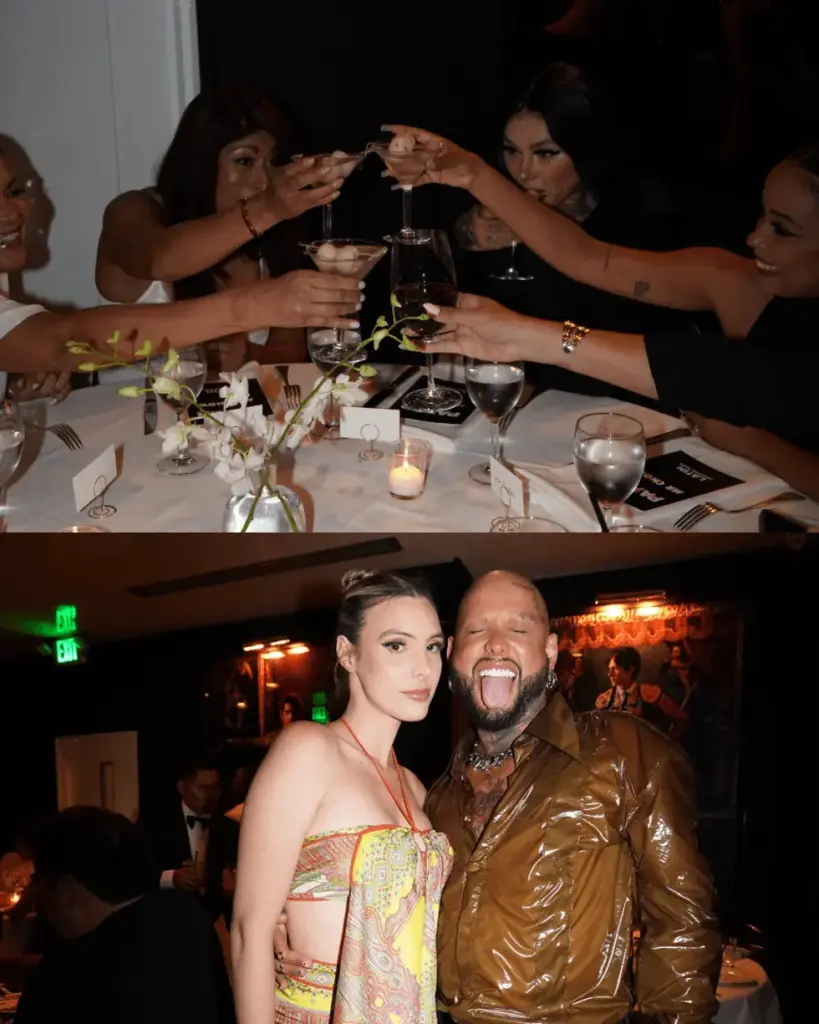
As captured through the lens of photographer Ricardo Diaz, the night was defined by authentic smiles, animated hand gestures, intense intellectual engagement, and the universal language of shared meals. At a historical moment when Latino talent is fundamentally reshaping culture on a global scale, gathering the architects of that momentum under one roof felt less like an industry dinner and more like the drafting of a cultural manifesto.
Ultimately, the evening proved an enduring truth of human enterprise: despite the infinite reach of the internet, the most transformative collaborations will never begin in a sterile boardroom, a corporate pitch deck, or a Zoom meeting. They start, as they always have, around a table.