Executive Overview
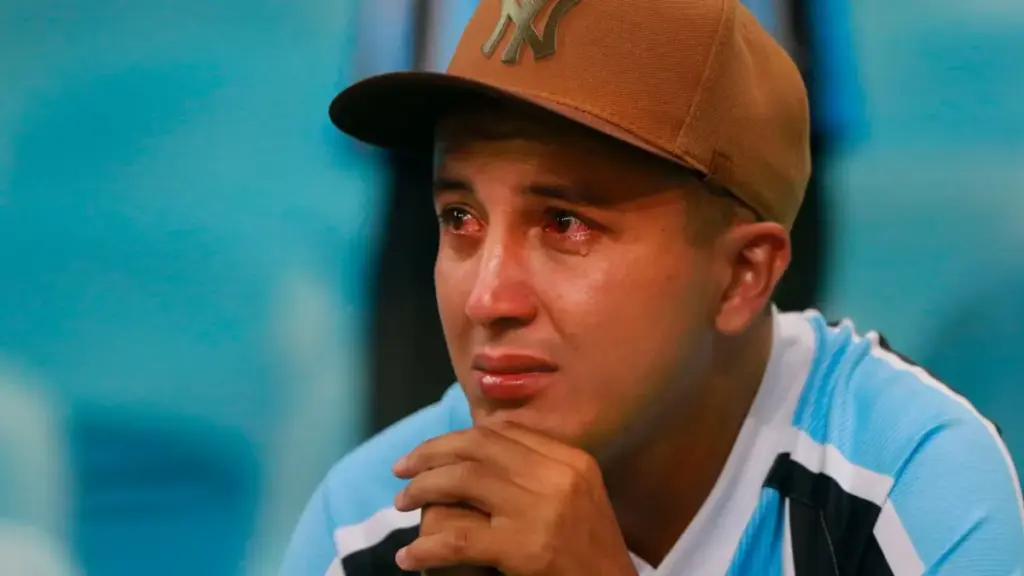
Picture a scene that plays out in living rooms, sports bars, and stadium bowls across the globe every weekend: a grown man who remained entirely dry-eyed during his own wedding ceremony is now openly weeping into a foam finger because his favorite franchise surrendered a fourth-quarter lead. In almost any other public context, such an emotional collapse might draw awkward stares, whispers, or concerns over mental stability. Yet, in the theater of professional and collegiate athletics, this display of profound grief is met not with ridicule, but with quiet solidarity. A heavy hand lands reassuringly on a trembling shoulder; a companion offers a silent nod of shared agony. No one laughs, and the incident is rarely spoken of again.
For generations, the athletic arena has functioned as a unique cultural sanctuary—a socially sanctioned space where men are seemingly granted a free pass to experience and express vulnerability. But beneath this surface-level tolerance lies a complex, paradoxical social architecture. Why is it that society condones, and even respects, a man sobbing over a blown lead in a football game, yet remains deeply uncomfortable with male emotional expression in professional, domestic, or social environments?
Recent psychological research suggests that the answer is rooted not in the act of crying itself, but in the identity of the person shedding the tears. According to groundbreaking studies from institutions like Hamilton College and Indiana University, public acceptance of male crying is largely dependent on a phenomenon known as "masculine collateral." In short, men who already embody traditional cultural ideals of toughness and machismo are afforded a wide margin of emotional leniency. Conversely, men operating in fields or spaces perceived as less traditionally masculine face severe social penalties for the exact same physiological response.
This investigative report examines the psychological, sociological, and cultural mechanics governing male tears. By synthesizing academic research, expert commentary, and data from gender studies, we explore why sports remain one of the final safe harbors for male grief, how locker room culture is slowly evolving, and what this reveals about the rigid, often punishing confines of modern masculinity.
Detailed Chronology: The Evolution of Academic Inquiry into Male Tears
The scientific exploration of how society perceives male emotional expression—and specifically, how context alters the reception of tears—has evolved significantly over the past two decades. What began as anecdotal observations among sociologists has transformed into rigorous empirical research across behavioral psychology and gender studies.
The 2011 Indiana University Study: Mapping the Locker Room
The foundational academic work examining male crying within hyper-masculine spaces was published by a research team at Indiana University, led by psychologists Joel Wong and Jesse Steinfeldt. The researchers sought to cut through the noise of cultural stereotypes by examining how actual participants in hyper-masculine environments—specifically, collegiate football players—viewed emotional displays among their peers.
The study recruited approximately 150 college football players and presented them with vignettes detailing the actions of a fictional teammate named "Jack," who wept following a high-stakes game. The methodology was carefully constructed to test the boundaries of acceptance, varying variables such as the outcome of the game (win versus loss) and the intensity of the emotional display (tearing up versus full-on sobbing).
The findings offered a nuanced look at locker room culture. The athletes were generally supportive of a teammate tearing up after a devastating loss. However, the data revealed a sharp psychological cliff: full-on sobbing was viewed with significantly less tolerance, and emotional displays following a win were met with skepticism or confusion. Crucially, the Indiana University study uncovered a direct correlation between an athlete’s acceptance of a teammate’s tears and their own psychological well-being. Players who viewed Jack’s crying as appropriate reported significantly higher levels of personal self-esteem. Conversely, players who intellectually condemned crying while simultaneously admitting they would likely react the same way reported the lowest levels of self-esteem, signaling an internal conflict driven by toxic self-suppression.
The 2019 Hamilton College Breakthrough: The Power of "Masculine Collateral"
While the Indiana University study illuminated dynamics within the football locker room, it left open a broader question: Why do sports grant this emotional exemption in the first place, when other domains do not?
Enter Dr. Heather MacArthur, a psychologist at Hamilton College, whose landmark study published in Frontiers in Psychology in 2019 sought to answer this exact question. MacArthur’s research investigated the subtle biases governing how society evaluates men who cry in various professional and personal contexts.
Through a series of experimental scenarios, MacArthur presented participants with short stories depicting men crying in workplace settings. The results laid bare a profound societal double standard. When participants evaluated a firefighter who teared up on the job, they consistently rated him as stronger, more competent, and more emotionally appropriate than a male nurse who exhibited the exact same behavior in a healthcare setting.
Expanding the inquiry into recreational pursuits, MacArthur asked male participants to gauge their own willingness to cry across different competitive domains. The responses confirmed a strict hierarchy: men reported feeling significantly more comfortable with the prospect of crying after losing a grueling weightlifting competition than they would after losing a figure skating match.
MacArthur’s conclusion was both stark and illuminating: "Men who are perceived to embody cultural ideals of masculinity may be given more room to cry." The tears themselves were not the variable determining social acceptance; rather, it was the perceived baseline masculinity of the individual shedding them that acted as a protective shield against judgment.
Supporting Context & Metrics: The Anatomy of the Emotional Double Standard
To fully comprehend why sports serve as a unique pressure-release valve for male emotion, one must examine the broader statistical and sociological landscape surrounding men’s mental health and emotional suppression.
The Cost of Emotional Silence
For generations, traditional socialization has taught boys to view emotional expression—particularly sadness, fear, and grief—as antithetical to manhood. Phrases like "boys don’t cry" or "suck it up" are more than colloquialisms; they function as behavioral conditioning tools that enforce emotional repression.
Sociological data underscores the severe toll of this conditioning. According to public health data from organizations like the American Foundation for Suicide Prevention, men account for nearly 80% of all suicides in the United States. Behavioral health experts frequently link this statistical disparity to the "male depressive mask"—a phenomenon where men struggling with emotional distress internalize their pain, avoiding professional help or emotional outreach due to deeply ingrained social stigmas.
Within this grim reality, sports emerge as an acceptable cultural bypass. Because athletic competition is universally recognized as a crucible of traditional masculinity, participating in it provides a man with undeniable "masculine credentials." Once those credentials are established, the ensuing emotional release—whether over a championship loss or a heartbreaking play—is insulated by the context of the arena.
The Metrics of Acceptance: Win vs. Loss, Tearing vs. Sobbing
The data collected by Wong, Steinfeldt, MacArthur, and subsequent behavioral researchers reveal distinct thresholds of tolerance regarding male tears:
- The Contextual Threshold: Emotional expression is heavily contextualized. Tears are viewed as rational and acceptable only when tied to an external, high-stakes catalyst (e.g., a championship defeat, a career-ending injury, or a teammate’s retirement). Internalized or unprovoked crying outside of these specific, dramatic settings is frequently pathologized.
- The Intensity Limit: As demonstrated by the Indiana University football study, a controlled display of emotion (tearing up, silent crying) garners empathy and social protection. Uncontrolled emotional displays (hyperventilating, sobbing) rapidly erode this protection, triggering archaic anxieties regarding loss of control.
- The Domain Hierarchy: Society applies a sliding scale of emotional legitimacy based on occupation and hobby. Hyper-masculine domains (contact sports, heavy industry, emergency services) afford participants the luxury of emotional deviance, while traditionally feminized or neutral domains (nursing, artistic pursuits, desk jobs) penalize men for identical emotional disclosures.
Official Statements and Expert Perspectives
The academic community and mental health advocates have increasingly focused on how the "stadium sanctuary" can serve as both a symptom of rigid gender norms and a potential gateway toward healthier emotional lives for men.
Dr. Joel Wong, lead author of the Indiana University study, emphasized the psychological advantages observed in athletes who successfully integrate emotional expression into their worldview. In statements following the publication of their research, Wong noted:
"The college football players in our study who believed Jack’s crying was appropriate had higher self-esteem. There is a profound psychological cost to maintaining a rigid, unyielding emotional armor. When men are given permission to acknowledge their grief and disappointment without self-loathing, their overall mental fortitude improves."
Co-author Dr. Jesse Steinfeldt expanded on this concept, highlighting the intersection of emotional intelligence and athletic performance. According to Steinfeldt, modern athletes and men in general benefit immensely when they reject the false dichotomy between strength and vulnerability:
"The players who were comfortable being both strong and emotionally expressive were more likely to have a mental edge on and off the field. Sports might be one of the few places where men can cry without immediately feeling embarrassed. But the ultimate goal of studying these spaces is to figure out how to translate that freedom into the rest of society."
Dr. Heather MacArthur’s work further contextualizes these expert observations by reminding us that breaking down emotional stigma requires dismantling the prerequisites for empathy. If society only permits men to cry when they meet pre-approved quotas of machismo, true emotional liberation remains unachieved. MacArthur’s findings challenge institutions to rethink how emotional regulation is taught, valued, and penalized across all professional and personal landscapes.
Future Outlook: Translating the Locker Room to the Living Room
As cultural conversations surrounding mental health, toxic masculinity, and emotional literacy continue to evolve, the paradox of the sports fan offers both a cautionary tale and a blueprint for the future.
The Double-Edged Sword of Athletic Sanctuary
While sports provide a vital release valve for millions of men who otherwise suppress their emotions, relying solely on a stadium or a Sunday afternoon game to process grief is fundamentally limiting. When men confine their emotional vulnerability strictly to the boundaries of athletic fandom, they reinforce the underlying premise that vulnerability is only permissible when mediated by a game.
This compartmentalization can spill over into domestic and professional spheres, where men who weep openly over a quarterback’s torn ACL may remain entirely unequipped to process grief over personal loss, career setbacks, or relationship failures without resorting to anger, withdrawal, or substance abuse.
Bridging the Gap: The Path Forward
The challenge for contemporary society lies in democratizing the psychological safety found within the sports arena. If men can learn to comfort a weeping companion in a stadium seat after a heartbreaking loss, that same empathy must be cultivated in boardrooms, classrooms, and living rooms.
Achieving this cultural shift requires intentional action across multiple fronts:
- Redefining Professional Standards: Workplaces and non-traditional male industries must actively dismantle the penalties associated with emotional transparency, moving away from toxic metrics of stoicism.
- Parenting and Early Socialization: Parents and educators must uncouple emotional expression from gendered expectations, teaching boys that sorrow, fear, and frustration are universal human traits rather than markers of weakness.
- Leveraging Athletic Influence: High-profile athletes, coaches, and sports organizations who openly discuss mental health and emotional well-being possess a unique platform to model healthy vulnerability for millions of fans.
Ultimately, the man crying into his foam finger is participating in a ritual older than modern sports itself: the communal processing of heartbreak. As behavioral research continues to illuminate the mechanisms behind these tears, the true victory will not be won on the gridiron, but in a society where men no longer require a scoreboard as permission to feel.