Executive Overview
In the hyper-accelerated ecosystem of modern celebrity culture, few figures command the digital arena quite like Liam Gallagher. The 54-year-old Oasis frontman, perpetual icon of 1990s Britpop, and unabashed antagonist has never required an explicit reason to upend social media feeds. Yet, his latest digital offensive has elevated digital trolling to an art form, successfully entangling football rivalries, pop-historical revisionism, and the relentless marketing machine behind the impending 2027 Oasis reunion tour into a single, explosive Twitter/X storm.
The catalyst for this latest online conflagration was as predictable as it was incendiary: Manchester City Football Club. Following a bombshell legal and regulatory verdict delivered by the Premier League—finding the treble-winning club guilty of an extensive series of financial rule breaches—Gallagher felt compelled to mount a fierce digital defense of his beloved boyhood club. In doing so, however, the youngest Gallagher brother diverted his ire toward Liverpool FC supporters, unleashing a volley of provocative statements that culminated in arguably his most audacious claim yet: that Oasis single-handedly “put The Beatles back on the map.”
What followed was a masterclass in modern rage-baiting. Within hours, Gallagher’s timeline transformed into a digital battleground, drawing furious rebukes from outraged Scouse football fans, cultural purists, and musicians alike. While a savvy fraction of the digital audience recognized the tongue-in-cheek bravado characteristic of Gallagher’s online persona, the incident underscores a fascinating psychological dynamic: the enduring, fiercely protective relationship between northern British cities and their musical heritage, set against the backdrop of one of the most anticipated commercial music comebacks in living memory.
Detailed Chronology: From Financial Verdicts to Scouse Firestorms
The sequence of events leading up to Liam Gallagher’s digital siege began behind closed doors before spilling out onto public timelines with ferocious velocity.
The Catalyst: The Manchester City Verdict
On a Tuesday morning that sent seismic shocks through English football, the Premier League officially confirmed a guilty verdict against Manchester City concerning a comprehensive portfolio of financial rule breaches. As club executives scrambled to mount an immediate legal appeal against the bombshell ruling, fans across the spectrum took to social media to dissect the fallout.

For Liam Gallagher—whose identity is inextricably bound to both his Manchester working-class roots and his vocal allegiance to City—silence was never an option. Known for using his X account as a digital megaphone for everything from mundane weather updates to cryptic teasers regarding the 2027 Oasis reunion shows (bolstered by the recent, highly successful Disney Plus documentary Don’t Look Back in Anger), Gallagher pivoted swiftly from tour hype to defensive posture.
Crossing the Mersey: The Provocation
Rather than engaging solely with rival football pundits, Gallagher widened his scope to target Liverpool FC supporters en masse. Recognizing the historic, deep-seated cultural and footballing rivalry between Manchester and Liverpool, the rocker deliberately aimed for the jugular of Britain’s most musically revered port city.
Taking to X, Gallagher posted a scathing indictment of his detractors:
*"All these Scousers giving me and my band s*t, OASIS have done more for the city of Liverpool than they will ever do…"
Before social media algorithms could even begin to process the statement, he delivered the definitive provocation, adding:

"…OASIS put the BEATLES back on the map which they no doubt directly profit from UNGRATEFUL little SODS [sic.]."
Sign-off: "MCFC. LG x."
The Immediate Digital Backlash
The response was instantaneous, incandescent, and vast. Scousers, music historians, and general observers rushed to dismantle Gallagher’s historical revisionism.
- Phil Gwilliam (@PhilGwilliam): "TBF Liam, if it wasn’t for the Beatles you’d be working in Home Bargains…"
- Paul (@Paul_MCFC_LFC_etc): "Claiming you put The Beatles back on the map is some serious reaching. They never fell off it."
- Gareth Roberts (@thejackmarmion): "Time to have a lie down. Also – The Real People would like a word." (A pointed reference to the Liverpool rock band formed in 1986 who famously assisted Oasis in recording the demos that secured their initial 1993 creation myth).
- @Boss_Tha: *"Just for the record the Spice Girls cracked America harder than Oasis ever did. Let that sink in before you start putting yourselves in the same f*king sentence as The Beatles."
Amidst the righteous indignation, however, cooler heads identified the unmistakable hallmark of Gallagher’s online persona. Commentator Kevin Sampson noted: "Some very seeeeeerious replies to this. People do realise that Liam’s having a grin here, don’t dee [sic.]?"
Supporting Context & Metrics: The Weight of Heritage
To truly comprehend the absurdity and the underlying friction of Gallagher’s claim, one must measure it against the monolithic architecture of British pop history.

The Incomparable Legacy of The Beatles
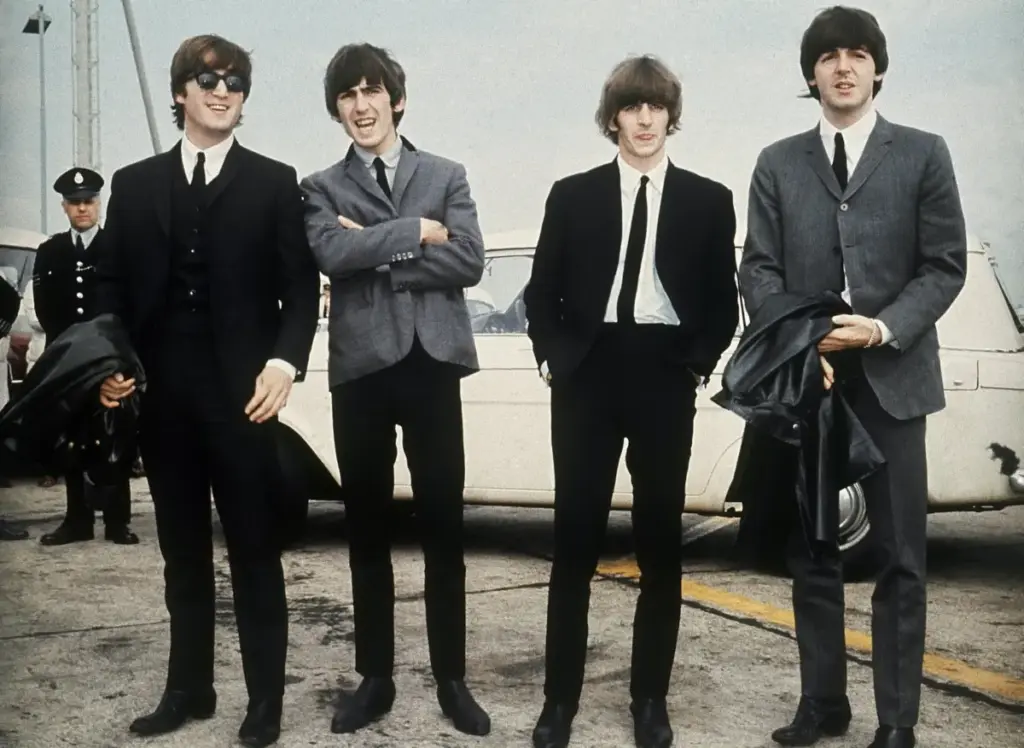
The Beatles are not merely a musical act; they are the gold standard of global cultural diplomacy. Hailing from Liverpool, John Lennon, Paul McCartney, George Harrison, and Ringo Starr fundamentally altered the trajectory of Western music, fashion, and youth culture in the 1960s.
- Chart Dominance: The Fab Four achieved a staggering 18 number-one singles on the UK Official Charts between 1962 and 2023. This legacy was cemented decades after their breakup when their final reconstructed demo, Now and Then, soared to the top spot.
- Global Footprint: From She Loves You and Hey Jude to All You Need Is Love, their catalog has soundtracked generations. Liverpool’s tourism economy remains permanently buoyant thanks to their legacy, housing the world-famous Cavern Club, the Beatles Story museum, and the annual International Beatleweek festival, which has run continuously since 1977.
Oasis vs. The Fab Four: A History of Hyperbolic Comparisons
Liam Gallagher’s relationship with the shadow of The Beatles is complex, contradictory, and historically fraught.
In the dizzying height of 1990s Britpop—specifically around the release of their sophomore masterpiece (What’s the Story) Morning Glory?—Gallagher famously proclaimed that Oasis were "bigger than The Beatles."
Years later, with the clarity of hindsight and maturity, Gallagher walked back those inflammatory remarks. In subsequent interviews, he confessed that he had been "high" at the time, calling comparisons between Oasis and the legendary Liverpool quartet "embarrassing" because "we weren’t as good as them."
This sentiment was famously echoed by none other than Beatles guitarist George Harrison. Speaking in the 1997 French documentary Derrière le Miroir, Harrison offered a characteristically blunt assessment of the Burnage upstarts:

"The one who writes the songs, Noel – he is ok. But they don’t have that much depth. The other bloke [Liam], he is just pain. I don’t think they need him. The one who writes the songs, he can sing them just as well, you know. Maybe because it’s his brother, he’s got to keep him in the band."
A Week of Multi-Front Digital Skirmishes
Gallagher’s spat with Liverpool fans did not occur in a vacuum. True to his form as a serial digital combatant, the singer spent the same week trading verbal blows with former Coronation Street actor Charlie Lawson. The actor had publicly dismissed Oasis as "distinctly average," prompting an immediate, caustic digital riposte from the singer that kept gossip columns and X feeds saturated with engagement metrics.
Official Statements and Industry Impact
While neither Noel Gallagher nor official representatives for Oasis have formally intervened in Liam’s latest social media crusade, industry insiders and PR experts note a calculated underlying utility to the chaos.
With the monumental, record-shattering 2027 reunion tour on the horizon—following the immense commercial success of their Disney Plus documentary Don’t Look Back in Anger—keeping the Gallagher name firmly entrenched in public discourse is a masterclass in organic marketing. Even negative engagement translates directly into algorithmic visibility, ensuring that demand for their upcoming stadium dates remains at a fever pitch, despite recent warnings from the band that tickets are severely limited and secondary market anxieties are reaching a boiling point.
Furthermore, the defense of Manchester City aligns with the band’s long-standing projection of working-class authenticity. By positioning himself as a defiant Mancunian fighting off a united front of Scouse critics, Liam reinforces the very persona that made him a countercultural icon three decades ago.

Future Outlook: What Lies Ahead for the Brothers and Their Fandoms
As the dust settles on another classic Liam Gallagher Twitter storm, the cultural landscape prepares for the inevitable juggernaut that will be 2027.
- The 2027 Reunion Tour: With tickets vanishing almost instantly and fans navigating complex ballot systems and "ticket anxiety," the brothers are poised to command the biggest live music spectacles of the decade. The friction between Manchester and Liverpool will undoubtedly manifest in sold-out stadiums across the North West, where football loyalties and musical fandoms routinely blur.
- The Enduring Social Media Persona: Liam Gallagher shows no signs of muting his digital presence. Whether he is sparring with soap stars, defending Manchester City against regulatory onslaughts, or tweaking the noses of Liverpool purists with outrageous historical claims, his unfiltered approach remains one of the last vestiges of authentic rock-and-roll rebellion in an otherwise sanitized celebrity landscape.
- The Unbreakable Mythos: Ultimately, whether Oasis "put The Beatles back on the map" is a laughable premise to music historians and Scousers alike; The Beatles require no resuscitation. Yet, by forcing millions of people to debate the relative cultural weight of two of Britain’s greatest musical exports, Liam Gallagher has once again achieved his primary objective: making sure the entire world is talking about him, his city, and his band.
As the iconic sign-off reminds us: MCFC. LG x.