Executive Overview
In the hyper-accelerated ecosystem of internet subcultures, the boundaries between real-world tragedy and abstract digital lore frequently blur. This phenomenon was starkly underscored when a purportedly new photograph of Patrick Crusius—the perpetrator of the 2019 El Paso Walmart mass shooting—surfaced across mainstream and alternative social media platforms. Crusius, whose visage serves as the biological blueprint for the notorious "Chudjak" Wojak-derivative meme, became the unexpected center of a viral storm.
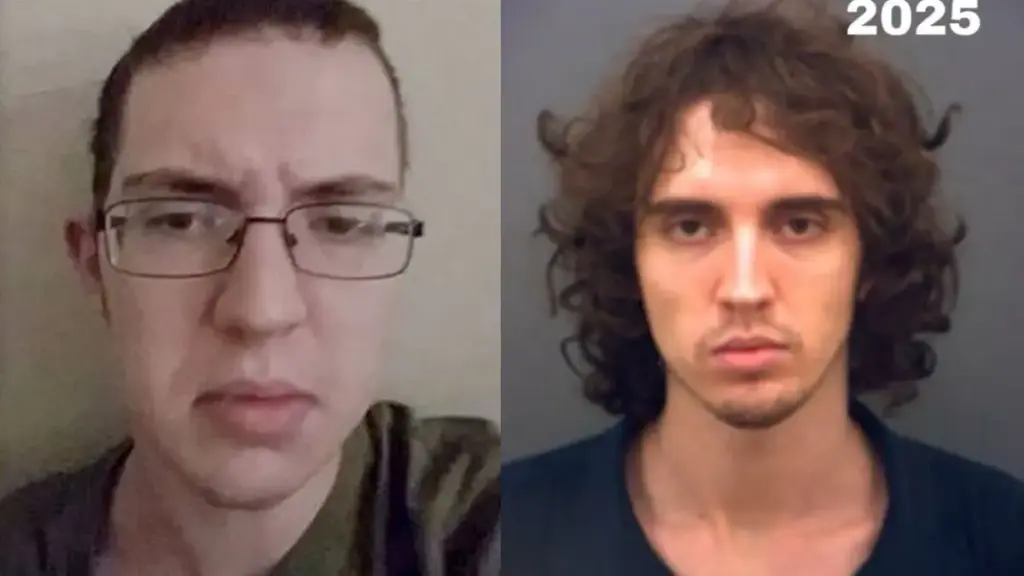
The circulating image, allegedly obtained via a Freedom of Information Act (FOIA) request and first posted to Reddit before migrating to X (formerly Twitter), presented a starkly different visual of the mass murderer: gone were the signature glasses, replaced instead by longer, curly hair and facial scruff. To the morbidly fascinating corners of meme aggregators and irony-poisoned web communities, this physical evolution was met not with solemn reflection on one of modern American history’s deadliest hate crimes, but with absurdist humor, comparisons to indie rock musicians, and surreal jokes about a prison "glow-up."
This incident highlights a deeply unsettling facet of contemporary digital culture: the profound abstraction of violent criminals into permanent digital caricatures. While Crusius serves multiple consecutive life sentences in federal prison for the racially motivated murder of 23 people, his digital double, Chudjak, continues to live an autonomous life online as shorthand for extremist doom-mongering through catchphrases like "The West has fallen. Billions must die."
This investigative report examines the chronology of the recent image leak, the mechanics of how real-world criminals are mythologized into internet memes, the psychological and sociological implications of online communities reacting to these updates, and the ongoing challenge authorities and platforms face when true crime intersects with digital satire.
Detailed Chronology
The Leak on Reddit: April 25, 2025
The digital trail of the new imagery began on April 25, 2025, within the niche Reddit community /r/masskillers. A user operating under the handle /u/uncanealguinzaglio uploaded what they claimed to be an official federal mugshot of Patrick Crusius. According to the original uploader, the image had been secured through a Freedom of Information Act (FOIA) inquiry.
The post did not linger long in the public eye. Recognizing potential violations of Reddit’s Terms of Service regarding the proliferation of content related to mass casualty events and incarcerated felons, platform moderators swiftly removed the thread. However, in the architecture of the modern internet, deletion is rarely erasure. Screenshots had already been captured, packaging the visual asset for export to less-regulated platforms.
Discussions accompanying the initial leak attempted to contextualize the photograph’s origin. The uploader clarified that the photo was believed to date back to July 2023—coinciding roughly with Crusius’s federal guilty plea—rather than being a contemporaneous snapshot from 2025. Furthermore, it was noted that the photograph was ostensibly captured by the El Paso holding facility processing him for federal transfer, rather than a direct federal bureau capture. Regardless of its precise pedigree, the image was firmly tied to Crusius’s ongoing federal and state legal proceedings rather than archival 2019 material.
The Viral Explosion on X: April 27, 2025
Two days after the initial Reddit leak, the image escaped insulated true-crime subcultures and entered the broader, highly volatile ecosystem of X. On Sunday, April 27, 2025, an X user with the handle @TruueDiscipline posted the image alongside a provocative, engagement-bait caption: "This is what chudjak looks like now… feel old yet?"
The post paired the reality of Crusius’s altered appearance—sans glasses, with a softer, scruffier aesthetic—with the internet moniker that has tracked him for half a decade. The response was immediate and overwhelming. Within 48 hours, the tweet amassed over 1.2 million views and secured upwards of 17,000 likes, thrusting the convicted murderer into the platform’s algorithmic trending awareness.
The Meme Machine Responds
The viral spread of the photograph triggered a cascade of derivative memes, showcasing the distinct subcultural dialect of imageboards and meme-centric social media pages. Users struggled to reconcile the image of a mass murderer with a civilian aesthetic traditionally associated with alternative subcultures:
- The "Indie Rock" Comparison: X user
@hayasaka_aryanposted a side-by-side comparison of Crusius with a tongue-in-cheek caption reading, "From chud to indie rock singer," leaning into the absurd physical transformation. - Absurdist Shock Reactions: Classic internet tropes were exhumed to express faux-disbelief at the physical changes. On April 28, X user
@Marcus_celposted an edited panel of the classic "Cereal Guy" webcomic character spitting out his breakfast in exaggerated shock. - Meta-Commentary on Simp Culture: Other users, such as
@Halsted_19, satirized the phenomenon of true-crime fandoms and prison pen-pal infatuation, posting meta-memes depicting online users fawning over the incarcerated killer.
Clarification and Courtroom Realities
As the "Feel Old Yet?" meme continued to circulate, the original poster (@TruueDiscipline) issued clarifications regarding the timeline. Recognizing that the image was nearly two years old (originating in mid-2023), they contrasted it with more contemporary documentation.
This included referencing Crusius’s appearance during a court hearing on April 21, 2025—just days prior to the leak—where he formally pleaded guilty to capital murder charges. In these recent courtroom photographs, Crusius had returned to wearing standard prescription glasses and sported a fuller beard, providing a stark reality check to the internet commentators who had momentarily mythologized his 2023 holding-facility look into an ironic pop-culture aesthetic.
Supporting Context & Metrics
The Genesis of Chudjak
To understand why a prison photograph of Patrick Crusius generated millions of impressions, one must examine the digital mythology surrounding the "Chudjak" meme. The character originated in late 2019 within the dark corridors of 4chan’s infamous /pol/ (Politically Incorrect) board, shortly after the El Paso Walmart shooting on August 3, 2019.

The meme is a direct evolutionary offshoot of the ubiquitous "Wojak" (or "feels guy") drawing style. Chudjak is explicitly modeled on photographs of Crusius released following his arrest. The character features exaggerated facial traits: thick-rimmed glasses, deep nasolabial folds, a permanent downturned frown, and an unkempt appearance designed to convey anti-social desperation.
Over the ensuing years, Chudjak shed its specific journalistic origin for many casual internet users, abstracting into a generalized symbol for modern male alienation, reactionary politics, and digital despair.
The "Billions Must Die" Phenomenon
Chudjak is inextricably linked to one of the most pervasive catchphrases in modern internet vernacular: "The West has fallen. Billions must die."
Originally formulated as a satirical exaggeration of doom-laden extremist rhetoric found on fringe message boards, the phrase metastasized into a versatile snowclone. Across X, Reddit, and TikTok, internet users deployed Chudjak paired with variations of the phrase to mock catastrophizing, hyper-pessimistic political commentary, and apocalyptic online subcultures.
By stripping the imagery of its direct association with a real-world tragedy, digital subcultures transformed an avatar of a mass murderer into a generalized cartoon of internet cynicism. The recent leak of Crusius’s actual prison photograph violently collapsed this distance, forcing internet denizens to confront the living, breathing human behind the ink-and-pixel caricature.
Engagement Metrics and Algorithmic Amplification
The virality of the April 2025 leak underscores the compounding nature of algorithmic platforms when combining true crime, dark humor, and meme lore:
- Initial Reach: The primary viral tweet by
@TruueDisciplinecrossed 1.2 million views within a 48-hour window. - Engagement Velocity: Generating over 17,000 likes and thousands of reposts, the post benefited from X’s engagement-driven algorithm, which frequently elevates controversial or absurd juxtapositions.
- Cross-Platform Migration: The content successfully bridged three distinct platform architectures: Reddit (as an archive/leak source), X (as a viral amplification engine), and imageboard/Discord ecosystems (as a source for localized shitposting).
Official Statements and Institutional Perspectives
The intersection of judicial transparency (via FOIA releases) and digital culture presents profound challenges for legal and institutional bodies. While federal and state agencies are legally bound to make certain administrative records and mugshots accessible to the public, the digital age ensures that these records are rarely consumed purely for civic oversight.
Legal ethics experts and victim advocacy groups have long criticized the transformation of mass shooters into anti-heroes or pop-culture meme subjects. While official statements from federal prosecutors and the Texas judicial system regarding Crusius have focused squarely on the gravity of his consecutive life sentences—ensuring he will never see freedom again—the broader cultural apparatus operates independently of judicial intent.
Platforms like Reddit have attempted to mitigate this by enforcing strict Content Policies regarding the glorification of violence or the unauthorized distribution of private materials concerning non-public figures involved in mass casualty events. However, these content moderation actions often act as a game of digital whack-a-mole; once an image crosses onto decentralized networks or high-velocity microblogging sites like X, containment becomes virtually impossible.
Future Outlook: The Digital Afterlife of Infamy
As digital culture continues to evolve at a breakneck pace, the phenomenon of the "memeification" of violent criminals represents a dark symptom of information saturation. When real-world horrors are translated instantly into pixels, reaction GIFs, and catchphrases, the human cost of tragedies can easily be buried beneath layers of layer-cake irony.
The viral resurgence of Patrick Crusius’s prison photograph demonstrates that digital avatars like Chudjak possess a sticky, persistent afterlife. Even as the physical person ages behind bars—transitioning from the clean-shaven suspect of 2019 to the scruffy inmate of 2023, and finally to the bearded convict of 2025—his digital double remains immortalized in the collective unconscious of the web.
Moving forward, platforms, researchers, and digital ethicists must grapple with how information transparency laws interact with algorithmic virality. As long as internet subcultures find amusement in the absurd collision of real-world monsters and cartoon iconography, the digital ghosts of historic crimes will continue to haunt our timelines, demanding a critical look at how we consume, sanitize, and meme infamy in the twenty-first century.