Executive Overview
In the hyper-accelerated ecosystem of internet subcultures, the boundaries between real-world tragedy and surreal digital folklore frequently blur. This phenomenon was cast into sharp relief when a previously unseen photograph of Patrick Crusius—the perpetrator of the 2019 El Paso Walmart mass shooting, serving multiple consecutive life sentences—surfaced across mainstream social media platforms. To the broader public, Crusius is remembered as the architect of one of the deadliest targeted attacks against Latinos in modern American history. Within the insular, cynical architecture of imageboards and meme forums, however, he is known by a far more reductive and pervasive moniker: "Chudjak."
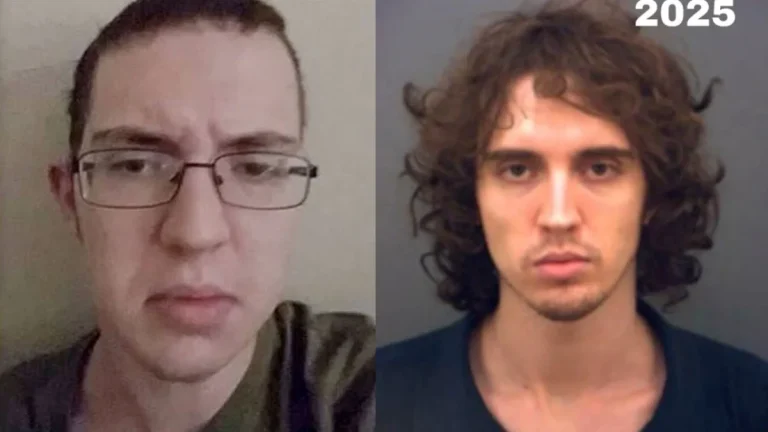
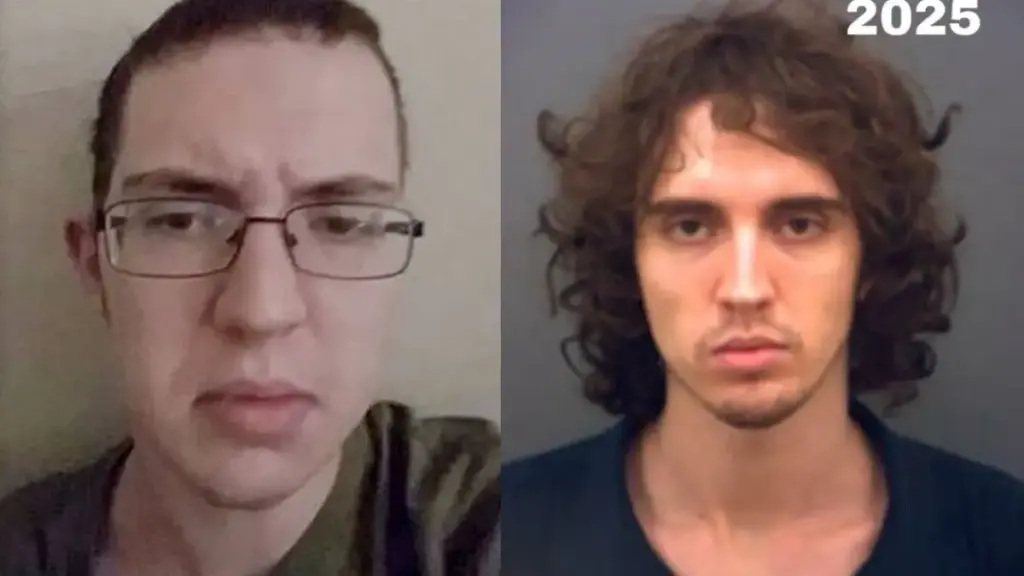
The circulation of what was purported to be a federal mugshot, acquired via the Freedom of Information Act (FOIA), triggered a bizarre wave of viral engagement. Stripped of his signature glasses, sporting longer curly hair and facial scruff, Crusius bore a starkly different appearance from the gaunt, bespectacled visage that inspired the infamous line-drawing caricature born on 4chan in late 2019. Online commentators seized upon the photograph with gallows humor, ironic disbelief, and absurdist commentary, joking that the inspiration behind the apocalyptic "Billions Must Die" meme had experienced an unexpected physical "glow-up."
This incident exposes a disturbing friction point in contemporary digital culture: the detachment of a real-world mass casualty event from its human toll, transforming a convicted domestic terrorist into a stylized caricature, and subsequently evaluating his physical transformation through the lens of internet aesthetics. This report examines the chronology of the leak, the mechanics of how the "Chudjak" meme permeates political and ironic meme spaces, the metrics of its viral resurgence, and the ethical implications of transforming violent criminals into pop-culture-adjacent curiosities.
Detailed Chronology: From FOIA Leak to Viral Phenomenon
The trajectory of the recent image leak follows a familiar path of modern digital distribution, moving from niche archival tracking communities to algorithmic virality within a matter of days.
The Reddit Leak (April 25, 2025)
The sequence of events began on April 25, 2025, when a user on Reddit—identified as /u/uncanealguinzaglio—published a thread within the subreddit /r/masskillers. The post introduced what the user claimed was an official federal mugshot of Patrick Crusius, allegedly obtained through a Freedom of Information Act (FOIA) request.
The image immediately drew scrutiny. Within the thread, the poster clarified the provenance of the photograph, noting that the image dated back to approximately July 2023, coinciding with a phase of his federal proceedings, rather than being captured concurrently with its 2025 release:
"From when he plead guilty to federal charges. circa July of 2023. It was not taken BY the federal government it was taken by El Paso holding him for them. For some reason. But it still came from his federal charges and not state."
Recognizing potential violations of Reddit’s Terms of Service regarding the glorification or distribution of content related to mass perpetrators, platform moderators swiftly removed the post. However, in the architecture of the modern web, deletion does not equal eradication. Copies of the image had already been harvested and redistributed across secondary channels.
The X (Twitter) Explosion (April 27, 2025)
The containment breach occurred on Sunday, April 27, 2025. An X user operating under the handle @TruueDiscipline posted the leaked photograph alongside a classic, ironic engagement bait caption: "This is what chudjak looks like now… feel old yet?"
The post juxtaposed the solemn-looking Crusius—now possessing longer, curly locks and light facial hair, completely devoid of his original spectacles—with the collective memory of his 2019 appearance. The contrast was enough to bypass the traditional algorithmic filters of political and meme-centric X, triggering a massive wave of engagement. Within 48 hours, the post accumulated over 1.2 million views and surpassed 17,000 likes.
The Satirical Backlash and Meme Adaptation
As the image permeated broader feeds, the internet’s reaction bifurcated into surreal, dark humor and incredulous critique. Accounts known for shitposting and absurdist commentary rapidly generated derivatives:
- @Halsted_19 posted a macro image mocking the phenomenon of women exhibiting anomalous attraction or morbid fascination toward high-profile criminals (colloquially termed "hybristophilia"), framing it around the newly surfaced image of the "Chud."
- @hayasaka_aryan published a side-by-side comparison of Crusius with the tongue-in-cheek caption, "From chud to indie rock singer," leaning directly into the bizarre aesthetic shift perceived in his updated appearance.
- @Marcus_cel contributed a reaction panel utilizing the classic "Cereal Guy" internet template, depicting the character spitting out his breakfast in simulated shock over the subject’s altered presentation.
Clarification and Contextual Correction
As the "Feel Old Yet?" meme continued to circulate unchecked, the original poster on X, @TruueDiscipline, stepped forward to provide temporal context. They clarified that the viral photo captured a moment in 2023, while publishing a more recent photographic record: a still from Crusius’s court appearance on April 21, 2025, where he formally entered a guilty plea to capital murder charges. In this contemporary court photo, Crusius had returned to a more familiar presentation, wearing standard corrective lenses and maintaining a heavier beard.
Supporting Context & Metrics: The Anatomy of the "Chudjak" Meme
To understand why a prison photograph of a mass murderer generated millions of impressions, one must analyze the cultural infrastructure of the "Chudjak" meme and its baseline position in modern online political discourse.
Origins on 4chan’s /pol/ Board
The Chudjak meme originated in late 2019 on 4chan’s politically charged /pol/ (Politically Incorrect) board. It emerged as a specialized offshoot of the ubiquitous Wojak (Feels Guy) meme template. While standard Wojaks convey general melancholy, irony, or self-deprecation, the Chudjak was explicitly modeled to mirror the facial geometry of Patrick Crusius, drawing upon his arrest photographs following the August 3, 2019, attack in El Paso, Texas, which claimed the lives of 23 people.
Characterized by distinct visual markers—thick-rimmed glasses, pronounced nasolabial folds, and a permanent, aggrieved frown—the Chudjak was initially deployed as a satirical self-portrait by users mocking the archetype of the radicalized, chronically online internet extremist.

The Evolution of "The West Has Fallen"
Over time, the image transcended its specific origin point to become a generalized avatar for internet doomerism. It is frequently paired with exaggerated, fatalistic aphorisms, most notably:
"The West has fallen. Billions must die."
This phrase evolved into a versatile rhetorical shorthand across political extremes. It is utilized by trolls, political commentators, and shitposters to parody genuine civilizational panic, hyper-nationalist grievance, and apocalyptic doom-mongering. By reducing complex socioeconomic and geopolitical anxieties to a grotesque cartoon face uttering absurdly catastrophic declarations, the meme created a layer of ironic detachment that insulated users from the gravity of its real-world namesake.
Quantitative Impact Metrics
The April 2025 viral cycle demonstrated the resilience and viral efficiency of derivative meme lore:
- Primary Virality: The foundational post by
@TruueDisciplinesecured 1.2 million views and 17,000 likes within a 48-hour window. - Cross-Platform Migration: The image migrated across three distinct platforms—Reddit (
/r/masskillers), X (formerly Twitter), and alternative imageboards—requiring active content moderation intervention to suppress TOS-violating material. - Engagement Velocity: Derivative memes (side-by-sides, indie rock comparisons, and reaction panels) generated aggregate impressions exceeding 3 million views across secondary accounts within three days of the initial leak.
Official Statements and Legal Framework
The unauthorized dissemination of federal and state correctional photographs brings into sharp focus the complex intersection of public information laws, platform governance, and institutional accountability.
The Freedom of Information Act (FOIA) and Public Records
The initial leak of the photographic material via Reddit highlights the ongoing tension surrounding transparency in the American carceral system. Under federal and state guidelines, certain administrative records, including intake and classification photographs, are technically subject to public disclosure laws unless their release compromises institutional security, ongoing investigations, or specific statutory privacy protections.
Legal experts note that while FOIA requests serve as a vital check on government transparency—allowing journalists and researchers to audit the treatment and status of incarcerated individuals—they also open secondary pipelines for sensationalist material to enter digital consumer markets. When public records intersect with digital subcultures, bureaucratic documents are frequently repurposed into viral entertainment.
Platform Moderation and Terms of Service (TOS) Enforcement
Major technology platforms face distinct moderation challenges when managing content related to high-profile violent offenders. Both Reddit and X enforce explicit policies prohibiting:
- The glorification or promotion of violent extremism and mass casualty perpetrators.
- The sharing of leaked non-public personal data or restricted government documents.
In the case of the Reddit leak within /r/masskillers, moderation teams acted in accordance with policies designed to prevent the platform from becoming a staging ground for offender notoriety. However, the decentralized nature of social media ensures that once an asset achieves critical mass—such as crossing the threshold of 1 million views—traditional content removal becomes a game of digital whack-a-mole, with users actively obfuscating images via watermarks, crops, and re-uploads to evade automated detection filters.
Future Outlook: The Digital Afterlife of Infamy
The viral resurgence of Patrick Crusius’s likeness via the "Chudjak" meme complex points toward a broader, increasingly complex reality of the digital age: the permanent merging of real-world atrocities with internet vernacular.
The Gamification of Tragedy
As long as algorithms reward novelty, irony, and transgressive humor, figures associated with horrific violence risk being permanently abstracted into pop-culture symbols. To a generation of internet users who came of age post-2016, the human reality of the El Paso Walmart shooting is two degrees removed, mediated entirely through layers of ironic distortion, caricature, and meme culture.
This abstraction creates a psychological buffer, allowing users to engage with the visual likeness of a mass murderer without confronting the moral horror of his actions. When a federal mugshot is evaluated through the framework of a physical "glow-up" or compared to an "indie rock singer," the tragedy is effectively stripped of its context, reduced to raw fuel for the content machine.
Regulatory and Cultural Trajectories
Looking forward, digital safety researchers and platform architects anticipate a tightening of automated filters surrounding the likenesses of mass perpetrators. As facial recognition and hashing technologies improve, platforms are increasingly equipped to identify and suppress unauthorized re-uploads of correctional imagery tied to violent offenders.
Nevertheless, the cultural damage remains difficult to reverse. The "Chudjak" has broken free from its literal inspiration, cementing itself as a permanent fixture of internet semiotics. Whether future disclosures of incarcerated offenders will continue to trigger this strange alchemy of gallows humor and viral engagement depends heavily on how platforms evolve their enforcement strategies—and whether digital communities can develop a more robust ethical framework for confronting the ghosts of real-world violence in virtual spaces.