Executive Overview
As global demographics shift toward an increasingly aging population, the conversation surrounding health and wellness has experienced a fundamental pivot. No longer is longevity measured merely by lifespan—the sheer number of years a person is alive—but rather by healthspan, the period of life spent in optimal physical and mental vitality. Central to preserving healthspan is an often-overlooked physiological pillar: balance.
Balance is a complex, multi-system neurological and musculoskeletal capability that allows humans to maintain their center of gravity over a base of support. Unfortunately, stability naturally degrades with age, setting the stage for devastating falls, loss of independence, and diminished mobility. Enter yoga: an ancient discipline that modern physiological science increasingly validates as one of the most potent interventions for combating age-related stability decline.
According to Cheryl McColgan, founder of Heal, Nourish, Grow, yoga serves as a masterclass in physical autonomy. "One of my favorite things about yoga is that it trains proprioception—your body’s ability to sense its own movements and position—so it can definitely help with balance and stability," McColgan explains. By simultaneously challenging muscular endurance, core strength, and neurological feedback loops, dedicated yoga practice provides a comprehensive toolkit for future-proofing the human body.
This comprehensive report examines the physiological mechanisms of balance, explores expert-recommended single-leg yoga sequences, and provides an authoritative roadmap for incorporating these movements into a lifelong wellness strategy.
Detailed Chronology: The Evolution of Balance Training in Modern Wellness
The integration of ancient movement arts like yoga into contemporary preventative medicine did not happen overnight. It represents a decades-long convergence of traditional Eastern practices and Western biomechanical research.
The Shift from Reactive Medicine to Preventative Conditioning
For much of the late 20th century, Western medicine approached balance issues reactively. Seniors experiencing instability were typically prescribed assistive devices—canes, walkers—or physical therapy after experiencing a debilitating fall. Exercise regimens prioritized cardiovascular health and high-load resistance training, often neglecting the intricate neuromuscular coordination required to stay upright on uneven terrain.
The Rise of Proprioceptive Awareness (2000s–2010s)
As sports science and kinesiology advanced into the 21st century, researchers began decoding the central nervous system’s role in spatial awareness. Scientists identified proprioception—often referred to as the body’s "sixth sense"—as the primary driver of physical stability. Proprioceptors located in muscles, tendons, and joints constantly relay data to the brain regarding body position. During this era, functional training tools like stability balls, balance boards, and yoga began gaining traction in clinical settings as superior methods for stimulating these neurological pathways.
Mainstreaming Yoga as a Clinical Intervention (Present Day)
Today, yoga has shed its reputation as a purely aesthetic or purely spiritual pursuit, emerging as a clinically backed modality for functional longevity. Geriatricians, physical therapists, and personal trainers routinely prescribe specific yoga postures to clients of all ages. By focusing on single-leg stability, controlled breathing, and eccentric muscular loading, contemporary yoga protocols directly address the root causes of age-related instability, transforming how society approaches physical aging.
Supporting Context & Metrics: The Science of Stability and Aging
To understand why yoga is so effective, one must first examine the physiological cost of aging on the human balance system. Balance is not governed by a single organ; rather, it is a symphony requiring the seamless integration of three distinct biological systems:
- The Visual System: Provides information about where the body is in relation to the surrounding environment.
- The Vestibular System: Located in the inner ear, it detects gravitational pull, linear acceleration, and head rotation.
- The Somatosensory (Proprioceptive) System: Relies on nerve receptors in the skin, muscles, and joints to register pressure, position, and stretch.
The Statistics of Instability
The consequences of system degradation are severe. According to global health metrics, falls are a leading cause of accidental injury and mortality among older adults worldwide.
- The Scale: Millions of older adults suffer moderate to severe fall-related injuries annually, often resulting in traumatic brain injuries or hip fractures.
- The Cascade Effect: A hip fracture in an older adult frequently triggers a rapid decline in independence, with a significant percentage of patients experiencing functional mortality or long-term institutional care within a year of the incident.
- The Economic Burden: Healthcare systems spend billions of dollars annually treating fall-related trauma, making preventative balance training a critical public health imperative.
How Yoga Reverses the Trend
Yoga directly counteracts these grim statistics by challenging the somatosensory and musculoskeletal systems simultaneously. When an individual performs a single-leg yoga pose, micro-adjustments must occur continuously across the ankle complex, knee, and hip joints. This constant recruitment strengthens stabilizing muscles—such as the tibialis posterior, gluteus medius, and core musculature—while sharpening the brain’s processing speed for spatial data.
As McColgan notes, "It works on both by improving muscular endurance and strength, especially when practicing poses that require balancing on one leg."
Expert Insights & Recommended Poses
To maximize the stability-boosting benefits of yoga without overwhelming beginners, McColgan recommends a progressive sequence of three foundational, single-leg postures. These poses systematically challenge the body’s base of support, forcing the nervous system to adapt and grow more resilient.
Guiding Principles for All Balance Poses
Before executing the sequence, practitioners should keep two universal rules in mind:
- Drishti (Focused Gaze): Fixing your eyes on a single, non-moving point in your environment dramatically reduces sway by anchoring the visual system.
- External Support: There is no shame in utilizing a wall, the back of a sturdy chair, or a yoga block. Extra support allows the nervous system to feel safe while building baseline strength.
- Micro-Habits: If structured yoga sessions feel daunting, McColgan suggests practical micro-interventions: "If you can’t do the full poses yet, try standing on one leg while you brush your teeth to start training your balance."
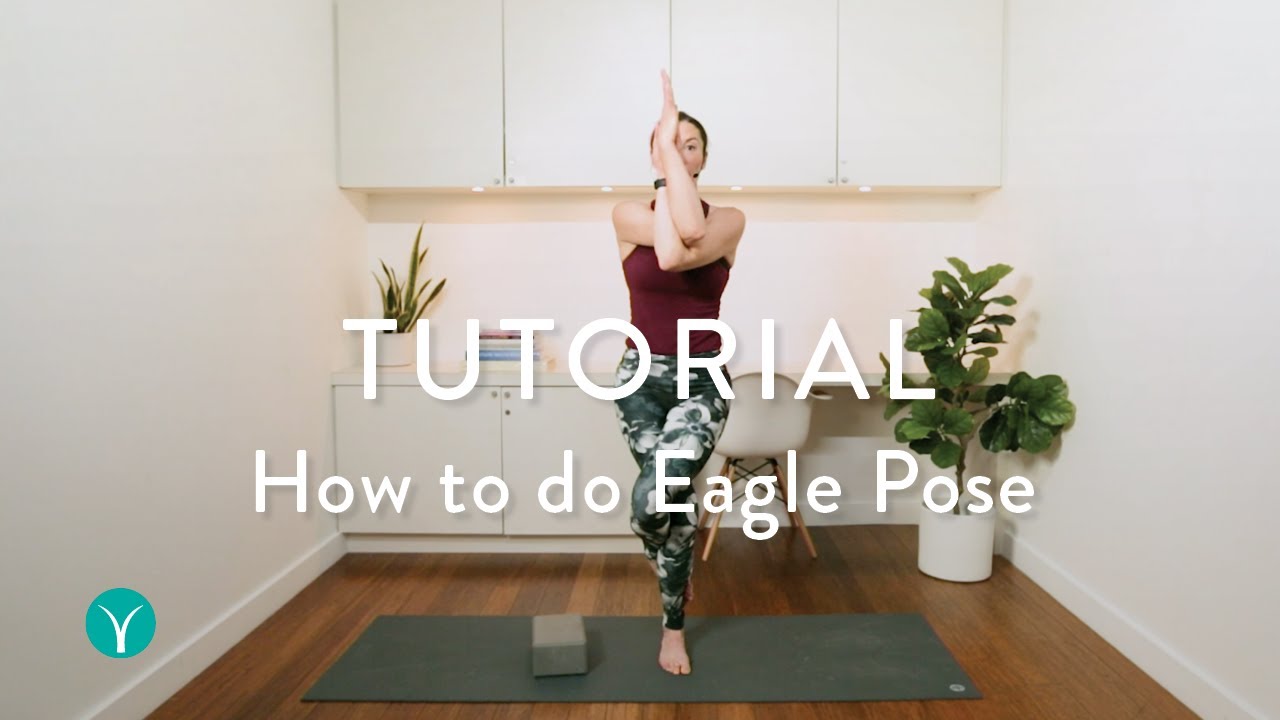
1. Tree Pose (Vrikshasana)
As the gateway balance posture, Tree Pose teaches practitioners how to ground through a single standing leg while opening the hips and engaging the core.
- Target Audience / Progression: Recommended as the starting point for all beginners.
- Hold Duration: 3 to 10 steady breaths per side.
- Muscular Focus: Strengthens the standing ankle, calf, and thigh while stretching the inner groin and hips.
How to Execute Tree Pose:
- Establish the Foundation: Stand tall in Mountain Pose (Tadasana) at the top of your mat. Distribute your weight evenly across both feet.
- Shift and Ground: Shift your weight entirely into your right foot, pressing down firmly through all four corners of the foot (big toe mound, pinky toe, inner and outer heel). Engage your right quadricep to lift the kneecap.
- Position the Foot: Draw your left knee up toward your chest, then turn it outward to the side. Place the sole of your left foot against the inside of your right calf or inner thigh. Crucial Rule: Avoid placing the foot directly against the side of the knee joint, as lateral pressure can cause injury.
- Find Your Balance: Bring your hands together at your heart center in Anjali Mudra (prayer position), or extend your arms overhead like tree branches.
- Gaze and Breathe: Fix your eyes on a non-moving point straight ahead. Hold for 3 to 10 deep, controlled breaths before gently releasing and repeating on the opposite side.
2. Eagle Pose (Garudasana)
Once Tree Pose feels established, practitioners can advance to Eagle Pose. This posture introduces a powerful element of internal rotation, compressing the limbs and challenging the core stabilizers in a tightly bound frame.
- Target Audience / Progression: Intermediate level; follows Tree Pose in the progression chain.
- Hold Duration: 3 to 10 steady breaths per side.
- Muscular Focus: Deeply engages the ankle stabilizers, outer hips, upper back, and shoulders.
How to Execute Eagle Pose:
- The Starting Stance: Begin standing tall in Mountain Pose. Bend your knees slightly as if sitting down into an imaginary chair (Utkatasana).
- Cross the Lower Body: Shift your weight into your left foot. Lift your right leg up and cross it over your left thigh, high up near the hip crease. If possible, hook the top of your right foot behind your left calf.
- Cross the Upper Body: Extend your arms straight forward. Cross your right arm under your left arm at the elbows. Bend your elbows and press your forearms and palms together (or press the backs of your hands together).
- Sink and Lift: Sink your hips slightly lower while lifting your elbows to shoulder height. Draw your shoulder blades down your back.
- Gaze and Breathe: Lock your gaze on your fingertips or a fixed point ahead. Maintain steady, rhythmic breathing for 3 to 10 breaths, unwind with control, and switch sides.
3. Warrior Three Pose (Virabhadrasana III)
The pinnacle of this foundational trio, Warrior Three transforms the body into a horizontal plane, demanding immense core strength, hamstring flexibility, and laser-focused proprioception.
- Target Audience / Progression: Advanced beginner to intermediate; the final step in McColgan’s recommended progression.
- Hold Duration: 3 to 10 steady breaths per side.
- Muscular Focus: Strengthens the posterior chain—including the glutes, hamstrings, lower back, and core—while testing single-leg stability to its maximum limit.
How to Execute Warrior Three Pose:
- The Launchpad: Begin standing at the top of your mat. Inhale and sweep your arms overhead, framing your ears.
- Hinge Forward: Shift your weight into your right foot. As you exhale, begin to hinge forward from your hip joints while simultaneously lifting your left leg straight up and back behind you.
- Create a "T" Shape: Continue moving your torso and back leg until they are completely parallel to the floor, forming a capital "T" shape with your body.
- Engage and Align: Keep your left hip dialed downward so your hips remain level with the floor. Flex your lifted left foot as if pressing it against an imaginary wall behind you. Engage your core strongly to protect your lower back.
- Gaze and Breathe: Direct your gaze toward the floor a few inches ahead of your mat to keep your neck in a neutral line with your spine. Hold for 3 to 10 breaths, then gracefully lower your leg and return to standing. Repeat on the left side.
Future Outlook: The Lifelong Practice of Stability
As society continues to grapple with the realities of an aging population, the paradigm of health is shifting away from reactive interventions and toward proactive physical autonomy. The ability to stand on one leg, navigate uneven terrain without fear, and recover quickly from minor stumbles are not merely fitness achievements—they are fundamental prerequisites for a high quality of life.
Yoga offers an elegant, accessible, and scientifically validated pathway to achieving this stability. By training proprioception, building muscular endurance around vulnerable joints, and teaching the mind to find stillness amidst physical challenge, practices like Tree Pose, Eagle Pose, and Warrior Three provide a profound return on investment.
Incorporating these movements into a weekly routine does not require an advanced fitness background or hours in the gym. As Cheryl McColgan demonstrates, consistency, mindfulness, and a willingness to start small—even while brushing your teeth—can completely transform your neurological and physical architecture. By investing a few minutes each day into balance training today, you ensure that your body remains strong, stable, and resilient for all the decades to come.