By Investigative Film Desk
Published: October 2, 2026
Executive Overview
As the red carpets rolled out for the premiere of Searchlight Productions’ Behemoth! at the New York Film Festival on Friday, October 2, 2026, cinephiles and critics alike braced for the latest creative output from writer-director Tony Gilroy. Best known for penning the 2007 legal thriller Michael Clayton—which earned him an Academy Award nomination—and more recently for orchestrating the gritty, critically acclaimed Star Wars television masterpiece Andor, Gilroy has built a reputation for crafting intricate, morally grey narratives powered by razor-sharp dialogue and uncompromising pacing.
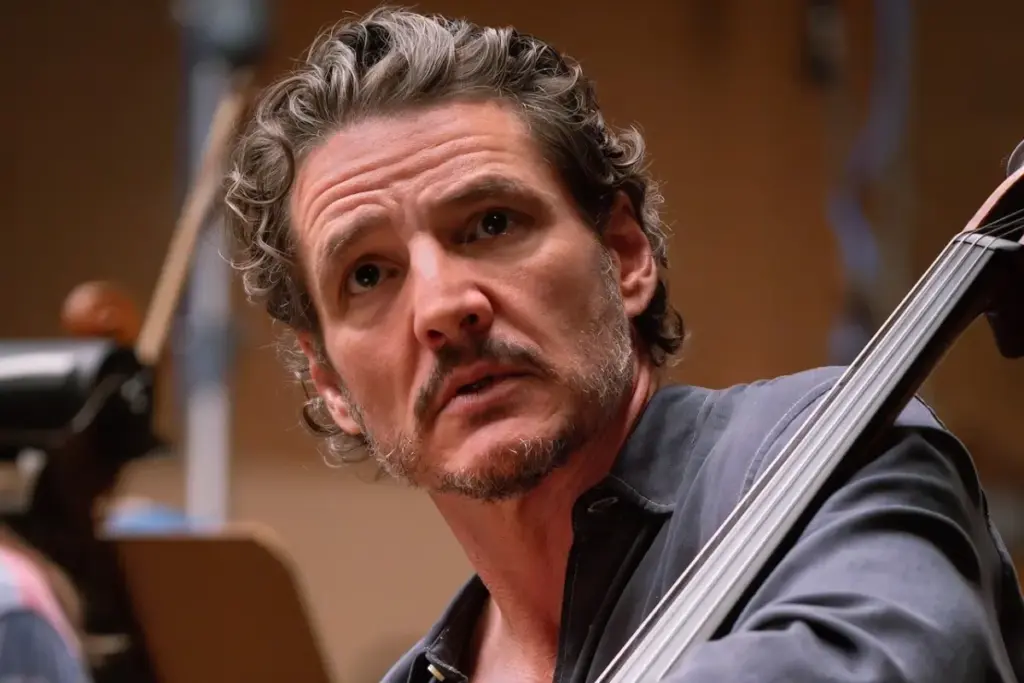
Behemoth! continues this structural ambition, serving up a non-linear puzzle box of a film anchored by a mesmerizing lead performance from Pedro Pascal. Playing Alex Serian, a world-class cellist navigating the murky waters of familial obligation and professional demotion, Pascal delivers an enigmatic portrait of an artist grappling with his own internal dissonance. The film itself is an undeniable auditory and visual feast, elevated by an unprecedented collaborative musical score featuring contributions from nine distinct, heavyweight composers—including James Newton Howard, Michael Giacchino, and Michael Abels—and directed with Gilroy’s trademark spatial economy.
However, beneath the film’s gleaming surface, rich tonal textures, and striking set-pieces lies a glaring structural flaw: a regression into regressive gender tropes. Despite boasting heavy-hitting talent in its supporting female roles, including Olivia Wilde and Eva Victor, Behemoth! systematically pushes its women to the narrative periphery. In doing so, it undercuts its own psychological depth, reducing complex dramatic foils to tired, one-dimensional clichés. As the film prepares for a limited theatrical run on December 4, 2026, it invites a deeper critical interrogation: can stellar technical execution and a commanding lead performance completely absolve a character study that fundamentally sidelines its women?
Detailed Chronology: Unpacking the Behemoth! Premiere and Plot Dynamics
The journey of Behemoth! from concept to its high-profile festival debut has been closely watched by industry insiders. The film’s structural architecture was unveiled to audiences at the New York Film Festival on October 2, 2026, immediately sparking intense debate among critics regarding its narrative priorities.
The Return to Los Angeles
The film centers on Alex Serian (Pedro Pascal), a renowned cellist who abruptly relocates from the glittering, high-stakes orchestra circuits of Chicago and the East Coast back to his hometown of Los Angeles. The stated impetus for this geographical and professional downgrade is noble on the surface: caring for his ailing mother. Yet, upon his return, Alex passes up prestigious orchestral chairs in favor of a much less glamorous gig: working as a session studio musician recording Hollywood film scores.
Right out of the gate, Gilroy establishes Alex’s formidable, borderline abrasive nature. In an early, telling scene, Alex bullies his way into a lucrative studio tracking job that, according to his agent, was originally earmarked to hire a woman cellist.
- “Fuck that,” Pascal’s character snaps back, securing the gig.
While the narrative eventually reveals a non-sexist, deeply personal motivation behind Alex’s aggressive maneuvering for this specific position, the casual assertion of male privilege at the expense of an unseen female musician strikes an ironic thematic chord. It serves as an early warning sign for how the film will ultimately treat its female characters: as collateral damage in the service of Alex’s internal journey.
A Puzzle-Box Narrative Architecture
Gilroy constructs Behemoth! with the precision of a master watchmaker, eschewing clumsy on-screen text or expository title cards to denote shifts in time and place. Instead, the audience is asked to orient themselves through subtle mise-en-scène cues:
- The biting chill and gray snowstorms of Chicago flashbacks.
- The sun-drenched palm trees and pastel architecture of contemporary Los Angeles.
- Cultural markers, such as a 2016 Hillary Clinton yard sign, anchoring the timeline in recent political memory.
This fragmented, non-linear approach makes it exceptionally difficult to get a firm read on Alex Serian during the film’s first act. Piece by piece, the ghosts of his past life are dragged into the present. Yet, even as the narrative eventually illuminates what Alex Serian wants, the film curiously falters in defining what he truly needs, leaving a lingering vacuum at the heart of its psychological inquiry.
Supporting Context & Metrics: The Musical Masterpiece and Supporting Missteps
While the narrative core struggles with thematic consistency, the artistic and technical achievements of Behemoth! demand rigorous examination. The film operates on a massive creative scale, particularly regarding its auditory landscape.
A Symphony of Nine Composers
One of the most remarkable technical aspects of Behemoth! is its revolutionary approach to scoring. Eschewing the traditional model of hiring a single composer to maintain a singular sonic vibe, Tony Gilroy enlisted a veritable dream team of nine distinct musical architects. The collaborative lineup includes:
- James Newton Howard
- Alan Silvestri
- Michael Abels
- Emily Bear
- Lukas Frank
- Michael Giacchino
- Henry Jackman
- Nami Melumad
The resulting score is a sonic smorgasbord that seamlessly blurs the line between diegetic and non-diegetic music. In several standout sequences, the audience watches Alex recording a film score in a Los Angeles studio, only for that exact recording to bleed outward and become the sweeping musical backdrop for a past Chicago flashback. As a technical exercise and a heartfelt celebration of orchestral arrangement, the film’s score is an undisputed triumph.
The Mismanagement of Olivia Wilde’s Carol
Despite these towering musical achievements, the human drama suffers due to undercooked character writing—most notably in the handling of Alex’s tempestuous ex-girlfriend, Carol, played by Olivia Wilde. Fresh off scorching Oscar buzz for her standout, critically lauded performance in The Invite (2026), Wilde brings fierce, magnetic energy to Behemoth!.
In flashback sequences set in Chicago, Carol is a vision of volatile desperation: stalking Alex through empty auditoriums in a gorgeous silk dress, sharp raccoon eyeliner framing her eyes, her sleek straightened hair swishing with every furious step. She shows up at his residence in the dead of winter, screaming obscenities at neighbors, promising in one breath to abandon her husband for him, and branding him a "pathetic loser" in the next. In one memorable set-piece, she stands out in the middle of a blinding snowstorm, screaming "ALEX!" at the top of her lungs while he flees into the safety of a taxicab.
Wilde wringing every ounce of dark comedy out of the role initially wins over festival audiences, generating loud laughs across the theater. However, as the film rolls toward its conclusion, it becomes painfully clear that Gilroy has trapped Carol in a regressive narrative amber. Despite Wilde’s best efforts, her character never evolves beyond the tired, misogynistic trope of the "crazy ex-girlfriend" used purely for comic relief. By the time the final Carol-centric joke lands—delivered with comedic bravado by Will Arnett, who plays Alex’s less-talented musician brother—the humor curdles into frustration.
Eva Victor’s Fleeting, Frustrating Cameo
The marginalization of women in Behemoth! is further underscored by the brief utilization of Eva Victor. Having captured a stunning, upset Best Actress Golden Globe just last year for their acclaimed directorial and acting debut Sorry, Baby, Victor enters the film with immense goodwill and undeniable screen presence.
Appearing in precisely three agonizingly short scenes as Nadia, a violinist and another of Alex’s ex-es, Victor brings the same warm, relatable, yet razor-sharp and caustic energy that defined their breakout work. In a brilliantly written exchange, Nadia cuts right to the psychological core of Alex’s romantic patterns, telling him directly:
"You love crazy because crazy makes it easy for you. You’re off the hook, you’re blameless."
It is a breathtakingly astute observation—one that holds the immense potential to catalyze genuine character growth, or at least a conscious narrative choice regarding Alex’s stagnation. Yet, the film abandons the thread entirely. Without tipping into major spoilers, Nadia’s character trajectory is unceremoniously cut short, reduced once more to a predictable cinematic cliché rather than explored as a catalyst for deep introspection.
Performance Analysis: Pascal’s Enigmatic Masterclass
Amidst the structural and thematic turbulence surrounding the supporting cast, Pedro Pascal delivers a masterclass in understated screen acting. Learning to play the cello with a physical grace that appears utterly effortless on screen is an impressive technical feat in its own right, but Pascal’s most transcendent moments require zero bow-handling and no dialogue whatsoever.
Instead, Gilroy wisely turns the camera on Pascal’s face simply to watch him listen. In one of the film’s absolute standout sequences, Alex sits in absolute stillness while a six-year-old piano prodigy performs an original composition dedicated to her late mother. Pascal’s eyes shine with a complex cocktail of fascination, aching awe, and utter disbelief. It is in these silent, observational beats that Behemoth! truly sings, allowing the audience to glimpse the profound emotional resonance that the surrounding script occasionally struggles to articulate.
Future Outlook & Critical Legacy
As Behemoth! looks toward its upcoming theatrical release via Searchlight Productions on Friday, December 4, 2026, it occupies a deeply paradoxical space in contemporary cinema.
On one hand, it represents a triumph of mood, texture, and auditory innovation. Tony Gilroy’s direction remains surgically precise, and the visual synergy between the stark Chicago flashbacks and the sun-bleached LA studio sessions creates an undeniable atmospheric pull. Pedro Pascal anchors the entire enterprise with a career-best display of magnetic, quiet intensity, supported by a revolutionary multi-composer score that redefines how film music can function narratively.
On the other hand, the film serves as a cautionary tale about the blind spots of traditional auteur-driven character studies. By reducing powerhouse performers like Olivia Wilde and Eva Victor to one-dimensional iterations of the "unstable ex-girlfriend" trope, Behemoth! ultimately fails the very women who populate its margins. It is a gorgeously constructed, impeccably scored puzzle box that, upon closer inspection, leaves the central piece missing. For audiences willing to trade deep thematic empathy for high-end technical craft, Behemoth! will undoubtedly thrill. For those demanding that complex character studies afford the same narrative dignity to all who enter their orbit, the film’s systemic oversights may prove too glaring to forgive.
Quick Reference Summary Table
| Metric / Detail | Description |
|---|---|
| Director / Writer | Tony Gilroy (Michael Clayton, Andor) |
| Lead Actor | Pedro Pascal (as Alex Serian) |
| Supporting Cast | Olivia Wilde, Eva Victor, Will Arnett |
| World Premiere | New York Film Festival (October 2, 2026) |
| Theatrical Release Date | Limited release on December 4, 2026 |
| Studio / Distributor | Searchlight Productions |
| Musical Score | Collaborative work by 9 composers (James Newton Howard, Michael Giacchino, Michael Abels, etc.) |
| Primary Critique | High technical and musical merit, paired with regressive, sidelined depictions of female supporting characters. |