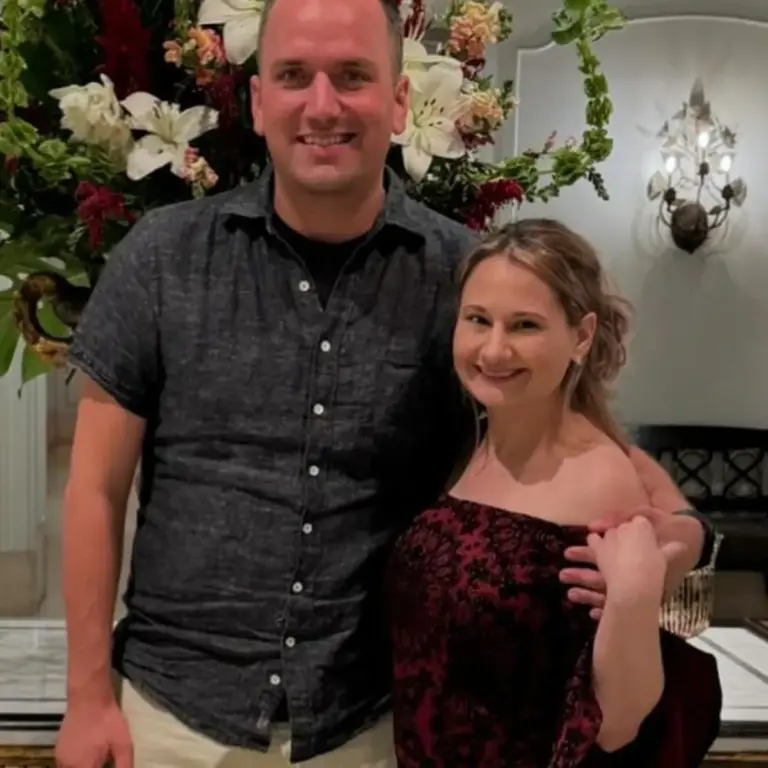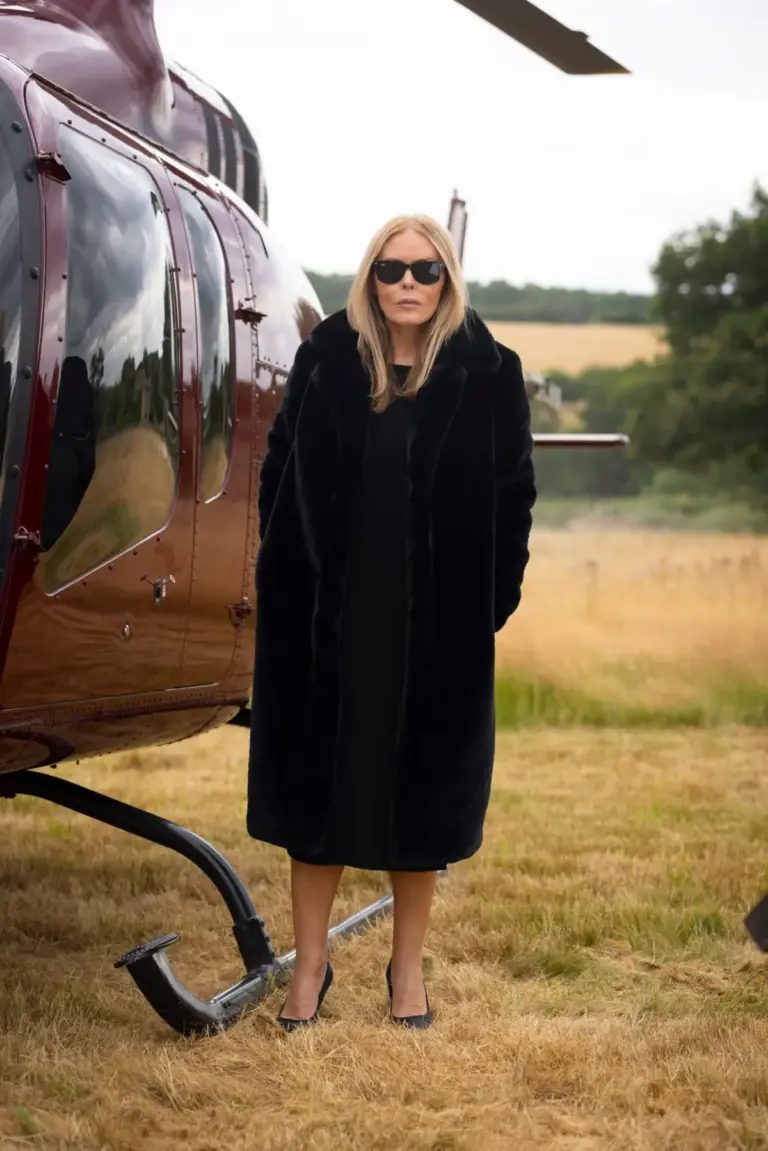
The rigorous demands of Fox’s hit reality competition series, Special Forces: World’s Toughest Test, once again proved to be an insurmountable barrier for multiple high-profile contestants. Season five of the quasi-military training camp delivered a punishing sophomore episode, concluding with a dramatic triple exit that reshaped the competitive landscape of the jungle-based compound. Following Brandi Glanville’s early medical withdrawal due to a painful injury in the premiere, three additional celebrities—former NFL star LeSean McCoy, disgraced former politician George Santos, and acclaimed actress Ruby Rose—found themselves folding under the immense physical and psychological pressures of the Directing Staff (DS).
What unfolded over the course of just forty-eight hours highlights the unforgiving nature of a show modeled after actual Special Forces selection processes. From visceral bodily rejections and severe nerve pain to terrifying flashbacks of near-fatal stunt injuries, the contestants were forced to confront their absolute limits. While some departures were met with clinical precision and empathetic wrap-ups from the instructors, others—most notably that of George Santos—triggered scathing rebukes from the elite DS personnel. As the remaining roster pushes deeper into the unforgiving terrain of the Malaysian jungle, the fallout from this week’s mass exodus underscores why Special Forces remains television’s most unyielding test of endurance.
Detailed Chronology: The Escalation of the 48-Hour Mass Exodus
The second episode of Special Forces Season 5 picked up immediately where the premiere left off, maintaining a relentless pace that quickly fractured the resolve of the remaining celebrity recruits. The sequence of departures over the two-day span exposed deep vulnerabilities across the camp, testing not only physical fortitude but psychological resilience.
Day One: LeSean McCoy’s Refusal and Tactical Retreat
The October 1 episode began with a surprising forfeiture driven by sheer stubbornness and sanitation complaints. Former NFL running back LeSean McCoy, accustomed to the lap of luxury associated with professional sports franchises, hit a brick wall when confronted with the camp’s rudimentary infrastructure—specifically, the outdoor latrine system.
Instead of adapting to the grueling field conditions, McCoy flatly refused to utilize the facilities, declaring to his bewildered peers that he would rather hold his biological functions for days on end than compromise his standards. In a frank confessional and subsequent conversation with Directing Staff instructor Jason Fox, McCoy tossed in the towel. Marking himself as the second contestant to officially leave the competition—hot on the heels of Brandi Glanville’s Episode 1 medical exit—McCoy admitted he simply wasn’t built for the lack of modern conveniences, signaling a swift and abrupt end to his military aspirations.
Day Two: The 300-Foot Jungle Descent and George Santos’ Collapse
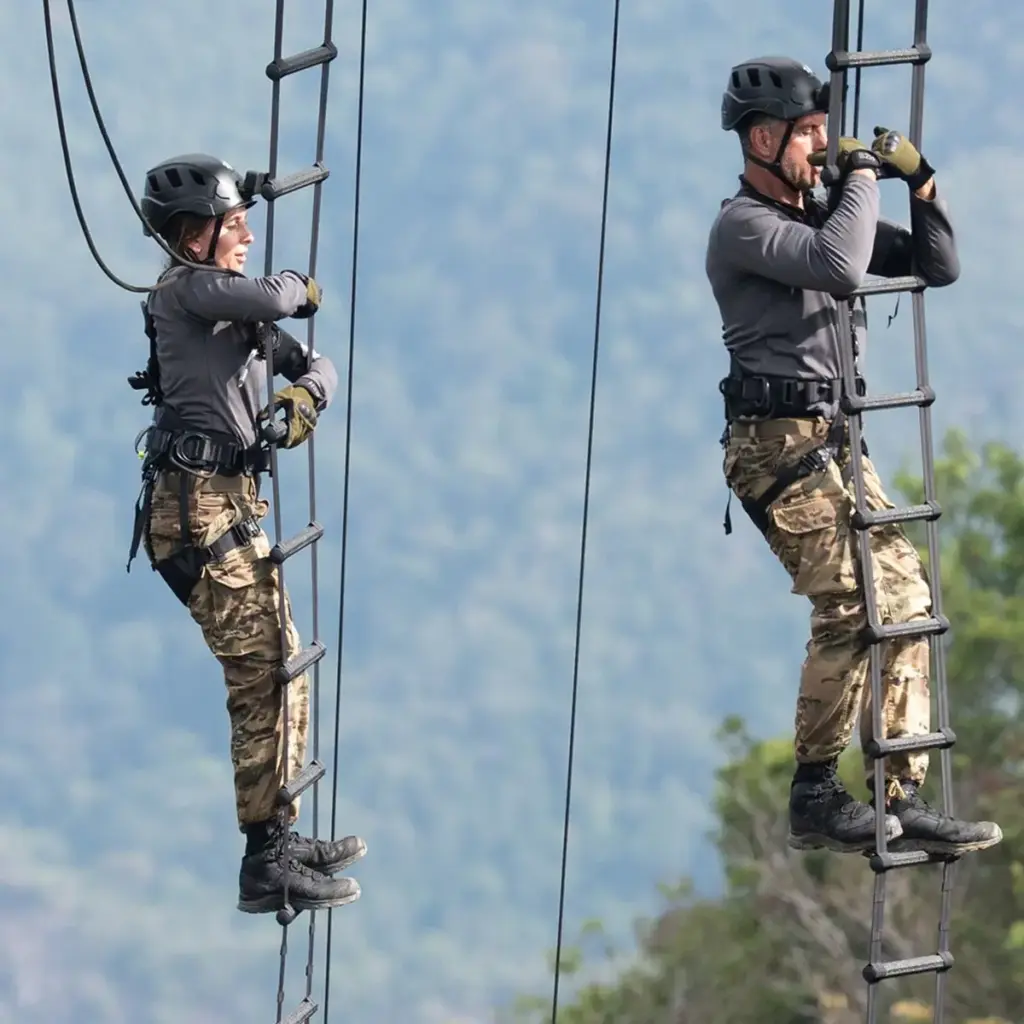
Later in the episode, the remaining 13 competitors faced a vertigo-inducing trial: descending a sheer, 300-foot rope ladder suspended high above a dense jungle canopy. Their objective was to retrieve a 17-pound supply bag and haul it back up within a strict five-minute window.
For George Santos, the physical toll of the course proved immediately catastrophic. Before even completing the descent, the controversial former politician signaled his surrender, citing severe physiological distress. Struggling to bear weight on his lower extremities, Santos claimed his foot had gone completely numb due to a severely pinched sciatica nerve.
"I can’t do this, Staff," Santos wept openly as he addressed the instructors, acknowledging he had hit his absolute physical ceiling. His voluntary withdrawal (VW), however, was met with zero sympathy from Directing Staff member Billy Billingham. Unimpressed by Santos’ performance throughout his brief tenure on the show—which had already been granted a controversial second chance in the premiere—Billingham stripped the recruit of his armband with cutting finality.
"Waste of space," Billingham lambasted the crying politician. "All you’ve done is talk yourself out of it. You’ve gone back to who you really were. No character. No balls. You are pathetic." Billingham punctuated the dismissal by noting that "a leopard don’t change its spots," bringing a brutal and humiliating close to Santos’ military simulation journey.
Ruby Rose Confronts the Ghosts of Batwoman
The attrition rate continued to climb during the secondary challenge of the episode, which required contestants to navigate a high-intensity assault course in pairs. Actress Ruby Rose, who had successfully gutted through the terrifying 300-foot ladder challenge earlier in the day, found her momentum halted by a sudden, jarring accident.
While navigating the course, Rose struck her head against a car door, instantly hearing a terrifying "crunch" in her cervical spine. The physical sensation immediately triggered severe psychological trauma linked to a catastrophic 2019 accident on the set of The CW’s Batwoman, during which she nearly severed her spinal cord while performing heavy stunt work.
In a candid confessional, Rose recalled the horror of her past injury: "Sixteen days into the pilot, on the most heavy stunt day of all, I broke my neck… I almost severed my spinal cord."
Although she initially attempted to push past the panic alongside teammate Hannah Stocking, the physical reality and psychological weight proved too heavy. Tapping out before completing the paired course, the 40-year-old actress confessed to instructor Jason Fox that her body simply could not recover the way it used to. Jason Fox accepted her armband with grace, offering words of comfort rather than condemnation: "Look, stop beating yourself up. Take it easy."
Supporting Context & Metrics: The Anatomy of Reality TV’s Toughest Test
To understand why Special Forces: World’s Toughest Test yields such high attrition rates, one must examine the clinical and logistical structure of the production. Unlike standard reality competition formats that rely on fan votes, timed puzzles, or manufactured interpersonal drama, Special Forces operates as a psychological and physical stress test engineered by actual elite military operators from the UK Special Air Service (SAS) and Special Boat Service (SBS).
Attrition Statistics Across Five Seasons
- Episode 1 Impact: Historically, the premiere episode serves as a massive psychological filter. In Season 5, Brandi Glanville’s early medical withdrawal set a precedent for physical vulnerability, proving that prior injuries or joint issues cannot withstand the blunt-force trauma of military-grade physical conditioning.
- The 48-Hour Drop-Off: Losing three contestants within a 48-hour window (McCoy, Santos, Rose) ties the record for the fastest depletion of talent in the franchise’s history.
- Injury Categories: Medical withdrawals typically fall into three distinct buckets: musculoskeletal trauma (sciatica, torn ligaments), concussive events (head trauma from vehicular or obstacle impacts), and psychological recalibration (panic attacks, claustrophobia, and the inability to cope with sleep deprivation and poor sanitation).
The Psychological Profile of the DS
The Directing Staff—composed of hardened veterans like Billy Billingham, Jason Fox, Rudy Reyes, and Mark "Billy" Billingham—do not act as traditional television hosts or mentors. They function in loco parentis to actual combat instructors. Their evaluations are absolute, and their verbal reprimands are designed to strip away ego. As seen in the contrasting exits of Ruby Rose (handled with empathetic de-escalation by Fox) and George Santos (handled with absolute disdain by Billingham), the DS evaluate not just physical output, but personal accountability and integrity under pressure.
Official Statements & Instructor Perspectives
The aftermath of Episode 2 brought the philosophical approach of the Directing Staff into sharp focus. The contrast in how the instructors manage voluntary withdrawals (VW) versus medical withdrawals (MW) illustrates the strict code of conduct governing the selection process.
When addressing George Santos’ departure, Billy Billingham’s evaluation went far beyond a simple failure of physical endurance. By invoking the idiom that "a leopard don’t change its spots," Billingham tied Santos’ inability to push through pain to a perceived lack of moral fiber and authenticity—a critique amplified by Santos’ recent legal troubles and public controversies. The instructors maintain that the camp acts as a truth serum; under extreme physical duress, facades crumble, revealing the true character of the individual.
Conversely, the interaction between Jason Fox and Ruby Rose demonstrated the nuanced psychology required when dealing with genuine trauma. Recognizing that Rose’s withdrawal was catalyzed by a legitimate history of near-fatal spinal trauma rather than mere unwillingness to suffer, Fox pivoted from tactical disciplinarian to empathetic counselor. By instructing her to "stop beating yourself up," the DS acknowledged that knowing when to preserve one’s long-term health is itself a form of tactical intelligence, separating reckless endangerment from genuine self-preservation.
Future Outlook: Survival of the Fittest in the Malaysian Jungle
As Special Forces: World’s Toughest Test Season 5 presses forward into its subsequent episodes, the remaining roster of celebrities faces an increasingly hostile environment. With the departure of vocal personalities like LeSean McCoy, George Santos, and Ruby Rose, the remaining recruits—including figures such as Candace Cameron Bure, Mauricio Umansky, and Oliver Hudson—must recalibrate their strategies for survival.
What Lies Ahead for the Remaining Recruits
- Increased Physical Intensity: As the headcount drops, the Directing Staff traditionally increases the complexity and danger of the daily tasks. Team-building exercises will transition into hyper-individualized stress tests designed to break the psychological cohesion of the remaining unit.
- The Threat of Attrition: With environmental factors such as relentless humidity, sleep deprivation, and basic rations wearing down immune systems and joint health, medical withdrawals are expected to outpace voluntary quits in the coming weeks.
- The Psychological Boiling Point: As isolation sets in, interpersonal friction within the camp will inevitably rise. The remaining contestants must prove they possess the team-first mentality that the DS demands, or risk facing the same stinging rebukes handed down to those who fell short in Week 1.
Ultimately, Special Forces continues to deliver on its premise: it is not a game show to be won, but an unyielding crucible where celebrities discover precisely what they are—or aren’t—made of.