Executive Overview
For millions of individuals worldwide, the daily ritual of looking in the mirror brings an unexpected moment of frustration: a sudden, burning flush across the cheeks, a constellation of persistent red bumps, or a chronic sensation of heat that defies simple makeup coverage. While transient facial redness is universally experienced during moments of embarrassment, exertion, or temperature shifts, for a significant demographic, it serves as the hallmark of a complex, chronic dermatological condition known as rosacea.
Historically mischaracterized as adult acne, mere sensitivity, or the result of poor lifestyle choices, rosacea is an inflammatory skin disorder that extends far deeper than the superficial epidermis. It affects not only the physical landscape of the skin through vascular anomalies, papules, and tissue thickening, but also exerts a profound psychological toll on those who navigate its unpredictable flare-ups. In an era dominated by hyper-curated skincare routines and flawless digital aesthetics, living with an unpredictable, highly visible skin condition can lead to profound feelings of isolation, anxiety, and social withdrawal.
This investigative feature explores the medical realities of rosacea, separating persistent clinical myths from empirical evidence. By examining expert dermatological insights, tracing the personal chronology of living with the diagnosis, and outlining targeted therapeutic interventions—from prescription topicals and lifestyle modifications to specialized skincare regimens—we aim to demystify this chronic condition. Ultimately, this piece champions a paradigm shift in how society views non-conforming skin: moving away from concealment and shame, and toward normalization, medical understanding, and self-acceptance.
Detailed Chronology: A Personal Journey Through Undiagnosed Rosacea
To truly understand the trajectory of rosacea, one must examine how it manifests in the lived experiences of patients long before a formal clinical label is ever applied. For many, the condition begins quietly in youth, masked as natural athleticism, youthful blushing, or normal sensitivity.
Early Signs and Teenage Misinterpretations
During adolescent sports teams and physical education classes, many future rosacea patients notice an anomalous facial redness that far outlasts that of their peers. While other students’ flushes recede minutes after physical exertion ceases, those predisposed to rosacea find their faces locked in a persistent, glowing crimson. Because familial traits often normalize these characteristics—attributing a pink complexion to genetic heritage—few question the underlying cause.
As these individuals transition into young adulthood and university life, the symptoms frequently escalate. Social settings, academic pressures, and lifestyle factors introduce new, unpredictable triggers. A bustling university lecture hall becomes a source of acute anxiety; walking in late triggers an immediate, uncontrollable physiological rush of blood to the face that remains visible and burning for hours. Even casual social outings can be abruptly interrupted by the need to seek out the nearest restroom, splashing freezing water onto a throbbing, heat-laden visage in a desperate attempt to quell the internal pulse. Concurrently, dietary indiscretions—such as late-night fast-food indulgences shared with roommates—frequently result in delayed inflammatory consequences: a swollen, pustule-peppered complexion the following morning.
The Misconception of "Bad Skin" and the Shock of Diagnosis
In the early stages, individuals often operate under the assumption that they simply possess reactive or unpredictable skin rather than a distinct medical pathology. Because many grew up without complex skincare regimens—and indeed, never suffered from traditional adolescent acne—the sudden onset of inflammation, burning, and papules is frequently misattributed to a temporary allergic reaction, a passing infection, or an improper cosmetic product.
The turning point typically occurs within a clinical setting. Walking into a dermatologist’s office expecting a quick fix for a temporary localized rash, patients are often met with a life-altering reality check. As the attending physician examines the skin and delivers the diagnosis—"It’s rosacea, and there is no cure"—the emotional impact can be devastating.
In past decades, particularly around the turn of the millennium, this diagnostic moment was often handled with clinical abruptness. Patients recall leaving appointments with little more than a sample tube of medicated gel—a topical treatment that frequently caused a burning sensation, exacerbating rather than alleviating the inflammation—and a lingering sense that they had wasted valuable medical time on a superficial cosmetic concern. Without digital support networks, patient forums, or widespread public discourse, navigating the immediate aftermath of a rosacea diagnosis was an intensely lonely endeavor.
Supporting Context & Metrics: Defining Rosacea and Its Clinical Subtypes
To move beyond the emotional narrative, it is essential to examine the clinical architecture of the condition. According to renowned consultant dermatologist Dr. Justine Kluk, rosacea is a chronic, inflammatory skin disease primarily characterized by facial erythema (redness) and a heightened propensity to flush.
Demographics and Underlying Triggers
Statistically, rosacea most commonly manifests during a patient’s thirties and disproportionately impacts individuals with fair skin types, though clinical presentations occur across diverse ethnic backgrounds (often requiring specialized diagnostic vigilance, as seen in cases of rosacea in skin of color).
Dr. Kluk emphasizes that the etiology of rosacea is multifactorial, involving a complex interplay of systemic and environmental elements:
- Genetics: A hereditary predisposition toward vascular instability and inflammatory responses.
- Vascular Anomalies: Structural abnormalities in facial blood vessels that cause them to dilate too easily and fail to constrict efficiently.
- Hormonal Fluctuations: Internal chemical shifts that can provoke sudden vascular dilation.
- Microorganisms: The proliferation of microscopic skin mites (Demodex folliculorum) and commensal bacteria living naturally on the skin, which can trigger immune reactions in sensitive hosts.
- Dietary and Environmental Factors: External stimuli that prompt immediate vasodilation.
The Four Clinical Subtypes of Rosacea
Dermatological classification systems divide rosacea into distinct subtypes, which can present independently or overlap within a single patient:
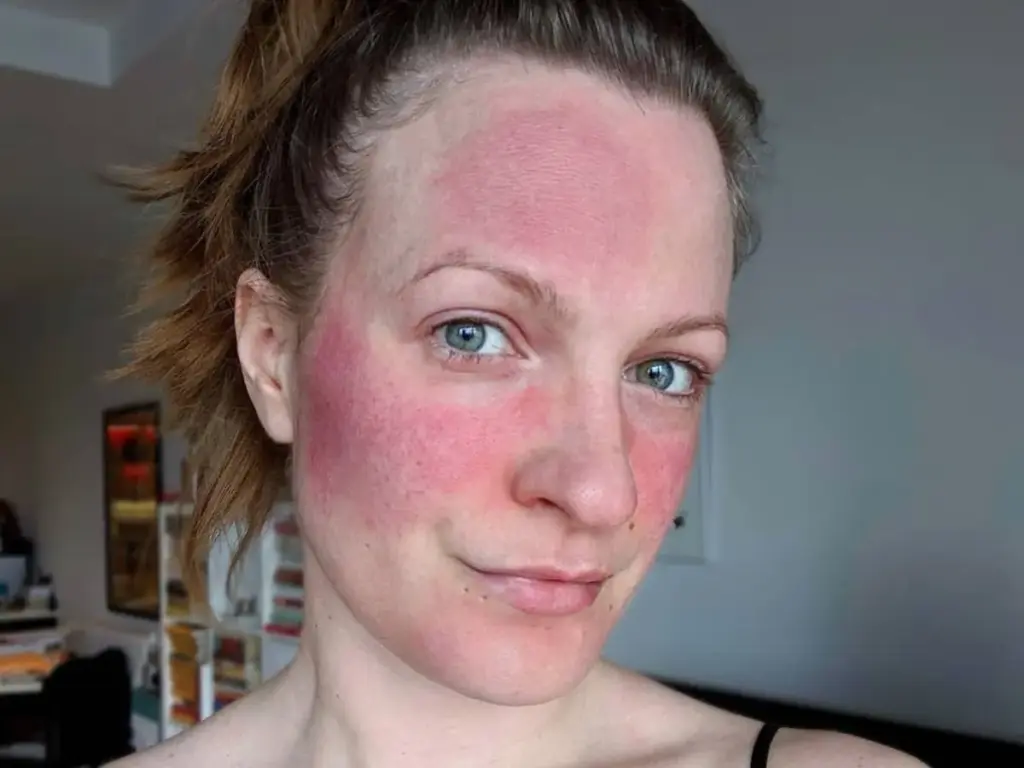
- Erythematotelangiectatic Rosacea (ETR): Characterized by persistent central facial redness, frequent flushing, and visible, dilated blood vessels (telangiectasia).
- Papulopustular Rosacea: Often visually confused with acne vulgaris, this subtype features persistent redness accompanied by inflammatory bumps (papules) and pus-filled blemishes (pustules).
- Glandular-Hyperplastic (Phymatous) Rosacea: A less common but severe manifestation where the skin thickens and enlarges, most classically observed on the nose (rhinophyma).
- Ocular Rosacea: Involves inflammation of the ocular structures, leading to dry, gritty, irritated eyes, swollen eyelids, and blurred vision.
Dr. Kluk notes that the condition almost invariably begins as a tendency to flush easily. Over time, this progression can evolve into permanent erythema across the nose and cheeks, accompanied by secondary symptoms such as localized dryness, flaking, stinging, burning sensations, and profound intolerance to standard cosmetic and skincare formulations.
Official Statements and Therapeutic Innovations
Modern medicine has revolutionized the management of rosacea, shifting the paradigm from passive endurance to active, targeted control. While a definitive systemic cure remains elusive, contemporary dermatological science offers a robust arsenal of prescription therapies, procedural interventions, and lifestyle management protocols.
Pharmacological and Procedural Interventions
When managing the diverse manifestations of rosacea, dermatologists tailor treatments to the patient’s specific subtype and symptom severity:
- Vascular Management: For patients whose primary complaint is frequent flushing and severe erythema, clinicians occasionally prescribe oral medications typically utilized for anxiety or menopausal vasomotor symptoms—such as low-dose beta-blockers or clonidine—to stabilize vascular responses.
- Topical Anti-Inflammatories and Antimicrobials: Redness and inflammatory papules are frequently addressed using prescription-strength topical creams or gels containing azelaic acid, metronidazole, or ivermectin. These formulations target the underlying inflammatory pathways and reduce microbial loads.
- Vascular Constrictors: Brimonidine gel functions as a targeted vasoconstrictor, temporarily reducing visible redness by prompting dilated superficial blood vessels to contract.
- Laser and Light Therapy: For persistent telangiectasia (visible broken capillaries) and chronic background erythema, advanced energy-based devices—such as Pulsed Dye Lasers (PDL) and Intense Pulsed Light (IPL) treatments—offer highly effective clearance by selectively targeting and destroying compromised micro-vessels.
The Evolution of Patient Communities and Digital Support
The landscape of patient support has undergone a radical transformation. Moving away from the isolated internet forum searches of the early 2000s, today’s patients benefit from an abundance of accessible education. Dermatologists, estheticians, and fellow advocates utilize digital platforms to normalize skin conditions, share evidence-based management tips, and build supportive global communities. This digital democratization of skincare knowledge ensures newly diagnosed individuals rarely have to navigate their initial distress in isolation.
Future Outlook: Lifestyle Integration and Skincare Protocols
Living successfully with rosacea requires a holistic commitment to lifestyle calibration and minimalist, barrier-supportive skincare. Because triggers vary widely from person to person, patient empowerment stems from systematic self-observation and lifestyle adjustment.
Identifying and Managing Personal Triggers
Clinical observations from both dermatologists and long-term patients highlight several universal lifestyle triggers that warrant careful management:
- Environmental Exposures: Ultraviolet (UV) radiation, high winds, and extreme temperature fluctuations.
- Physical Exertion: High-intensity workouts that rapidly elevate core body temperature.
- Dietary Stimulants: Consumption of caffeine, alcohol, and spicy foods.
- Stress and Mental Well-being: Professional and social stress, which directly influences neurovascular reactivity.
Adapting to these triggers often involves practical lifestyle modifications: transitioning from steaming hot showers and baths to lukewarm water, minimizing heat-styling hair tools, modifying dietary habits (such as moderating alcohol, dairy, and refined sugar intake), and developing active stress-management techniques to regulate the nervous system.
Formulating a Resilient Skincare Routine
Because rosacea-prone skin frequently co-exists with conditions like seborrheic dermatitis or general barrier dysfunction, skincare routines must prioritize gentleness, consistency, and barrier repair. French pharmacy brands—renowned for their minimalist, hypoallergenic, and soothing formulations—frequently serve as foundational staples for sensitive complexions.
The Evening Protocol: Gentle Cleansing and Repair
An effective evening routine focuses on thorough yet non-disruptive cleansing followed by deep hydration:
- Cleansing: Utilizing a mild, non-foaming cleansing fluid (such as La Roche-Posay Toleriane Reinigungsfluid) that lifts impurities without stripping essential lipids or inducing post-wash flushing.
- Hydration & Barrier Support: Applying a low-molecular-weight hyaluronic acid serum (La Roche-Posay Hyalu B5 Serum) to draw moisture into the epidermis, sealed with a minimalist, soothing moisturizer (La Roche-Posay Toleriane Sensitive Fluid).
- Targeted Actives (Optional/Advanced): For patients in their mid-30s seeking anti-aging benefits without triggering inflammatory cascades, introducing low-concentration retinoids or advanced vitamin A derivatives (such as encapsulated retinaldehyde) must be done with extreme caution. Patch-testing and gradual integration (one to two nights per week) are essential to prevent flaking and barrier compromise.
The Emergency Protocol: Calming Flare-Ups
For acute flare-ups where the skin feels intensely hot, tight, or inflamed, specialized rescue products can provide immediate relief:
- Anti-Itch Sprays: Products formulated to soothe neurological itch responses (such as Bioderma Atoderm SOS Spray).
- Refrigerated Cooling Masks: Therapeutic masks containing botanical and peptide complexes stored at low temperatures (such as SkinCeuticals Phyto Corrective Masque) to instantly constrict surface heat and alleviate tightness.
- Barrier Restoration Balms: Multi-recovery creams rich in panthenol and madecassoside (such as La Roche-Posay Cicaplast Baume B5+) that actively repair compromised epidermal barriers, soothe irritation, and provide a protective shield suitable even for compromised skin.
Conclusion
Managing rosacea is an ongoing journey of patience, trial, and self-compassion. While the condition demands constant vigilance regarding environmental exposures, dietary choices, and topical formulations, it does not have to dictate a patient’s quality of life.
Ultimately, the overarching narrative of modern dermatology is one of normalization. Atypical skin—whether characterized by chronic redness, persistent papules, or vascular fluctuations—is neither the most important nor the most defining characteristic of an individual. By dismantling the societal stigma surrounding visible skin conditions, patients can move past the impulse to hide behind makeup or shame. Rosacea requires management, yes, but it no longer requires concealment. Through informed medical partnerships, targeted lifestyle adjustments, and supportive communities, individuals can successfully reclaim control over their skin, ensuring their complexion never defines their worth.