Executive Overview
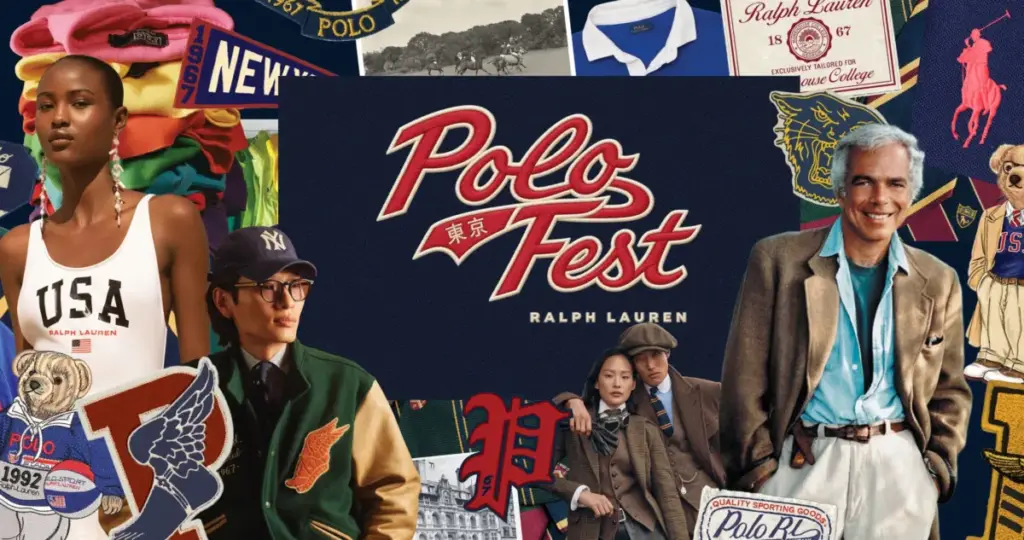
Ralph Lauren has announced the creation of PoloFest, an immersive, multi-day fashion and lifestyle festival dedicated entirely to its foundational label, the Polo line. Set to debut in the vibrant, youth-centric Shibuya district of Tokyo from October 23 to 25, the inaugural three-day event marks a monumental shift in how heritage fashion brands engage with consumer subcultures, archival preservation, and experiential retail.
Rather than opting for a traditional runway show in traditional fashion capitals like Paris, Milan, or New York, the American luxury house has deliberately chosen Tokyo—a metropolis with a long-standing, obsessive devotion to Americana and vintage fashion. PoloFest is designed to bridge generational divides and physical geographies by bringing together international collectors, vintage dealers, artists, cultural commentators, and brand loyalists.
The festival’s core programming features a comprehensive museum-grade exhibition of archival Polo Ralph Lauren garments, an intimate live speaker series exploring the socio-cultural footprint of the brand, and an exclusive vintage marketplace showcasing rare, highly coveted pieces. According to the brand, PoloFest is intended to become a recurring global format. Each subsequent iteration will analyze the history and evolution of the Polo aesthetic through the hyper-local cultural lens of the host city.
.jpg)
By anchoring the festival’s debut in Tokyo, Ralph Lauren honors a profound, decades-long cross-cultural romance. Japan’s deep-rooted subcultural appreciation for authentic American Ivy League style, workwear, and preppy leisure has turned the island nation into a global epicenter for vintage fashion curation. PoloFest is not merely a marketing activation; it is a validation of a global community that has spent nearly six decades reading, interpreting, and wearing the narrative that Ralph Lauren wove into the fabric of global culture.
Detailed Chronology: The Evolution of Polo Ralph Lauren
To fully understand the gravity of PoloFest, one must trace the extraordinary trajectory of the Polo name from a modest neckwear line in 1967 to a global socio-cultural phenomenon.
1967–1972: The Genesis of an Empire
The story of Polo began more than half a century ago. In 1967, a young designer named Ralph Lifshitz—who would legally change his surname to Lauren—secured backing from Manhattan tie manufacturer Beau Brummel to launch a line of wide, European-cut neckties under the brand name Polo. At a time when conservative, narrow ties dominated corporate boardrooms, Lauren’s opulent, patterned silk ties broke conventions and captured the imagination of high-end department stores like Bloomingdale’s.

By 1968, Lauren expanded the label into a full menswear collection, officially incorporating the Polo name. Famously, at the time of the launch, Lauren had never actually attended a polo match; he was drawn instead to the aristocratic, cinematic lifestyle the sport represented. As he later reflected on his design philosophy, "I’m selling a feeling."
1970–1972: Sportswear, Expansion, and the Mesh Shirt
In 1970, Polo expanded into broader sportswear categories, tailoring, and accessories. However, the true turning point for the brand—and modern casual wear—occurred in 1972 with the introduction of the Polo mesh shirt. Featuring the iconic embroidered player on horseback galloping across the left chest, the shirt was initially released in 24 vibrant colors. It immediately transcended its athletic origins to become a canvas for effortless, egalitarian elegance. The Polo shirt gave the brand its most enduring, accessible, and democratic expression.
The 1980s and Beyond: Diversification into a Lifestyle Universe
As the Ralph Lauren corporation continued to scale throughout the late 20th and early 21st centuries—launching luxury tiers like Purple Label and rugged heritage lines like Double RL—Polo steadfastly remained the beating heart of the enterprise. It evolved into Lauren’s broadest and most commercially vital proposition. Through Polo, the designer’s overarching universe of collegiate prep, athletic heritage, rustic Americana, and aristocratic aspiration could reach the widest possible audience, shaping the wardrobes of successive generations across the globe.

Supporting Context & Metrics: The "Cult of Ralph Lauren" in Japan
While Polo conquered the American consciousness early on, its reception in international markets took on a different, highly specialized texture—most notably in Japan.
The 1976 Catalyst
Ralph Lauren officially dates its commercial and cultural relationship with Japan to 1976. In the post-war decades, Japanese youth culture developed an insatiable appetite for authentic American heritage apparel. Publications like Take Ivy (published in 1965) had already laid the groundwork by documenting the Ivy League style of American university campuses, creating a blueprint that Japanese designers and consumers studied with academic precision.
When Ralph Lauren entered the Japanese market, it struck a profound chord. The brand’s romanticized vision of American life resonated deeply with a culture that values craftsmanship, historical fidelity, and meticulous material preservation.

RL Vintage and the Japanese Archive Economy
The depth of this relationship came into sharp focus in 2012, when Ralph Lauren launched RL Vintage, an online initiative dedicated to sourcing, authenticating, and reselling rare, archival pieces from the brand’s history. Through this project, corporate executives discovered a vibrant, deeply entrenched collecting culture operating largely within Tokyo.
Reflecting on this phenomenon at the time, David Lauren, Chief Branding and Innovation Officer, described the "cult of Ralph Lauren" in Japan as "kind of amazing." Tokyo had quietly evolved into a global network of specialist vintage dealers, archivists, and collectors whose encyclopedic knowledge of vintage Polo surpassed even that of the brand’s own corporate archives in New York.
For dedicated fashion historians hunting for a rare 1980s Stadium collection piece, an early-edition ski jacket, or the perfect broken-in suede field jacket, Tokyo’s vintage enclaves—spanning neighborhoods like Shibuya, Harajuku, and Shimokitazawa—offer a level of curation and historical inventory that rivals, and often exceeds, traditional hubs in Brooklyn or London.

Official Statements: Decoding the Vision Behind PoloFest
In its official press release announcing the festival, the brand emphasized that PoloFest is intended to be much more than a transient promotional event. It is positioned as an interactive, living archive that honors the interplay between clothing and culture.
"PoloFest is designed as a recurring global format, with each upcoming edition examining the history, influence, and style of the Polo line through the unique cultural framework of the city in which it is staged," the company stated.
By placing the inaugural event in Shibuya, Ralph Lauren is acknowledging the city’s status as a crucible of street style and vintage preservation. The three-day festival will intentionally break down traditional barriers between luxury fashion houses and their consumer base, welcoming an eclectic mix of veteran collectors, international vintage dealers, avant-garde artists, and everyday enthusiasts.

The conceptual framework of PoloFest finds a poetic echo in a statement Ralph Lauren himself made to The Washington Post back in 1980:
"Somebody said one time, I’m actually a writer who writes through clothes. I think that’s absolutely right."
For nearly six decades, Lauren has authored an ongoing narrative concerning identity, aspiration, belonging, and heritage using textiles as his ink. PoloFest represents a living symposium for the most voracious readers of that literary universe—bringing together the global community that has spent decades turning his American dream into their personal reality.

Future Outlook: The Next Era of Experiential Heritage
The launch of PoloFest signals a critical evolution in luxury marketing and brand stewardship. In an era dominated by fast-paced digital drops, algorithmic trends, and ephemeral social media campaigns, heritage brands are increasingly looking toward deep, tactile, and community-driven experiences to foster brand loyalty.
Expanding the Festival Blueprint
By structuring PoloFest as a recurring global initiative, Ralph Lauren is creating a scalable blueprint for cultural engagement. Future editions are expected to travel to other global style capitals—each time recalibrating their programming to reflect the distinct subcultures that have adopted the brand. Whether exploring the hip-hop lineage of Polo in New York, the rugged outdoor traditions in the Pacific Northwest, or the preppy collegiate adaptations in European hubs, the festival format allows the brand to celebrate its past while actively writing its future.
Deepening Consumer Connections
As consumer behavior continues to favor authenticity, sustainability, and provenance over mass-produced novelty, the market for archival and vintage fashion has never been stronger. By validating and platforming the secondary market and independent vintage dealers through PoloFest, Ralph Lauren is embracing circular fashion and acknowledging that the lifespan of a great garment extends far beyond its initial retail season.

Ultimately, PoloFest in Tokyo stands as a testament to the enduring power of storytelling in fashion. By gathering the world’s most passionate collectors in the heart of Shibuya, Ralph Lauren is not only celebrating a clothing line; he is honoring a global community brought together by a shared language of style, history, and imagination.