Executive Overview
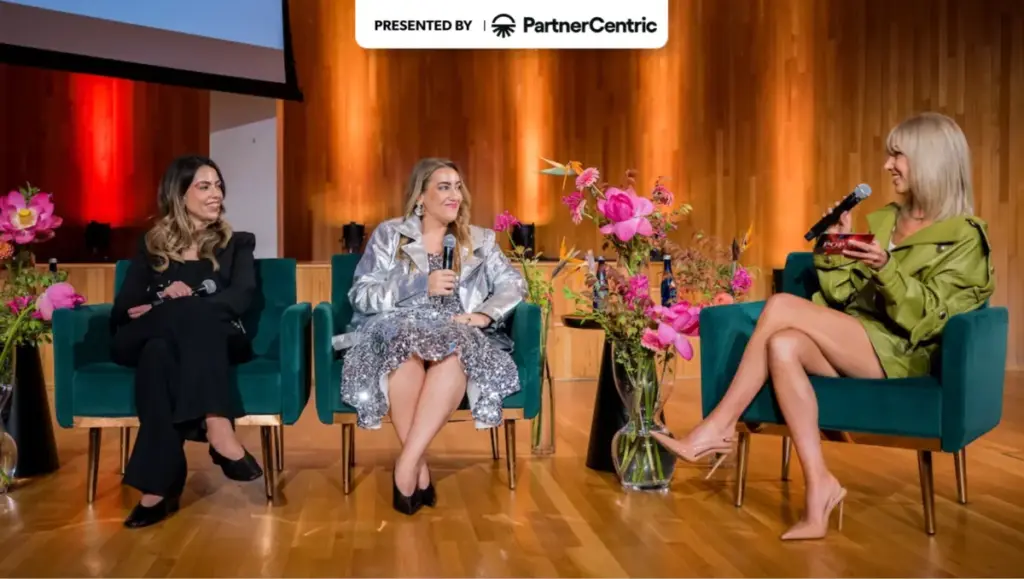
The contemporary beauty consumer is not suffering from a lack of information; they are drowning in it. This central paradox—that hyper-accessibility to data has obscured, rather than clarified, the truth about cosmetics and skincare—formed the foundation of a compelling panel discussion at the recent Glossy Pop NYC event. Featuring Alexis Androulakis and Dr. Christina Basias Androulakis, the married creative force behind the digital phenomenon The Lipstick Lesbians, the conversation dissected the complex intersection of beauty misinformation, meaningful innovation, and the evolving role of human expertise in an increasingly automated retail landscape.
With a combined following of nearly 1.8 million across social media platforms, the Androulakis duo has built an empire on demystifying the beauty industry. By breaking down how cosmetics are formulated, packaged, and marketed, they have shifted the cultural conversation from passive consumerism to active education. However, as the digital ecosystem accelerates, the couple warns that the industry faces a critical juncture. Extreme opinions dominate social feeds, algorithms reward provocation over nuance, and consumers are increasingly left unequipped to separate marketing hype from genuine scientific advancement.
This comprehensive report examines how The Lipstick Lesbians transitioned from independent brand founders to premier beauty educators. It explores their warnings regarding artificial intelligence in product discovery, analyzes their latest entrepreneurial venture—Leaked Labs—and assesses how human intuition and expertise remain the irreplaceable anchor in a multi-billion-dollar market driven by algorithms.
Detailed Chronology: From Fempower Beauty to Digital Pedagogy
To understand the authority with which Alexis and Dr. Christina speak on beauty literacy, one must look at the trajectory that brought them here. Their journey is a masterclass in pivoting through industry volatility, leveraging unexpected viral success, and converting raw entrepreneurial experience into educational authority.
2019–2021: The Birth of Fempower Beauty and the Pandemic Pivot
The duo’s entry into the beauty sector began with the 2019 launch of Fempower Beauty, an independent cosmetics line centered on empowering narratives and inclusive formulation. Investing between $500,000 and $1 million of their personal savings, Alexis—drawing on her extensive background in professional makeup artistry, product development, and industry consulting—led the formulation and creative direction. Meanwhile, Dr. Christina, who holds a Ph.D. in education and technology, managed the operational and strategic framework.
Like many independent brands launched immediately prior to the COVID-19 pandemic, Fempower faced insurmountable retail hurdles. As funding steadily depleted, the founders sought alternative avenues to market their products. They turned to TikTok, establishing an account originally designed to drive direct-to-consumer sales for Fempower.
2021–2024: The Viral Rise of The Lipstick Lesbians
The paradigm shift occurred organically. Dr. Christina began filming Alexis as she wandered through brick-and-mortar retail spaces like Sephora, dissecting products down to their component parts. Instead of offering standard beauty reviews, Alexis analyzed crimped metal packaging, explained the function of specific polymers in long-wear formulas, and exposed the realities of cosmetic manufacturing costs.
This behind-the-scenes transparency struck a profound chord with consumers fatigued by traditional influencer endorsements. Within its first year, the account amassed over 500,000 followers. Recognizing that their educational content was vastly outpacing their brand’s commercial traction, the couple made a strategic pivot. They institutionalized their expertise, expanding their digital footprint into professional speaking engagements, product-development consulting, and an intensive eight-hour paid masterclass covering the formulation of lip, cheek, eye, and face cosmetics.
2025: Closing the Chapter and Launching Leaked Labs
By 2025, Fempower Beauty was officially closed, allowing the founders to dedicate their full operational bandwidth to education, consulting, and the testing of new consumer models. This evolution culminated in March with the launch of Leaked Labs, a direct-to-consumer incubator brand designed to test consumer-led innovation in real time. Rather than relying on traditional multi-year product development cycles, Leaked Labs introduces experimental formats in limited quantities, allowing direct customer feedback to dictate whether a product is scaled, reformulated, or permanently archived.
Supporting Context & Metrics: The Anatomy of Modern Beauty Literacy
The insights shared by The Lipstick Lesbians at Glossy Pop NYC are underscored by distinct socio-technical shifts in how beauty products are researched, bought, and reviewed.
The Information-to-Discernment Gap
According to Dr. Christina, the modern beauty market suffers from a systemic imbalance:
- Volume vs. Comprehension: Consumers today have access to thousands of product reviews, ingredient databases, and dermatological studies on demand. However, access to data does not equate to foundational understanding.
- The Algorithm Trap: Social media algorithms are structurally optimized for engagement. Consequently, extreme opinions—such as declaring a formulation "life-changing" or "absolute garbage"—outperform nuanced, objective analyses.
- The Creator-Formulator Divide: As Alexis noted during the panel, beauty creators are often handed complex formulations with little to no context regarding why specific ingredients were chosen. This creates unintentional misinformation, as influencers must explain sophisticated chemistry to mass audiences without direct access to the formulators and cosmetic chemists behind the products.
The Rise of AI in Beauty Discovery
Artificial intelligence is rapidly reshaping how consumers navigate the vast cosmetics market. From personalized shade-matching algorithms to AI-driven skincare routines, technology promises hyper-personalization. However, the Androulakises urge caution regarding the limitations of machine learning in beauty:
- The Hallucination Risk: AI models can efficiently summarize research and compare ingredient decks, but they are also prone to "hallucinations"—confidently presenting incorrect chemical interactions or false efficacy claims as absolute facts.
- The Context Deficit: While a user can prompt an AI to find the "best mascara," the algorithm relies on rigid parameters (length, volume, curl). It cannot account for the subtle, subjective nuances of human preference—such as how a specific formula feels against sensitive eyelids or how a user’s emotional state influences their daily makeup choices.
Official Statements & Key Insights from the Panel
The Glossy Pop NYC panel provided a wealth of direct commentary from the founders, illustrating their philosophical approach to the beauty industry’s future.
On the Illusion of Extreme Opinions:
"Extreme opinions often receive the most attention, but attention and expertise aren’t the same thing. There can be pressure to declare that a product is either revolutionary or terrible, when the reality is usually much more nuanced."
— Alexis AndroulakisOn Information Versus Understanding:
"We are definitely more exposed. There is more beauty content, more product and more advice coming at us than ever before, but access to information isn’t the same as understanding it."
— Dr. Christina Basias AndroulakisOn the Boundaries of Artificial Intelligence:
"AI can support your research. It shouldn’t replace the research… AI can recommend a lipstick, but it cannot tell you exactly how that lipstick will feel on your lips. Technology can help narrow the possibilities, but the human experience completes the decision."
— The AndroulakisesOn Rethinking Industry Innovation:
"At a certain point, we don’t need 96-hour makeup."
— Alexis Androulakis, addressing the industry’s obsession with hyper-longevity over sensory pleasure and skin-friendly textures.
Future Outlook: The Intersection of Technology, Touch, and Taste
As the beauty industry looks toward the horizon, the lessons imparted by The Lipstick Lesbians point toward a necessary recalibration of how brands innovate and how consumers shop.
1. The Evolution of Consumer-Led Innovation
Brands that cling to opaque, top-down product development cycles will increasingly find themselves disconnected from an educated consumer base. Initiatives like Leaked Labs—where products like the Amplify Flexi Powder (which abandoned traditional metal pans for flexible pigment discs) are subjected to immediate public critique and swift archiving—demonstrate the future of agile beauty development. Transparency is no longer just a marketing buzzword; it is an operational strategy.
2. The Complementary Role of AI and Human Expertise
Rather than viewing artificial intelligence as an existential threat to beauty professionals, the industry must embrace it as a sophisticated research assistant. AI will excel at the logistical heavy lifting: cross-referencing INCI lists, filtering out allergens, and narrowing down thousands of SKUs to a manageable shortlist. Yet, the final mile of beauty retail will remain stubbornly human.
3. Preserving the Sensorial and Emotional Core of Beauty
Ultimately, cosmetics and skincare are not merely utilitarian tools for physiological optimization. As Alexis aptly summarized, beauty is fundamentally rooted in "play, identity, emotion, and the way we connect with ourselves and one another."
No algorithm can replicate the tactile joy of pressing a creamy pigment into the skin, the emotional resonance of a signature shade, or the intuitive guidance of a seasoned makeup artist who understands a client’s unspoken desires. As the noise of the digital beauty landscape grows louder, the value of true human discernment—grounded in education, empathy, and expertise—will only become more precious.