Executive Overview
In the hyper-connected ecosystem of modern social media, few phenomena are as publicly humiliating as the "ratio"—a metric imbalance where a reply outpaces a parent post in likes, signaling overwhelming community disapproval. Yet, it is a rare occurrence for a multi-billion-dollar corporate entity to deliver that blow to the owner of the platform itself.
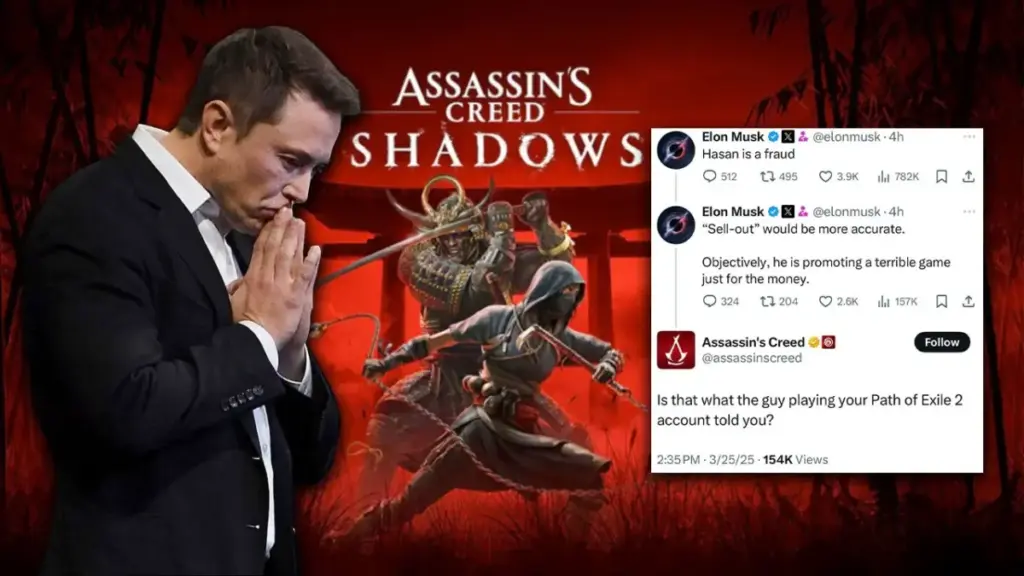
That rare spectacle unfolded on X (formerly Twitter) when the official Assassin’s Creed social media team systematically dismantled tech billionaire and platform owner Elon Musk. The digital crossfire erupted after Musk weighed in on a standard culture-war skirmish involving video game developer Ubisoft, controversial internet personality Hasan Piker, and prominent video game critic "Grummz."
What began as predictable commentary on promotional sponsorships quickly devolved into a public roasting when the Assassin’s Creed account invoked Musk’s recent, highly publicized Path of Exile 2 "boosted account" scandal. By weaponizing the billionaire’s own history of in-game fakery, the Ubisoft-backed franchise secured over 400,000 likes overnight, dominating headlines and cementing a viral moment that internet historians will study for years.
This comprehensive report breaks down the anatomy of the feud, the historical context of Musk’s strained relationship with the gaming community, the broader cultural proxy war over Assassin’s Creed: Shadows, and the enduring irony of the world’s richest man getting thoroughly "cooked" on the very app he purchased for $44 billion.
Detailed Chronology: Anatomy of a Digital Execution
Phase 1: The Inciting Spark and Grummz’s Critique
The saga began with a familiar flashpoint in contemporary gaming culture: corporate sponsorships and political alignments. Noted video game commentator Grummz took to X to voice his displeasure with Ubisoft. The French game publisher had partnered with prominent leftist Twitch streamer Hasan Piker ("HasanAbi") to promote their upcoming, highly anticipated title, Assassin’s Creed: Shadows.
Grummz criticized the marketing strategy, arguing that leveraging a overtly political streamer undermined the perceived integrity of the franchise’s development team. The post found a receptive audience among anti-woke factions within the gaming community, who frequently target modern AAA game studios for ideological alignment.
Phase 2: Elon Musk Enters the Fray
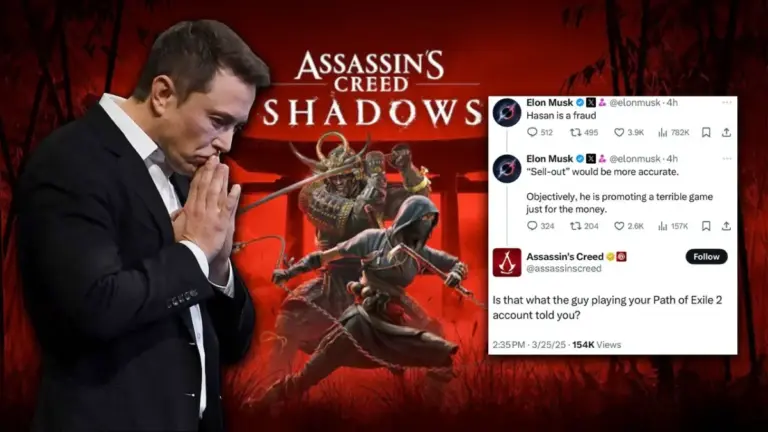
Sensing an opportunity to chime in on a polarising cultural topic, Elon Musk waded directly into the replies. Quoting or responding to the thread, Musk levied harsh accusations against Hasan Piker, labeling the streamer a "fraud" and a "sell out." According to Musk, Piker was promoting a "terrible game just for the money," invoking familiar anti-establishment rhetoric that often plays well among conservative and populist segments of the platform’s user base.
For an ordinary user, such a critique might have generated standard partisan engagement. However, Musk’s status as a self-styled gamer—coupled with his deeply documented history of inflated gaming pretensions—made him an immediate target for pushback.
Phase 3: The Assassin’s Creed Drop and the Fatal Ratio
Sensing blood in the water, the social media manager behind the official @AssassinsCreed X account seized the moment. Rather than issuing a corporate, sanitized PR statement defending their marketing budget or game quality, the account went straight for the jugular.
Responding directly to Musk’s accusations of fraudulence, the Assassin’s Creed account posted a biting rhetorical question:
"Is that what the guy playing your Path of Exile 2 account told you?"
The response was instantaneous and catastrophic for Musk’s digital standing. The tweet completely eclipsed Musk’s original post, generating over 400,000 likes within hours and spawning an endless cascade of quote tweets, memes, and celebratory remarks from internet users who marveled at the sheer audacity of a corporate brand openly mocking the platform’s proprietor.
Phase 4: Hasan Piker, Elden Ring, and Grummz’s Mediation
As the internet feasted on the Assassin’s Creed ratio, the feud expanded sideways. Hasan Piker and Elon Musk engaged in a bizarre, multi-layered exchange mediated through Grummz’s screenshots.

Piker publicly challenged Musk to a digital duel in FromSoftware’s notoriously difficult action RPG, Elden Ring, attempting to test the billionaire’s actual mettle as a player. In response, Musk fired back, accusing Piker of being "chickens—" for allegedly blocking him on X. The surreal spectacle of a tech titan and a top-tier political streamer bickering over gaming credentials—with internet commentators acting as ringside announcers—highlighted the absurd intersection of modern politics, internet celebrity, and gaming culture.
Supporting Context & Metrics: The Path of Exile 2 "Fraud Gamer" Controversy
To fully understand why the Assassin’s Creed jab struck such a devastating chord, one must revisit the public relations disaster that befell Musk earlier in the year. The joke only worked because the gaming community already viewed Musk as a fraudulent player.
The Grinding Charade
Earlier in the year, Musk began livestreaming his playthrough of Grinding Gear Games’ grueling action-RPG sequel, Path of Exile 2. Sporting a high-rank character, Musk attempted to project the image of a hardcore, elite gamer who had mastered one of the most mechanically complex titles on the market.
However, veteran players watching the streams immediately noticed glaring discrepancies. Despite operating a high-level build, Musk blundered across maps with the unmistakable hesitation and mechanical ineptitude of an absolute beginner. His routing, skill usage, and inventory management screamed "first-time player," triggering widespread mockery across Reddit, X, and YouTube.
The VPN and Account-Boosting Revelation
Curious fans dug deeper, analyzing public game data and telemetry associated with Musk’s account. The findings were damning: game data clearly indicated that the account was either being played directly from Asia or utilizing a VPN to route traffic from Asian servers—an inexplicable logistical choice for a resident of the United States unless someone else was logging in to do the heavy lifting.
Faced with mounting proof that he had paid someone to level up and gear out his character, Musk eventually copped to "account boosting." In a post that permanently damaged his gamer street cred, he wrote:
"It’s impossible to beat the players in Asia if you don’t, as they do!"
For the gaming community—a demographic that fiercely values authenticity, time-investment, and skill earned through sweat equity—paying someone else to play a video game so you can pretend to be a pro is the ultimate sin. Thus, when Musk called Hasan Piker a "fraud," the irony was so thick it defied satire.
Official Statements and Community Reaction
The public response to the Assassin’s Creed ratio was nothing short of a cultural watershed moment for X users tired of algorithmic favoritism and billionaire posturing.
The Corporate Shift in Tone
The maneuver by Ubisoft’s social media team reflects a growing trend in modern marketing: corporate accounts dropping the sterile, risk-averse persona of the 2010s in favor of internet-native snark. By leaning into meme culture and directly challenging high-profile figures, brands can generate millions of dollars in organic impressions for the cost of a single, well-crafted punchline.
The Public Verdict
Users across X were universally amused by the spectacle.
- The "Unfamiliar" Meme: Countless replies invoked the viral meme format, "I was unfamiliar with your game," conceding that Ubisoft’s social media team had vastly outperformed expectations.
- Intentional Purchases: Some users, such as X user @soundaholism, publicly declared that the sheer comedic brilliance of the ratio had convinced them to pre-order or purchase Assassin’s Creed: Shadows immediately rather than waiting for a post-launch discount.
- The $44 Billion Irony: The most pervasive narrative focused on the poetic justice of Musk’s heavy financial investment. As numerous viral posts pointed out, Musk spent $44 billion to acquire Twitter primarily to champion "free speech" and absolute control, only to find himself thoroughly and publicly "cooked" on his own digital turf by a corporate video game franchise.
Future Outlook
As the dust settles on what is easily one of the funniest viral moments of the year, several broader implications emerge regarding the intersection of tech oligarchs, video games, and social media governance.
- The Vulnerability of Platform Owners: Musk’s experience demonstrates that ownership of a digital town square does not grant immunity from community pushback. In fact, wielding institutional power while engaging in petty internet disputes often magnifies the backlash, turning every misstep into global front-page news.
- The Evolution of Gaming Marketing: Traditional advertising budgets are increasingly competing with organic, personality-driven internet culture. While controversies surrounding sponsorships like the one involving Hasan Piker will continue to divide audiences, the ability of a brand to pivot into a cultural meme ensures that conflict remains a lucrative marketing engine.
- The Enduring Stain of the Gamer Tag: For Elon Musk, the damage to his gaming reputation appears irreversible. No matter how many hours he logs in Path of Exile 2 or Elden Ring, the ghost of his account-boosting admission will forever haunt him—ready to be resurrected by any corporate account, streamer, or casual troll looking to serve up a devastating ratio.
Ultimately, the day the Assassin’s Creed account checked Elon Musk will be remembered as a masterclass in internet retribution: a reminder that on the digital playground, millions of hours of community experience will always triumph over a boosted character sheet and a multi-billion-dollar wallet.