Executive Overview
For the past three months, Hollywood’s executive suites, boardrooms, and festival circuits have been dominated by a singular, paradigm-shifting conversation. The unprecedented box-office explosion of The Backrooms—directed by viral YouTube creator Kane Parsons—alongside Curry Barker’s Obsession, has fundamentally disrupted traditional studio wisdom. These two micro-budget, YouTube-bred phenomena have not only shattered financial expectations, grossing hundreds of millions of dollars, but have also successfully lured elusive Gen Z audiences back into physical cinema halls en masse.
As major studios scramble to decode this new formula for viral theatrical success, Parsons is already looking toward the horizon. Currently deep into development on the sequel to his $400-million-grossing A24 feature, the young filmmaker used a high-profile industry panel at the recent Zurich Summit to unpack the mechanics of his success. Alongside traditional titans of the industry—including Mattel Studios President Robbie Brenner, Sony Pictures Classics Co-President Michael Barker, and Academy CEO Bill Kramer—Parsons stood as the unofficial spokesperson for a disruptive new generation of digital-first creators.
This report offers an in-depth investigation into how digital fandoms are migrating to the big screen, the cultural rejection of algorithmic fatigue, and what industry leaders believe this seismic shift means for the future of global cinema.
Detailed Chronology: From Analog Horror to the Silver Screen
The meteoric rise of Kane Parsons did not happen overnight, but its translation into a theatrical powerhouse represents a watershed moment in media history.
The Genesis of The Backrooms
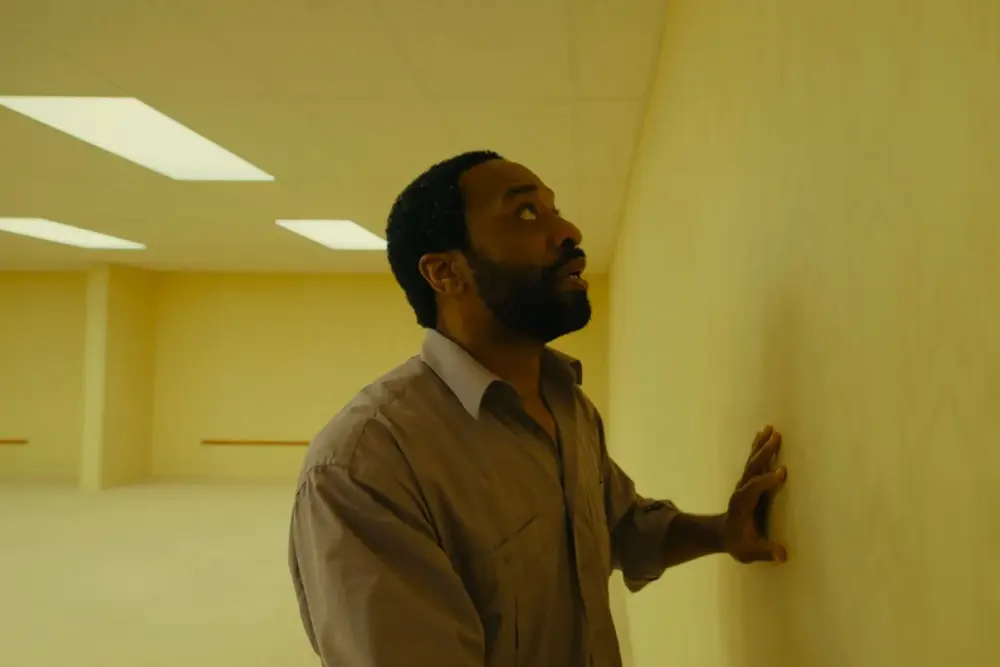
Years before capturing the attention of A24, Parsons was a teenager working out of his bedroom, utilizing 3D animation software (specifically Blender) to construct a haunting, liminal universe known as The Backrooms. Based on a popular internet creepypasta, Parsons’ analog horror web series relied on faux-VHS footage, unsettling sound design, and an eerie sense of geometry to captivate millions of digital subscribers.
Rather than diluting the property’s mystique for a mainstream theatrical run, the transition to film maintained the decentralized, participatory nature of the online lore. When the film adaptation finally hit theaters under the A24 banner, it defied all conventional wisdom regarding digital-to-physical translations, pulling in a staggering $400 million globally and proving that digital audiences will eagerly pay for a premium theatrical experience if the intrinsic value of the community is respected.
The Zurich Summit Disclosures
Speaking at the Zurich Summit on Saturday, Parsons addressed a packed room of industry insiders, offering a candid critique of how traditional Hollywood categorizes creative work. Most notably, the young director revealed that he never approached the project with the narrow constraints of a traditional genre piece.
"I don’t view it as a horror project," Parsons told the audience. "I think that’s just naturally in the path of least resistance from a marketing perspective and is what seems comfortable to people as a framing device."
He further emphasized his growing creative autonomy moving forward:
"I’m gonna try to stay as oblivious to those labels as possible. I think I have more creative control now with future projects. So those sort of structures will probably be a little less forceful, I think, in the future."
Supporting Context & Metrics: A New ‘Easy Rider’ Era
The parallels between the summer of The Backrooms and Obsession and past historical shifts in cinema were a central theme among the veteran panelists in Zurich.
The 1970s Counterculture Parallel
Drawing a sharp historical comparison, Sony Pictures Classics Co-President Michael Barker likened the current box-office phenomenon to the seismic industry shift triggered by Dennis Hopper’s Easy Rider in 1969.
“’Easy Rider’ came out in the middle of the Vietnam War, in the middle of a right-wing presidency," Barker noted. "It spoke to young people; they responded in huge numbers, and it affected the movies that were gonna be made afterwards. I think this is that moment, this summer with ‘Obsession’ and ‘Backrooms.’”
This sentiment underscores a growing realization among studio executives: audiences are experiencing fatigue with cyclical, self-cannibalizing intellectual property. As Parsons pointed out, viewers are actively searching for "newness" and a detachment from corporate cinematic universes that continuously "eat themselves."
Re-evaluating Gen Z and Attention Spans
A recurring friction point during the panel centered around how older generations perceive the media consumption habits of youth. When Parsons casually mentioned that people around his age "gravitate toward short-form material," Academy CEO Bill Kramer swiftly interjected, labeling the assumption as "reductive." Parsons readily agreed, expanding on the psychological reality behind why Gen Z is willingly leaving their screens at home to sit in dark, enclosed cinemas:
"I feel like the sentiment is more that this is weaponized. This algorithmically incentivized [reality] is not really something I think most people enjoy about their own wiring. They don’t love that their attention spans are being sucked into the spiral of mostly consuming stuff that is that short. Going into a closed room without outsider interference […] lowers the tempo in a way that is refreshing."
Official Statements & Industry Perspectives
The convergence of digital creators and traditional cinematic infrastructure has forced legacy institutions to rethink their long-term strategies.
Bill Kramer on Fandom Fluidity and the Academy’s Future
Bill Kramer, CEO of the Academy of Motion Picture Arts and Sciences, expressed profound optimism regarding the health of theatrical exhibition. For Kramer, the success of The Backrooms represents an entirely unprecedented pipeline of cultural engagement.
"It was the first time that we saw [fandoms traveling from YouTube to cinemas]," Kramer stated. "Young people want to go back to movie theaters. Fandoms shift; theatrical can inform a fandom, YouTube can inform a theatrical fandom. It’s all connected in a way that I don’t think we thought was possible. And that, for me, was a big takeaway of this summer. And it gives me great hope for the film industry because we’re seeing young people come back to the movies, and that’s really key."
Adding to this forward-thinking institutional stance, Kramer also addressed the Academy’s monumental, multi-year agreement granting YouTube exclusive global rights to stream the Oscars live and free worldwide starting in 2029 through 2033. When asked if the deal was financially and strategically sound for the nonprofit organization, Kramer offered a confident smile:
"A very good deal. We are a nonprofit, so this also allows us to sustain our great work."
Robbie Brenner on the Inevitability of a ‘Barbie’ Sequel
Shifting from digital-first indie breakouts to multi-billion-dollar studio juggernauts, Mattel Studios President and Chief Content Officer Robbie Brenner addressed the inevitable questions surrounding a follow-up to Greta Gerwig’s historic cultural phenomenon, Barbie.
While keeping her remarks concise, Brenner left no doubt about the studio’s internal desires:
"Look, we all wanna have a ‘Barbie’ sequel. I mean, who doesn’t wanna see the sequel to ‘Barbie’? And I’m sure at some point in time there will be one. We all want it to happen. We’ll see."
Future Outlook: The Decentralized IP Landscape
As the dust settles on a historic box-office season, the implications of Kane Parsons’ and Curry Barker’s successes are rippling through every major talent agency and studio development slate.
- The Death of Traditional Gatekeeping: The traditional pipeline—wherein a filmmaker spends decades working up through short films, commercials, and indie service gigs before landing a studio feature—has been permanently bypassed. Digital platforms now serve as the ultimate proving ground, offering direct-to-consumer audience testing on a global scale.
- Decentralized Intellectual Property: As Parsons noted, modern audiences respond powerfully to "pre-existing but decentralized IP presences online." Rather than top-down corporate world-building, tomorrow’s biggest franchises may be born from open-source internet mythologies nurtured by passionate online communities.
- The Theatrical Sanctuary: Far from killing the cinema, the hyper-digital age has inadvertently made the theatrical experience a sanctuary. By offering a respite from algorithmic feeds and short-form fatigue, movie theaters are reclaiming their status as essential cultural destinations for a generation seeking immersion over interruption.
With Parsons already at work on his next major cinematic venture and legacy institutions like the Academy forging direct alliances with digital video giants, the boundary line between "internet creator" and "auteur filmmaker" has officially dissolved. Hollywood is no longer watching the digital revolution from the sidelines—it is being actively rewritten by it.