Executive Overview
The video game industry is currently bearing witness to one of the most profound corporate restructurings in its history. As Microsoft presses forward with a sweeping internal reset of its Xbox ecosystem—marked by wave after wave of sweeping layoffs and structural reorganizations—historic pillars of the gaming landscape are being shifted across the corporate chess board. Among the most seismic changes is the transition of storied developers like Rare and Halo Studios under the direct operational supervision of Activision.
For industry watchers, long-term fans, and veterans of the console wars, this moment evokes a complex cocktail of nostalgia, frustration, and cautious optimism. Coinciding almost to the day with the 24th anniversary of Microsoft’s acquisition of Rare—a landmark purchase that initially signaled Xbox’s aggressive bid for the big leagues—the current climate highlights a persistent, uncomfortable truth: Microsoft has historically struggled to effectively manage and nurture its creative development houses.
While Microsoft’s direct oversight has frequently resulted in prolonged development hell, cancelled projects, and wasted potential—such as Rare’s forced, multi-year detour into Kinect development—the integration into Activision’s corporate umbrella offers a compelling twist. Known for its ruthless production efficiency, structured pipelines, and commercial savvy, Activision may represent the precise administrative medicine that chronically delayed studios like Rare and Halo Studios desperately need. Yet, this union brings severe risks, including the potential reduction of legendary studios into mere support cogs for the Call of Duty machine, or worse, serving as neatly packaged assets for a future corporate divestment.
This report examines the multi-decade trajectory of Microsoft’s studio management, the historical context of the Rare acquisition, the systemic failures of Xbox’s creative oversight, and what Activision’s oversight truly means for the future of some of gaming’s most cherished properties.
Detailed Chronology: Twenty-Four Years of Trials at Xbox
To understand the gravity of the current Xbox reorganization, one must retrace the historical milestones that brought Microsoft to this precarious juncture. The journey is defined by aggressive expansion, unrealized creative visions, and a recurring inability to translate massive financial investments into steady, reliable pipelines of prestige software.
The Acquisition Era and the Genesis of Xbox (2002–2005)
In September 2002, Microsoft made a statement of absolute intent by acquiring Rare Ltd., the British powerhouse responsible for a golden era of Nintendo 64 classics like GoldenEye 007, Banjo-Kazooie, and Perfect Dark. At the time, the move was heralded as a masterstroke. Microsoft was attempting to establish the original Xbox as a legitimate contender against Nintendo and Sony. Driven by this hardware push, the original Xbox ultimately managed to outsell the GameCube—the sole instance in history where an Xbox home console did not finish last in its respective generational sales race.
However, the transition was far from smooth. The creative talent that defined Rare’s output in the 1990s began to splinter, and the studio’s output for the Xbox hardware was met with a distinctly mixed critical and commercial reception. Titles originally conceived or heavily influenced by a post-Nintendo pivot—such as Grabbed by the Ghoulies, Kameo: Elements of Power, and Perfect Dark Zero—failed to capture the cultural lightning in a bottle of their predecessors. While Viva Piñata garnered critical acclaim, its whimsical, management-focused gameplay struggled to find its footing on an Xbox platform increasingly dominated by mature shooters and an older demographic, a game that arguably would have found runaway success on the Nintendo Wii.
The Kinect Detour and the Lost Decade (2010–2018)
The true nadir for Rare—and a glaring indictment of Microsoft’s strategic vision during the era—arrived with the advent of motion controls. Rather than allowing Rare to return to its core competencies of single-player platformers and adventure games, Microsoft forced the studio into a multi-year servitude centered around the Kinect peripheral.
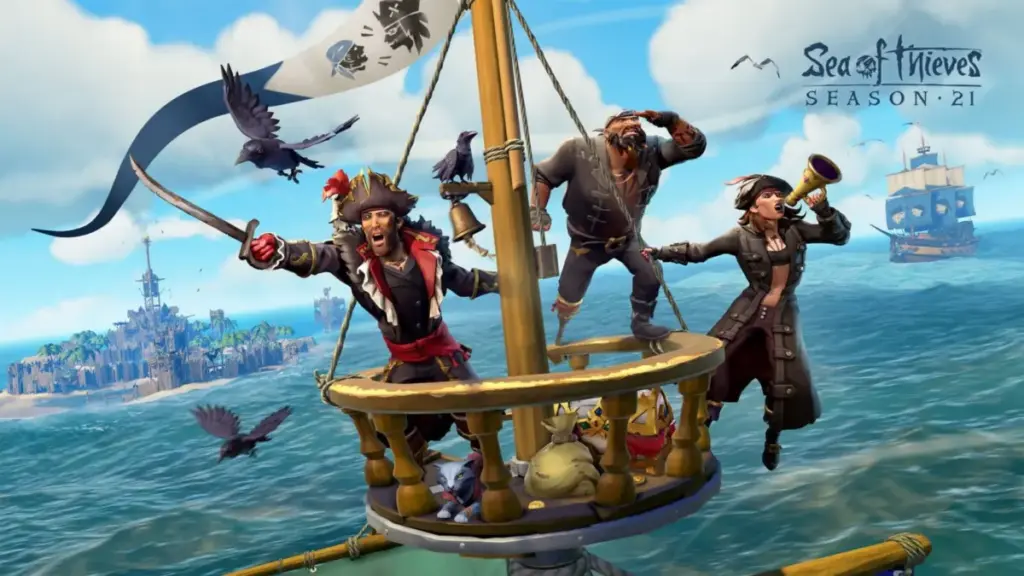
For the better part of a decade, one of the most celebrated development teams in the industry was relegated to producing mini-game compilations like Kinect Sports. This era created a staggering void in Rare’s catalog, leaving many industry analysts to wonder why Microsoft didn’t simply shutter or sell the studio off entirely. It wasn’t until the twilight of the Xbox One generation that Rare was finally released from "Kinect jail" to deliver Sea of Thieves—a title that, despite a rocky initial launch, eventually blossomed into a massive, multi-platform multiplayer success.
The Bungie Departure and the Halo Vacuum
Parallel to Rare’s struggles was the administrative turbulence surrounding the Halo franchise. Following Bungie’s departure from Microsoft in 2007 to regain its independence, the mantle of Xbox’s most valuable intellectual property was handed to 343 Industries (subsequently rebranded as Halo Studios).

Unlike Bungie, which maintained a steady cadence of genre-defining releases, Halo Studios struggled immensely with engine transitions, changing creative visions, and management churn. The result was a devastating drought of core releases, punctuated by troubled developments like Halo Infinite. The inability to keep Xbox’s premier franchise humming at a reliable pace exposed systemic flaws in how Microsoft structured, supported, and oversaw its first-party development studios.
Supporting Context & Metrics: The Management Paradox
The structural changes currently unfolding across Xbox and Activision are underpinned by financial realities, institutional metrics, and a stark contrast in management philosophies.
The Cost of Chronic Mismanagement
Microsoft’s recent history is defined by massive capital deployment followed by painful corrections. The multi-billion-dollar acquisitions of Bethesda (ZeniMax) and Activision Blizzard expanded Microsoft Gaming into an unprecedented corporate titan, boasting dozens of studios and thousands of employees. Yet, this aggressive expansion has collided with economic realities and shifting market demands, resulting in successive waves of mass layoffs throughout recent years.
Critics and industry insiders point to a fundamental disconnect between Microsoft’s corporate tech culture and the volatile, highly creative nature of video game development. While tech giants excel at scaling infrastructure and cloud services, their top-down management structures often stifle creative autonomy or fail to provide the rigorous production guardrails needed to keep ambitious games on schedule.
The Activision Contrast: Efficiency vs. Creativity
By contrast, Activision—despite its own historical controversies and corporate baggage—has operated for decades with a razor-sharp focus on production pipelines. Activision is rarely cited as an incubator for risky, experimental art house games (though notable exceptions like FromSoftware’s Sekiro: Shadows Die Twice prove they were capable of publishing prestige titles when the partnership aligned). Instead, Activision excels at what traditional tech companies often fail at: execution, scheduling, and commercial scale.
Consider the Call of Duty franchise: it remains the preeminent annual release model in the non-sports gaming sector. Maintaining a multi-studio, synchronized development cycle that pumps out a blockbuster shooter every single year requires a level of organizational discipline that Microsoft’s internal studios have consistently lacked.
[Microsoft Gaming Strategy]
       │
       ├── Heavy Capital Investment (Bethesda, Activision, Rare)
       ├── Top-Down Tech Corporate Culture
       └── Result: Prolonged Development Cycles, Project Delays, Layoffs

[Activision Production Model]
       │
       ├── Structured Pipelines & Milestone Tracking
       ├── Rigorous Project Management (e.g., Annual Call of Duty cadence)
       └── Result: Commercial Reliability, Predictable Output
Placing studios like Rare and Halo Studios under Activision’s operational supervision introduces a fascinating hybrid model. If Activision can impose its rigorous managerial discipline onto studios historically plagued by developmental drift, the industry might finally see a consistent output of software from these legendary teams.
Official Statements and Industry Reactions
While executive commentary from Microsoft corporate has largely focused on "streamlining operations," "synergy," and "long-term sustainability" amid its ongoing workforce reductions, the broader development community and veteran observers have offered starkly different perspectives.
Industry analysts emphasize that the restructuring is an admission of past failures in studio oversight. Former developers and studio leads have frequently noted that Microsoft’s matrix management style—relying heavily on temporary contractors, shifting product managers, and corporate oversight committees—frequently drains momentum from creative teams.
In a recent assessment shared by gaming commentators, the sentiment regarding Activision’s new supervisory role is clear:

"After all the reports of bad management at Microsoft, I don’t think it could be any more obvious that they don’t know how to run a games developer (or probably anything creative) but Activision have been doing it for decades. They’re not exactly the most creative or experimental publisher out there… but they at least understand the business and know how to work with a developer."
This perspective captures the paradox of the current moment. Gamers may lament Activision’s corporate risk-aversion, but in the realm of basic competence—ensuring that games actually ship on time without collapsing under the weight of their own development cycles—Activision’s pedigree vastly outstrips Microsoft’s recent track record.
Future Outlook: Three Scenarios for Rare and Halo Studios
As the dust settles on the latest Xbox reset, the ultimate fate of Rare, Halo Studios, and other integrated properties hangs in the balance. Industry observers generally point toward three distinct pathways for how this corporate realignment could play out over the next five years:
1. The Support Studio Trap (The Most Likely Outcome)
The most palpable danger facing Rare and Halo Studios is their reduction into high-end support infrastructure. In this scenario, Activision utilizes these veteran teams to supplement the massive workforce required to maintain the perpetual Call of Duty machine or other mega-franchises. While this guarantees job security and keeps developers working, it effectively spells the end for original intellectual property and creative independence, relegating historic studios to work-for-hire anonymity.
2. The Productivity Renaissance (The Optimistic View)
Should Activision’s leadership successfully impose operational order without crushing creative morale, we could witness a renaissance of productivity. With seasoned project managers enforcing clear milestones and eliminating developmental bloat, Halo Studios could finally stabilize its output, while Rare might be empowered to leverage its talent pool into mid-budget or AAA experiences outside of the live-service Sea of Thieves ecosystem.
3. The Corporate Divestment Bundle (The Wildcard Scenario)
Some financial analysts have floated a more speculative, aggressive theory: that Microsoft is cleaning house, streamlining management lines, and organizing its massive studio acquisitions into neat, modular packages—such as bundling Activision and Bethesda properties—to make a future corporate spin-off or sale easier to execute. Under this hypothesis, putting Rare under Activision’s wing isn’t about long-term stewardship, but rather preparing a cleaner, more digestible asset portfolio for potential market shifts down the line.
Conclusion
The 24-year arc of Rare within the Microsoft ecosystem—coupled with the ongoing struggles of Halo Studios and the broader systemic layoffs across Xbox—paints a sobering picture of modern corporate gaming. Massive financial muscle cannot substitute for empathetic, competent creative management.
As Activision steps into a supervisory role over some of Microsoft’s most cherished assets, the gaming world watches with bated breath. Whether this unprecedented corporate maneuver breathes new life into stagnant franchises or simply reduces legendary developers to cogs in a larger commercial machine remains to be seen. What is certain, however, is that the era of unfettered, poorly managed studio autonomy at Xbox has officially drawn to a close.