Executive Overview
For decades, hair serums occupied a humble, strictly utilitarian role in the daily grooming routine. Once relegated to the absolute bottom of the vanity drawer, they were deployed as a desperate, last-minute salvage operation for fried, weather-worn, or excessively frizzy ends. A lone pump rubbed hastily between the palms and dragged through the tips was considered sufficient to temporarily mask heat damage or tame a stubborn flyaway before stepping out the door.
Today, however, the cultural and aesthetic landscape of haircare has undergone a seismic shift. Driven by relentless social media trends celebrating "glass hair," the voluminous yet polished architecture of the 1990s supermodel blowout, and a broader cultural obsession with "mirror shine," hair serums have transitioned from an afterthought to the entire conversation.
In an era where consumers overwhelmingly prioritize sleekness, luminosity, and fluidity over unmanaged volume, the hair serum has emerged as the fastest, most efficient vehicle to achieve that elusive, high-gloss finish. More importantly, these potent elixirs are no longer merely surface-level cosmetic patches. Modern formulations are engineered to interact with the hair’s internal structure, smoothing the cuticle, locking in vital moisture, and erecting a microscopic, weather-resistant shield against humidity.
As the beauty market floods with sophisticated water-based hydrators, silicone-infused glossers, and nutrient-dense overnight treatments, navigating the category requires far more than a casual purchase. Achieving that coveted, glass-like finish demands a nuanced understanding of hair density, base ingredients, and precise application techniques. Below is an exhaustive investigative breakdown of why serums have taken over our digital feeds and bathroom counters, supported by elite industry insights and a definitive guide to the absolute best formulas currently on the market.
Detailed Chronology: From Afterthought to Industry Anchor
To understand how the hair serum conquered the modern beauty market, one must examine the evolution of consumer hair goals over the last twenty years.
- The Early 2000s (The Heavy Silicone Era): At the turn of the millennium, serums were largely synonymous with heavy silicones designed to weight down unruly textures. While effective at killing frizz, many early iterations lacked molecular sophistication, often leaving hair feeling greasy, stiff, or weighed down by product buildup.
- The Texture Revolution (2010–2018): For nearly a decade, the pendulum swung violently away from sleekness. The industry entered a prolonged love affair with natural texture, sea salt sprays, matte dry shampoos, and voluminous, bohemian waves. Serums took a backseat as consumers favored airy, touchable, and decidedly unstructured styles.
- The Digital Shift to "Glass Hair" (2019–Present): The rise of high-definition video platforms—specifically TikTok and Instagram Reels—altered visual standards of beauty. Under studio lighting and algorithmic compression, textured, matte hair often read as dry or unkempt. In its place, ultra-reflective, glass-like luminosity became the ultimate aesthetic flex. Consumers collectively decided that smoothness, light reflection, and fluid movement were paramount.
To meet this demand, cosmetic chemists completely reinvented the category. Serums evolved from blunt-instrument defrizzers into targeted, multi-tasking treatments capable of repairing bonds, resisting high humidity, and delivering weightless shine.
Supporting Context & Metrics: The Science of Smoothness
Why do modern hair serums perform so dramatically better than their predecessors? The answer lies in the physiological science of frizz.
Frizz is rarely just a stylistic inconvenience; it is a structural distress signal. When hair is parched, chemically treated, or mechanically damaged, the protective outer layer—the cuticle—lifts and cracks. This allows ambient moisture from the atmosphere to penetrate the hair shaft, causing the cortex to swell and individual strands to warp outward in search of hydration.
"Frizz is often a sign that the hair is looking for moisture, so a good serum can help smooth the cuticle, add slip, and create a more polished surface without taking away the hair’s natural movement," explains celebrity hairstylist Gregory Russell.
When applied correctly, a high-quality serum wraps each strand in a hydrophobic (water-repelling) barrier. This microscopic seal achieves two critical functions:
- Moisture Retention: It locks existing hydration inside the hair shaft.
- Humidity Defense: It blocks external moisture from breaching the cuticle, preventing mid-day puffiness.
Furthermore, industry data highlights a profound consumer migration toward multi-functional styling hybrids. Shoppers no longer want separate products for heat protection, anti-frizz, shine enhancement, and overnight repair. They demand singular, highly concentrated elixirs that can fulfill all four requirements while remaining lightweight enough to carry in a small bag for touch-ups throughout the day.
Official Statements: Expert Insights on Formulation and Application
Navigating the vast ecosystem of modern hair serums requires professional guidance. Because formulations now range from feather-light water suspensions to rich botanical oils, matching the right product to your specific hair type is non-negotiable.
Choosing Your Base: Water vs. Oil vs. Silicone
Celebrity hair artist Emaly Baum emphasizes that the chemical makeup of a serum matters far more than its marketing label.
- For Fine Hair: "If you have finer hair and like to air dry, I’d shy away from serums that are primarily oil-based and instead opt for a water-based serum," Baum advises. Water-based options deliver deep hydration and glassy slip without collapsing delicate strands or sapping natural body.
- For Thick or Coarse Hair: "If you have thicker hair, oil or silicone ingredients might be the way to go," notes Baum.
- The Humidity Battle: Master hairdresser Sarah Lund champions the often-misunderstood category of lightweight silicones for weather-proofing the hair. "Lightweight options can block humidity and add incredible shine," she states, noting that they lay the cuticles down flat and provide the necessary slip to survive a downpour or coastal fog.
The Golden Rule of Application
Even the most expensive, scientifically advanced serum will fail if applied incorrectly. According to top stylists, user error is the primary reason people give up on serums.
- Target the Mid-Lengths and Ends: "It’s important not to start at the roots to avoid heavy, greasy hair," warns Baum.
- Build Gradually: Gregory Russell advocates for a minimalist approach during application. "I always start with less than I think I need—you can add more, but you can’t really take it away."
- Damp vs. Dry Hair: Most experts recommend dispensing a dime-sized amount into the palms, emulsifying thoroughly, and working the product through damp hair prior to styling. A microscopic drop can then be smoothed over dry hair as a final polish to kill lingering flyaways.
The Definitive Edit: The Best Hair Serums Worth Your Shelf Space
Based on rigorous editorial testing, expert consultations, and real-world performance metrics, these are the standout hair serums addressing every conceivable hair concern.
1. Best Drugstore: Garnier Fructis Sleek & Shine Anti-Frizz Hair Serum
- Price: ~$8
- Why We Love It: Proving that high performance does not require a luxury price tag, this iconic drugstore staple remains an undisputed champion. Infused with argan oil, it penetrates deep into frizzy, dry hair to impart long-lasting smoothness and brilliant shine without breaking the bank.
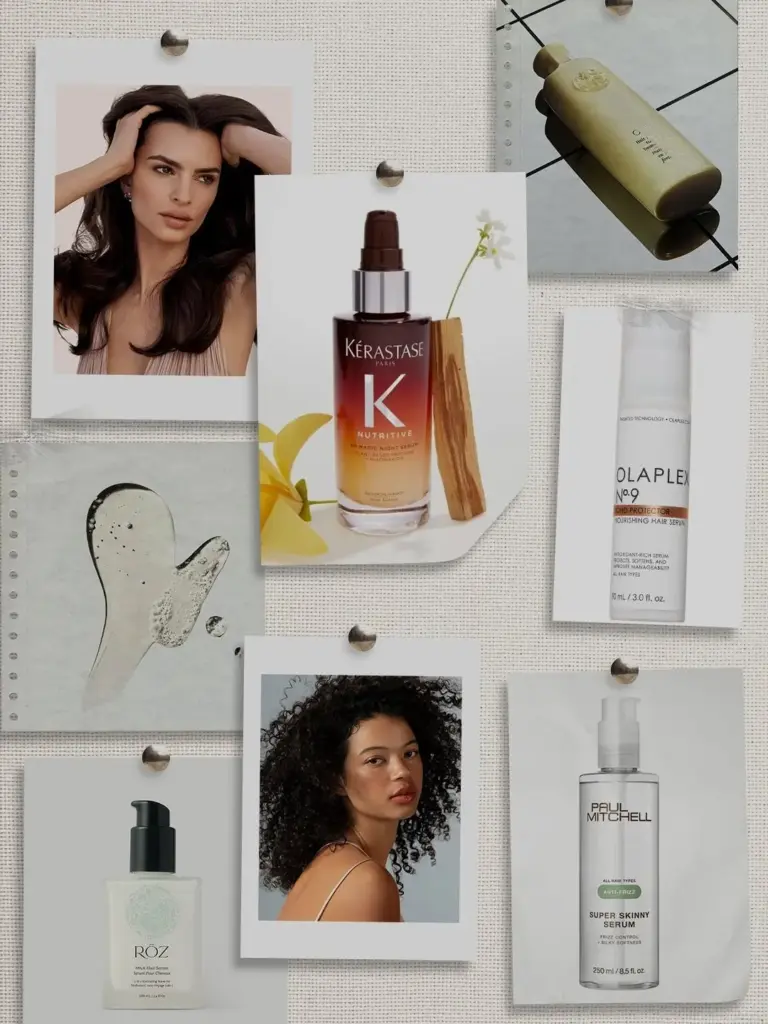
2. Best for Overnight Repair: Kérastase Nutritive 8H Magic Night Serum
- Price: ~$35
- Why We Love It: Designed to work while you sleep, this nourishing nighttime treatment uses plant-based proteins and vitamins to gradually envelope dry strands. You wake up with hair that feels deeply conditioned, incredibly soft, and entirely free of morning-after bedhead frizz.
3. Best for Thick Hair: Moroccanoil Intense Smoothing Serum
- Price: ~$32
- Why We Love It: Formulated specifically for unmanageable, thick, and coarse textures, this powerhouse combines nutrient-rich argan oil with vitamin E. It provides extreme slip and tames rebellious volume, ensuring even the densest manes achieve a sleek, controlled finish.
4. Best for Fine Hair: Oribe Hair Alchemy Treatment Serum
- Price: ~$66
- Why We Love It: A masterclass in luxury formulation, Oribe’s treatment serum uses a curative blend of chia seed, bio-fermented bamboo leaf, and plant-based protein. It fortifies fragile, fine strands from the inside out while boosting elasticity and eliminating frizz with zero weight.
5. Best for Styling: Paul Mitchell Super Skinny Serum
- Price: ~$14
- Why We Love It: A legendary backstage favorite, this lightweight smoothing serum speeds up blow-drying time while constricting the hair diameter to make thick or unruly hair significantly sleeker, shinier, and easier to manage.
6. Best for Damaged Hair: Olaplex No. 9 Bond Protector Hair Serum
- Price: ~$32
- Why We Love It: Silicon-free and packed with Olaplex’s proprietary bond-building chemistry, this antioxidant-rich shield protects hair from daily pollution, heat styling, and mechanical breakage while delivering satin-like shine and anti-static control.
7. Best for Dry Hair: Rōz Milk Hair Serum
- Why We Love It: A milky, deeply hydrating emulsion that bridges the gap between a leave-in conditioner and a styling serum, quenching parched textures and restoring youthful vibrancy to dehydrated locks.
Everything You Need to Know: Frequently Asked Questions
To ensure you get the absolute most out of your investment, our beauty editors have compiled answers to the most pressing questions surrounding hair serums.
Do hair serums actually help with frizz?
Yes. "Not only do hair serums help tame flyaways, but they also help to lock moisture into the hair," explains Emaly Baum. By depositing a smooth, humidity-resistant barrier, serums refine the hair’s overall texture. "Hair looks healthier and more refined, not greasy," adds Gregory Russell.
What should I look for in a serum for frizzy hair?
Begin by evaluating your hair’s natural density and porosity. "Fine hair needs something incredibly lightweight, while thicker or more porous hair can usually handle something richer," says Russell. Sarah Lund recommends seeking out formulas containing lightweight silicones and humectants that work synergistically to lay down cuticles and provide maximum slip.
How do you apply a hair serum for the best results?
Application should almost always begin on damp hair. "I recommend applying a pea- or dime-sized amount, depending on hair density," notes Sarah Lund. "This ensures a more even product distribution throughout." A micro-drop can also be pressed onto dry hair as a final finishing step to capture stray flyaways.
Can you use a hair serum every day?
Yes, daily use is not only permitted—it is actively encouraged. "It’s the best way to keep your hair healthy and frizz-free," advises Baum. On days when you aren’t washing your hair, simply scale back the amount of product used to prevent accumulation and preserve natural movement.
How do I know if a serum or a cream is better for my hair?
Both formulas have distinct, non-interchangeable places in a comprehensive routine. "I like a serum to prep the hair and a cream works well for more control when drying," says Lund. Clayton Hawkins notes that he frequently introduces clients to serums first because they deliver monumental smoothness and shine without heavy build-up. Conversely, if your hair requires intense softness, detangling, and moisture control, a rich cream may be the superior primary choice, with a serum reserved for final polishing.
Future Outlook: Where the Haircare Industry is Heading
As cosmetic technology continues to advance at a breakneck pace, the future of the hair serum points firmly toward hyper-personalization and biotechnology.
We are rapidly moving away from a one-size-fits-all approach to anti-frizz care. The next generation of serums currently in development leverage biomimetic peptides, custom microbiome balancing agents, and pollution-neutralizing polymers that react dynamically to shifting environmental barometers—adjusting their protective barrier in real-time as humidity or UV index fluctuate throughout the day.
Furthermore, as sustainability becomes a non-negotiable mandate for beauty consumers, brands are pivoting toward anhydrous (waterless) formulations, infinitely recyclable aluminum packaging, and ethically sourced, upcycled botanical extracts.
What remains entirely undisputed, however, is the product’s ultimate destination. The hair serum has successfully shaken off its past as a greasy, last-resort fix. Today, it stands proudly as the crown jewel of the modern vanity—an essential, high-performance daily ritual designed to deliver uncompromised radiance, flawless health, and mirror-like shine.