When health enthusiasts, athletes, and casual gym-goers alike think about building core strength, the mental imagery is almost universally the same: lying flat on a mat, knees bent, repeatedly flexing the spine upward in a standard sit-up or crunch. For decades, fitness culture has treated these two movements as the undisputed gold standard for abdominal development.
However, according to modern strength coaches, physical therapists, and movement specialists, relying solely on crunches and sit-ups is a fundamental misunderstanding of human biomechanics. While these isolation movements certainly engage the rectus abdominis—the superficial "six-pack" muscle—they leave out a vast, interconnected network of supporting tissues that make up a truly functional midsection.
To bridge the gap between aesthetic muscle isolation and practical, real-world physical capability, Pilates instructor and strength coach Rebecca Daodun is championing a paradigm shift. Moving past outdated, repetitive spinal flexion, Daodun outlines four dynamic, multi-planar movements designed to build a resilient, well-rounded, and bulletproof core.
Executive Overview
The human core is not merely a collection of muscles meant to pull your chest toward your pelvis. It is a sophisticated, three-dimensional muscular cylinder designed to stabilize the spine, transfer force between the upper and lower extremities, resist unwanted motion, and facilitate movement across multiple planes.
When training focuses exclusively on forward spinal flexion—as is the case with crunches—it creates muscular imbalances, neglects the obliques, underutilizes the lower back and posterior chain, and fails to prepare the body for the dynamic challenges of daily life.
This comprehensive report examines the anatomical limitations of traditional abdominal exercises, explores the holistic philosophy of modern core training, breaks down four specialized movements recommended by expert coaches, and provides a forward-looking perspective on how functional fitness is reshaping modern physical conditioning.
Detailed Chronology: The Evolution of Core Training
To understand why traditional crunches are losing favor in advanced athletic circles, it is helpful to examine the historical trajectory of abdominal training over the past century.
The Era of Isolation (Mid-to-Late 20th Century)
During the mid-20th century, physical culture heavily emphasized isolation exercises. Bodybuilding philosophies prized muscle-specific targeting, leading to the widespread adoption of the sit-up, and later, the crunch. The goal was simple: hypertrophy of the rectus abdominis. Fitness media popularized the idea that visible abdominal definition was the primary indicator of core health, ignoring deep-stabilizing muscles like the transversus abdominis, the pelvic floor, and the multifidus.
The Functional Fitness Revolution (Early 2000s)
As sports science advanced into the 21st century, researchers and biomechanists began analyzing how the body actually moves during athletic performance and daily living. Studies on spinal health highlighted the potential dangers of repetitive lumbar flexion—particularly under load—paving the way for the "core stability" movement. Exercises like planks, bird-dogs, and farmers’ carries entered the mainstream lexicon, shifting the focus from moving the spine to resisting unwanted spinal movement.
The Multi-Planar Integration (Present Day)
Today, elite strength coaches like Rebecca Daodun advocate for a hybrid approach that honors the multifaceted nature of the trunk. Modern core training integrates stability, rotation, lateral flexion, and anti-rotation. The contemporary fitness paradigm recognizes that a strong core must perform well not just on a stationary floor mat, but while walking, running, twisting, lifting heavy objects, and maintaining balance on uneven terrain.
Supporting Context & Metrics: Anatomy of a True Core
To appreciate why Daodun’s alternative exercises are so effective, one must first deconstruct the anatomy of the human core. The core is often conceptualized as a "muscular box" or cylinder:
- The Roof: The diaphragm, which controls respiration and intra-abdominal pressure.
- The Floor: The pelvic floor muscles, which support internal organs and stabilize the pelvis.
- The Front and Sides: The rectus abdominis, internal obliques, external obliques, and the deep transversus abdominis (which acts like a natural weightlifting belt).
- The Back: The erector spinae, multifidus, and quadratus lumborum.
The Limitations of Crunches
From a kinesiological standpoint, crunches restrict movement to a single plane (sagittal) and a single function (spinal flexion). While this builds localized muscular endurance in the front of the abdomen, it completely ignores:
- Lateral Flexion: The ability to bend sideways against resistance.
- Rotation: The capacity to twist the torso while maintaining control.
- Anti-Movement: The ability to resist external forces trying to push the spine out of alignment.
- Posterior Extension: The strengthening of the back extensors to balance anterior pull.
Statistics from orthopedic and physical therapy clinics indicate that repetitive, loaded spinal flexion (such as unguided, high-volume sit-ups) places undue shearing stress on the lumbar intervertebral discs, contributing to lower back pain over time. Conversely, multi-planar core stability programs have been clinically shown to reduce the incidence of lower back injuries and improve overall athletic force transfer.
Official Statements & Expert Insights
Rebecca Daodun offers a clear critique of traditional methods while providing a more sustainable, functional framework for everyday fitness enthusiasts.
"I wouldn’t necessarily say that crunches are a bad core exercise—they have their place—but our core has a much bigger job than simply flexing the spine forwards," explains Daodun.
"In real life, our trunk needs to bend, rotate, resist movement, transfer force between our upper and lower body, and keep us stable while our arms and legs are moving."
Daodun emphasizes that variety and multi-positional challenges are the secret to long-term physical resilience.
"I like including exercises that challenge the core in different planes and in different positions, rather than relying solely on crunches," she notes. "We tend to think of core training as everything happening at the front of the body, when actually our trunk needs to be strong in every direction."
Four Core Exercises to Try Instead of Crunches
To break free from monotonous floor routines, Daodun shares four expert-recommended movements designed to test your core across lateral, rotational, stabilization, and extension planes.
+-------------------------------------------------------------------------+
|                  SUMMARY OF DAODUN'S 4 CORE MOVEMENTS                   |
+--------------------------+-------------------+--------------------------+
| Exercise                 | Primary Plane     | Key Benefit              |
+--------------------------+-------------------+--------------------------+
| 1. Weighted Side Bend    | Lateral Flexion   | Strengthens obliques     |
| 2. Standing Knee Drive   | Multi-planar      | Combines balance & core  |
| 3. The Hundred           | Isometric Flexion | Sustained endurance      |
| 4. Back Extension        | Posterior Chain   | Balances anterior work   |
+--------------------------+-------------------+--------------------------+
1. Weighted Side Bend
- Target: Obliques and lateral stabilizers.
- Reps: 8 to 12 per side.
- The Science: This exercise challenges the core through lateral flexion, with an external weight adding progressive overload. The obliques must work overtime to control both the descent and the controlled return to an upright posture.
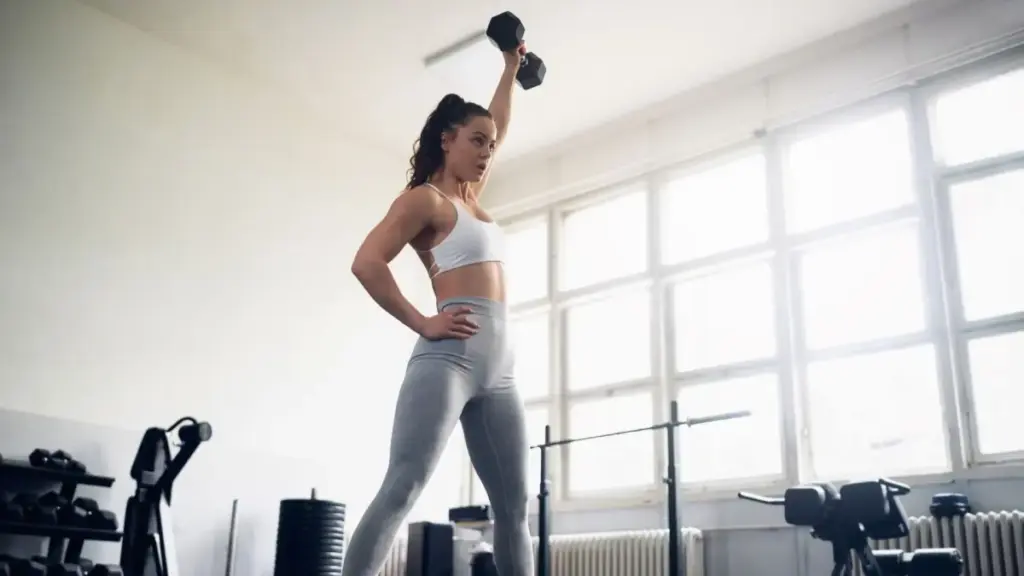
- How to Perform: Stand tall holding a dumbbell or kettlebell in one hand, keeping the opposite hand resting on your hip or behind your head. Keeping your torso facing forward (avoiding any forward lean or rotation), lower the weight down the side of your leg by bending laterally at the waist. Use your core muscles on the opposite side of the weight to pull your torso back to the starting position.
- Trainer Tip: Focus on moving purely through your waist, not your hips. Imagine sliding your torso between two narrow glass panes.
2. Standing Cross-Body Knee Drive
- Target: Obliques, transverse abdominis, hip flexors, and deep stabilizers.
- Reps: 8 to 12 per side.
- The Science: Moving core exercises out of the prone (lying down) position dramatically increases the neuromuscular demand. By balancing on a single leg while driving the opposite arm and knee together, you engage the obliques dynamically while your pelvis and standing leg work to maintain equilibrium.
- How to Perform: Stand with your feet hip-width apart. Engage your core, shift your weight onto your right foot, and lift your left knee while simultaneously bringing your right elbow across your body to meet or move toward your left knee. Return to the starting position with control before repeating.
- Trainer Tip: Keep your standing leg stable and your pelvis level. Avoid excessive torso rotation or wobbling by focusing your gaze on a fixed point ahead of you.
3. The Hundred
- Target: Deep abdominal wall, hip flexors, and isometric endurance.
- Sets & Reps: 2 to 3 sets of 30 rhythmic arm pumps (building up to 100 as strength improves).
- The Science: A cornerstone of classical Pilates, The Hundred eliminates the repetitive flexion and extension cycle of a crunch. Instead, it demands sustained abdominal isometric contraction while the upper and lower extremities move independently.
- How to Perform: Lie on your back, lift your head, neck, and shoulders off the mat, and extend your arms long by your sides, hovering them slightly above the floor. Lift your legs into a tabletop position (or extend them at a 45-degree angle for a greater challenge). Pump your arms vigorously up and down while inhaling for 5 counts and exhaling for 5 counts.
- Trainer Tip: Maintain a flat lower back pressed gently into the floor. Keep your neck relaxed by curling from the upper thoracic spine, not by straining your cervical vertebrae. If your lower back arches, bend your knees or raise your legs higher toward the ceiling.
4. Back Extension
- Target: Erector spinae, multifidus, glutes, and upper posterior chain.
- Reps: 8 to 12.
- The Science: A truly balanced core cannot exist without a strong back. The core is a 360-degree cylinder; neglecting the posterior side creates a muscular imbalance that can lead to postural rounding and spinal fatigue. Back extensions strengthen the muscles along the back of the trunk, providing essential counter-tension to all the forward-bending work typical of modern life and traditional workouts.
- How to Perform: Lie face down on a mat with your hands resting gently beside your shoulders or extended overhead (depending on your fitness level). Keeping your gaze directed downward to protect your neck, gently lift your chest, upper back, and hands a few inches off the floor using the muscles of your upper and lower back. Hold briefly at the top, then lower down with control.
- Trainer Tip: Do not hyperextend your neck or yank your body upward using momentum. Think of lengthening your spine forward and up, engaging your glutes and hamstrings to support the movement.
Future Outlook: The Next Generation of Functional Core Conditioning
As fitness trends continue to shift away from aesthetics-only training toward longevity, functional health, and injury prevention, the death of the monotonous crunch is accelerating.
Future developments in strength and conditioning will likely place even greater emphasis on functional integration—training the body as a cohesive unit rather than a collection of isolated parts. We can expect to see fitness programming incorporate more rotational resistance, cable-based anti-rotation holds (like the Pallof press), and dynamic, multi-planar locomotion.
By expanding our definition of "core training" to include lateral stability, spinal extension, balance, and force transfer, practitioners are discovering that true physical strength is not measured by how many crunches you can knock out on a Saturday morning, but by how resilient, stable, and capable your body feels in every movement you make throughout the week.