Executive Overview
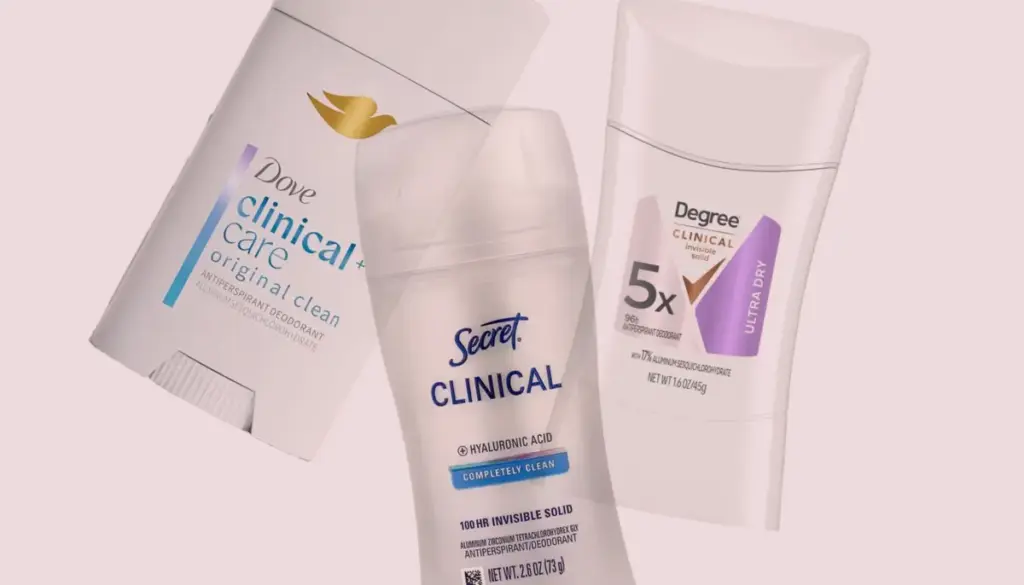
The personal care aisle can be an overwhelming maze of sleek packaging, enticing fragrances, and bold marketing promises. Among the most heavily contested claims are those found on products bearing the coveted "clinical strength" label. For millions of consumers battling stubborn sweat and persistent body odor, these products represent a beacon of hope—a promise of dry, worry-free days when standard over-the-counter antiperspirants fall short.
However, beneath the polished marketing terminology lies a complex dermatological reality. According to leading skin care specialists, "clinical strength" is not a formal medical demarcation regulated by governing health agencies, but rather a descriptive tier indicating heightened product potency. These formulations bridge the gap between standard grocery store cosmetics and heavy-duty prescription treatments.
Understanding the mechanics of these powerful formulations requires a deep dive into dermatological science. By examining active sweat-reducing ingredients like aluminum salts, evaluating the precise concentrations needed for efficacy, and identifying the physiological thresholds that signal a transition from standard to clinical care, consumers can make informed decisions. This comprehensive report explores the functional differences between standard and clinical-strength antiperspirants, details the active ingredients that drive their performance, analyzes expert guidance on potential skin sensitivities, and outlines the rigorous testing methodologies used by industry authorities to evaluate these products.
Detailed Chronology: The Evolution of Sweat Management and Antiperspirant Potency
To fully appreciate the modern landscape of clinical-strength deodorants, it is essential to understand how sweat management has evolved from rudimentary hygiene practices to advanced dermatological science.
The Early Eras of Hygiene
For centuries, human attempts to control body odor and perspiration relied primarily on masking agents. Ancient civilizations utilized natural perfumes, aromatic oils, and botanical extracts to cover up the scent of bacterial breakdown. However, these methods did nothing to stop the underlying physiological process of sweating. The realization that sweat itself could be managed topically began to take shape with the advent of modern chemistry in the late 19th and early 20th centuries.
The Introduction of Aluminum Salts
The true turning point in sweat management arrived with the introduction of aluminum-based compounds. Early inventors discovered that aluminum salts possessed astringent properties capable of temporarily altering the skin’s surface proteins. When applied to the underarms, these compounds dissolved in moisture, creating a superficial, gel-like plug that temporarily blocked the opening of the sweat ducts.
During the mid-20th century, cosmetic chemists refined these formulas to make them less irritating and more stable for daily use. Standard over-the-counter deodorants and antiperspirants emerged as household staples, balancing mild sweat reduction with pleasant fragrances.
The Rise of the "Clinical" Tier
As consumer demand for high-performance personal care grew—driven by high-stress modern lifestyles, rigorous fitness cultures, and an intolerance for visible perspiration—manufacturers sought ways to differentiate superior formulations. This gave rise to the "clinical strength" category.
While initially unregulated, the term quickly became synonymous with over-the-counter products containing significantly higher concentrations of active aluminum compounds than their traditional counterparts. Today, clinical-strength deodorants occupy a sophisticated middle ground in the pharmaceutical and cosmetic market, offering near-prescription-grade dryness without requiring a doctor’s visit.
Supporting Context & Metrics: Active Ingredients, Concentrations, and Efficacy
Navigating the active ingredient label on a clinical-strength antiperspirant requires a basic understanding of chemical concentrations and how different compounds interact with the human body.
Decoding Active Ingredients
Dermatologists emphasize that the efficacy of any clinical-strength product hinges on its active ingredients, which generally fall into two categories: sweat-reducers (antiperspirants) and odor-neutralizers (deodorants).
- Aluminum Chloride: Widely regarded as the gold standard for high-potency sweat reduction, aluminum chloride is exceptionally small in molecular size, allowing it to penetrate deeper into the sweat ducts for a more robust blockage. Dermatologists typically recommend concentrations between 12% and 15% for optimal results.
- Aluminum Zirconium Compounds & Aluminum Sesquichlorohydrate: These alternative active ingredients are engineered to be slightly less potent than aluminum chloride, but they offer a significant advantage: a lower incidence of skin irritation. Experts such as Dr. Oska often recommend concentration ranges between 15% and 20% for products utilizing aluminum zirconium compounds to achieve a balance between dryness and skin comfort.
- Deodorizing Agents: While antiperspirants block the ducts to stop sweat, antibacterial agents and odor neutralizers—such as sodium bicarbonate—target the root cause of body odor. Sweat itself is largely odorless; the distinct smell associated with perspiration occurs when resident skin bacteria break down the proteins and fatty acids found in apocrine sweat. Combining aluminum salts with neutralizing agents provides comprehensive protection.
Evaluating the Trade-Offs: Potency vs. Sensitivity
The primary challenge in formulating clinical-strength products lies in the inverse relationship between potency and skin tolerance. Because clinical-strength deodorants create a more substantial mechanical blockage within the sweat ducts, they place greater stress on the epidermal barrier.
Board-certified dermatologists note that individuals with sensitive skin, eczema, or conditions prone to contact dermatitis must exercise caution. The higher concentration of aluminum salts, often paired with synthetic fragrances, can trigger redness, itching, and burning if the skin barrier is compromised. Consequently, dermatologists frequently advise sensitive users to patch-test clinical formulations or seek out fragrance-free, lower-concentration alternatives.
Official Statements & Expert Perspectives
To understand when and why a consumer should make the transition to clinical-strength protection, leading dermatological experts offer clear clinical criteria.
Defining "Clinical" and Assessing Need
"‘Clinical’ is more of a marketing term than a medical demarcation," notes Dr. Spearman. However, she stresses that products bearing this designation are functionally distinct due to their elevated concentration of sweat-reducing active ingredients.
Dr. Vidya Shivakumar, a board-certified dermatologist in Chicago, elaborates on the physiological mechanism: "Clinical deodorants usually contain higher concentrations of active sweat-reducing ingredients, such as aluminum salts, which temporarily block sweat ducts to decrease perspiration."
When should an individual make the leap from standard cosmetics to clinical options? According to Dr. Oska, the decision should be guided by how significantly underarm moisture impacts daily life. Indicators include:
- The need to reapply standard deodorant multiple times throughout the day.
- Frequently changing clothes due to sweat breakthrough.
- Persistent feelings of dampness and discomfort during normal, non-strenuous activities.
Dr. Spearman adds that clinical-strength options are invaluable for individuals grappling with persistent body odor despite maintaining impeccable personal hygiene. "When sweating begins to impact confidence, clothing choices, or social comfort, that is often a sign that a clinical-strength option may be appropriate," she explains.
The Boundary of Over-the-Counter Care
While clinical-strength deodorants successfully manage moderate to heavy perspiration for a vast majority of users, dermatologists emphasize that there is a threshold where over-the-counter interventions are no longer sufficient.
For individuals suffering from hyperhidrosis—a medical condition characterized by excessive, unpredictable sweating beyond what is necessary for thermoregulation—topical solutions may fail to provide adequate relief. In such cases, experts recommend consulting a board-certified dermatologist to explore advanced, prescription-strength treatments, iontophoresis, or medical procedures.
Testing Methodologies and the Quest for Product Integrity
Evaluating personal care products requires a rigorous, multi-faceted approach. High-end beauty and wellness publications, alongside dermatological boards, rely on exhaustive testing frameworks to ensure that products live up to their claims.
The Five-Pillar Evaluation Framework
When industry experts and beauty editors test clinical-strength deodorants, assessments are typically anchored in five primary categories:
- Ingredients and Efficacy: The formulation is scrutinized for active ingredient concentrations, pH balance, and proven clinical performance against moisture and odor.
- Packaging: Packaging must ensure product stability, ease of dispensing (whether stick, roll-on, or cream), and protection of sensitive active compounds from degradation.
- Fragrance: Evaluators assess the pleasantness, longevity, and hypoallergenic properties of added scents, ensuring they do not clash with natural body chemistry or trigger allergic reactions.
- Texture: The physical feel upon application—ranging from dry-touch powders to smooth gels and invisible solids—is critical for consumer compliance. A product that leaves heavy residue or pills on the skin will ultimately be rejected by users.
- Product Wear: Long-term performance is tested across various environmental conditions, including high humidity, physical exertion, and extended wear times (up to 48 or 72 hours, depending on brand claims).
The Importance of Diverse Testing Panels
A core tenet of modern product journalism is inclusivity in testing. A formulation cannot be declared universally effective if it has only been tested on a narrow demographic.
Comprehensive testing panels intentionally incorporate diverse writers, editors, and outside testers spanning various age groups, skin tones, hair textures, and biological backgrounds. This diversity ensures that potential issues—such as white cast on deeper skin tones, irritation on mature or sensitive skin, or differential efficacy across varying hormonal profiles—are fully identified and documented before any product recommendation reaches the public.
Future Outlook: The Next Generation of Sweat Management
As dermatological science and cosmetic chemistry continue to converge, the future of sweat management promises even greater precision, comfort, and personalization.
The Shift Toward Microbiome-Friendly Formulations
Historically, heavy-duty antiperspirants relied on broad-spectrum antimicrobial agents that disrupted the entire underarm microbiome, sometimes causing secondary skin issues. Future developments in clinical-strength deodorants are moving toward microbiome-friendly formulations. By selectively targeting odor-producing bacteria while preserving beneficial skin flora, next-generation products will offer superior odor control with significantly less irritation.
Advanced Delivery Systems
Researchers are also exploring novel delivery systems, such as micro-encapsulated aluminum salts and time-released botanical actives. These technologies allow active ingredients to deploy gradually in response to changes in skin temperature and moisture levels, maximizing dryness while minimizing the total concentration of aluminum required on the skin’s surface.
Personalized Dermatology
As direct-to-consumer genetic and microbiome testing becomes more widespread, the personal care market is poised to enter an era of hyper-personalization. Consumers may soon bypass generic "clinical strength" labels altogether, opting instead for custom-compounded antiperspirants formulated specifically for their unique sweat profile, skin sensitivity index, and microbiome composition.
Until that future arrives, understanding the science behind current clinical-strength options remains the best tool for consumers. By recognizing the difference between marketing hype and active ingredient potency, and by listening closely to the physiological signals of the skin, individuals can reclaim their comfort, confidence, and peace of mind.