Executive Overview
For decades, the cultural narrative surrounding women’s body hair has been one of eradication. From the painfully thin, plucked eyebrows of the late 1990s to the ubiquitous requirement of the smooth, hairless "Brazilian" wax, contemporary beauty standards have historically treated female body hair as an engineering error—something offensive, unhygienic, or inherently unfeminine that needed to be systematically scrubbed, shaved, waxed, or lasered away.
Today, however, that monolithic standard is fracturing. A growing number of women and non-binary individuals are pushing back against the sexist double standards that dictate how their bodies should look. By consciously choosing to forgo hair removal, they are doing much more than simply saving time on bathroom routines; they are actively reclaiming their autonomy. For many, body hair has transformed from a source of teenage insecurity into a canvas for self-expression, a rejection of heteronormative beauty myths, and a powerful symbol of diverse gender expression, sexuality, and multifaceted femininity.
This deep dive explores the shifting cultural landscape of female body hair. Drawing on firsthand accounts from individuals who have abandoned hair removal entirely, we examine how personal choices intersect with societal expectations, historical trends, and the ongoing evolution of modern identity.
Detailed Chronology: From the 90s Waxing Boom to the Modern Body-Positive Era
To understand why body hair has become such a potent political and personal statement today, it is necessary to examine how societal expectations have evolved over the last several decades.
The Era of Hyper-Eradication (1990s–2000s)
The late 20th and early 2000s represented the absolute zenith of enforced hairlessness. Pop culture, fashion magazines, and commercial advertising heavily promoted an ultra-sleek, prepubescent ideal for the female body. Eyebrows were subjected to relentless tweezing until they were little more than faint pencil lines. Meanwhile, total hair removal in the intimate zones transitioned from an alternative choice to an absolute mainstream standard, heavily reinforced by the popularity of the Brazilian wax.
During this period, any deviation from the hairless norm was routinely pathologized. Women with naturally dense arm hair, visible upper lip fuzz, or unshaved legs were frequently subjected to social policing, peer mockery, and internal shame.
The Shift Toward Acceptance (2010s–Present)
As cultural attitudes slowly began to pivot toward body positivity and inclusivity in the 2010s, cracks began to form in the smooth-skin facade. The rise of intersectional feminism and digital platforms allowed individuals to share alternative representations of womanhood. Gradually, natural beauty standards began making a comeback. Full eyebrows, once mocked, became high fashion. Discussions surrounding sensory comfort, skin health, and bodily autonomy began to outweigh the strict demands of male gaze-oriented grooming. Today, while societal pressure has by no means disappeared, a vibrant counter-movement has emerged, normalising body hair in all its forms—from untamed underarms to natural leg and pubic hair.
Supporting Context & Metrics: The Intersection of Hair, Gender, and Identity
Body hair is rarely just hair. Psychologically and sociologically, it sits at a complex intersection where gender presentation, sexuality, and personal identity collide.
Breaking Down Gender Binaries
Historically, body hair has been weaponized as a primary marker of masculinity. Women presenting with thick arm hair or facial hair have historically been dismissed as "unfeminine" or "masculine." However, many modern women are flipping this binary on its head. By refusing to remove their body hair, they are actively expanding the definition of what it means to look and feel like a woman.
For queer and trans individuals, abandoning the razor often serves as a deliberate deconstruction of gender norms. As many note, once you begin questioning the rigid, heteronormative scripts handed down by society—such as how a "proper" woman should manage her body—it becomes much easier to dismantle other arbitrary cultural myths. The rejection of compulsory hair removal frequently opens the door to a broader liberation of personal style, beauty routines, and social expectations.
The Social Cost of Unshaved Realities
Despite growing acceptance, navigating the world with body hair still carries social friction. Unshaved underarms or legs can still provoke stares on public transport or subtle critiques from family members. Yet, for many who choose to let their hair grow, these moments of friction only reinforce their conviction. The act of leaving hair untouched becomes a daily affirmation of self-sovereignty: This is my body, and my presentation is entirely my own business.
Voices from the Movement: Why Ten Women Dropped the Razor
To truly grasp this cultural shift, we must listen to the experiences of those living it. Ten women share their personal journeys toward embracing their natural body hair, the hurdles they overcame, and the unexpected liberation they found along the way.
1. The Power of Light and Laissez-Faire
"My hair is very light. Because of that, I always used to think, ‘Oh wow, I actually don’t need to shave.’ So I just let the hair keep growing, and when it finally became visible, I realized I simply didn’t care. I felt completely comfortable with it."
2. Supportive Partnerships and Autonomy
"My boyfriend encourages me to leave my body hair alone wherever I want. He wants me to do whatever makes me happy. It’s your body—and therefore your choice how you present yourself."
3. Redefining Femininity Through Underarm Hair
"I love body hair and see no reason not to have it if you like it. I stopped shaving my underarms at some point because I realized that hairless armpits don’t automatically make me look feminine. I actually felt more feminine with body hair, so I decided to just let it grow. I feel super about it, and I’m all the more happy to see more and more women skipping underarm shaving. Yes, ladies!"
4. Comfort Over Convention
"I’ve been letting my underarm hair grow for over two years now. I’ve pretty much always left my leg and intimate hair alone, maybe just tidying up the bikini line occasionally. I used to shave, but I find it really uncomfortable, so I just stopped. I also really like the way my natural hair looks."
5. The "Secret Club" of Unshaved Pits
"I just let my underarm hair grow for myself, and it was a totally empowering feeling. They feel very pleasant, and when I see other women with unshaved armpits—for instance on the subway, holding onto the upper pole—it feels like we’re part of some secret club. I used to be definitely shocked when I saw a woman with underarm hair. But it’s becoming more and more normal. It might feel a bit unusual at first. The people I’ve dated mostly didn’t mind at all. Some did, though. But I was never ready to change anything about my hair—I simply don’t see the point."
6. Embracing Natural Density
"My arms are quite hairy, and that used to make me very insecure. I definitely have more body hair than many others. I also have pretty thick eyebrows. But I get compliments for those now. That’s great!"
7. Landscaping the "Downton Abbey" Lawn
"I used to rock a proper ’70s bush and just let it sprout freely. Nowadays, I trim it into shape a bit more. I call it ‘Downton Abbey’ because it’s as well-groomed as a British lawn."
8. Owning Bold Eyebrows and Historic Icons
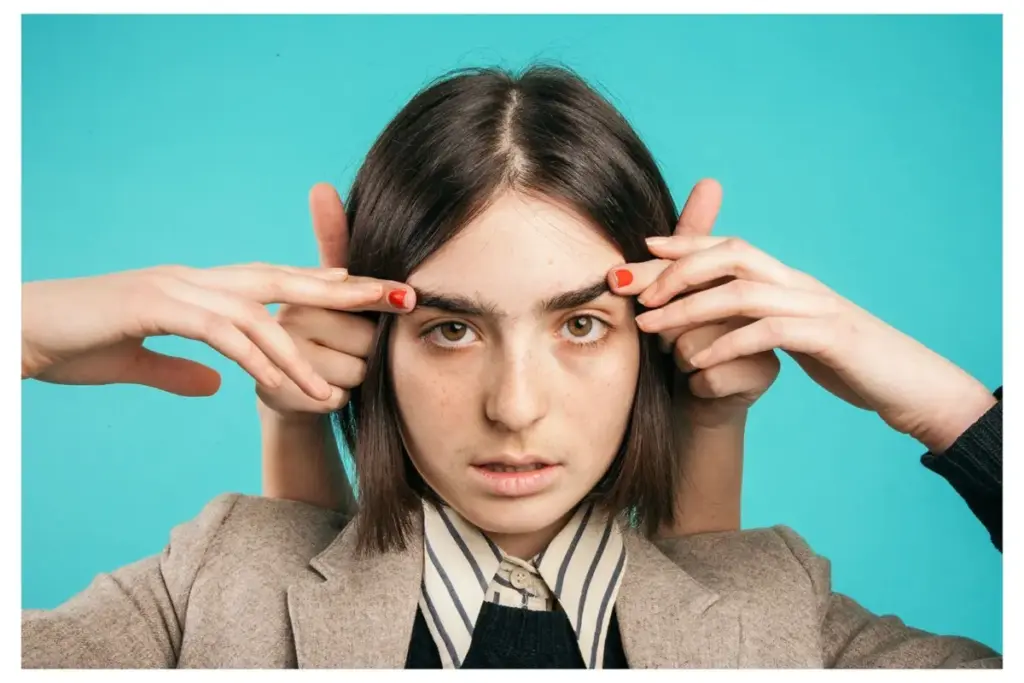
"As a child, people used to make fun of my eyebrows. At one point someone said I looked like a monkey—pretty mean. Some women prefer to be completely hairless. But I believe the trend is moving toward the acceptance of body hair, and that more and more women are content keeping it completely natural. That’s tolerated much more today. What I like best about my eyebrows is how strong they look. They make me look strong, and I feel that way, too. And when people tell me I remind them of Frida Kahlo, even though I don’t look like her, it’s very flattering; she was, after all, an amazing painter and a strong woman. It’s cool to have that connection with other women who have thick eyebrows."
9. Deconstructing Cultural Myths and Heteronormativity
"When I came out as a queer person and explored that identity a bit, I stopped shaving. At the same time, it was also tied to my very sensitive skin. I think mostly it was about looking at gender in a new way and trying out all the facets of what a woman or femininity could look like—and how that connects with sexuality and other forms of gender presentation. As a queer person, you feel that once you really examine cultural myths, you quickly realize they’re all just made up. You’re continually fed the heteronormative narrative of how your life is ‘supposed’ to be—and when you question that and realize it’s all nonsense and doesn’t work for you, you eventually start questioning the compulsion toward heterosexuality, too. Once you recognize that doesn’t work for you either, you turn to other parts of your life—like your beauty routine or social issues. I think that really opens your eyes to these myths."
10. Overcoming Teenage Insecurities
"During my youth, my arm hair always felt kind of embarrassing to me until I was about 15 or 16. Then at some point, I stopped caring what others thought about it. I was chubby, but that barely bothered me. My real problem was my arm hair and my acne. I used hair removal cream once or twice to get rid of my arm hair because I was so ashamed of it."
11. Skin Health and Unapologetic Visibility
"I don’t shave anywhere on my body. My skin doesn’t tolerate shaving well, and I think my body should look this way. In the summer, most people stare at my armpits, which I find strange. If you raise your arm and everyone is totally shocked… that’s silly. Some people really find it gross, but I haven’t really had any strong negative reactions to it. My parents always tell me I should shave, but whatever."
12. Community and Cultural Context
"In my hometown, simply no one shaved. It was completely normal—especially for the women at my art school—to just have underarm and arm hair. But when I moved to a new city, it was different. Suddenly it totally depended on the people you hung out with. I have many queer friends, and within that friend group, body hair is nothing unusual at all."
13. Maturing Into Self-Acceptance
"With my bush, I feel mature and feminine."
14. Neutrality and Body Neutrality
"I don’t actually think about my body hair very often. It’s just… there."
Future Outlook: Where Do We Go From Here?
The conversation around female body hair is steadily evolving from a rebellious subcultural statement toward a broader philosophy of body neutrality. While earlier waves of body positivity demanded that women love every single inch of their natural appearance, the modern approach allows for a more relaxed middle ground: the realization that body hair does not need to carry immense emotional weight at all. For many, it is no longer an active political protest; it is simply a neutral, biological reality.
As cultural acceptance widens, the future of personal grooming is projected to be defined entirely by choice rather than obligation. Whether an individual chooses a completely smooth aesthetic for sensory comfort or leaves their body hair completely untouched for reasons of identity, convenience, or self-love, the ultimate victory lies in autonomy. The razor is no longer a mandatory tool of citizenship in the female experience; it is simply one option among many in a world that is slowly learning to embrace diversity in all its natural forms.