Executive Overview
Tucked away in the rolling green hills of Tuscany, just northwest of Florence, lies Prato—a province that serves as the beating engine of European textile manufacturing. Annually, thousands of garments roll off its assembly lines, bearing the universally coveted, premium "Made in Italy" label. From mass-market trendy apparel brands like Zara and Brandy Melville to ultra-luxury powerhouses such as Gucci and Prada, major global fashion players rely heavily on the hyper-efficient factory floors embedded within this historic Italian town.
Yet, the reality behind Prato’s economic resurgence is far more complex than a simple postcard of Tuscan craftsmanship. The foundation of this thriving textile hub is built upon a profound wave of immigration that began in the early 1990s. Thousands of entrepreneurs and laborers migrated from Wenzhou—an industrial port city situated on the southeastern coast of China—to settle in Tuscany. Establishing small family-run workshops by the dozen, these immigrants ultimately carved out the largest Chinatown in Italy, single-handedly breathing new life into a centuries-old textile center that had been fading into obsolescence.
Today, Prato is undergoing yet another profound transformation. As the fast-fashion manufacturing model—locally known as Pronto Moda—continues to churn out clothing at breakneck speeds, it brings with it the persistent dark sides of the industry: systemic wage theft, labor violations, and ecological overproduction. But simultaneously, a vital cultural awakening is taking place. The second generation of Wenzhounese youth, born and raised on Italian soil, is now coming of age. Straddling two distinct worlds, these young people are redefining what it means to be modern, challenging rigid country-of-origin stereotypes, and rewriting the cultural playbook of the Italian fashion ecosystem.
Detailed Chronology: From Tuscan Tradition to Transnational Hub
The Historical Foundations of Prato’s Textile Legacy
Long before the arrival of East Asian immigrants, Prato was internationally renowned for its textile trade. Dating back to the Middle Ages, the city built its reputation on wool processing and fabric manufacturing. Generations of Italian families passed down specialized artisan skills—spinning, weaving, and dyeing—creating an interconnected industrial ecosystem where entire neighborhoods specialized in specific steps of garment creation.

By the mid-20th century, however, traditional European manufacturing began to face intense global pressures. Rising labor costs, bureaucratic hurdles, and shifting international trade agreements threatened to render Prato’s legacy mills obsolete. The town needed a reinvention, or risk losing its competitive edge entirely.
The Wenzhounese Influx of the 1990s
The turning point arrived in the early 1990s with the steady arrival of migrants from Wenzhou. Known historically as a region of merchant traders and entrepreneurial risk-takers, Wenzhou provided a steady stream of individuals seeking economic opportunity abroad. Finding their way to Prato, these immigrants recognized an ailing industrial infrastructure ripe for revitalization.
Starting with small, family-owned workshops, the newcomers introduced a hyper-flexible, rapid-response manufacturing model known as Pronto Moda (Fast Fashion). Unlike traditional Italian fashion houses that operated on slow, seasonal timelines, Prato’s new Chinese-led workshops could take a design from concept to rack in a matter of days. This agility attracted global brands looking to capture fleeting micro-trends without sacrificing the legal loopholes and marketing goldmine of the "Made in Italy" stamp. Over three decades, this influx transformed Prato’s demographic landscape, establishing a bustling ethnic enclave complete with Chinese-language schools, supermarkets, cultural associations, and commercial hubs.
The Rise of Pronto Moda and Its Contradictions
As the decades progressed, Prato evolved into Europe’s fast-fashion capital. The synergy between Chinese manufacturing speed and Italian design heritage proved immensely profitable. However, this rapid expansion was not without severe growing pains. Investigative reporting and sociological studies have consistently highlighted the systemic issues plaguing the district.

The pressure to produce cheap clothing at lightning speed often materialized as severe labor violations, underground sweatshops, tax evasion, and wage theft. The legal gray areas surrounding subcontracting networks made it difficult for authorities to regulate workplace safety and fair compensation. Consequently, Prato became a lightning rod for debates regarding the ethics of globalization, labor exploitation, and the true meaning of origin labels in an interconnected world supply chain.
The Second-Generation Renaissance (Present Day)
Now, thirty years after the initial wave of migration, Prato is experiencing a new cultural epoch. The children of those original Wenzhounese immigrants—individuals who grew up speaking fluent Italian with Tuscan accents at school, alongside Wenzhounese dialects at the dinner table—are stepping into adulthood.
This second generation does not view their identity through a singular, rigid lens. Instead, they are navigating a transnational reality. Photographers, creative directors, and everyday teenagers are documenting and living this synthesis, proving that the future of Prato’s fashion identity will be defined not by binary divisions of "East vs. West" or "Authentic vs. Imitation," but by a fluid, multi-faceted modernity.
Supporting Context & Metrics: Unpacking the Global Fashion Machine
To fully understand Prato’s unique position, one must examine the broader mechanics of country-of-origin labeling and the economic architecture of modern apparel.

The Illusion of Country-of-Origin Labels
In the global fashion industry, labels such as "Made in Italy," "Made in America," or "Made in China" carry immense psychological weight with consumers. They serve as shorthand proxies for quality, luxury, ethical production, or, conversely, cheap mass production. However, industry analysts and fashion waste researchers emphasize that these labels often obscure more than they reveal.
A garment labeled "Made in Italy" legally requires that the final, most substantial stage of manufacturing took place within Italian borders. This legal threshold means a dress or handbag can have its raw materials sourced in one nation, its components assembled by migrant laborers in a semi-autonomous workshop in Prato under grueling conditions, and still legally bear the prestigious Italian stamp. As researchers note, just as ethical, high-standard factories exist in every corner of the globe, exploitative sweatshops can—and do—exist anywhere, including inside the heartland of European luxury.
Economic Impact and Scale
Prato remains one of the most concentrated textile districts in Europe, housing tens of thousands of registered businesses.
- Enterprise Density: The district hosts thousands of active textile and apparel enterprises, a significant percentage of which are owned or operated by members of the Chinese diaspora.
- Production Volume: Millions of individual garments leave Prato annually, supplying everything from low-cost fast-fashion retailers to high-end designer diffusion lines.
- Demographic Shift: The local population reflects a profound multicultural reality, with Chinese nationals and second-generation residents forming a vital pillar of the community’s civic, economic, and educational structures.
Official Statements & Creative Perspectives
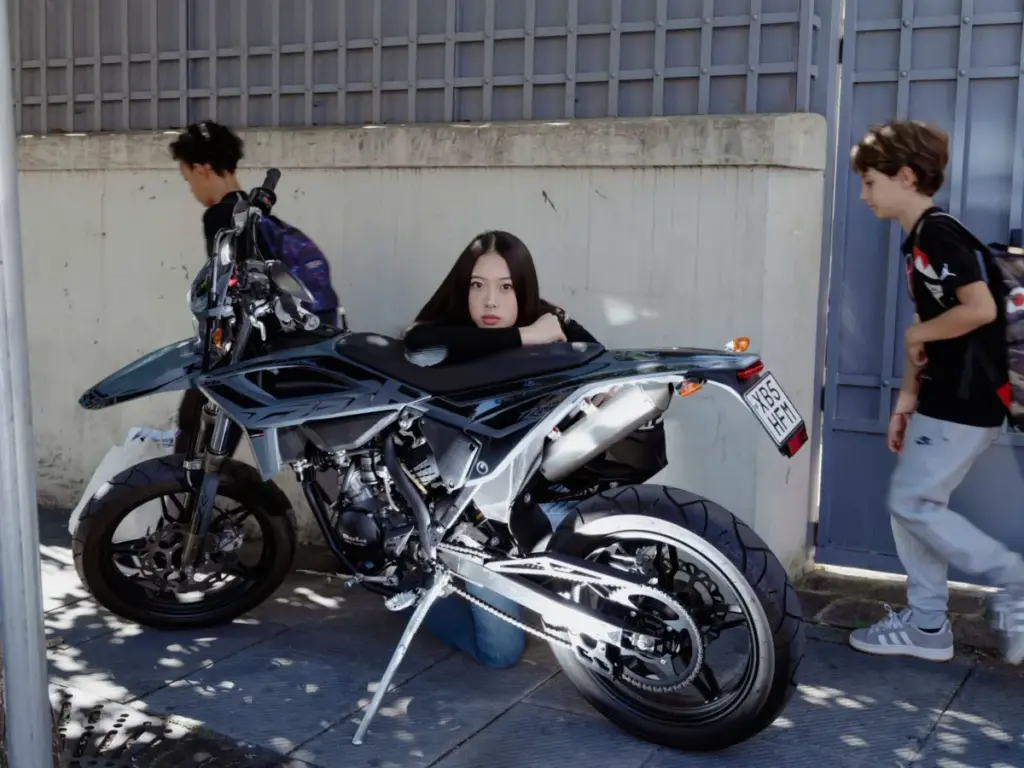
The cultural nuances of this transnational identity have recently been captured through artistic and sociological documentation. A prime example is the collaborative photo project Home In Quiet Place, spearheaded by photographer Kaiwei Duan and creative director Olivia Chen.

Olivia Chen, who possesses Wenzhounese heritage and deep personal ties to the fashion manufacturing networks in Prato, sat down to discuss the heart of the project:
"We landed on how the second generation of Wenzhounese youth identity goes with the fashion textile industry in Prato, and on this topic of what is modernity now?" Chen explains to reporters. "Identity is not a fixed point but a current; constantly moving, readjusting, and finding new channels through which to flow. We explore how these young people navigate the space between inherited tradition and contemporary possibility, crafting identities that refuse simple categorization."
The project follows teenagers and young adults—such as students navigating local schools, youth hanging out at skate parks, and family members waiting outside Chinese-language academies—whose daily routines bridge two distinct worlds. Their lives unfold across borders, reflecting a lived experience where the heritage of ancient Chinese mercantile traditions meets the gritty realities of contemporary European fast fashion.
Kaiwei Duan’s visual documentation highlights everyday moments in Prato: a map of Wenzhou symbolically floating near the Bisenzio River, teenagers traversing historic cobblestone streets after school, and families balancing local Italian community integration with ancestral cultural preservation. These narratives challenge external observers to look past simplistic tropes of immigrant labor and recognize the rich, human tapestry of a town constantly reinventing itself.

Future Outlook: Prato’s Next Chapter
As the fashion world shifts its gaze toward major industry milestones like Milan Fashion Week and global showcases, the spotlight inevitably touches upon supply chain realities. Prato stands at a critical crossroads.
Navigating Sustainability and Labor Reform
Moving forward, the district faces immense pressure from both European regulatory bodies and conscious consumers to clean up its supply chain. Issues of overproduction, textile waste, and labor rights can no longer be swept under the rug. For Prato to retain its prestige, local authorities, brand conglomerates, and factory owners must foster greater transparency and implement rigorous ethical standards. The future viability of Pronto Moda depends on its ability to evolve into a sustainable, accountable manufacturing model.
The Cultural Vanguard
Simultaneously, the second and third generations of Wenzhounese-Italians are poised to take leadership roles not just on the factory floors, but in design studios, boardrooms, cultural institutions, and political spaces. Armed with a deep appreciation of their dual heritage, these young visionaries are uniquely positioned to bridge historical divides.
They are redefining what it means to craft the modern wardrobe. By refusing to be pigeonholed into outdated stereotypes of immigrant labor or traditional European artisanry, the youth of Prato are forging a bold, new aesthetic. In doing so, they ensure that the story of "Made in Italy" will continue to write itself—not as a static relic of the past, but as a living, breathing, and ever-evolving global dialogue.