
Executive Overview
As the curtains close on another monumental season of New York Fashion Week (NYFW), the industry is left with more than just lookbooks, high-definition runway videos, and recycled trend reports. While the official tents and high-profile show venues showcased meticulously curated collections for the upcoming spring and summer cycles, a parallel, far more authentic dialogue was taking place on the concrete catwalks outside.
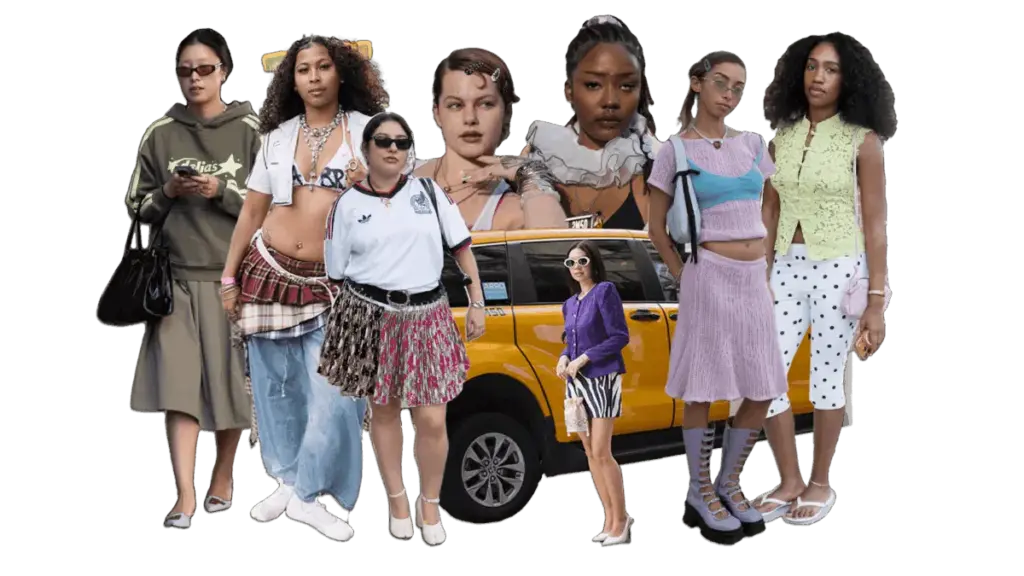
This season, street style photography evolved past mere aesthetic documentation. Armed with a camera and a microphone, street style photographer Emily Malan set out to capture not just the striking sartorial choices of NYFW attendees, but their raw, unfiltered perspectives on the current state of fashion. The resulting dispatch offers a rare, democratized look at an industry caught in a tug-of-war between commercialized influencer culture, algorithmic homogeneity, and a deep-seated yearning for genuine artistic expression.

From blistering critiques of ubiquitous footwear trends like tabi shoes to exhaustion over algorithm-driven afterparties and pop-up fatigue, the voices of NYFW attendees—ranging from Gen Z creatives to seasoned industry veterans—paint a vivid picture of modern style culture. This report dives deep into the street-level sentiment of New York Fashion Week, analyzing the cultural friction points, the economic realignments of show productions, and the shifting paradigms of who fashion week is truly for.
Detailed Chronology: The Pulse of NYFW Through the Eyes of the Streets
Days 1–2: The Arrival, High Hopes, and Footwear Controversies
The energy at the onset of NYFW was palpable, characterized by a mix of old-school glamour and contemporary street-level critique. Attendees gathered early outside major Lower Manhattan and Midtown venues, debuting looks that tested the boundaries of seasonal transitions.

However, philosophical debates erupted almost immediately regarding footwear. The divisive split-toe shoe—commonly known as the tabi—remained a prominent fixture on the pavement, but it drew sharp rebukes from onlookers. Brooke, 30, didn’t mince words when assessing the trend, declaring simply, "Tabis should have been kept in the past." Echoing this sentiment, Hope, 25, captured the physical and emotional toll of avant-garde footwear choices with brutal honesty: "Hoof shoes hurt my feelings."
Despite the sartorial polarizing items, early-week discussions also centered on the sheer kinetic energy of the city. Trinity, 25, reflected on the broader economic and cultural impact of the bi-annual event alongside Ai, noting, "This week [and the] productions feed the people of New York for months to come."

Days 3–4: Navigating Authenticity, Clout Culture, and Creative Fatigue
As the week progressed, the conversations shifted from clothing choices to systemic industry grievances. A recurring theme among younger attendees was the friction between authentic creative exploration and algorithmic mimicry.
A collective of 18-year-olds—Oliver, Ricky, and Pilar—offered some of the most incisive commentary of the week. Oliver took aim at corporate-leisure uniformity, stating, "I don’t like the all Lululemon, bright neon clothes look, lol." Ricky expanded on this by addressing the erosion of originality in modern styling: "A lot of people faking creativity. Inspiration is fine, mimicking is lame." Meanwhile, Pilar brought the conversation inward to the educational and institutional hubs of New York fashion, warning that environments like Pace University can foster a toxic culture where students feel inadequate based on their wardrobe choices.

The discourse also turned toward the democratization of invitations and access. Regan, 27, argued for a structural overhaul of front-row seating and guest lists, asserting that "The invites to Fashion Week should go to the most loyal customers." This sentiment was shared by others who felt the traditional gatekeeping model was being replaced by an equally exclusionary metric: follower counts.
Days 5–Final Day: Afterparty Apathy, Spatial Fatigue, and the Call for Whimsy
By the final stretch of NYFW, fatigue had set in—not just physical exhaustion, but cultural exhaustion regarding how events and parties are executed.

A group consisting of Julia (23), Milei (24), and Jasmine (22) delivered a scathing critique of the modern fashion afterparty ecosystem. Julia pointed out the superficial nature of contemporary nightlife curation: "Afterparty guest lists are way too focused on social media, and therefore all the same type of people are at the parties, aka no dancing." Milei punctuated this with a desperate plea: "Neeeed more dancing." Jasmine added a call for industry-wide transparency: "Less gatekeeping!!"
Kayla, 27, doubled down on the critique of stagnant social gatherings, asking a rhetorical question that resonated across the pavement: "We need more dancing at afterparties. Why are we standing around aura farming?! I love to get the dance floor going."

Physical geography also emerged as a point of contention. Keziah, 21, argued that the industry’s heavy reliance on Lower Manhattan as the epicentre of all fashion activities limits the city’s broader creative ecosystem, stating plainly that "NYFW shouldn’t center around Lower Manhattan."
Compounding the spatial gripes were the sensory annoyances of digital-first content creation. Katrina Ariana, 25, expressed frustration over the physical barriers created by modern documentation: "No more tripods on every corner." Ruth Ann, 29, added a critique of marketing saturation: "Not every brand needs a pop-up… <3"

Supporting Context & Metrics: The Demographic Breakdown of Street Sentiment
To understand the weight of these critiques, it is vital to examine the demographic split of this season’s street style contributors. The sentiment analysis reveals a distinct generational divide in how NYFW is perceived, consumed, and criticized.
| Age Group | Primary Concerns | Dominant Critique | Desired Industry Shift |
|---|---|---|---|
| 18–22 (Gen Z Creatives) | Authenticity, toxicity in peer institutions, mimicry vs. inspiration | Fake creativity, trend uniformity (e.g., neon athleisure) | Greater inclusion, rejection of algorithmic style copying |
| 23–27 (Early Career / Influenced) | Party culture, social media gatekeeping, experiential fatigue | "Aura farming" at parties, tripod obstruction, pop-up saturation | More dancing, less digital curation of guest lists, physical decentralization |
| 28–30+ (Veterans / Consumers) | Historical appreciation vs. commercial bloat, customer loyalty | Divisive footwear (tabis), loss of old-school fashion focus | Prioritizing loyal brand patrons for invites, embracing whimsy and personal joy |
Despite the exhaustion over pop-up saturation and influencer influxes, several attendees noted positive developments. Emily, 27, observed a nostalgic shift back toward garment-focused presentations: "This NYFW feels more old school and more about the fashion. For example, Ralph Lauren is back and there’s more celebrities around." Summer, 21, offered the balancing caveat: "There’s an abundance of influencers and it can definitely be overwhelming."

Official Statements and Industry Highlights
While street-level critics debated social media’s grip on afterparties, major fashion houses experimented with how collections are presented to the public. Kimberly, 23, praised the architectural integration of fashion within the urban landscape: "I love that they’re adding creative presentations, like Moncler’s recently. The use of the city as your stage is so fun to me [referencing urban spectacles by Michael Kors, KidSuper, and Thom Browne]."
This sentiment highlights a broader structural change: brands are increasingly bypassing traditional indoor runway setups in favor of immersive, city-wide happenings. By turning New York City into an open-air theater, designers are attempting to bridge the gap between exclusive elite audiences and the everyday citizens who populate the sidewalks—addressing, in part, the very spatial critiques raised by attendees like Keziah.

On the manufacturing and creative unity front, Robyn, 25, highlighted the importance of regional creative communities supporting one another: "I love seeing young people from all over the world come together to celebrate and express their authenticity as a collective through fashion! The Detroit creative community, specifically, always moves as a unit. It’s awesome." Ravyn, 25, encapsulated the underlying emotional engine of the week: "The authenticity is loud and so are the people trying to find themselves."
Future Outlook: Where Goes New York Fashion Week?
As the dust settles on this season’s presentations, the overarching takeaway is clear: the monopoly of the traditional fashion week model is being challenged from within by the very people who fuel its visual economy.

1. The Death of the "Aura Farming" Party
The widespread critique of static, social-media-optimized afterparties signals that the pendulum may be swinging back toward genuine nightlife culture. Promoters and brands relying solely on follower counts to curate rooms filled with non-dancing attendees risk alienating the creative core that makes New York nightlife culturally relevant. Future seasons will likely see brands pivoting toward more inclusive, music-centric, and experiential gatherings to combat afterparty fatigue.
2. Decentralization of Show Venues
With mounting calls to break away from the Lower Manhattan hegemony, future iterations of NYFW may see a more distributed geographic footprint. Expanding deeper into the outer boroughs—utilizing warehouses in Brooklyn, community spaces in Queens, or creative hubs in Upper Manhattan—can alleviate street congestion, reduce the density of content creator bottlenecks, and re-engage local communities.

3. Return to Whimsy and Individualism
Amid warnings against derivative style, uniformity, and corporate-mandated aesthetics, veterans like Julia, 28, offered a timeless manifesto for the future of dress: "Honestly, just wear what makes you feel like you, and sparkle and whimsy it up to your liking."
Ultimately, NYFW remains an indispensable cultural anchor. However, its long-term health depends on listening to the sidewalk critics just as much as the front-row editors. If the voices captured by Emily Malan are any indication, the future belongs to those who prioritize authentic expression over algorithmic optimization, community over gatekeeping, and joy over pretense.