Milan Fashion Week always demands a degree of theatricality, but the arrival of Vogue World: Milano elevated the city’s creative output into an entirely unprecedented cultural phenomenon. Mere minutes after the grand finale of the inaugural Italian installment wrapped up within the magnificent, glass-domed corridors of the historic Galleria Vittorio Emanuele II, a select group of insiders—including Chloe, Nicole, and Vogue Italia’s Head of Editorial Content, Francesca Ragazzi—retreated to a nearby, dimly lit Milanese ristorante. Over post-show plates and reflections on an extraordinary evening, the team began the inevitable post-mortem of a night that had consumed months of meticulous planning, delicate diplomacy, and what Ragazzi affectionately termed "curated chaos."
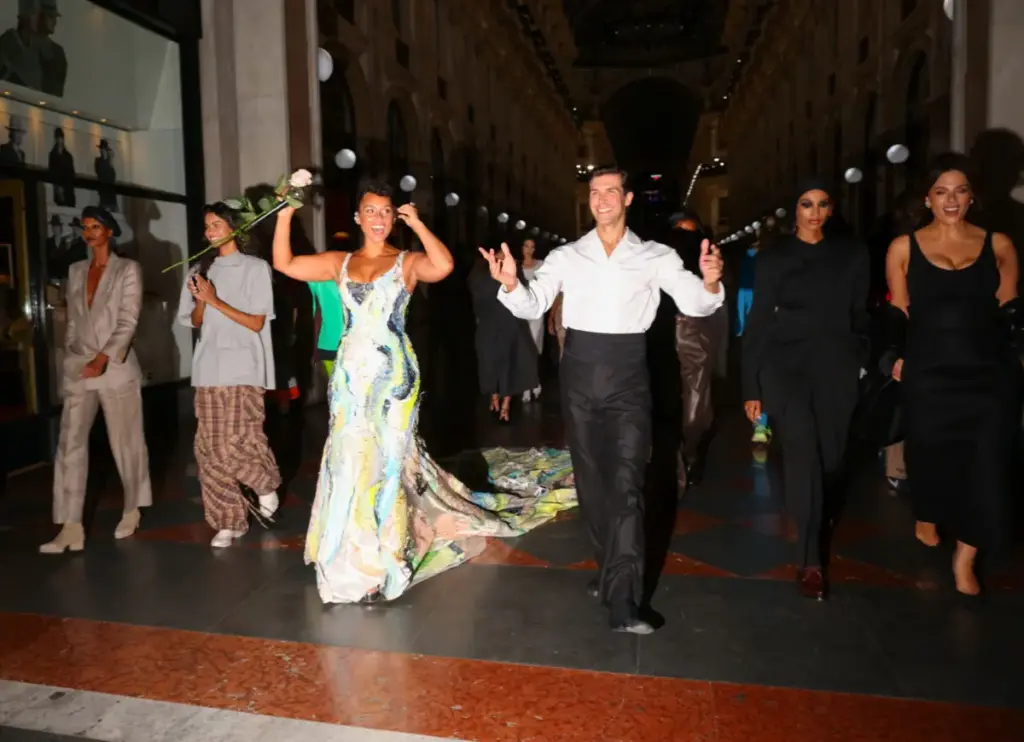
Vogue World 2026 did not merely function as another high-profile runway event on a crowded international calendar; it was a sprawling, multi-dimensional love letter to Italian design across generations. Following a day that kicked off with the pulse-setting Spring 2027 ready-to-wear presentations from powerhouse labels like Prada and Diesel, the fashion elite descended upon the heart of the city. What unfolded inside the iconic 19th-century shopping arcade was a masterclass in scale: an over-the-top celebration featuring world-class top models, show-stopping musical and theatrical performances, and a profound homage to the heritage of Italian fashion and artisanal craftsmanship.
Behind the glittering facade, however, lay an operation of staggering logistical complexity. Shutting down one of Italy’s most famous and heavily trafficked architectural landmarks for a night required nothing short of civic diplomacy. For Ragazzi, who has essentially functioned as the unofficial "mayor of Milan" throughout the event’s preparation, success hinged on grassroots community engagement—negotiating with every local stakeholder, restaurateur, and shop owner within the historic complex. This comprehensive report explores the anatomy of Vogue World: Milano, dissecting the meticulous coordination, the star-studded highlights, the cultural performances, and the broader implications of an event destined to be remembered as a landmark moment in modern fashion history.
Detailed Chronology: From the Runway to the Galleria
To understand the magnitude of Vogue World: Milano, one must trace the arc of a day that fundamentally reshaped the rhythm of Milan Fashion Week. The schedule was relentless, designed to test the endurance of editors, buyers, and celebrities alike, while showcasing the breadth and depth of Italian style.
The Day’s Genesis: Prada and Diesel
The morning of the event began with high-stakes anticipation as the fashion world gathered for the Spring 2027 ready-to-wear collections. Prada, a perennial bellwether for intellectual luxury and avant-garde tailoring, set an elevated tone for the week, pushing silhouette boundaries while maintaining its signature cerebral aesthetic. Shortly after, Diesel injected its trademark disruptive energy and denim-centric rebellion into the conversation, proving that Milan remains a city capable of balancing heritage craftsmanship with contemporary counter-culture.
These early shows served as the prologue to the main event. They established a baseline of creative excellence that Vogue World would later seek to synthesize on a grander, more theatrical scale.
The Migration to the Galleria Vittorio Emanuele II
As dusk settled over the Lombard capital, the gravity of the fashion crowd shifted toward the Piazza del Duomo and, specifically, the sprawling threshold of the Galleria Vittorio Emanuele II. Named after the first king of a unified Italy, the 19th-century architectural marvel—featuring twin glass vaults meeting in an octagonal central dome—was transformed into the ultimate open-air runway.
Executing this transition required military-grade precision. Guests walked from the surrounding presentation spaces into a transformed Galleria, where historic storefronts were temporarily integrated into an expansive set design. The atmosphere crackled with electricity as the world’s top models prepared backstage for an ambitious narrative that traced the evolution of Italian style from historical tailoring to futuristic innovation.
The Climax and the Post-Show Debrief
When the final notes of the evening’s performances faded and the applause echoed off the Galleria’s mosaic floors, the physical event ended, but the cultural resonance was just beginning. Mere minutes later, Chloe, Nicole, and Francesca Ragazzi found themselves huddled in a cozy, authentic ristorante just blocks away.
Overlooking their notes and still buzzing from the adrenaline of the evening, the trio dissected the triumphs of the night. The conversation quickly turned to the human element of the production: the immense pressure, the unexpected last-minute pivots, and the overwhelming sense of collective achievement that defined Vogue World 2026.
Supporting Context & Metrics: The Anatomy of a Takeover
Mounting an operation of the size and scale of Vogue World: Milano is a feat of modern event production. It requires balancing corporate partnerships, municipal permissions, artistic direction, and real-time problem-solving under intense public scrutiny.
Civic Diplomacy: Shutting Down the Galleria
Securing the Galleria Vittorio Emanuele II is not a matter of simply cutting a check; it requires navigating a labyrinth of bureaucratic, commercial, and historical regulations. Francesca Ragazzi’s role in this process went far beyond traditional editorial oversight. For the months leading up to the event, Ragazzi operated effectively as a cultural ambassador—or, as Chloe aptly dubbed her, the "mayor of Milan."
To earn the trust and cooperation required to close down one of the city’s most vital economic and tourist hubs, Ragazzi engaged in deeply personal diplomacy. She spoke individually with every stakeholder, restaurateur, and shop owner operating within the historic shopping complex.
"It’s all about being curious about their stories. I could write a book," Ragazzi shared during the post-show dinner. "Believe me—the secrets and the mysterious things…"
This grassroots approach not only smoothed over potential logistical hurdles but also fostered a genuine sense of local ownership over a global fashion moment.
Curated Chaos: The Art of the Last-Minute Pivot
While major milestones of the production were mapped out months in advance, the reality of live fashion theater often demands improvisational brilliance. Parts of Vogue World 2026 famously came together mere days—and in some cases, hours—before showtime.
Ragazzi revealed that her team was street-casting models for specific sequences right down to the wire. Far from being a source of panic, this organic approach was embraced as part of the event’s unique charm.
"We plan too much, Chloe! It was curated chaos, we say," Ragazzi laughed, summarizing the high-wire act of producing a live, uncompressed fashion spectacular.
Official Statements & Front-Row Highlights
The success of Vogue World: Milano was ultimately measured by the visceral reactions of those who experienced it—both from the audience and from the architects of the industry themselves. During their post-show debrief, the panel zeroed in on the moments that transcended standard runway fare.
The "Mount Rushmore" of Italian Fashion
For Nicole, one of the most poignant and visually arresting aspects of the evening was the makeup of the front row. Rather than being populated solely by traditional influencers or Hollywood starlets, the front row served as a "Mount Rushmore" of Italian fashion royalty—featuring legendary designers such as Miuccia Prada and Donatella Versace, among others.
"It was really fun to watch everyone watching their designs in the show," Nicole noted, highlighting the rare meta-experience of seeing industry titans witness their enduring legacies interpreted and celebrated on a live, global stage. It was a rare moment of collective vulnerability and pride for designers who usually spend their lives backstage directing the gaze of others.
A Symphony of Music, Dance, and Heritage
Chloe’s highlights leaned heavily into the multidisciplinary nature of the performances, which seamlessly blended high fashion with classical arts and contemporary soul.
The Voices of La Scala: The inclusion of young choristers from the prestigious Teatro alla Scala injected a profound sense of operatic gravity into the proceedings, marrying Italy’s storied musical heritage with contemporary garments.
Alicia Keys: Global superstar Alicia Keys delivered a spellbinding musical performance, dressed in a custom creation by Francesco Risso, bridging American pop royalty with Italian sartorial flair.
Roberto Bolle: The legendary Italian ballet dancer Roberto Bolle brought athletic grace and dramatic tension to the Galleria, performing alongside automotive-inspired motifs that paid homage to Italian industrial design.
Reflecting on the sheer volume of moving parts, Ragazzi expressed profound gratitude for the collective effort required to bring these disparate elements into harmony.
"I’ve never seen such harmony and teamwork," she reflected, praising the hundreds of technicians, stylists, musicians, and logistical experts who ensured the night went off without a hitch.
Future Outlook: The Legacy of Vogue World: Milano
As the dust settles on Milan Fashion Week and the global fashion community unpacks the implications of Vogue World 2026, the event’s long-term impact on the industry is already coming into focus.
Vogue World has successfully redefined what a fashion publication can achieve. It has transformed the static print medium into dynamic, live-action public theater that engages local communities while broadcasting to millions of digital viewers worldwide. By anchoring each iteration in the cultural and historical DNA of the host city—following previous triumphs in New York, London, and Paris—the franchise has established a new gold standard for experiential luxury marketing.
For Milan, the event served as a powerful reminder of the city’s enduring centrality in the global fashion ecosystem. It proved that heritage and innovation are not mutually exclusive, but rather mutually reinforcing forces capable of transforming a historic 19th-century arcade into a futuristic runway of possibility.
As Francesca Ragazzi, Chloe, Nicole, and their peers concluded their evening over plates of traditional Milanese fare, the consensus was clear: Vogue World: Milano was not merely a moment in time, but a benchmark for how the fashion world will engage with culture, community, and craftsmanship for years to come.