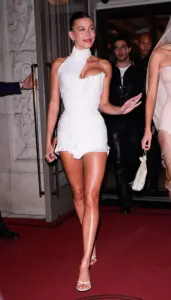
On September 22, 2026, the historic vaults of Milan’s majestic Galleria Vittorio Emanuele II bore witness to an event that many industry insiders previously considered an architectural and logistical impossibility: the gathering of virtually every towering figure in contemporary Italian luxury fashion under a single roof. Vogue World: Milano 2026 transcended the boundaries of a traditional runway show, evolving instead into a living, breathing museum of sartorial history, a cultural homecoming, and an unprecedented family reunion for the visionaries who defined global style.
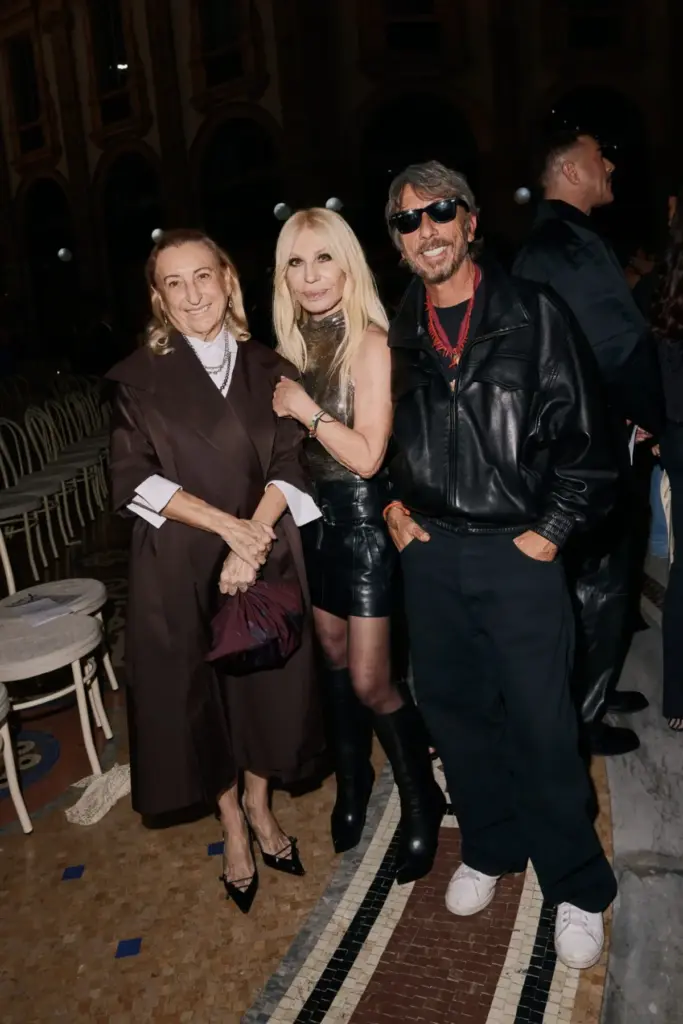
At the center of this cultural cyclone was a front row so densely packed with creative genius, heritage-defining pedigree, and avant-garde leadership that it defied normal industry hierarchy. When Miuccia Prada (the quintessential Milanese modernist), Alessandro Michele (the maximalist romantic from Rome), and Donatella Versace (the glamorous sovereign hailing from Calabria) took their places side-by-side, it wasn’t merely a seating chart triumph—it was a manifestation of Italian fashion’s soul.
They were far from alone. Flanked by domestic legends and international talents serving as the stewards of Italy’s greatest houses, the front row read like a masterclass in design heritage. From Domenico Dolce and Stefano Gabbana framing global icon Jennifer Lopez, to Pierpaolo Piccioli, Maria Grazia Chiuri, and an international roster of honorary Italian creative directors, the evening celebrated not just individual collections, but the collective ecosystem of Made in Italy. As the runway unspooled a greatest-hits retrospective of the nation’s most iconic looks—ranging from Prada’s spring 2000 lipstick skirts to Warhol-inspired Versace catsuits and Sicily-inspired opulence—the assembled icons watched their pasts come alive against the backdrop of Milan’s architectural crown jewel.
Detailed Chronology: An Evening of Historic Proportions
Pre-Show Anticipation and the Galleria Transformation
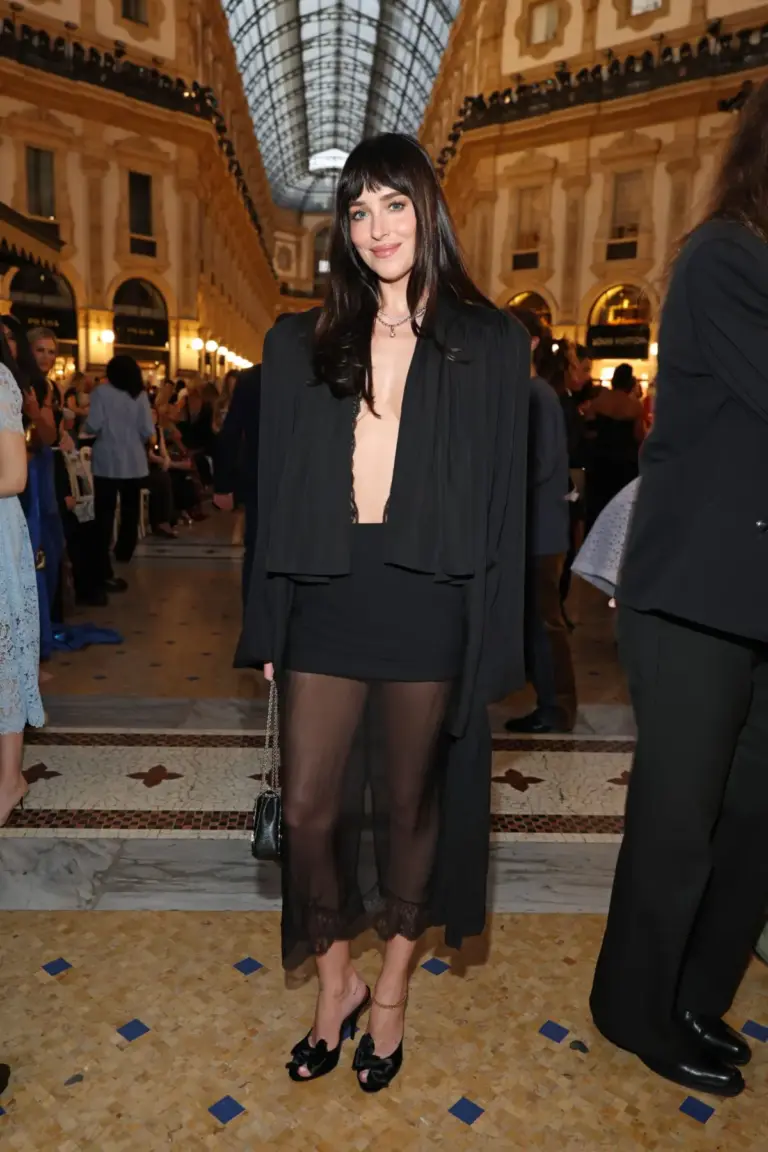
Months of meticulous planning preceded the September 22 gala, transforming the sunlit, glass-domed corridors of the 19th-century Galleria Vittorio Emanuele II into a high-octane amphitheater. The historic shopping arcade, often regarded as Milan’s living room, was locked down for security and production logistics days in advance, drawing crowds of passionate fashion enthusiasts and global press to its perimeter.
As twilight descended, the red carpet transformed into a procession of cinematic arrivals. The narrative of the evening began long before the first model stepped onto the parquet flooring. The arrival sequence was carefully orchestrated to maximize dramatic impact, culminating in the seating of the design elite. Observers noted the rare sight of competitors and collaborators casually mingling, shedding the usual corporate silos that characterize fashion week schedules.
The Runway Retrospective and Front-Row Reactions
The core of Vogue World: Milano 2026 was structured as a sweeping retrospective, paying homage to the milestones of Italian design over the past three decades. The show was a high-concept nostalgia trip wrapped in contemporary execution.
The Prada Heritage: When models stepped out wearing subtle revivals of Miuccia Prada’s legendary spring 2000 lipstick skirt collection, cameras instinctively panned to the front row to capture Mrs. Prada’s reaction. Known for her intellectual detachment and sharp observation, the designer’s expression offered a rare glimpse of fond remembrance as her foundational minimalist motifs were reinterpreted for a new decade.
The Versace Legacy: The atmosphere reached a fever pitch with the reappearance of the Warhol-inspired catsuit, originally designed by Gianni Versace for spring 1991 and later revisited by Donatella in her acclaimed spring 2018 tribute collection. Seeing the archival masterpiece move through the Galleria prompted visible emotion from industry veterans and brought a palpable sense of kinetic energy to Donatella Versace’s section of the seating arrangement.
Dolce & Gabbana’s Sicilian Dream: Flanking global superstar Jennifer Lopez—who wore a custom creation by the duo—Domenico Dolce and Stefano Gabbana watched with undisguised delight as models Wali Deutsch and James Turlington showcased opulent, sun-drenched ensembles directly inspired by the house’s early-2010s collections celebrating Sicilian heritage.
The Aftermath and Celebratory Gatherings
Following the conclusion of the live stream and the final bow of the models, the energy shifted seamlessly from high-fashion spectacle to intimate camaraderie. Designers, musicians, and international guests spilled out into the surrounding spaces of the Galleria and private Milanese palazzos. Impromptu photo opportunities—such as Alessandro Michele embracing iconic Italian DJ Gigi D’Agostino—underscored the cross-disciplinary nature of the evening, bridging the worlds of high luxury, popular culture, and electronic music history.
Supporting Context & Metrics: The Architecture of an Icon
To understand the magnitude of Vogue World: Milano 2026, one must examine the staggering concentration of design authority assembled within a few square meters of the front row. The event served as a rare intersection of heritage houses, creative directorship transitions, and international cross-pollination.
The Front-Row Roster: Indigenous Masters and International Stewards
Designer / Creative Director
House / Affiliation
Regional Origin / Architectural Association
Miuccia Prada
Prada / Miu Miu
Milan, Italy
Alessandro Michele
Valentino (and former Gucci)
Rome, Italy
Donatella Versace
Versace
Calabria, Italy
Domenico Dolce & Stefano Gabbana
Dolce & Gabbana
Sicily / Milan connection
Maria Grazia Chiuri
Dior (Haute Couture, Ready-to-Wear)
Rome, Italy
Pierpaolo Piccioli
Independent / Former Valentino
Rome, Italy
Francesco Risso
Marni
Italy
Demna
Gucci
Tbilisi, Georgia (Honorary Italian Appointee)
Raf Simons
Prada (Co-Creative Director)
Neerpelt, Belgium (Honorary Italian)
Louise Trotter
Bottega Veneta
Sunderland, UK (Honorary Italian)
Maximilian Davis
Ferragamo
Manchester, UK (Honorary Italian)
Pieter Mulier
Versace (Incoming Creative Director)
Belgium (Upcoming debut: Feb 2027)
Economic and Cultural Significance to Milan
Milan remains the undisputed financial engine of Italian fashion, contributing tens of billions of euros annually to the national GDP through manufacturing, textile innovation, and retail exports. Events of this magnitude act as massive economic multipliers, boosting hospitality, tourism, and media engagement. According to preliminary industry metrics, the global digital footprint of Vogue World: Milano 2026 generated billions of impressions within the first 24 hours alone, reinforcing Milan’s position against rival capitals like Paris, London, and New York.
Official Statements and Industry Commentary
While the evening was primarily visual and experiential, statements released by participating luxury groups and cultural bodies highlighted the deeper intent behind the gathering: unity in the face of shifting global markets.
A spokesperson for the Camera Nazionale della Moda Italiana noted:
"What we witnessed tonight in the Galleria was not just a celebration of clothes, but a celebration of community. Italian fashion has always thrived on its familial yet fiercely competitive spirit. Bringing these generations of creators together proves that the future of luxury is rooted in our shared heritage and collective resilience."
In an impromptu press briefing following the show, discussions centered around the passing of the torch. With international talents like Demna at Gucci, Louise Trotter at Bottega Veneta, and Pieter Mulier preparing his highly anticipated debut collection for Versace in February 2027, the traditional boundaries of nationality in Italian design have given way to a global meritocracy united by local craftsmanship.
A senior executive from Kering reflected on the evening’s atmosphere:
"You have designers who shaped the 1990s sitting shoulder-to-shoulder with the minds directing collections today. The cross-pollination of ideas happening in that front row is something you cannot engineer in a boardroom. It requires a cultural catalyst like Vogue World to bring them out into the open air."
Future Outlook: The Road to February 2027 and Beyond
The reverberations of Vogue World: Milano 2026 will be felt across the global fashion calendar for seasons to come. By honoring the past while firmly spotlighting current leadership and upcoming transitions, the event established a blueprint for how legacy media and luxury houses can collaborate to celebrate cultural heritage.
Key Milestones on the Horizon:
The Pieter Mulier Era at Versace: All eyes are now fixed on February 2027, when Pieter Mulier—currently deep in development behind closed doors—will unveil his inaugural collection for Versace. His placement among the front-row elite in Milan signaled total acceptance by the Italian fashion establishment.
The Evolution of the "Vogue World" Format: Following successful stops in New York, London, Paris, and now Milan, the franchise has proven its ability to adapt to distinct cultural capitals, blending local performing arts, historical landmarks, and high fashion into a consumer-facing spectacle.
Sustainable Craftsmanship and Heritage Preservation: Discussions sparked in the wake of the retrospective runway highlighted a growing industry emphasis on archival reinterpretation, sustainable production, and the protection of Italy’s artisanal supply chain—the network of small-scale leather workers, silk weavers, and embroiderers without whom none of the front-row legends could exist.
As the lights dimmed over the Galleria Vittorio Emanuele II and the last of the fashion royalty departed into the Milanese night, one truth remained resoundingly clear: while trends evolve and creative directors change uniforms, the beating heart of Italian style remains anchored in its unmatched history, its passionate community, and its unwavering commitment to beauty.