Set against the majestic architectural tapestry of Milan’s historic cultural core, Vogue World 2026: Milano positioned itself as a monumental celebration of Italian heritage, fine craftsmanship, and timeless aesthetic philosophy. Staged within the iconic, sun-drenched glass vaults of the Galleria Vittorio Emanuele II—just steps away from the legendary Duomo—the grand opening act of the global fashion spectacle paid profound homage to the golden age of Italian ingenuity: the Renaissance.
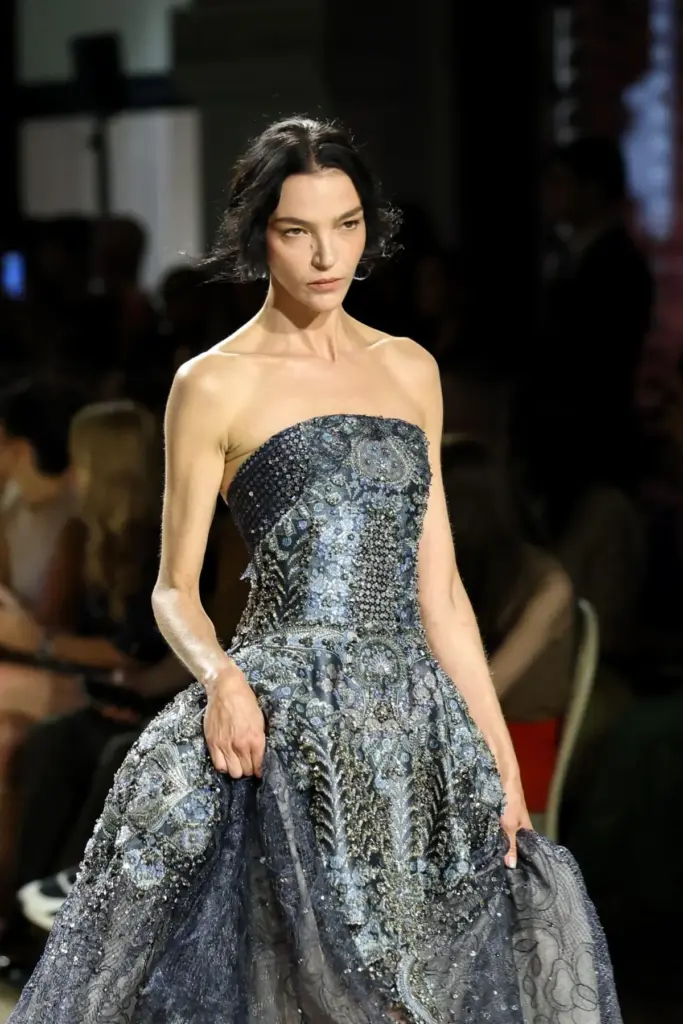
Under the master guidance of legendary makeup artist Dame Pat McGrath, visionary hairstylist Cyndia Harvey, and meticulous nail artist Eri Narita, the runway transformed into a living museum. Supermodels such as Gigi Hadid, Mariacarla Boscono, Vittoria Ceretti, and Bianca Balti brought the heavy-hitting brushstrokes of Raphael, Sandro Botticelli, and Domenico Ghirlandaio to life. Rather than serving as a literal costume-party pastiche, the beauty direction for Vogue World 2026: Milano orchestrated a delicate, high-stakes dialogue between historical painting techniques and contemporary global beauty trends.
From artful blush stacking that mirrored Da Vinci’s theories on the moti dell’animo (the outward physical manifestations of inner emotions) to sculptural, ribbon-laced braids and Botticelli-esque cascading curls, the evening’s aesthetic blueprint proved that the foundational tenets of Renaissance beauty remain intensely relevant. This comprehensive report investigates the historical inspirations, structural methodologies, technical executions, and overarching cultural implications of the beauty looks that defined Milan’s most anticipated fashion convergence.
Detailed Chronology: The Unveiling of Act I
The timeline of Vogue World 2026: Milano unfolded with calculated theatricality, designed to transport an international audience of editors, celebrities, and art historians back to the intellectual and creative epicenter of 15th- and 16th-century Italy.
Phase One: The Setting and the Overture
As twilight began to pool across the mosaic floors of the Galleria Vittorio Emanuele II, anticipation mounted around the opening sequence of the show. Act I was explicitly dedicated to Italy’s legacy of master artisans, inventors, and fine artists. The historic setting was not merely a backdrop; it was an active participant in the narrative. The soaring iron-and-glass dome overhead mirrored the sweeping, luminous arches of Renaissance frescoes, establishing an immediate atmosphere of classical grandeur.
Phase Two: The Descent of the Muses
As the first notes of an orchestral score filled the vaulted arcade, top-tier models stepped onto the runway, immediately arresting the audience with an aesthetic language rarely deployed with such precision in modern high fashion. Leading the charge, Gigi Hadid and Mariacarla Boscono walked with an ethereal grace that directly channeled the serene proportions and harmonious balance found in the masterworks of Raphael.
Instead of the hyper-contoured, matte-heavy finishes that have dominated commercial cosmetics over the past decade, the runway presented a glowing, ethereal visage. The skin appeared lit from within, punctuated by an avant-garde application of blush and high-contrast highlighting that immediately signaled a departure from standard seasonal trends.
Phase Three: Structural Hair and Sculptural Textures
Simultaneously, the hairstyling narrative—orchestrated by Cyndia Harvey—unfurled in waves of historical contrast. Moving away from sleek, uniform blowouts, the runway showcased a complex spectrum of textures. Naturally curly and voluminous tresses vied for attention with meticulously engineered, gel-sculpted configurations. The choreography of the hair reflected the shifting sociological views of femininity throughout the Renaissance, transforming locks from medieval symbols of modesty into fierce emblems of individual status and artistic expression.
Supporting Context & Metrics: The Art History and Science of the Look
To fully comprehend the visual triumph of Vogue World 2026: Milano, one must deconstruct the intricate web of art history, optical science, and material culture that informed Dame Pat McGrath’s and Cyndia Harvey’s creative laboratories.
1. The Art of Sfumato and Blush Stacking
The defining beauty signature of the runway was an arresting, multi-dimensional flush of color across the cheeks, temples, and brow bones. This was no ordinary application of powder; it was an exercise in sfumato—the iconic Renaissance painting technique pioneered by Leonardo da Vinci, characterized by delicate, imperceptible transitions between colors and tones without perceptible lines or borders.
Dame Pat McGrath utilized a rich, reddish-pink palette reminiscent of Titian red—a legendary pigment derived historically from natural mineral sources such as vermilion. On the runway, this color was built up in layers, creating an aura-like cloud of pigment that enveloped the upper face.
The Psychological Theory Behind the Color:
In Renaissance Italy, a rosy complexion carried a dual cultural weight:
Aesthetic Standard: It served as the ultimate visual shorthand for youth, health, and physiological purity.
Emotional Expression (Moti dell’animo): According to Leonardo da Vinci’s scientific and artistic treatises, external physical changes—such as a sudden flush of blood to the cheeks—were the direct, visible reflection of a person’s inner emotional and mental state. Shyness, modesty, vitality, and passionate love were all communicated through the strategic placement of facial color.
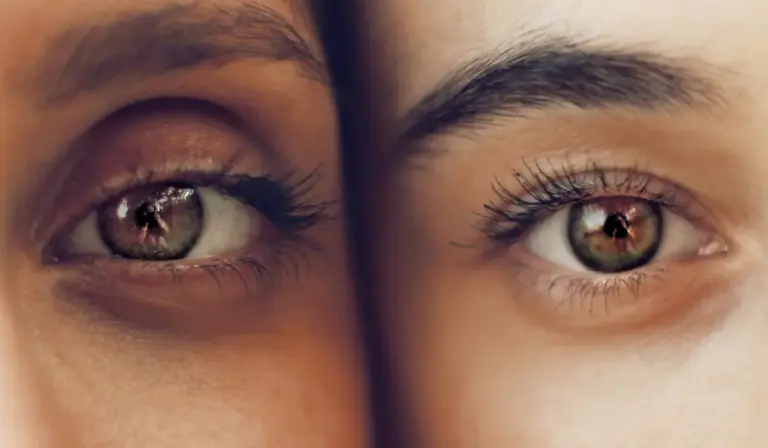
To balance this intense warmth, the makeup execution relied heavily on optical illumination. White eye shadow swept across the upper eyelid, combined with a generous application of pearlescent white highlighter at the inner corners of the eye and along the lower lash line, effectively opened up the gaze, creating an expansive, wide-eyed look that echoed the celestial subjects of Botticelli.
2. The Evolution of Hair: From Medieval Veils to Renaissance Status Symbols
Hair styling during the Renaissance was a revolutionary socio-cultural milestone. Throughout the medieval period, women’s hair was rigorously concealed beneath heavy veils and wimples, treated primarily as an instrument of temptation that required containment. The Renaissance, however, unleashed hair as a high-status art form.
Harvey and her team drew direct inspiration from two monumental works:
Leonardo da Vinci’s Lady with an Ermine (Ginevra de’ Benci era aesthetics)
Sandro Botticelli’s The Birth of Venus
The runway played with "harmonious tensions." Models walked with wild, untamed, naturally textured coils alongside rigidly molded architectural styles. For instance, top model Bianca Balti showcased a contemporary-leaning Renaissance bob—bell-shaped with soft, voluminous curls that reflected the more androgynous, artful grooming styles favored during certain periods of the Quattrocento.
The Engineering of the "Horseshoe" Braid:
Perhaps the most technically impressive hair feat of the evening was the introduction of the long, rigid "horseshoe" braid. Initiated at the nape of the neck, this structural masterpiece traced an arrow-like geometry down the models’ shoulders. Interlaced with stark black ribbons, the braid was set with specialized gels and styling pastes to create an embossed, almost sculptural relief effect along the spine—merging 15th-century braiding traditions with avant-garde modern architecture.
Official Statements and Creative Insights
While the backstage environment was a whirlwind of frantic touch-ups and precision execution, the creative leads behind Vogue World 2026: Milano shared profound insights into the conceptual framework powering the event.
Dame Pat McGrath reflected on the intersection of historical pigment exploration and modern formulation:
"We weren’t just slapping red pigment on a cheekbone; we were studying how light hits a fresco in the afternoon sun. The Renaissance masters understood volume and shadow better than anyone in history. Translating sfumato into a 2026 runway look meant diffusing color so that it behaved like a living aura—breathing, pulsing, and shifting with every movement under the glass vault of the Galleria."
Cyndia Harvey elaborated on the complex interplay of natural texture and structural engineering in the hair design:
"Hair in the Renaissance told a story of liberation and structure colliding. Women were finally allowed to show their hair, but they sculpted it, braided it with gold thread, and shaped it into works of art. We wanted to honor that dual nature today—giving some models that raw, Botticelli-esque freedom while locking others into these incredible, rigid, ribbon-laced architectural braids that feel entirely futuristic yet deeply ancient."
Event organizers noted that choosing Milan as the host city for 2026 required a deeply localized yet globally resonant narrative. By anchoring the opening act in the visual vocabulary of the Italian Renaissance, Vogue World successfully celebrated Milan not just as a contemporary fashion capital, but as the enduring custodian of Western aesthetic evolution.
Future Outlook: The Trend Forecast Stemming from Milano
The ripples of Vogue World 2026: Milano are projected to dominate global beauty, cosmetics, and hairstyling markets well into the late 2020s. Industry analysts and trend forecasters have already identified several key takeaways from the runway that will transition from high-fashion spectacle to commercial reality:
The Renaissance Flush Replaces Heavy Contour: The era of aggressive, gray-toned contouring is officially facing a challenger. The runway’s "blush stacking" and sfumato diffusion point toward a future where monochromatic, high-placed rosy flushes—extending all the way to the temples and brow bones—will define everyday luxury makeup routines.
Illuminated Inner Corners and Luminous Eyes: The stark white and pearlescent highlights applied to the inner eye corners signal a definitive pivot away from heavy, smoked-out grunge looks toward open, angelic, and well-rested optical aesthetics.
Sculptural Braiding and Ribbon Integration: In hair care, the embrace of textured, organic curls paired with hyper-structured, ribbon-threaded geometric braids will inspire bridal, red-carpet, and festival styling. Consumers are increasingly looking for hair looks that tell a narrative, utilizing hair accessories not as afterthoughts, but as primary structural components.
The Marriage of Heritage and High-Tech Formulation: As demonstrated by McGrath’s team, modern cosmetics consumers are demanding products that deliver historical, painterly finishes with high-performance longevity. Brands will likely rush to release ultra-blendable, multi-tonal blush pigments designed specifically to achieve the diffused aura effect seen under the Milanese dome.
Ultimately, Vogue World 2026: Milano proved that the future of fashion does not lie in throwing away the past, but in reinterpreting its greatest masterpieces through a contemporary lens. By marrying the genius of Raphael, Botticelli, and Da Vinci with modern cosmetic science and visionary styling, the Italian capital has set a towering benchmark for the global fashion calendar.